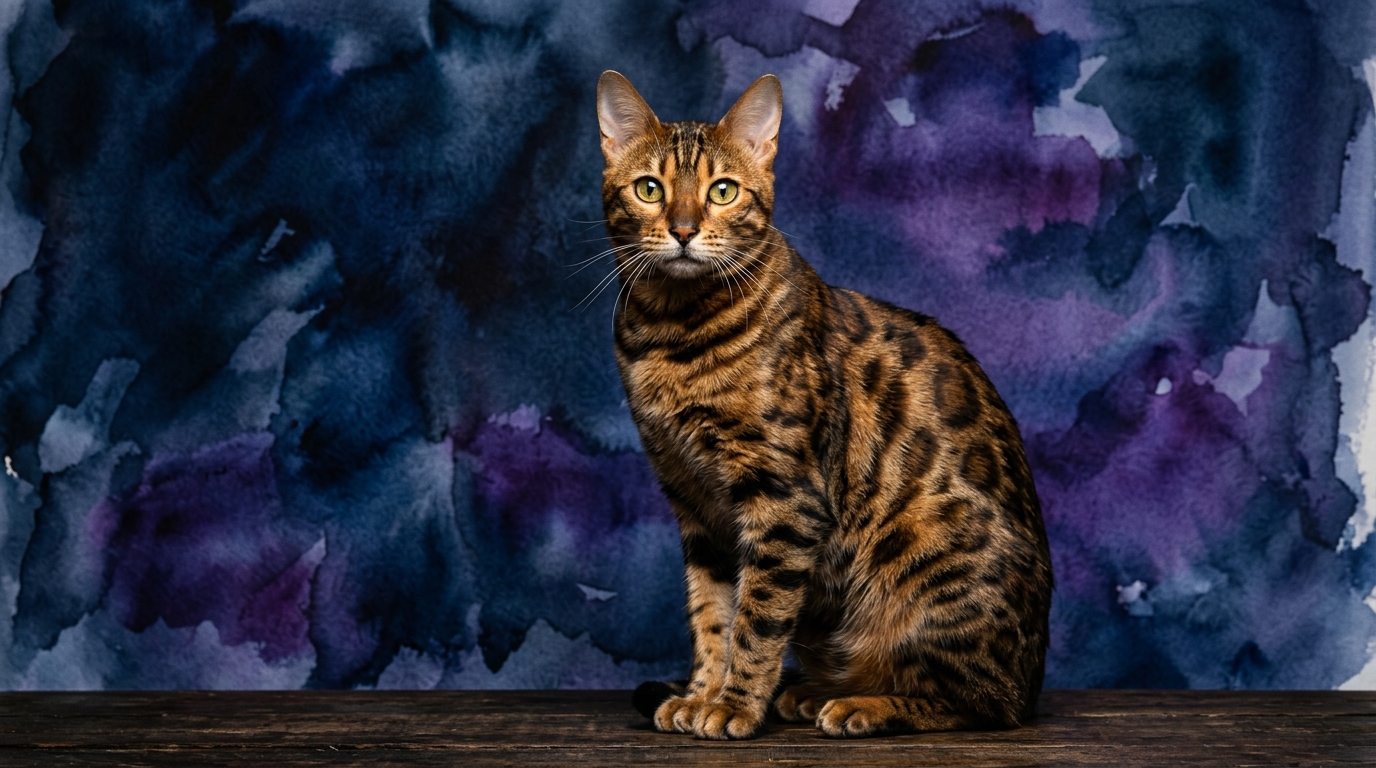

Side-by-Side IQ Profile
**Problem Solving:** The Bengal cat showcases a remarkable 5/5 in problem-solving, indicating an exceptional capacity to navigate complex situations, figure out puzzles, and devise strategies to achieve goals. In contrast, the Bombay cat exhibits a steady 3/5, suggesting they approach challenges with a more straightforward methodology, often relying on learned patterns rather than innovative solutions.
**Training Speed:** Bengal cats demonstrate a swift training speed of 4/5, absorbing new commands and behaviors with impressive alacrity, a trait that makes them responsive to consistent instruction. The Bombay, with a 3/5 training speed, learns at a more measured pace, requiring patience and repetition, yet proving capable of mastering routine tasks and house rules.
**Social Intelligence:** With a 4/5 in social intelligence, Bengals are adept at interpreting human cues and engaging in interactive play, often forming strong, dynamic bonds with their families. Bombays score 3/5, indicating a pleasant, companionable nature that enjoys interaction, though perhaps with less nuance in deciphering complex social signals compared to their Bengal counterparts.
**Instinctive Drive:** The Bengal's powerful 5/5 instinctive drive reflects a strong connection to their wild ancestry, manifesting in robust hunting behaviors, exploration, and a need for stimulating physical activity. The Bombay's 3/5 instinctive drive suggests a more domesticated set of urges, content with less intense predatory play and a greater inclination towards comfort and routine within the home environment.
**Memory:** Boasting a 5/5 memory score, Bengal cats possess an outstanding ability to recall experiences, learned tasks, and the locations of objects, which contributes significantly to their problem-solving prowess. The Bombay cat's 3/5 memory indicates a reliable recall for daily routines and familiar faces, but perhaps without the same capacity for remembering intricate sequences or past events over extended periods.
Where Bengal Wins Cognitively
The Bengal’s cognitive profile paints a picture of a feline architect, excelling in areas demanding mental agility and sustained engagement. Their 5/5 problem-solving ability means they are adept at manipulating objects to achieve desired outcomes, whether it's opening cupboards, solving intricate treat puzzles, or even learning to retrieve specific toys on command. This capacity for understanding cause and effect allows them to apply previous knowledge to novel situations.
Furthermore, the Bengal’s perfect 5/5 memory underpins much of their cognitive strength. They can recall complex sequences of actions, the layout of their environment, and specific learned commands, making them exceptionally consistent once a behavior is established. This superior recall, combined with their 5/5 instinctive drive, means they are not only capable of learning elaborate hunting simulations or agility courses but also remember them with precision, often seeking out these challenges independently.
Where Bombay Wins Cognitively
While the Bengal’s scores highlight an energetic, intellectually demanding companion, the Bombay’s cognitive strengths lie in a different, equally valuable domain: balanced adaptability and serene integration into home life. Their consistent 3/5 across all categories isn't a deficit but rather a profile indicating a steady, predictable temperament that thrives on routine and companionship without requiring constant intellectual stimulation. The Bombay's moderate social intelligence (3/5) means they are affectionate and enjoy interacting with their human family, forming strong, yet less demanding, bonds.
Their 3/5 instinctive drive also contributes to a calmer demeanor. Unlike breeds with a powerful predatory urge, Bombays are typically less prone to destructive behaviors driven by an insatiable need to hunt or explore every nook and cranny. This makes them excellent candidates for households seeking a peaceful presence, where a cat's primary role is companionship rather than an ongoing intellectual project. Their moderate memory and problem-solving skills mean they are perfectly capable of learning house rules and routines, remembering family members, and navigating their home with ease.
Which is Easier to Train and Why
When considering ease of training, the distinction between Bengals and Bombays becomes nuanced, depending on the training goals. The Bengal, with its 4/5 training speed, coupled with its 5/5 problem-solving and memory, is generally quicker to pick up complex commands, tricks, and even leash training. Their high instinctive drive (5/5) means they are often motivated by prey-like toys or food puzzles, making reward-based training highly effective for teaching elaborate sequences.
The Bombay, with a 3/5 training speed, learns at a more deliberate pace. They may not master new tricks as quickly as a Bengal, but their moderate instinctive drive (3/5) often translates to fewer distractions and a greater willingness to follow simple commands for the sake of routine or affection. For basic obedience, litter training, and adapting to household rules, the Bombay’s steady approach can be quite effective, especially for owners who prefer a less intense training journey.
Which Suits Active Owners vs Relaxed Owners
The choice between a Bengal and a Bombay hinges significantly on an owner’s lifestyle and their capacity for feline engagement. Active owners, those who enjoy consistent interaction, training sessions, and providing ample mental and physical challenges, will find a profound match in the Bengal. Their high problem-solving, instinctive drive, and memory demand an environment rich with interactive toys, puzzle feeders, and opportunities for exploration and play, potentially including outdoor adventures on a leash or within a secure enclosure.
Conversely, relaxed owners, those who appreciate a calmer household dynamic and a companion that provides steady affection without requiring constant stimulation, will find the Bombay an ideal fit. Their moderate scores across all cognitive dimensions mean they are content with a comfortable routine, regular petting, and less intense play sessions. Bombays are typically happy to lounge, observe, and offer gentle companionship, making them suitable for quieter homes or individuals who may not have the time or inclination for extensive daily training and elaborate play.
The Verdict
Choose a Bengal if you are an active individual or family eager for a highly interactive, mentally stimulating, and challenging feline companion who thrives on complex play and learning.
Choose a Bombay if you seek a steady, affectionate, and moderately active cat that integrates smoothly into a calmer home environment with fewer demands for intense mental engagement.
🧠 Find Your Pet's IQ Score
Our Pet IQ Lab assessment covers 25+ tests across 5 cognitive dimensions — personalized to your breed.
Take the Full IQ Test →Frequently Asked Questions
Are Bengals good with other pets?
Bengals, with their 4/5 social intelligence and 5/5 instinctive drive, can coexist with other pets, especially if introduced early and carefully. Their strong prey drive means small, vulnerable animals might be a challenge, but they often adapt well to other cats or cat-friendly dogs with proper socialization and supervision.
Do Bombays need a lot of playtime?
Bombays have a 3/5 instinctive drive, suggesting they enjoy playtime but don't require the intense, extended sessions a Bengal might. They appreciate regular, moderate play with favorite toys and interactive games, but are also content with quiet companionship and lounging.
Can Bengals be leash-trained?
Yes, Bengals, with their 4/5 training speed and 5/5 memory, are often highly receptive to leash training and enjoy exploring safely outdoors. Their adventurous spirit makes them excellent candidates for harness and leash walks, provided training starts early and is consistent.