Side-by-Side Cognitive Profiles
To understand the nuanced differences between these two captivating breeds, The Cosmic Pet Pet IQ Lab provides a detailed breakdown of their cognitive strengths across five key dimensions:
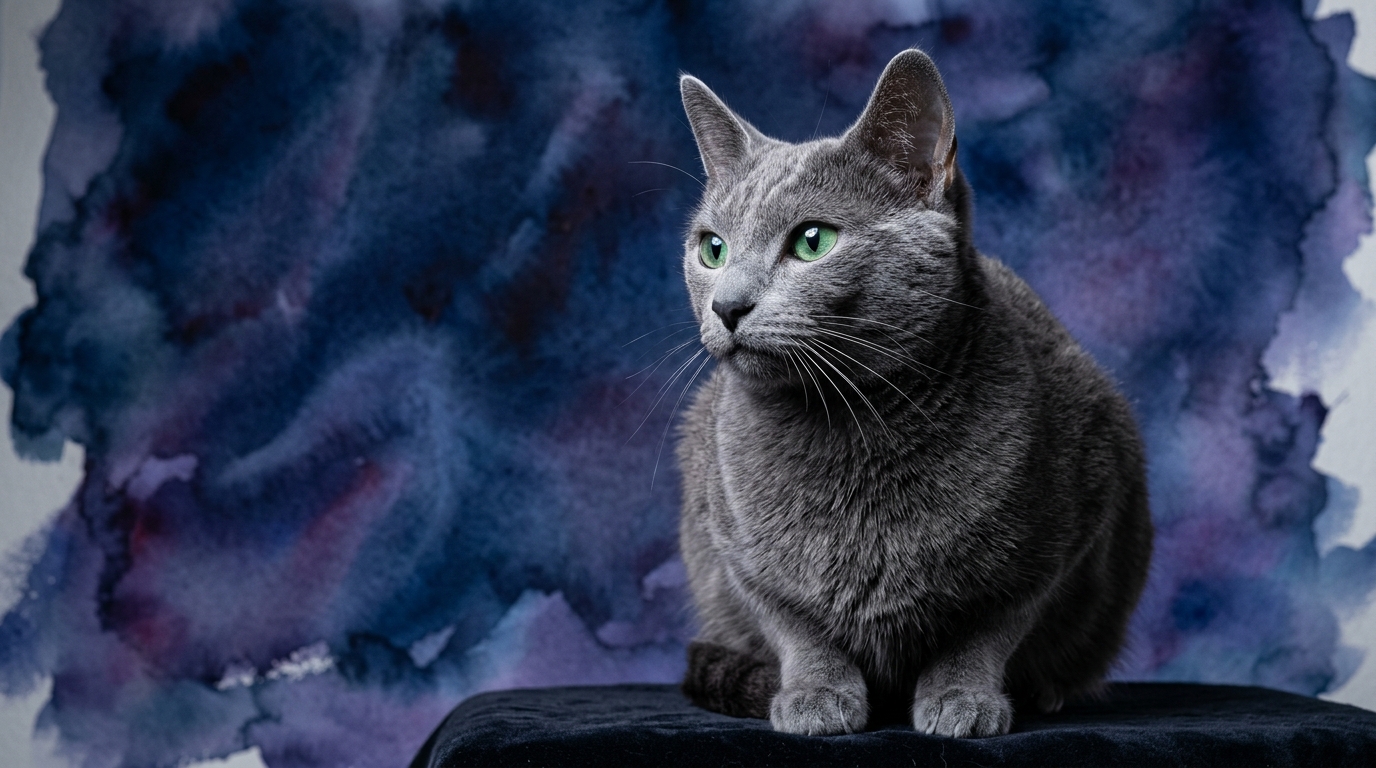
For the **Russian Blue**:
Problem Solving (4/5): This score indicates adeptness at navigating complex environments, like opening tricky cabinets or devising routes to high perches. They approach obstacles with persistent, methodical observation and strategy.
Training Speed (3/5): A 3/5 suggests they are trainable, capable of learning commands and routines, but require consistent, patient reinforcement. They grasp concepts well but may not always generalize new behaviors quickly without sufficient motivation.
Social Intelligence (4/5): Russian Blues show a refined understanding of social cues, forming deep bonds with chosen humans. They are sensitive to emotions, offering comfort, and learn household routines by observing human behavior.
Instinctive Drive (3/5): Their 3/5 instinctive drive means moderate predatory and exploratory urges. They enjoy play mimicking hunting but aren't overwhelming in their need for constant active engagement, often content with indoor life.
Memory (5/5): This exceptional score signifies outstanding recall. Russian Blues remember people, places, routines, and experiences with remarkable clarity, demonstrating long-term retention of learned behaviors or past interactions.
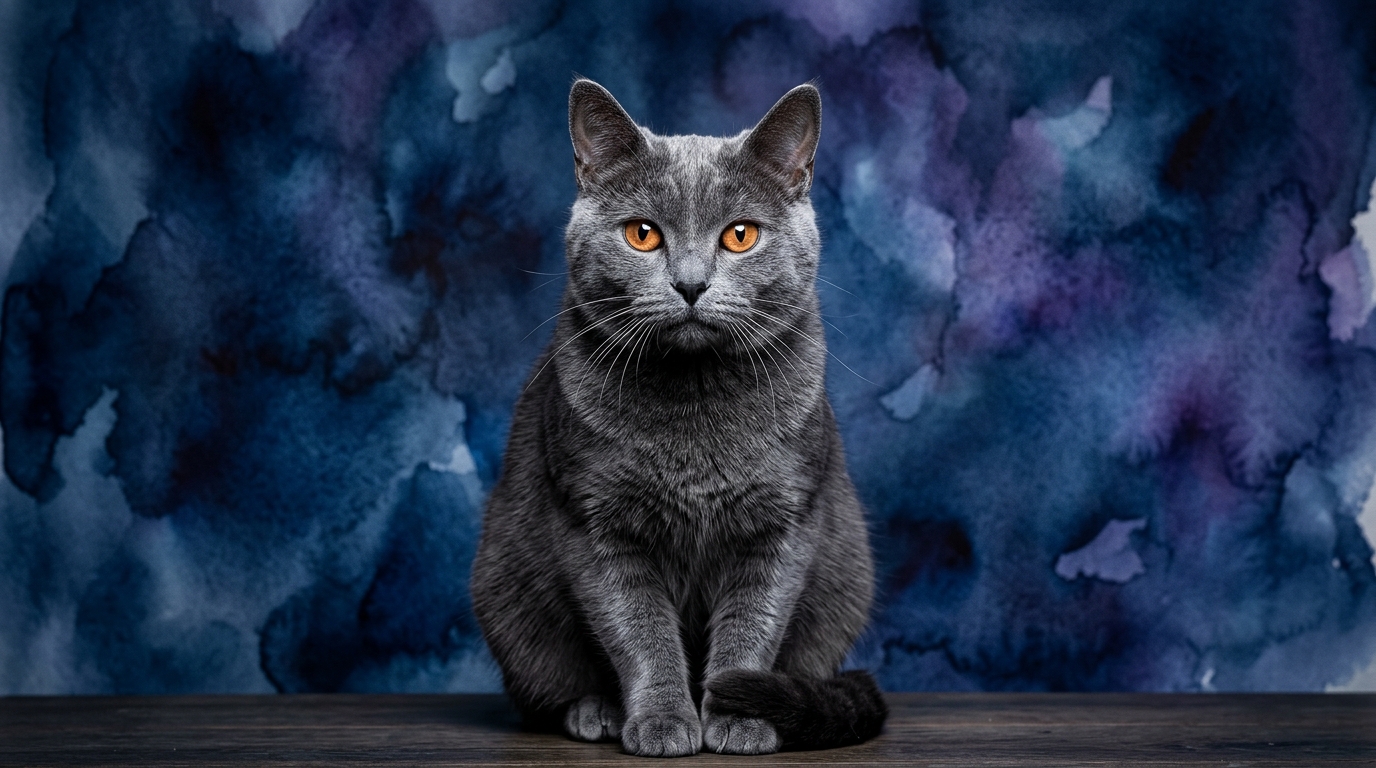
For the **Chartreux**:
Problem Solving (4/5): Like the Russian Blue, the Chartreux displays strong problem-solving, independently figuring out how to access items or navigate spaces. Their approach combines observation with quiet determination and focused attention.
Training Speed (3/5): A 3/5 suggests Chartreux are receptive to learning various behaviors and tricks. They respond well to positive reinforcement and consistency, though requiring a calm, patient approach to solidify new skills.
Social Intelligence (4/5): Chartreux cats possess notable social acumen, discerning moods and understanding household dynamics. They form strong, often singular, bonds, expressing affection subtly and adapting to their social environment.
Instinctive Drive (4/5): With a 4/5, Chartreux exhibit a more pronounced instinctive drive. This means a stronger inclination towards hunting, exploring, and physical play. They show keen interest in surroundings and a greater need for outlets for natural predatory behaviors.
Memory (4/5): A 4/5 for memory indicates very good recall. Chartreux remember routines, people, and learned associations effectively, retaining information over considerable periods, such as favorite toy locations or meal times.
Where the Russian Blue Wins Cognitively
The Russian Blue truly shines in the realm of memory, boasting a perfect 5/5 score. This superior recall means a Russian Blue is exceptionally adept at remembering intricate sequences of events, specific locations of hidden toys, or the subtle nuances of human routines over long periods. For instance, if you teach a Russian Blue a complex trick, they are likely to retain that knowledge for years, even with infrequent practice. Their ability to remember specific interactions and past experiences can contribute to their sometimes perceived 'aloofness' or 'pickiness' with strangers, as they clearly recall previous encounters and form lasting impressions. This exceptional memory also underpins their strong attachment to routines; any deviation is quickly noted, and they might even attempt to 'remind' you of the established schedule, fostering a sense of predictable comfort for both cat and owner.
Where the Chartreux Wins Cognitively
The Chartreux, while equally adept in many areas, distinguishes itself with a higher instinctive drive at 4/5 compared to the Russian Blue's 3/5. This heightened drive manifests as a more pronounced inclination towards exploring, hunting, and engaging with their environment through natural feline behaviors. A Chartreux is more likely to be found actively stalking imaginary prey, investigating every new scent, or demonstrating a persistent curiosity about sounds coming from outside. This isn't merely about physical activity; it's a cognitive engagement with their surroundings, constantly processing sensory input and seeking opportunities for stimulation. Owners might observe a Chartreux more readily engaging with puzzle toys designed to simulate hunting, or diligently 'helping' with household tasks by batting at dust bunnies. Their stronger drive indicates a mind that is constantly looking for engagement and opportunities to exercise its innate feline capabilities, making them particularly responsive to enrichment that taps into these primal urges.
Which is Easier to Train and Why
Both the Russian Blue and Chartreux share an identical training speed score of 3/5, suggesting neither breed is inherently 'easier' to train in terms of how quickly they grasp new commands. However, the underlying cognitive profiles influence their trainability in subtle but significant ways. The Russian Blue's exceptional 5/5 memory means that once a concept or command is learned, it is likely to be retained with remarkable longevity. This can make long-term training more rewarding, as previously taught behaviors don't easily fade. Their 4/5 social intelligence also means they are attuned to human cues and desires, making them responsive to positive reinforcement and praise. They understand the social contract of training and are motivated by the bond with their owner. Conversely, the Chartreux's 4/5 instinctive drive can be both an asset and a challenge. While they are equally receptive to learning, their stronger drive means training methods that tap into their natural hunting and exploratory instincts are likely to be more effective. For example, using a wand toy as a reward for a 'sit' command might resonate more deeply with a Chartreux, appealing to their inner predator. Their 4/5 social intelligence also ensures a good understanding of human interaction, but their stronger independent drive might mean they sometimes prioritize an interesting scent or a rustling leaf over a training session. Therefore, while both require patient, consistent methods, Russian Blues might excel at retaining complex sequences, while Chartreux might respond best to training that feels like an engaging game.
Which Suits Active Owners vs. Relaxed Owners
Considering their cognitive profiles, the Chartreux, with its 4/5 instinctive drive, generally aligns better with active owners who enjoy interactive play and providing ample environmental enrichment. This breed thrives when given opportunities to stalk, pounce, and explore, whether through regular play sessions with wand toys, access to cat trees, or supervised outdoor excursions. Their stronger drive means they mentally engage more deeply with stimulating activities, making them ideal for owners who want a feline partner in exploration and playful interaction. They appreciate puzzle feeders that challenge their problem-solving skills and satisfy their innate curiosity. In contrast, the Russian Blue, with its 3/5 instinctive drive, often fits seamlessly into the lifestyle of relaxed owners who appreciate a calmer, more predictable companion. While they certainly enjoy play, their needs are typically less intense, and they are often content with quiet observation, cuddling, and a consistent routine. Their superior memory means they thrive on predictability, and their moderate social intelligence makes them excellent companions for those who enjoy a subtle, comforting presence. They are less likely to demand constant stimulation and more inclined to share a quiet evening on the couch, making them perfect for those seeking a tranquil, yet deeply connected, feline friend.
The Verdict
Choose a Russian Blue if you value a companion with exceptional memory, a strong attachment to routines, and a calm, observant presence that thrives on predictable interaction.
Opt for a Chartreux if you seek a cat with a robust instinctive drive, a keen sense of curiosity, and a playful spirit that thrives on interactive engagement and environmental exploration.
🧠 Find Your Pet's IQ Score
Our Pet IQ Lab assessment covers 25+ tests across 5 cognitive dimensions — personalized to your breed.
Take the Full IQ Test →Frequently Asked Questions
Do Russian Blues and Chartreux get along with other pets?
Both breeds exhibit a 4/5 social intelligence, suggesting they can adapt well to other pets, especially when introduced properly. Russian Blues might be more reserved initially due to their strong memory of past interactions, while Chartreux's higher instinctive drive might make them more curious about new animal companions.
Which breed is more prone to destructive behaviors like scratching furniture?
Neither breed is inherently more prone to destruction, as their problem-solving skills are equal at 4/5. However, a Chartreux's higher instinctive drive (4/5) means they might need more outlets for scratching and climbing to satisfy their natural urges, making appropriate scratching posts and climbing structures crucial.
How do their different memory scores impact their daily lives?
A Russian Blue's 5/5 memory means they recall routines and specific events with remarkable precision, potentially making them more sensitive to schedule changes. A Chartreux's 4/5 memory is still very good, allowing them to easily learn and remember daily patterns, but they might be slightly more adaptable to minor variations.