Side-by-Side Cognitive Profiles
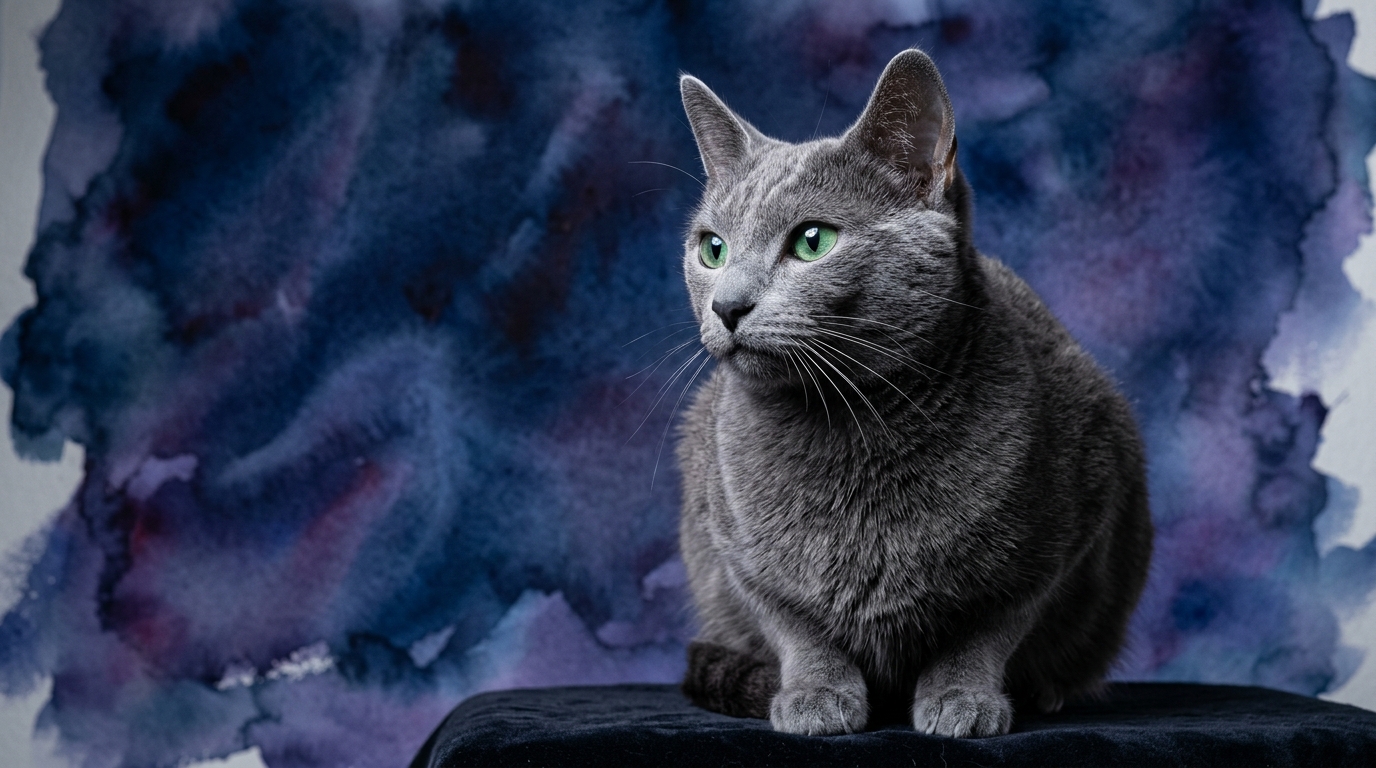
The Cosmic Pet Pet IQ Lab assesses feline intelligence across five crucial dimensions, offering a granular view of a breed's mental makeup. For the sleek Russian Blue, we observe a robust profile: Problem Solving 4/5, Training Speed 3/5, Social Intelligence 4/5, Instinctive Drive 3/5, and an exceptional Memory 5/5. This suggests a cat that is adept at navigating complex situations and retaining information over long periods.
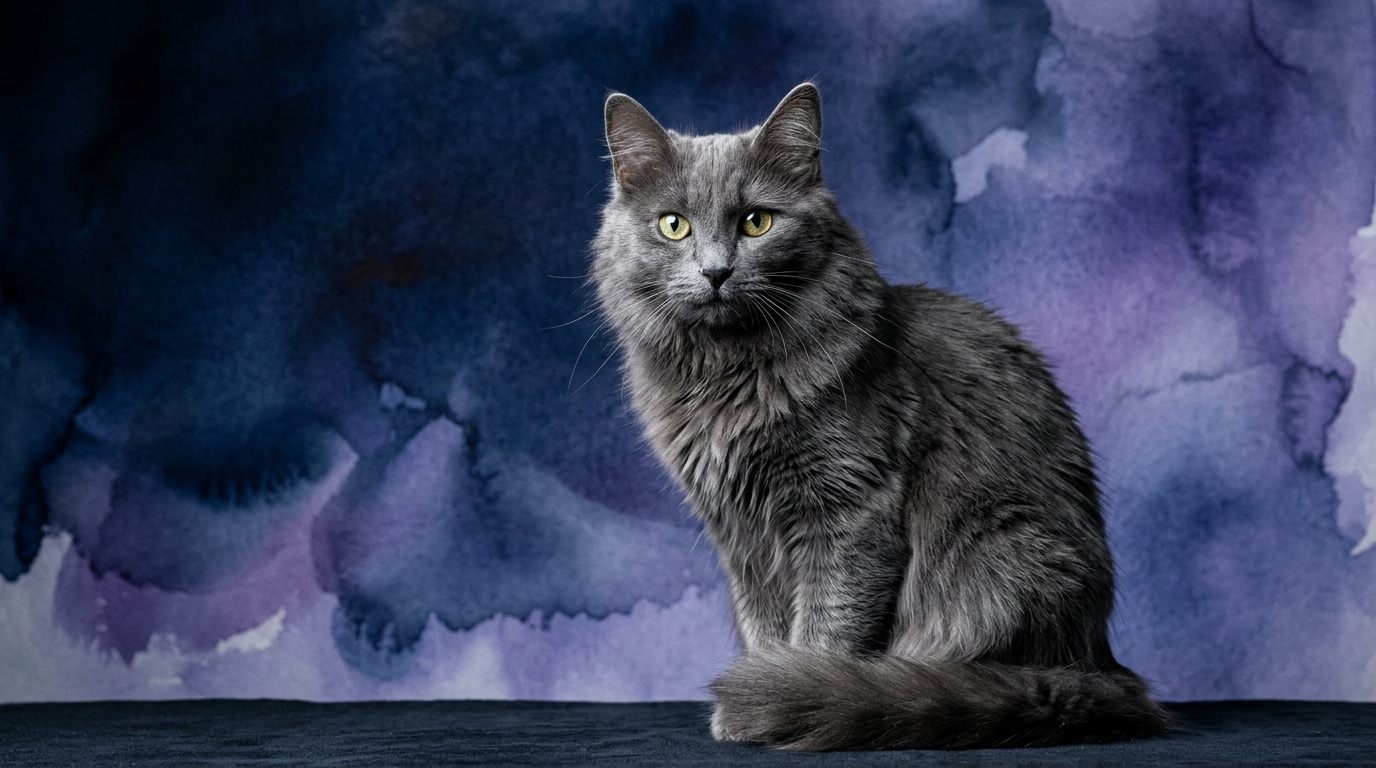
Conversely, the ethereal Nebelung presents a more balanced, albeit slightly lower, cognitive profile: Problem Solving 3/5, Training Speed 3/5, Social Intelligence 3/5, Instinctive Drive 3/5, and Memory 3/5. While these scores indicate a capable feline, they point towards a less intensely driven or socially demanding companion compared to their Russian Blue counterparts.
Where the Russian Blue Excels Cognitively
The Russian Blue truly shines in areas demanding sharp mental faculties. Their Problem Solving score of 4/5 indicates a cat that can figure out how to open cabinets, retrieve hidden toys, or even manipulate simple latches to get what they want. This isn't brute force; it's a methodical approach to obstacles, often involving observation and trial-and-error that quickly leads to success.
Their Social Intelligence, also at 4/5, means Russian Blues are remarkably attuned to human emotions and routines. They often pick up on subtle cues, understanding when their owner is busy versus receptive to play, or even anticipating meal times with uncanny accuracy. This makes them highly interactive companions who seem to genuinely connect with their human family members, often forming deep, loyal bonds. They might greet you at the door, follow you from room to room, and even offer comfort during stressful times, all indicative of their perceptive social awareness.
However, the Russian Blue's standout trait is undoubtedly their Memory, rated at an unparalleled 5/5. This extraordinary recall capability means they remember routines, specific commands, and even past events with remarkable clarity. If you've ever taught a Russian Blue a trick, expect them to remember it months later. They recall where favorite toys are stored, the exact spot a treat was last hidden, and the preferred scratching post. This superior memory contributes significantly to their problem-solving abilities, allowing them to learn from experience and apply past solutions to new challenges, making them seem uncommonly clever in their daily lives.
Where the Nebelung's Cognitive Profile Finds Its Niche
While the Nebelung's individual scores might not reach the peaks of the Russian Blue in specific areas, their consistent 3/5 across most dimensions paints a picture of a well-rounded and adaptably intelligent cat. Their Problem Solving at 3/5 means they are perfectly capable of navigating their environment and figuring out standard cat puzzles, though perhaps not with the same rapid ingenuity as a Russian Blue. They will still find their way to a coveted perch or figure out a treat dispenser, but they might take a slightly more deliberate approach.
The Nebelung's Social Intelligence, also at 3/5, suggests a cat that is affectionate and connected to its family, but often in a more reserved or selective manner. They bond deeply with their chosen few, showing devotion and warmth, but may not be as outwardly demonstrative or as quick to engage with strangers as a Russian Blue. Their social interactions are often thoughtful and measured, preferring quiet companionship over boisterous play, making them ideal for owners who appreciate a calm, dignified presence.
Their Memory at 3/5, while not as vivid as the Russian Blue's, is certainly sufficient for daily life. Nebelungs remember their names, the location of their litter box, and the general household routines. This level of memory ensures they are predictable and trainable for basic commands, without necessarily retaining complex sequences or intricate details over extended periods. This balanced cognitive profile means they are neither overly demanding nor prone to boredom in a way that requires constant mental gymnastics, making them a wonderfully serene companion for the right home.
Which is Easier to Train and Why
When considering ease of training, both breeds score 3/5 for Training Speed, indicating they are generally receptive to learning. However, the Russian Blue's superior Problem Solving (4/5) and exceptional Memory (5/5) give them a distinct edge in practical training scenarios. A Russian Blue will not only grasp a command or trick quickly but will also remember it with remarkable longevity, requiring fewer refreshers. Their higher Social Intelligence also means they are often more eager to please and more perceptive of their trainer's intentions, making the process feel more collaborative.
The Nebelung, with its 3/5 in Training Speed, Problem Solving, and Memory, will certainly learn, but perhaps with a slightly longer retention curve for complex tasks. Their more reserved social nature means they might respond best to a calm, consistent trainer who builds trust gradually. While they can master litter box use and basic commands, teaching them intricate tricks might require more patience and repetition. Their training success often hinges on positive reinforcement and a strong, quiet bond with their owner, rather than an innate drive to solve complex puzzles or impress.
Suitability for Active vs. Relaxed Owners
The Russian Blue's cognitive profile makes them an excellent match for moderately active owners who enjoy engaging with their pets. Their 4/5 Problem Solving and Social Intelligence mean they thrive on mental stimulation, enjoying interactive toys, puzzle feeders, and even learning new tricks. They appreciate owners who are present and willing to interact, providing enrichment that challenges their sharp minds. While not excessively hyperactive in a physical sense (Instinctive Drive 3/5), their mental energy demands an owner who can provide consistent attention and intellectual outlets to prevent boredom-induced mischief.
Conversely, the Nebelung's balanced 3/5 scores across the board make them particularly well-suited for relaxed owners who appreciate a calm, affectionate, and less demanding companion. Their moderate Problem Solving and Social Intelligence mean they are content with a stable routine and gentle interactions, without requiring constant novelty or intense engagement. They are often described as devoted but undemanding, happy to observe from a distance or curl up quietly beside their chosen human. Their Instinctive Drive at 3/5 means they enjoy play, but are less likely to be relentlessly seeking out high-energy activities, making them ideal for quieter households or those with a more predictable pace of life.
The Verdict
Choose the Russian Blue if you seek a highly interactive, mentally agile companion who will surprise you with their problem-solving skills and long-term memory.
Opt for the Nebelung if you prefer a serene, devoted cat who offers calm companionship and appreciates a consistent, peaceful home environment.
🧠 Find Your Pet's IQ Score
Our Pet IQ Lab assessment covers 25+ tests across 5 cognitive dimensions — personalized to your breed.
Take the Full IQ Test →Frequently Asked Questions
Do Russian Blues get bored easily due to their higher intelligence?
Yes, Russian Blues, with their 4/5 Problem Solving and 5/5 Memory, benefit greatly from mental enrichment. Without adequate stimulation through puzzle toys or interactive play, they may invent their own 'puzzles,' potentially leading to unwanted behaviors out of boredom.
Are Nebelungs good with children or other pets?
Nebelungs, with their 3/5 Social Intelligence, can be good with respectful children and other calm pets, especially if introduced thoughtfully. Their reserved nature means they may prefer quieter interactions and a predictable environment, rather than boisterous play.
How do these breeds' instinctive drives compare for hunting or play?
Both breeds have an Instinctive Drive of 3/5, indicating a healthy interest in play and 'hunting' games. They will enjoy chasing toys and engaging in predatory-like play, but neither is excessively high-strung or possesses an overwhelming prey drive, making them suitable for indoor living.