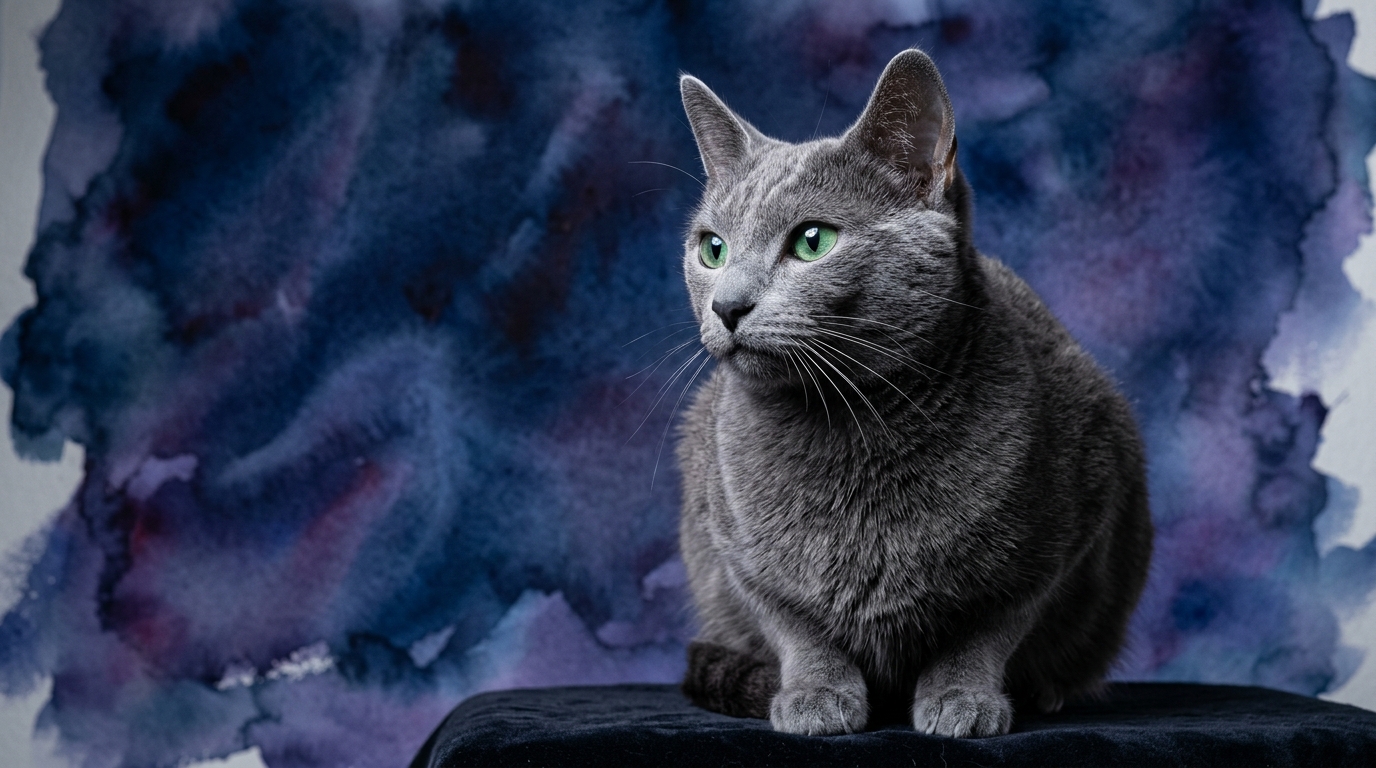
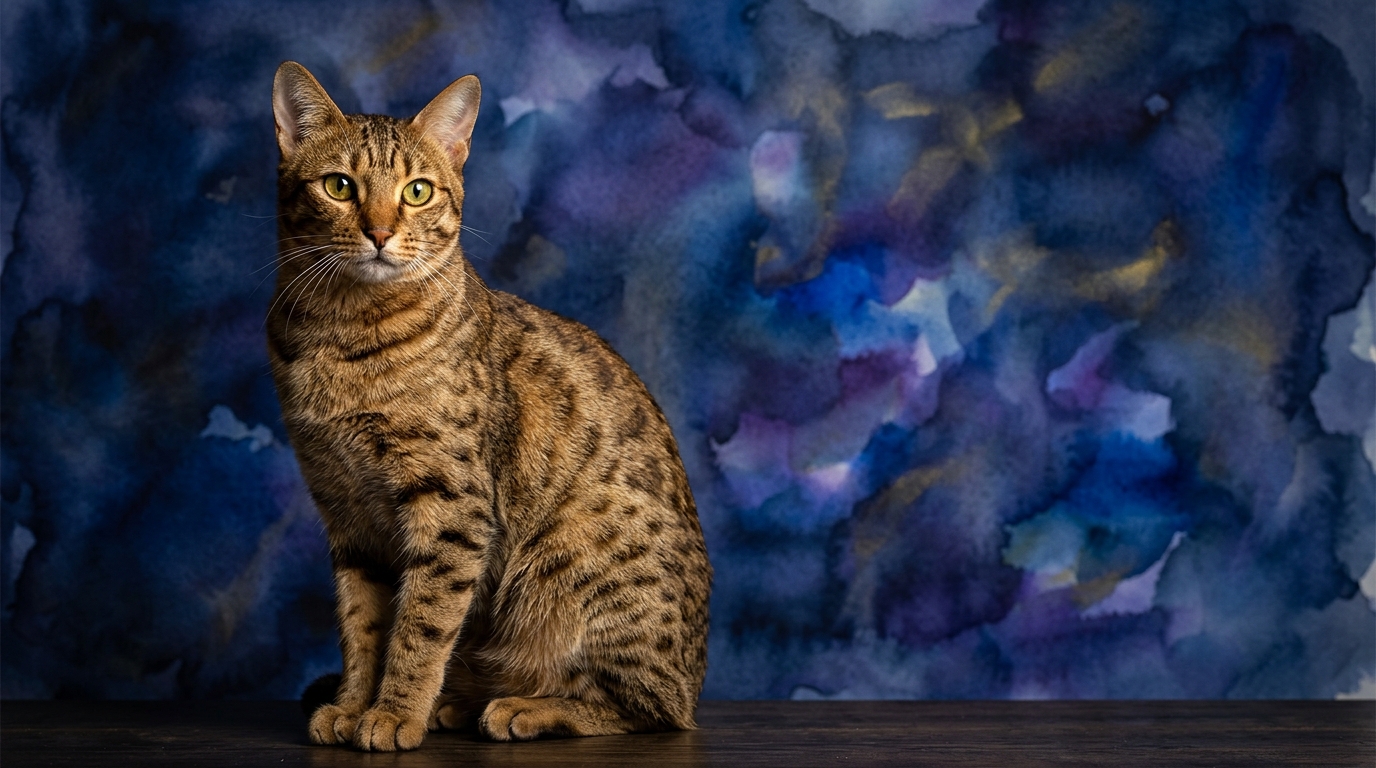
Side-by-Side IQ Profile: Russian Blue vs. Ocicat
**Russian Blue - Problem Solving (4/5):** These cats exhibit a thoughtful, often methodical approach to challenges, observing situations before executing a plan to achieve desired outcomes like opening a cabinet. Their problem-solving often leverages their exceptional memory to recall past successful strategies, leading to consistent, effective solutions.
**Russian Blue - Training Speed (3/5):** While capable learners, Russian Blues require consistent, patient training, processing new information at a moderate pace. Commands need repetition and positive reinforcement to solidify, though their strong memory ensures long-term retention once learned, making the initial acquisition the primary challenge.
**Russian Blue - Social Intelligence (4/5):** Russian Blues are deeply attuned to their human companions, often displaying a nuanced understanding of moods and routines. They form strong bonds, anticipating needs and offering empathetic companionship, making them excellent, perceptive partners who value harmonious interactions.
**Russian Blue - Instinctive Drive (3/5):** Their instinctive drive is moderate; they enjoy play and mock hunts but aren't overwhelmingly driven by predatory instincts. They balance active curiosity with contentment for quiet observation or peaceful rest, valuing tranquility alongside thoughtful engagement with their environment.
**Russian Blue - Memory (5/5):** This is a standout cognitive trait. Russian Blues possess an exceptional capacity for recall, remembering people, routines, toy locations, and intricate event sequences over long periods. This superior memory significantly contributes to their adaptability and their ability to form lasting, complex relationships.
**Ocicat - Problem Solving (4/5):** Ocicats approach problems with active experimentation and physical engagement, using their agility and drive to manipulate objects or explore environments for solutions. Their problem-solving is often goal-oriented, tied to achieving desired interactions or accessing favorite toys through dynamic interaction.
**Ocicat - Training Speed (5/5):** Ocicats are remarkably quick learners, absorbing new commands, tricks, and routines with impressive speed. Their eagerness to engage and high motivation make them highly receptive to training, often mastering complex behaviors after only a few repetitions, making them exceptionally rewarding to teach.
**Ocicat - Social Intelligence (4/5):** Highly social and outgoing, Ocicats actively seek interaction and involvement in household activities. They adeptly communicate desires to their human companions, often through vocalizations, expressing a strong desire to be a central part of the family and participate in daily life.
**Ocicat - Instinctive Drive (4/5):** With a robust instinctive drive, Ocicats possess a strong urge to hunt, explore, and play. They thrive on interactive games mimicking prey, showcasing their agility and energy, requiring ample mental and physical stimulation to remain content and channel their natural behaviors constructively.
**Ocicat - Memory (4/5):** Ocicats exhibit very good memory, effectively recalling routines, people, and learned commands. While not reaching the Russian Blue's perfect score, their recall is more than sufficient for daily life and training, allowing them to build a rich tapestry of experiences and associations rapidly.
Where the Russian Blue Wins Cognitively
The Russian Blue’s perfect 5/5 score in memory provides a profound cognitive advantage, allowing them to retain complex information, routines, and social cues with remarkable fidelity over extended periods. This superior recall means they rarely forget learned behaviors or the nuanced preferences of their human companions, fostering a deeply predictable and harmonious home environment. Their methodical approach to problem-solving, combined with this memory, often yields consistent, elegant solutions rather than trial-and-error, making them adept at navigating their world with quiet competence and foresight.
Where the Ocicat Wins Cognitively
The Ocicat's exceptional 5/5 training speed is a clear cognitive triumph, enabling them to grasp new commands and complex behaviors faster than many other breeds. This rapid acquisition, coupled with their 4/5 instinctive drive, means they are highly motivated to engage in interactive learning and problem-solving that involves physical activity and exploration. Their cognitive strength lies in their ability to quickly adapt to new challenges and environments through active, dynamic participation, making them remarkably agile learners in practical, stimulating situations.
Which Is Easier to Train and Why
The Ocicat is demonstrably easier to train, primarily due to its perfect 5/5 training speed and robust 4/5 instinctive drive. These traits combine to create a cat that is not only quick to understand new commands but also highly motivated by interactive play and rewards, making them enthusiastic participants in training sessions. They readily engage in activities like leash walking, clicker training, and learning tricks, often picking up complex sequences in just a few repetitions. In contrast, the Russian Blue, with its 3/5 training speed, requires more patience and consistency; while they certainly learn and retain information thanks to their excellent memory, the initial learning curve is steeper, and they may be less outwardly driven to participate in structured training sessions.
Which Suits Active Owners vs. Relaxed Owners
For active owners who relish interactive play, training challenges, and a feline companion deeply involved in daily activities, the Ocicat is an ideal match. Their higher instinctive drive and rapid training speed mean they thrive on mental and physical stimulation, enjoying games of fetch, puzzle toys, and exploring new environments with gusto. Conversely, relaxed owners who appreciate a calm, observant, and deeply loyal companion that is less demanding of constant physical engagement might find the Russian Blue more suitable. Their moderate instinctive drive and profound social intelligence allow them to enjoy quiet companionship and predictable routines, while still appreciating thoughtful, occasional play.
The Verdict
Opt for the Russian Blue if you value a companion with an exceptional memory, a calm demeanor, and a deep, empathetic connection that thrives on predictable routines and quiet companionship.
Select the Ocicat if you seek an agile, quick-witted feline eager to learn tricks, engage in energetic play, and participate actively in an stimulating household environment.
🧠 Find Your Pet's IQ Score
Our Pet IQ Lab assessment covers 25+ tests across 5 cognitive dimensions — personalized to your breed.
Take the Full IQ Test →Frequently Asked Questions
Can Russian Blues learn tricks despite their moderate training speed?
Absolutely. While they may take more repetitions than an Ocicat, their excellent memory ensures that once a trick is learned, they will retain it for a long time, making them capable of mastering a variety of commands with patient instruction and positive reinforcement.
Do Ocicats need a lot of space due to their high instinctive drive?
Ocicats benefit from space to explore and play, but more importantly, they need consistent interactive engagement and mental stimulation. Vertical spaces, puzzle feeders, and regular play sessions with their owners can effectively fulfill their drive even in smaller living environments, provided their minds are kept busy.
How do their social intelligence scores of 4/5 manifest differently?
Both breeds are social, but the Russian Blue's social intelligence often manifests as deep emotional attunement and quiet, observant companionship. The Ocicat's is expressed through active participation, vocal communication, and a strong desire to be at the center of family activities, often following owners from room to room.