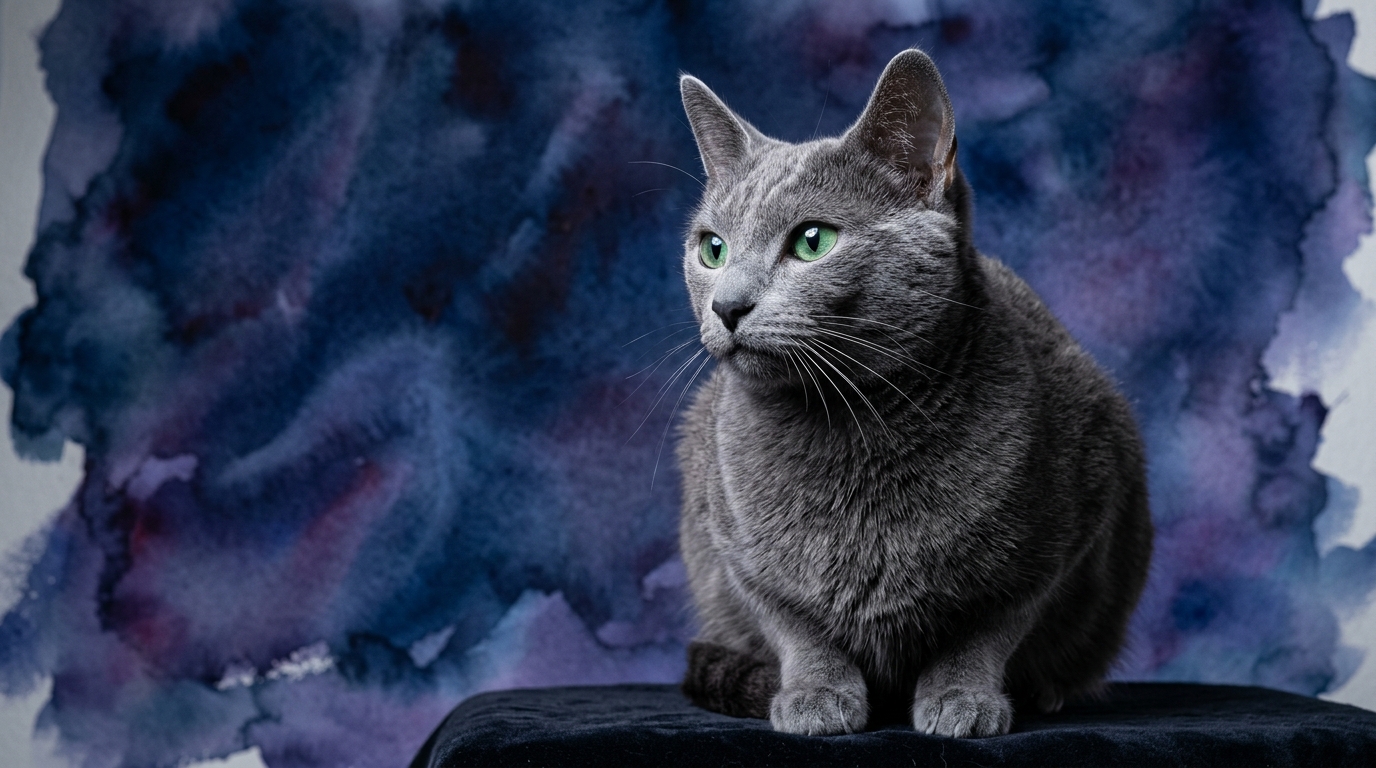
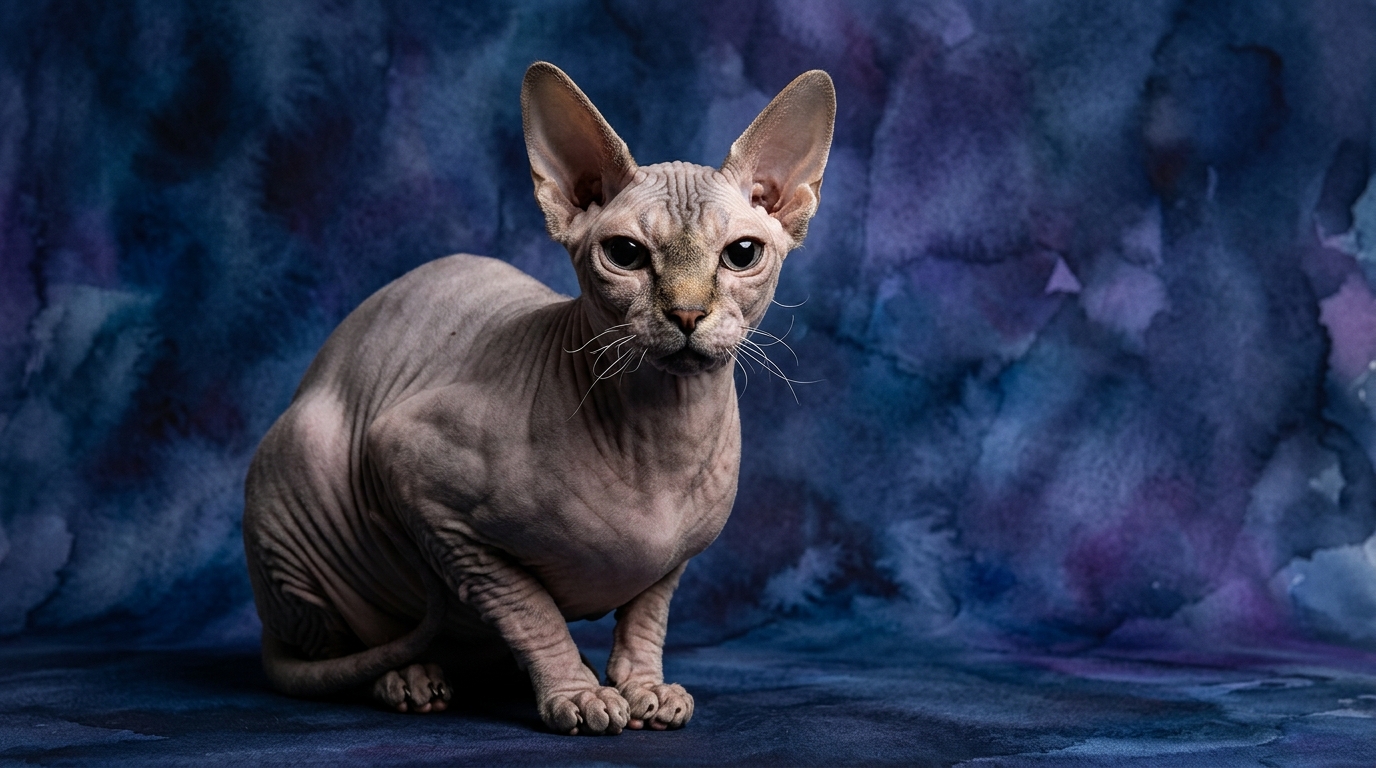
Side-by-Side Cognitive Profiles: Russian Blue vs. Sphynx
The Cosmic Pet Pet IQ Lab employs a five-dimensional framework to assess feline intelligence, offering a granular view into each breed's cognitive strengths. Let's examine how the Russian Blue and Sphynx measure up across these specific metrics.
For **Problem Solving**, both the Russian Blue and the Sphynx achieve an impressive 4 out of 5. This indicates a robust capacity for figuring out complex situations, such as manipulating puzzle feeders, navigating intricate environments, or strategizing to access forbidden spaces. Owners of both breeds frequently report their cats demonstrating ingenuity in overcoming obstacles, suggesting a strong innate curiosity and a methodical approach to challenges.
In **Training Speed**, a notable difference emerges: the Russian Blue scores 3 out of 5, while the Sphynx earns a higher 4 out of 5. This suggests that while both breeds are capable of learning, the Sphynx typically processes new commands and associations more rapidly, often requiring fewer repetitions to master a trick or routine. The Russian Blue, though certainly trainable, might necessitate a more patient and consistent approach to behavioral conditioning.
**Social Intelligence** is where the Sphynx truly shines with a perfect 5 out of 5, compared to the Russian Blue's respectable 4 out of 5. The Sphynx displays an exceptional ability to read human emotions, respond to subtle cues, and actively seek out interaction, often forming extraordinarily deep and empathetic bonds with their human companions. The Russian Blue also develops strong attachments, particularly with select individuals, showing a refined awareness of their chosen people, but perhaps with a slightly more reserved or selective expression of their social acumen.
Regarding **Instinctive Drive**, both breeds share a score of 3 out of 5. This indicates a moderate level of natural predatory behaviors, such as stalking, pouncing, and chasing. While they enjoy interactive play that simulates hunting, their drive is generally manageable and can be readily channeled into appropriate toys and activities, rather than presenting an overwhelming demand for constant prey simulation.
Finally, **Memory** highlights another key distinction: the Russian Blue achieves an outstanding 5 out of 5, while the Sphynx scores 4 out of 5. The Russian Blue possesses an exceptional recall for routines, locations of objects, past interactions, and the specific behaviors of their human family members. This superior memory contributes to their predictable nature and their ability to anticipate daily events. The Sphynx, while certainly having good memory, might not retain every detail with the same crystalline clarity or for quite as long as its Russian Blue counterpart.
Where the Russian Blue Excels Cognitively
The Russian Blue's standout cognitive strength lies in its **Memory (5/5)**. This isn't just about remembering where the food bowl is; it's about an intricate recall of complex routines, the precise location of objects in the home, and the nuances of past interactions. A Russian Blue might remember a specific toy hidden months ago, or a particular sequence of events that leads to a treat. This exceptional memory contributes to their reputation for predictability and their subtle understanding of household dynamics. They seem to internalize the rhythm of their environment, anticipating events with uncanny accuracy, which can manifest as them waiting by the door precisely when their owner is due home, or guiding a human to a forgotten item.
Coupled with their solid **Problem Solving (4/5)**, their memory allows them to refine strategies over time. If a Russian Blue figures out how to open a cupboard, they'll remember the exact technique and apply it consistently. This combination makes them adept at navigating their world efficiently and persisting in their cognitive endeavors, often learning from previous attempts to achieve desired outcomes. Their strong memory means they build a rich internal map of their world and the behaviors within it, making them remarkably observant and contextually aware companions.
Where the Sphynx Excels Cognitively
The Sphynx's cognitive superiority is most evident in its unparalleled **Social Intelligence (5/5)**. These cats are not just social; they are profoundly attuned to human emotions and social cues. A Sphynx can often sense a shift in mood, offering comfort or initiating play at just the right moment. They actively participate in family life, often preferring to be physically close to their humans, whether nestled on a lap or draped over a shoulder, demonstrating an almost intuitive understanding of social dynamics and connection. This high social awareness makes them incredibly responsive and interactive companions, eager to engage in two-way communication.
Their elevated **Training Speed (4/5)** also gives them a distinct advantage. This means Sphynx cats tend to pick up new commands, tricks, or desired behaviors more quickly than many other breeds. Their eagerness to engage and their strong social bond with their owners often translate into a keen desire to please, which further accelerates the learning process. Whether it's leash training, 'sit,' 'stay,' or more complex agility courses, the Sphynx often demonstrates a rapid grasp of expectations, making them a joy to train and interact with on a learning level.
Training Ease: Russian Blue vs. Sphynx
When considering ease of training, the **Sphynx** generally holds an advantage due to its higher **Training Speed (4/5)** and exceptional **Social Intelligence (5/5)**. Sphynx cats are often described as 'people-pleasers' due to their profound desire for interaction and connection. This strong social drive makes them highly motivated to engage with their owners during training sessions, readily responding to positive reinforcement and eager to learn new behaviors that strengthen their bond. Their quicker learning curve means they often grasp commands and routines with fewer repetitions, making the training process feel more fluid and rewarding for both cat and owner. They thrive on attention and mental stimulation, viewing training as another form of engaging play.
The **Russian Blue**, with a **Training Speed of 3/5**, is certainly trainable, but might require a more patient and consistent approach. While their outstanding **Memory (5/5)** ensures that once a behavior is learned, it is retained remarkably well, the initial acquisition phase might take a bit longer. Russian Blues can be more independent and discerning, meaning an owner needs to find the right motivators and maintain a consistent training regimen to achieve desired results. Their social intelligence (4/5) means they form strong bonds, but they may not have the same inherent 'eagerness to please' that drives the Sphynx, sometimes preferring to observe rather than actively participate in every command. Training a Russian Blue is more about building trust and understanding their independent spirit, leveraging their memory for long-term retention rather than relying on rapid initial uptake.
Ideal Owners: Active vs. Relaxed Lifestyles
For **active owners** seeking a highly interactive and engaged companion, the **Sphynx** is often the more suitable choice. Their exceptional **Social Intelligence (5/5)** means they crave constant interaction and thrive on being an integral part of daily activities. They are not content to merely observe; they want to participate, whether it’s 'helping' with chores, engaging in extended play sessions, or learning new tricks. Their higher **Training Speed (4/5)** also makes them excellent candidates for owners interested in teaching complex commands, leash training, or even agility. A Sphynx will flourish in a bustling home where they receive ample attention, mental stimulation, and opportunities to connect deeply with their human family. They are known for their playful antics and affectionate nature, requiring an owner who can match their energy and desire for companionship.
Conversely, for **relaxed owners** who appreciate a more serene yet deeply connected companion, the **Russian Blue** often fits perfectly. While they form strong bonds and possess considerable social intelligence (4/5), they are often described as more reserved and appreciate quiet companionship. Their outstanding **Memory (5/5)** means they quickly learn household routines and provide a comforting, predictable presence without demanding constant attention. They enjoy observing their environment and engaging in occasional, focused play, but are generally less insistent on being the center of attention than a Sphynx. A Russian Blue will thrive in a home that offers calm predictability, a comfortable routine, and an owner who values a loyal, observant presence that offers affection on its own terms, perhaps with a penchant for quiet cuddles and independent exploration.
The Verdict
Choose the Russian Blue if you value a deeply loyal, observant companion with an exceptional memory for routines and a calm, predictable presence, offering affection on its own discerning terms.
Opt for the Sphynx if you desire an extraordinarily social, highly interactive, and rapidly trainable cat that thrives on constant engagement and actively participates in every aspect of family life.
🧠 Find Your Pet's IQ Score
Our Pet IQ Lab assessment covers 25+ tests across 5 cognitive dimensions — personalized to your breed.
Take the Full IQ Test →Frequently Asked Questions
Are Russian Blues good with strangers?
Russian Blues typically exhibit a reserved nature with strangers, preferring to observe from a distance before approaching. While they develop deep bonds with their chosen family, their social intelligence (4/5) means they are selective and take time to warm up to new people, valuing trust and familiarity.
Can Sphynx cats be left alone for long periods?
Due to their exceptional social intelligence (5/5) and profound need for interaction, Sphynx cats generally do not thrive when left alone for extended periods. They are prone to loneliness and may develop anxiety or destructive behaviors if their social needs are not met, making them best suited for homes where they receive ample companionship.
Do Russian Blues and Sphynx cats get along well with other pets?
Both breeds can generally coexist with other pets, though their approaches differ. The Sphynx, with its high social intelligence, often adapts well and seeks interaction with other friendly animals, sometimes even forming strong bonds. The Russian Blue, while adaptable, may be more selective and prefer a more independent coexistence, tolerating rather than actively seeking out constant interaction with other furry housemates.