
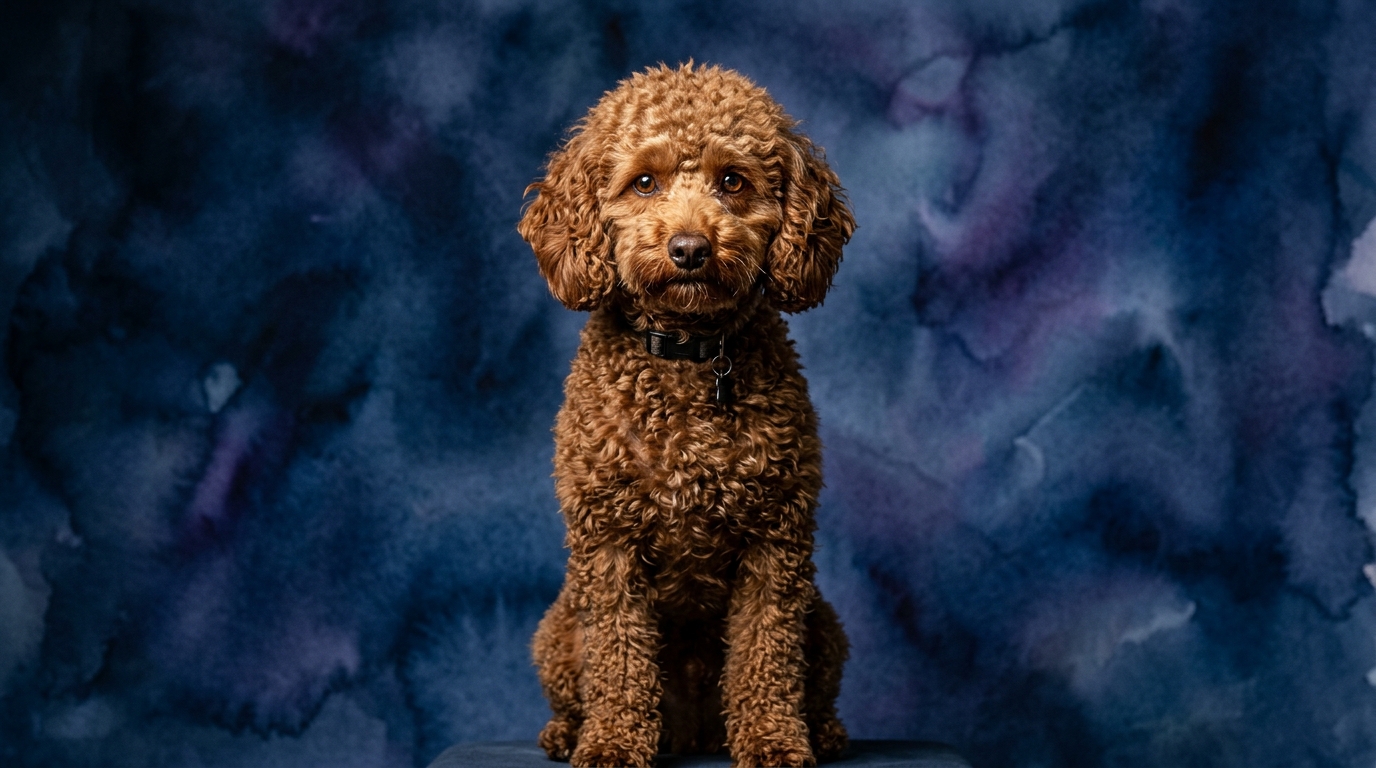
Side-by-Side Cognitive Profiles: Russian Toy vs. Miniature Poodle
The Russian Toy presents a uniformly balanced cognitive profile, scoring a consistent 3/5 across all five dimensions. Their Problem Solving (3/5) suggests an aptitude for deciphering moderately complex tasks. They can navigate household puzzles, figure out how to access preferred spots, or learn simple routes, but multi-step challenges or abstract reasoning might push the limits of their natural inclination for persistence. For Training Speed (3/5), Russian Toys demonstrate a steady learning curve. They absorb new commands and routines with consistent repetition and positive reinforcement, requiring a patient and clear approach from their handler to embed behaviors effectively. Their Social Intelligence (3/5) is robust; they are adept at reading human emotions and understanding canine body language within their social circle, fostering harmonious relationships built on mutual understanding. This capacity for social awareness contributes to their charming and adaptable nature. In terms of Instinctive Drive (3/5), these dogs possess a moderate level of natural inclinations. They might show a mild curiosity for exploring new scents or a gentle interest in chasing a rolling toy, but these drives are typically manageable and rarely become overwhelming or difficult to redirect. Finally, their Memory (3/5) is adequate for retaining essential information. They remember routines, familiar faces, and learned commands reliably, though perhaps not with the precision or long-term recall seen in breeds with higher scores, requiring occasional refreshers.
The Miniature Poodle's cognitive architecture reveals a dog of exceptional intellectual capacity, particularly in areas of learning and retention. Their Problem Solving (5/5) is truly remarkable; these dogs excel at dissecting intricate challenges, quickly devising strategies to overcome obstacles, open latches, or solve advanced puzzle toys. This superior cognitive flexibility allows them to adapt with impressive speed to novel situations and environments. Regarding Training Speed (5/5), Miniature Poodles are extraordinarily quick learners. They often grasp new commands, concepts, and even complex sequences in very few repetitions, making them highly responsive to training and capable of mastering advanced obedience, tricks, and dog sports with ease. Their Social Intelligence (3/5) is well-developed, enabling them to interpret human moods and intentions accurately, as well as navigate canine social dynamics effectively. This contributes to their reputation as sensitive and intuitive companions. Their Instinctive Drive (3/5) is balanced; while they may exhibit a natural inclination for retrieving, scent work, or water activities, these drives are typically controllable and can be channeled into productive outlets rather than becoming disruptive. Most notably, their Memory (5/5) is outstanding. Miniature Poodles possess an impressive ability to commit a vast amount of information to long-term memory, recalling commands, learned experiences, and routines with precision, even after significant time has passed. This formidable recall underpins their consistent performance in various disciplines.
Where the Russian Toy Excels Cognitively
The Russian Toy’s consistent 3/5 rating across all cognitive dimensions presents a uniquely balanced and predictable intellectual profile that can be a distinct advantage for certain owners. While they don't surpass the Miniature Poodle in raw cognitive scores, their moderate problem-solving and memory capabilities translate into a companion less prone to developing destructive behaviors rooted in profound boredom or an incessant need for advanced mental games. Unlike breeds with exceptionally high cognitive demands that can become restless or mischievous if not constantly stimulated, the Russian Toy's intellectual rhythm is more even-keeled. Owners seeking a dog whose cognitive engagement is steady and manageable, rather than requiring an exhaustive schedule of intricate mental challenges, might find the Russian Toy’s intellectual temperament a more harmonious fit. This offers a simpler, more straightforward companionship dynamic without the pressure of always providing complex brain teasers, fostering a wonderfully content and adaptable pet for a less demanding lifestyle.
Where the Miniature Poodle Excels Cognitively
The Miniature Poodle undeniably shines in several key cognitive areas, particularly in problem-solving, training speed, and memory, where it achieves a perfect 5/5 score. Their exceptional problem-solving acumen allows them to quickly analyze situations and strategize solutions to complex challenges, often surprising owners with their ingenuity in navigating obstacles, figuring out new puzzles, or even manipulating their environment to achieve a desired outcome. This superior cognitive flexibility means they can adapt rapidly to new environments, grasp abstract concepts, and learn novel tasks with remarkable efficiency. Furthermore, their outstanding memory ensures they commit a vast repertoire of commands, routines, and past experiences to long-term retention with precision. This formidable recall makes them highly reliable in executing learned behaviors and remembering intricate sequences, even after extended periods of inactivity. The combination of these attributes positions the Miniature Poodle as a highly capable and adaptable learner, eager to engage in intellectually stimulating activities and master intricate skills, making them a true partner in cognitive endeavors.
Trainability: Russian Toy vs. Miniature Poodle
When evaluating ease of training, the Miniature Poodle holds a distinct and significant advantage over the Russian Toy, primarily due to its superior cognitive scores. With a perfect 5/5 score in training speed, Miniature Poodles absorb new commands and concepts with remarkable rapidity, often grasping new behaviors in just a few repetitions. This swift learning curve means they are excellent candidates for advanced obedience, agility, rally, or even complex trick training, thriving on the mental engagement these activities provide. Their outstanding memory (5/5) further solidifies their trainability, allowing them to recall a vast array of commands consistently over time, even after periods of inactivity, and generalize learned behaviors across different environments and distractions with relative ease. In contrast, the Russian Toy's training speed is a solid 3/5. While certainly trainable and eager to please their owners, they require more consistent repetition and patience to solidify new behaviors. Owners should expect a more gradual learning process, focusing on positive reinforcement, clear communication, and breaking down tasks into smaller steps to build a strong foundation. A Russian Toy might take longer to generalize a command to different environments or respond as reliably under distractions compared to a Miniature Poodle, whose cognitive agility allows for quicker adaptation and generalization. This difference means a Miniature Poodle might progress to advanced skills much faster, while a Russian Toy will benefit from a more patient, steady approach to training.
Matching Cognitive Profiles to Lifestyles
For owners with an active lifestyle and a strong desire to engage their dog in mentally stimulating activities, the Miniature Poodle is an ideal and enthusiastic match. Their 5/5 problem-solving and training speed mean they thrive on challenges like dog sports (agility, flyball), advanced obedience, rally, or complex puzzle toys, needing consistent and varied mental engagement to prevent boredom and potential behavioral issues stemming from under-stimulation. An owner who enjoys teaching new tricks, participating in competitive canine activities, or even engaging in scent work will find a Miniature Poodle an incredibly willing, capable, and rewarding partner, eager to channel its considerable intellect productively. Conversely, the Russian Toy's beautifully balanced 3/5 cognitive profile across all dimensions makes it a superb fit for more relaxed owners. While they still greatly benefit from routine training, daily walks, and engaging play, their moderate need for intricate intellectual challenges means they are significantly less likely to become restless, mischievous, or destructive if not constantly challenged with advanced tasks. They are content with regular physical exercise, basic obedience, and consistent companionship, providing a delightful and affectionate presence without demanding an exhaustive schedule of advanced mental exercises. This makes them wonderfully suitable for individuals or families seeking a charming, adaptable companion who enjoys a steady, predictable routine and values companionship over competitive performance.
The Verdict
Opt for a Russian Toy if you seek a charming companion with a balanced, moderate cognitive profile, content with consistent basic training and a predictable daily rhythm without requiring constant, complex intellectual challenges.
Select a Miniature Poodle if you are an active owner eager to engage a highly capable learner in advanced training, dog sports, and intricate mental stimulation, appreciating a dog that thrives on intellectual partnership.
🧠 Find Your Pet's IQ Score
Our Pet IQ Lab assessment covers 25+ tests across 5 cognitive dimensions — personalized to your breed.
Take the Full IQ Test →Frequently Asked Questions
Do Russian Toys get bored easily?
With a 3/5 problem-solving and memory score, Russian Toys have a moderate need for mental stimulation. They benefit from daily engagement and basic training but are less prone to profound boredom than breeds with extremely high cognitive demands, making them generally content with a balanced routine.
Can Miniature Poodles be good family dogs?
Absolutely. Their robust social intelligence (3/5) allows them to connect well with family members, while their high trainability (5/5) means they can be taught good manners and boundaries effectively, making them adaptable and pleasant companions in a family setting with proper socialization.
Is the Coren rank relevant for these breeds?
The Coren rank primarily assesses working and obedience intelligence, aligning well with the Miniature Poodle's #2 ranking and its 5/5 scores in training speed and memory. The Russian Toy, not Coren-ranked, has a more balanced profile (all 3/5), indicating a different, though equally valid, type of cognitive aptitude that prioritizes adaptability over specialized working intelligence.