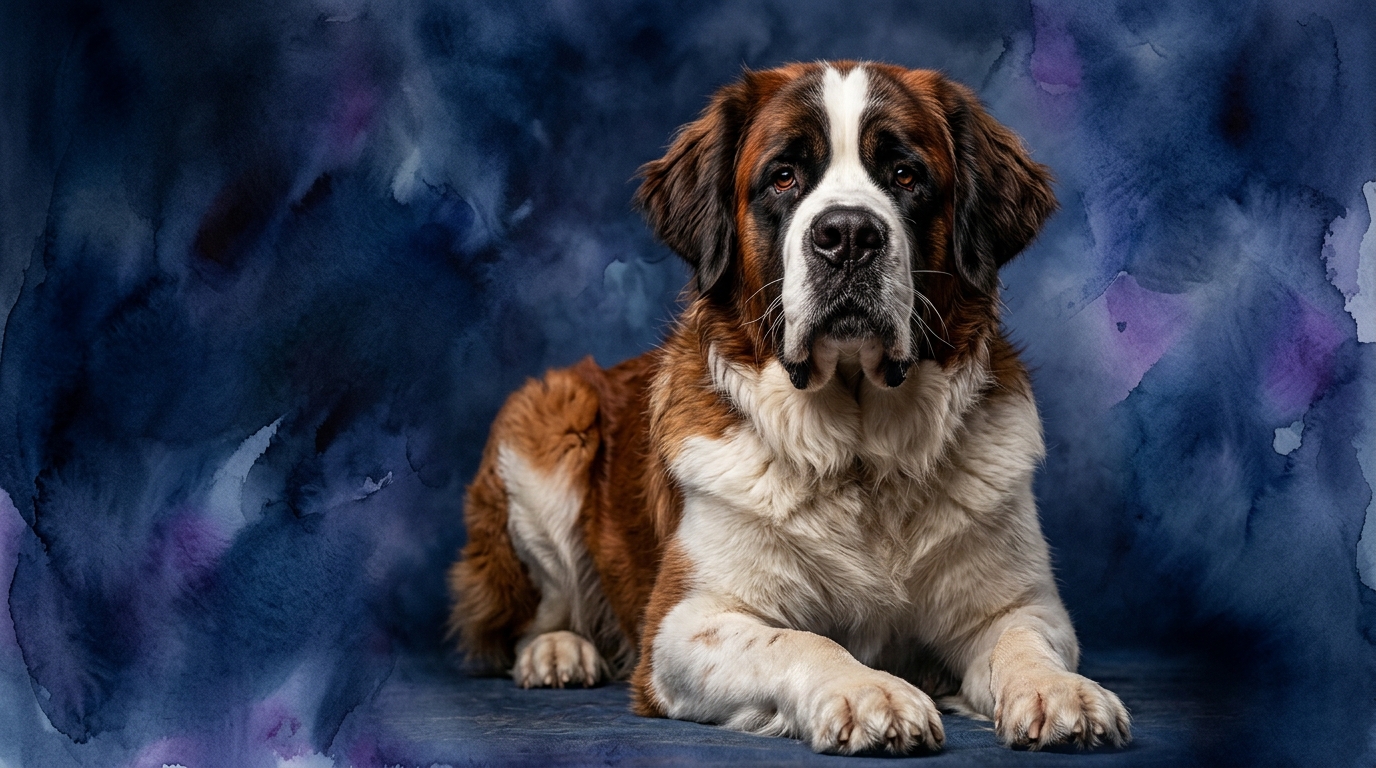
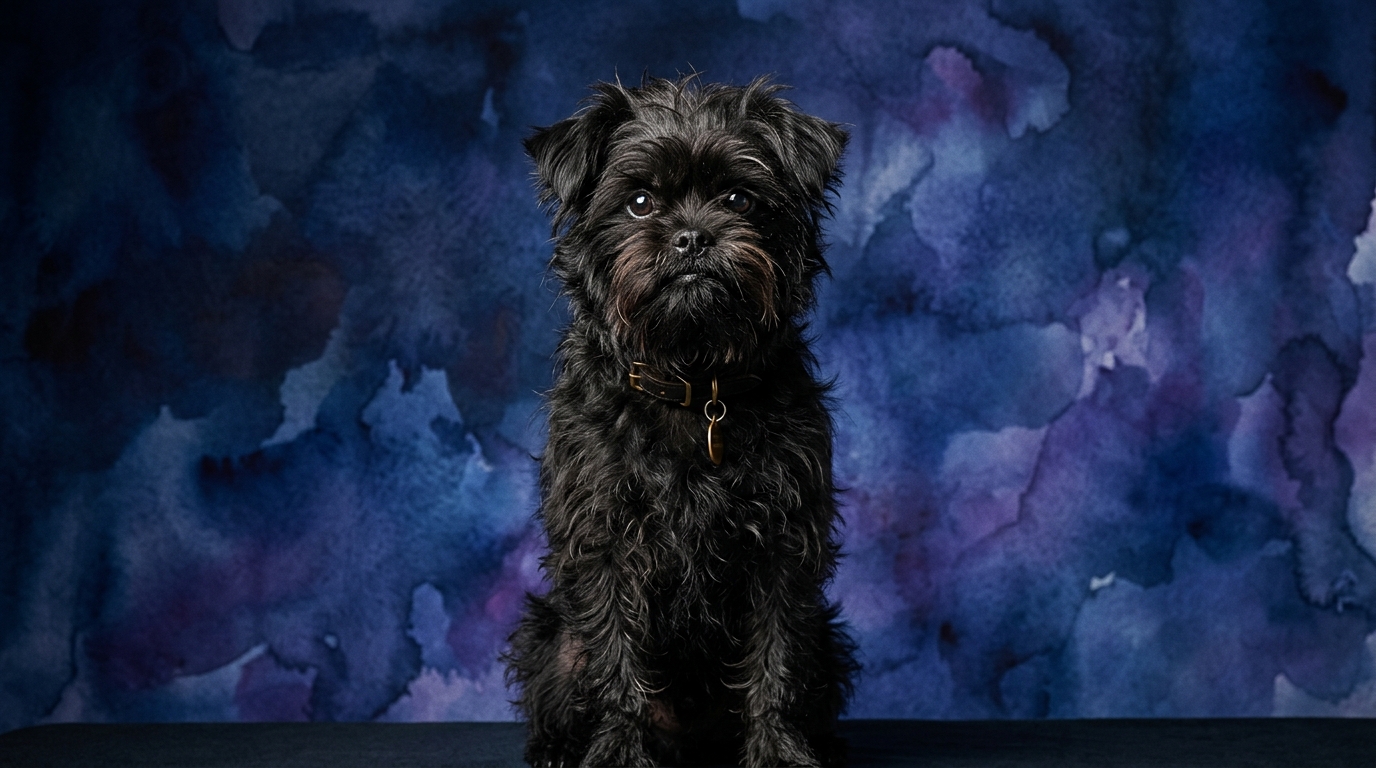
Side-by-Side IQ Profile: Saint Bernard vs. Affenpinscher
Our Cosmic Pet IQ Lab evaluates five key cognitive dimensions, painting a detailed picture of each breed's mental makeup. The Saint Bernard, ranked #65 in Coren's intelligence list, presents a profile reflecting its working heritage. Its Problem Solving is rated 3/5, indicating an ability to tackle moderately complex tasks, especially those linked to its historical roles, though it's not typically an innovator in novel situations. Training Speed is 2/5, meaning new commands require patience and consistent repetition to solidify. Social Intelligence shines at 4/5, showing exceptional attunement to human emotions and social cues. Instinctive Drive is a perfect 5/5, reflecting a profound innate desire for tasks related to its heritage, demonstrating unwavering intrinsic motivation. Memory is 3/5, retaining learned information and routines adequately.
The Affenpinscher, not Coren-ranked, offers a different set of cognitive strengths. Its Problem Solving is also 3/5, demonstrating a moderate ability to tackle challenges, often employing cleverness and persistence, particularly when motivated by curiosity or a desired outcome. Training Speed is 3/5, indicating an average pace for learning new commands with reasonable consistency and positive reinforcement. Social Intelligence is 3/5, understanding social interactions and emotional states adequately, forming strong bonds while often maintaining a watchful demeanor. Instinctive Drive is 3/5, exhibiting a balanced level of innate behaviors including curiosity and playfulness, without the intense, specialized drives of working breeds. Memory is 3/5, possessing typical capacity for recalling routines, commands, and familiar individuals effectively.
Where the Saint Bernard Wins Cognitively
The Saint Bernard's cognitive strengths distinctly shine in areas deeply rooted in their historical function as alpine rescue dogs and guardians. Their Social Intelligence, rated 4/5, far surpasses the Affenpinscher's 3/5, making them exceptionally empathetic and perceptive companions. This means a Saint Bernard is more likely to intuitively pick up on subtle changes in human mood, offering a gentle nudge or a comforting presence when their owner is distressed, without needing explicit cues. They excel at reading group dynamics within a family, understanding who needs space or who requires attention, a nuanced social skill vital for their role in multi-person rescue teams.
Furthermore, their Instinctive Drive, a perfect 5/5, is a profound cognitive advantage. This isn't just about physical energy; it's a deep-seated mental programming for purpose and perseverance. While an Affenpinscher has a balanced drive, the Saint Bernard possesses an unwavering mental tenacity to complete a task once engaged, whether it's 'finding' a lost hiker (even if it's just a family member hiding) or diligently patrolling their perceived territory. This drive translates into a deep satisfaction from having a 'job' and a cognitive persistence that fuels their actions, making them uniquely suited for roles demanding sustained focus and commitment beyond simple obedience. This contrasts sharply with the Affenpinscher, whose drives are more generalized and less intensely focused on a singular, demanding purpose.
Where the Affenpinscher Wins Cognitively
While the Saint Bernard leans into historical working roles, the Affenpinscher carves its niche with a distinct cognitive profile that prioritizes adaptability and quick processing for a companion lifestyle. The Affenpinscher's Training Speed, rated 3/5, subtly outperforms the Saint Bernard's 2/5. This means that while both breeds learn, the Affenpinscher typically grasps new commands and desired behaviors with fewer repetitions. They often show a quicker 'lightbulb moment' during training sessions, translating into more efficient learning and potentially a broader repertoire of tricks or obedience skills acquired in the same timeframe. This isn't about raw problem-solving capacity, where both are rated 3/5, but rather the speed at which new neural pathways for specific actions are formed and reinforced.
Their balanced Instinctive Drive (3/5) also offers a cognitive advantage in specific contexts. Unlike the Saint Bernard's intense, specialized drives, the Affenpinscher's more generalized drives mean they are less likely to be single-mindedly fixated on a particular task. This allows for greater flexibility in their attention and motivation, making them more amenable to a diverse range of activities and less prone to becoming frustrated if their 'job' isn't available. Their problem-solving, though rated equally, often manifests in clever, sometimes mischievous, ways to achieve personal goals, like figuring out how to reach a treat or manipulate a toy, reflecting a nimble, inquisitive mind well-suited to navigating a domestic environment with ingenuity.
Which is Easier to Train and Why
When considering ease of training, the Affenpinscher generally presents a more straightforward experience for the average owner, primarily due to its faster Training Speed (3/5 compared to the Saint Bernard's 2/5). An Affenpinscher is more likely to pick up basic commands like 'sit,' 'stay,' or 'come' with fewer repetitions and in shorter training sessions. Their cognitive processing for new information tends to be quicker, and they often respond well to positive reinforcement, eager to engage in activities that yield rewards. While they can have an independent streak, their smaller stature means that even if they decide to be stubborn, their physical manageability makes redirection simpler.
The Saint Bernard, on the other hand, requires a more patient and consistent approach. Their slower Training Speed (2/5) means that new concepts take longer to solidify. What an Affenpinscher might learn in three sessions, a Saint Bernard might need five or six. This isn't a deficit in their ability to learn, but rather a difference in their processing pace and decision-making. Their strong Instinctive Drive (5/5), while valuable for specific roles, can sometimes translate into a focused determination that makes them less flexible if they've decided on a course of action, or if their innate drives conflict with a training command. For instance, if a Saint Bernard's guarding instinct kicks in, it might override a 'stay' command more readily than a toy breed's general curiosity. Their sheer size also means that any lack of training or willful behavior can become physically challenging to manage, underscoring the necessity of early, consistent, and well-structured training, even if it progresses at a more deliberate speed.
Which Suits Active Owners vs. Relaxed Owners
The Saint Bernard, despite its imposing size, is often suited for owners who are more relaxed in terms of high-intensity physical activity but profoundly active in their commitment to companionship and a structured, purposeful life. While they require regular, moderate exercise to maintain their health – a good daily walk and some yard time – they are not typically candidates for agility courses or marathon running. Their 'active' requirement is more cognitive and social; they thrive with owners who provide consistent social interaction, gentle mental stimulation, and opportunities to engage their strong Instinctive Drive, even if it's just 'guarding' the house from the couch or participating in family activities. They need an owner who is 'active' in providing a stable, loving environment and acknowledging their deep social intelligence, rather than demanding constant physical exertion.
The Affenpinscher, conversely, can be an excellent fit for owners who enjoy a more flexible kind of 'active' lifestyle. While they don't demand vast amounts of strenuous exercise, their nimble problem-solving and quicker training speed mean they often enjoy varied mental and moderate physical activities. They can be enthusiastic participants in short, engaging play sessions, learning new tricks, or accompanying their owners on errands. Their compact size makes them portable companions for urban adventures or trips, suiting owners who want a dog that can easily adapt to different environments and participate in a range of daily activities without requiring extensive dedicated outdoor excursions like a working breed might. Their moderate instinctive drive means they are generally less demanding of a specific 'job' and more content to be an involved, curious family member.
The Verdict
Choose a Saint Bernard if you seek an incredibly empathetic, purpose-driven companion for a stable home, valuing deep social bonds and a gentle giant who thrives on a sense of belonging and a deliberate pace of life.
Opt for an Affenpinscher if you desire a clever, adaptable, and quicker-to-train companion who enjoys varied mental stimulation and can easily integrate into a more flexible, dynamic lifestyle.
🧠 Find Your Pet's IQ Score
Our Pet IQ Lab assessment covers 25+ tests across 5 cognitive dimensions — personalized to your breed.
Take the Full IQ Test →Frequently Asked Questions
Do Saint Bernards truly have a 'rescue instinct'?
Yes, their 5/5 Instinctive Drive reflects a historical breeding for search and rescue in the Alps. This drive manifests as a natural inclination towards seeking, aiding, and bonding deeply with people, making them profoundly attentive and protective companions.
Is an Affenpinscher a good choice for first-time dog owners?
An Affenpinscher can be suitable for first-time owners due to their average training speed and manageable size, making basic obedience relatively accessible. However, their sometimes independent nature means consistent, positive training is still essential for success.
How does size relate to intelligence in these breeds?
Our IQ Lab data shows that size doesn't directly correlate with overall cognitive scores; both breeds have a 3/5 in problem-solving and memory. Their cognitive strengths lie in different areas, with the Saint Bernard excelling in social intelligence and the Affenpinscher in training speed, demonstrating that intelligence manifests uniquely across breeds.