
Side-by-Side Cognitive Profiles: Gentle Giant vs. Spirited Terrier
The Saint Bernard, a member of the Working Group, presents a cognitive profile shaped by centuries of lifesaving work in the Swiss Alps. Its Problem Solving ability is rated at 3/5, indicating a moderate capacity for navigating complex situations independently, often relying on learned patterns rather than spontaneous innovation. Training Speed for the Saint Bernard is 2/5, suggesting that acquiring new commands requires patience and consistent repetition, reflecting a deliberate learning style. Where this breed truly shines is in Social Intelligence, scoring 4/5, demonstrating a profound understanding of human emotions and social cues, crucial for its historical role. Its Instinctive Drive is a commanding 5/5, underscoring a powerful, innate urge for specific tasks, such as tracking and guarding. Memory for the Saint Bernard is 3/5, indicating a solid ability to retain information and experiences over time.
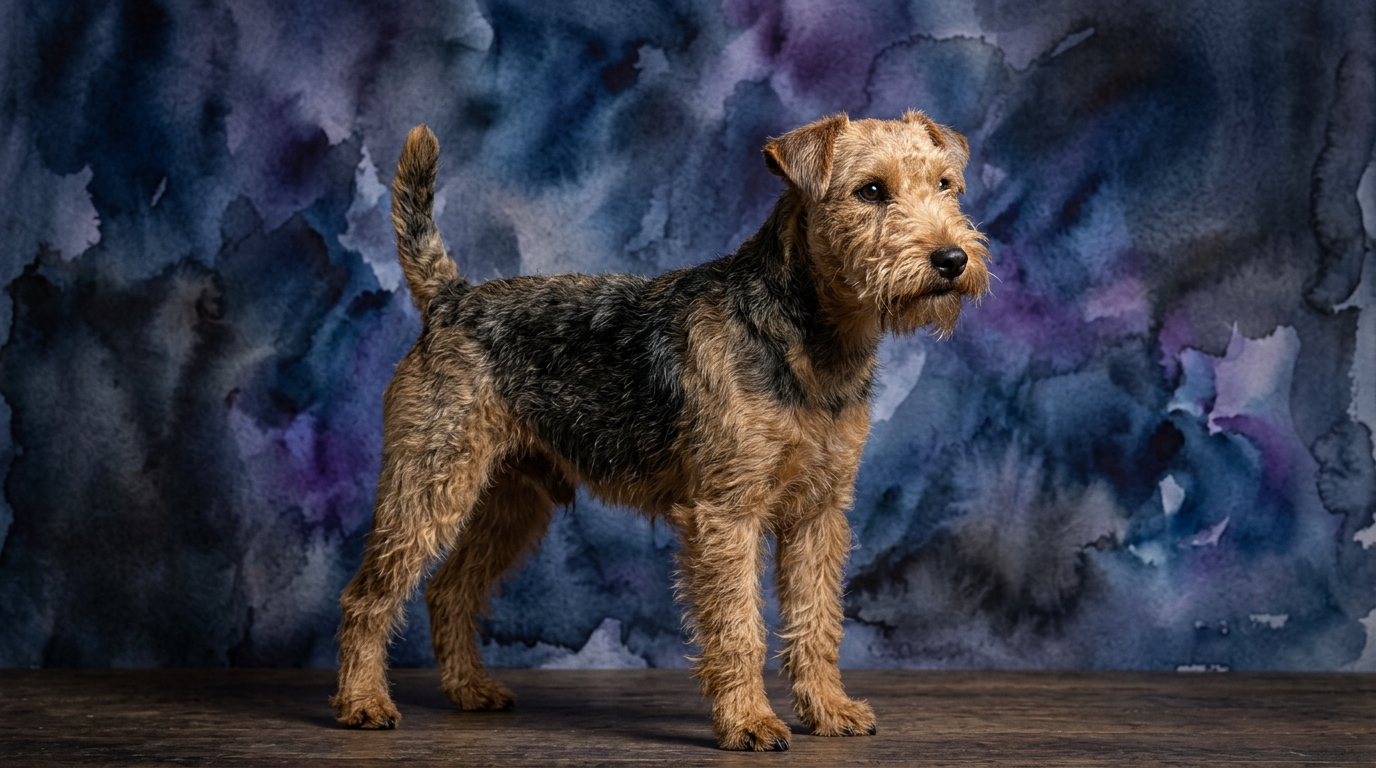
In contrast, the Lakeland Terrier, belonging to the Terrier Group, offers a distinct cognitive makeup, optimized for independent hunting and pest control. Its Problem Solving ability is also rated at 3/5, similar to the Saint Bernard, suggesting it can figure out challenges, albeit often with a terrier's signature tenacity and sometimes stubbornness. The Lakeland Terrier's Training Speed is 3/5, indicating it generally picks up new commands more readily than the Saint Bernard, possessing a quicker grasp of associations. Social Intelligence for this breed is 3/5, showing a functional understanding of its human companions, but perhaps with less overt empathy than the Saint Bernard. Its Instinctive Drive is 3/5, present but less overwhelmingly specialized than the Saint Bernard's, often manifesting as a strong prey drive. Memory for the Lakeland Terrier is 3/5, on par with the Saint Bernard, allowing it to remember routines, commands, and experiences effectively.
Where the Saint Bernard Exhibits Cognitive Strengths
The Saint Bernard's cognitive strengths distinctly emerge in areas demanding profound emotional perception and a powerful, directed purpose. With a Social Intelligence score of 4/5, significantly higher than the Lakeland Terrier's 3/5, the Saint Bernard demonstrates a superior capacity for reading and responding to human emotional states. This translates into an intuitive understanding of distress, making them naturally empathetic companions and historically, effective rescuers. They often seem to anticipate needs and offer comfort, exhibiting a nuanced social awareness that goes beyond simple obedience.
Furthermore, the Saint Bernard's Instinctive Drive, rated at an impressive 5/5, is a defining cognitive advantage. This isn't merely about physical strength, but a deep-seated, unwavering motivation towards specific, often altruistic, tasks. This drive manifests as a persistent focus once engaged in a task, such as tracking or guarding, making them exceptionally reliable when their natural inclinations are properly channeled. While their Problem Solving is moderate, their intense drive combined with their social acuity allows them to navigate complex human-centric situations with a steadfast resolve that is less pronounced in the Lakeland Terrier.
Where the Lakeland Terrier Exhibits Cognitive Strengths
The Lakeland Terrier's cognitive profile showcases particular strengths in adaptability and a quicker acquisition of new behaviors, making it a nimble learner in certain contexts. Its Training Speed, rated at 3/5, surpasses the Saint Bernard's 2/5, indicating that Lakeland Terriers typically form associations between commands and actions with greater efficiency. This means they often require fewer repetitions to grasp a new trick or command, making initial training sessions potentially more dynamic and less drawn out. This quicker uptake can be a significant advantage for owners who enjoy teaching a variety of commands and engaging in diverse canine sports.
While both breeds share a Problem Solving score of 3/5, the Lakeland Terrier's approach often involves a tenacious, independent streak. Their problem-solving isn't necessarily about grand, altruistic tasks, but rather about resourcefulness in navigating their immediate environment, often with a goal-oriented focus characteristic of terriers. This manifests in their ability to figure out how to access desired items or overcome obstacles, often through persistent trial and error rather than waiting for human intervention. This independent problem-solving, coupled with their faster learning pace, provides them with a cognitive edge in adapting to new environments and challenges that require individual initiative.
Ease of Training: Patience vs. Persistence
When considering ease of training, the distinction between the Saint Bernard and the Lakeland Terrier becomes apparent, primarily due to their differing Training Speed scores and behavioral tendencies. The Saint Bernard, with a Training Speed of 2/5, requires significant patience and consistent methods. They are not quick to pick up new commands and thrive on gentle, repetitive reinforcement. Their strong Social Intelligence means they are eager to please their human companions, but their learning process is more deliberate. Training a Saint Bernard often involves breaking tasks into smaller steps and celebrating incremental successes, recognizing that their large physical presence doesn't always translate to rapid cognitive processing of new instructions. Owners should be prepared for a longer, more thoughtful training journey, focusing on building a strong bond and clear communication.
The Lakeland Terrier, with a Training Speed of 3/5, generally learns new commands more quickly. They are often more responsive to varied training techniques and can progress through obedience tasks at a faster pace. However, their terrier nature introduces a different kind of training challenge: persistence and independence. While they grasp concepts rapidly, their instinctive drives and independent spirit can lead to stubbornness or a tendency to follow their own agenda, especially if a more interesting scent or sight captures their attention. Successful training with a Lakeland Terrier requires engaging their active minds, maintaining consistency, and employing positive reinforcement to channel their spirited energy. While they learn faster, managing their inherent tenacity demands a firm, fair, and engaging approach to prevent them from becoming bored or deciding they know better.
Matching Canine Companions to Lifestyles
The distinct cognitive and behavioral profiles of the Saint Bernard and Lakeland Terrier lend themselves to very different owner lifestyles. The Saint Bernard, with its high Social Intelligence and profound Instinctive Drive, is an ideal fit for relaxed owners who value companionship, emotional connection, and a steady, gentle presence. These owners should appreciate a dog that is deliberate in its actions and requires a consistent, patient approach to training. They thrive in environments where they can be integral family members, offering quiet reassurance and a watchful, if not overly active, presence. Owners who enjoy long, slow walks, quiet evenings, and a deeply empathetic companion will find the Saint Bernard's nature profoundly rewarding. Their substantial size means they need space, but their activity levels are generally moderate, making them suitable for owners who prefer a calmer pace of life.
Conversely, the Lakeland Terrier, with its quicker Training Speed, moderate Instinctive Drive, and independent problem-solving, is better suited for active owners. These individuals should be prepared for a spirited, energetic companion that thrives on mental engagement and physical activity. Lakeland owners often enjoy dog sports such as agility, earthdog trials, or advanced obedience, where the terrier's quick wit and tenacious spirit can be channeled productively. They need consistent stimulation to prevent boredom, which can lead to undesirable behaviors. Owners who appreciate a dog with a strong personality, a mischievous streak, and a desire to be involved in adventures will find the Lakeland Terrier a vibrant and engaging partner. Their compact size belies a significant energy output, demanding owners who can provide ample opportunities for exercise, exploration, and challenging cognitive tasks.
The Verdict
Choose the Saint Bernard if you seek a deeply empathetic, patient companion with a strong, gentle presence, and you are prepared for a deliberate training pace.
Opt for the Lakeland Terrier if you desire an energetic, quick-witted partner for an active lifestyle, capable of learning rapidly but requiring consistent engagement to manage its independent spirit.
🧠 Find Your Pet's IQ Score
Our Pet IQ Lab assessment covers 25+ tests across 5 cognitive dimensions — personalized to your breed.
Take the Full IQ Test →Frequently Asked Questions
How does social intelligence differ between these two breeds?
The Saint Bernard exhibits superior social intelligence (4/5), meaning they are highly attuned to human emotions and social cues, often anticipating needs. The Lakeland Terrier (3/5) possesses a functional understanding but demonstrates less overt emotional empathy, focusing more on direct interactions and personal goals.
Which breed is generally more independent?
The Lakeland Terrier tends to be more independent, a trait stemming from its historical role as an earthdog working alone. While both breeds show moderate problem-solving, the terrier's approach often involves more self-directed initiative compared to the Saint Bernard's more people-oriented problem-solving within a task.
Do their memory scores impact daily life differently?
Both breeds share a 3/5 memory score, suggesting a similar capacity to recall commands, routines, and experiences. In daily life, this means both can effectively remember training, familiar faces, and established household rules, though the Saint Bernard's deliberate learning might make initial recall slower than the Lakeland Terrier's quicker grasp.