
Side-by-Side Cognitive Profile: Saint Bernard vs. Westie
The Cosmic Pet Pet IQ Lab employs five key dimensions to evaluate canine intelligence, offering a nuanced understanding beyond simple obedience. For the Saint Bernard, ranked #65 on the Coren scale, their profile reveals a unique blend of strengths. Their Problem Solving is rated 3/5, indicating a practical, methodical approach to real-world challenges rather than abstract puzzles. Training Speed is 2/5, suggesting a deliberate learning pace that requires patience. Their Social Intelligence shines at 4/5, reflecting a profound capacity for empathy and understanding human dynamics. An exceptional Instinctive Drive of 5/5 highlights their deep-seated purpose, while Memory is a solid 3/5, reliable for routines and familiar contexts.
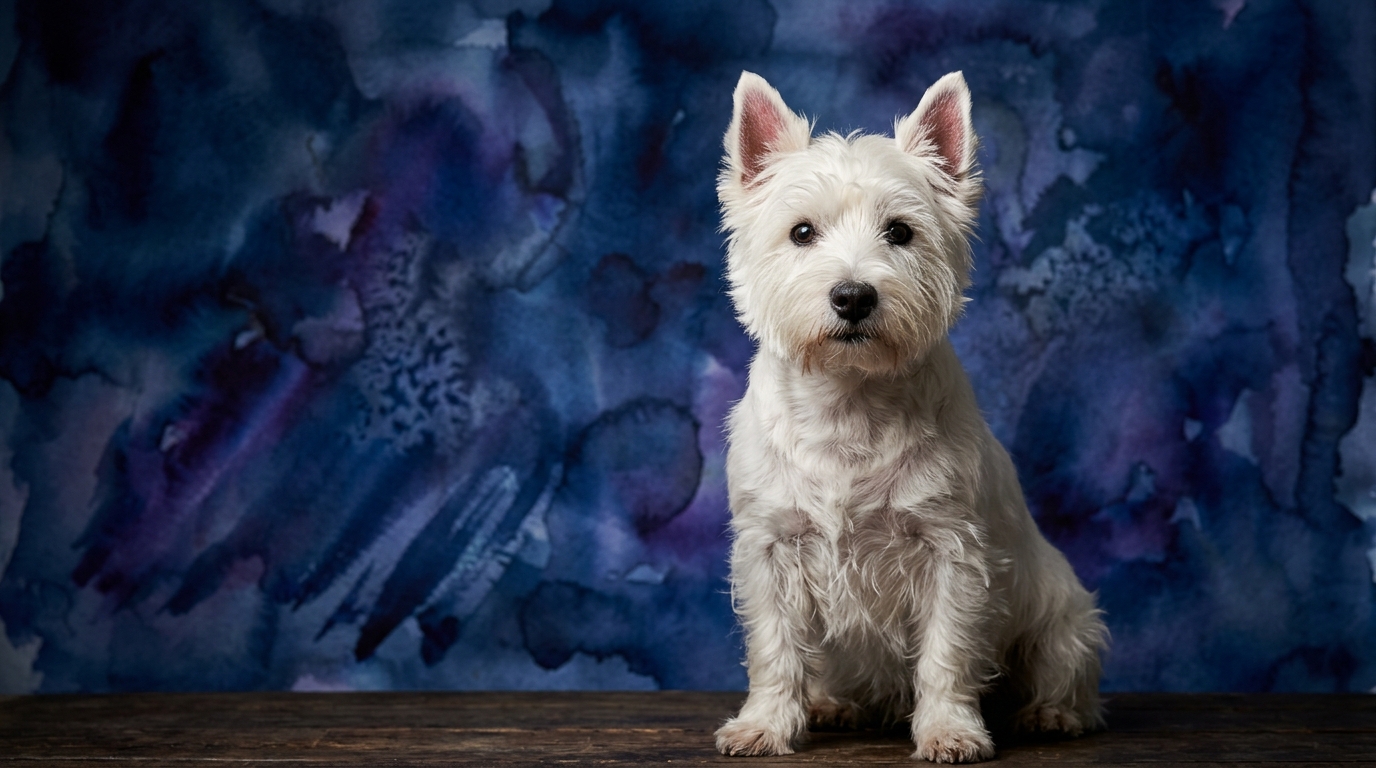
In contrast, the West Highland White Terrier, holding a higher Coren rank at #47, presents a different cognitive blueprint. Their Problem Solving is also 3/5, but often characterized by cleverness and tenacity in achieving immediate goals. Training Speed is 3/5, indicating a moderate learning pace, though often influenced by their independent streak. Social Intelligence stands at 3/5, adept at navigating their human environment with charm. Their Instinctive Drive is 3/5, channeled primarily into exploration and independent activities. Notably, their Memory is 4/5, suggesting a strong capacity for retaining commands and learning from experiences.
Where the Saint Bernard Wins Cognitively
The Saint Bernard's cognitive strengths are deeply rooted in their historical function as companions and rescuers in the challenging alpine environment. Their Social Intelligence (4/5 compared to the Westie's 3/5) stands out significantly. They possess an exceptional ability to read and respond to human emotions, often displaying a profound empathy that goes beyond mere recognition of cues. This manifests as an intuitive sense of when a family member needs comfort, or a patient, reassuring presence during times of distress. Their connection is not just about understanding commands, but about forging a deep emotional bond, making them unparalleled as steady, supportive companions who genuinely attune to the emotional landscape of their human household.
Furthermore, their Instinctive Drive (5/5 versus the Westie's 3/5) is a testament to their heritage. This isn't just a general energy level; it's a powerful, sustained mental fortitude geared towards purposeful work, specifically search and rescue. A Saint Bernard exhibits immense focus and perseverance when given a task, such as tracking a scent or navigating difficult terrain, demonstrating a mental resilience to continue despite obstacles. This drive is intrinsically linked to their capacity for endurance and their unwavering commitment to a perceived mission, showcasing a specialized cognitive framework for sustained, goal-oriented effort in service to others.
Where the West Highland White Terrier Wins Cognitively
The West Highland White Terrier showcases cognitive advantages that reflect their role as agile, independent earthdogs. Their Coren rank of #47, significantly higher than the Saint Bernard's #65, indicates a generally quicker uptake of new commands and a greater capacity for obedience intelligence under ideal conditions. This translates into a more rapid initial learning phase for basic cues. Coupled with their superior Memory (4/5 versus the Saint Bernard's 3/5), Westies are often quicker to recall learned behaviors and apply them in various contexts. This enhanced memory allows them to build a larger repertoire of commands and learn from experiences more efficiently, contributing to their adaptability in diverse situations.
While both breeds share a Problem Solving rating of 3/5, the nature of their problem-solving differs. The Westie's approach is often characterized by resourceful, independent ingenuity, particularly when it involves accessing something or outsmarting a perceived barrier. They display a cleverness in navigating their immediate environment to achieve personal goals, whether it’s figuring out how to get to a hidden treat or finding a novel way to explore. This opportunistic and agile mental approach, combined with their Training Speed (3/5 versus the Saint Bernard's 2/5), means that while they might be stubborn, they can master new tasks and complex sequences faster if the training engages their innate curiosity and drive.
Which is Easier to Train and Why?
When considering ease of training, the West Highland White Terrier generally presents a more straightforward path for basic obedience, despite their independent nature. Their higher Coren ranking (#47) and superior Training Speed (3/5) mean they typically grasp new commands more quickly than a Saint Bernard. A Westie's Memory (4/5) also allows for better retention of these lessons, meaning less frequent refreshers are needed once a command is learned. However, their strong prey drive and inherent terrier tenacity mean that training requires consistency, engaging methods, and a firm but fair approach. They might challenge an owner's authority more, testing boundaries, but once motivated – often through play, treats, or leveraging their curiosity – they can achieve a high level of obedience with relative speed. Their smaller size also makes managing any training lapses less physically demanding.
Conversely, the Saint Bernard, with a Training Speed of 2/5, requires considerably more patience and repetition. While they are eager to please and possess high social intelligence, their sheer size and deliberate processing style mean they learn at a slower, more methodical pace. Commands need to be broken down into smaller steps, and each step reinforced consistently over time. Their physical presence also dictates that early and consistent training in leash manners and impulse control is critical; an untrained Saint Bernard can be physically challenging to manage due to their immense strength. Their training success hinges on an owner’s commitment to a calm, positive, and exceptionally consistent regimen, understanding that progress will be steady rather than rapid. Their social intelligence means they respond well to positive reinforcement and a strong bond with their trainer, but their cognitive processing speed for complex commands is simply slower.
Which Suits Active Owners vs. Relaxed Owners?
For active owners seeking a dynamic companion, the West Highland White Terrier is often the more fitting choice. Their inherent terrier energy, combined with a strong instinctive drive for exploration and chasing (3/5), means they thrive on regular, varied physical and mental stimulation. They enjoy brisk walks, engaging play sessions, and opportunities to sniff and investigate their surroundings. Owners who enjoy hiking, agility, or even consistent, vigorous playtime in a secure yard will find a Westie a willing and enthusiastic participant. Their clever problem-solving (3/5) also means they benefit from puzzle toys and training games that challenge their minds, preventing boredom and potential mischief. They are not content to simply lounge for extended periods; they require an owner who can consistently provide outlets for their spirited nature.
In contrast, the Saint Bernard is better suited for more relaxed owners who appreciate a calm, steady presence. While they certainly require daily walks for health and mental well-being, their overall energy output is considerably lower than a Westie's, particularly as adults. Their sheer size means intense, prolonged exercise can be taxing, and they prefer a more leisurely pace. Their high social intelligence (4/5) means they thrive on close companionship and being an integrated, comforting part of family life, often content to simply be near their humans. Owners who enjoy quiet evenings at home, gentle strolls, and appreciate a dog whose primary joy is offering a comforting, stable presence will find the Saint Bernard to be an ideal, gentle giant, perfectly content with a less frenetic lifestyle.
The Verdict
Choose a Saint Bernard if you seek a profoundly empathetic, patient companion with a deep capacity for social bonding, and value a calm, gentle giant who thrives on offering comfort and a steady presence in a more relaxed home environment.
Choose a West Highland White Terrier if you prefer a spirited, clever, and adaptable companion with a keen memory, who enjoys engaging activities and can be trained to a high standard with consistent, motivating methods, fitting into an active lifestyle.
🧠 Find Your Pet's IQ Score
Our Pet IQ Lab assessment covers 25+ tests across 5 cognitive dimensions — personalized to your breed.
Take the Full IQ Test →Frequently Asked Questions
Do Saint Bernards truly have a strong rescue instinct?
Yes, their instinctive drive (5/5) is historically rooted in their work as alpine rescue dogs, making them highly motivated by purposeful tasks, especially those involving finding and aiding. This isn't just an anecdote; it's a deeply ingrained behavioral pattern that still manifests today.
Are Westies difficult to train due to their independence?
While West Highland White Terriers have an independent streak, their training speed (3/5) and memory (4/5) mean they are capable learners. Consistency, positive reinforcement, and making training fun and engaging are key to harnessing their intelligence effectively and overcoming their stubborn tendencies.
How does social intelligence manifest differently in these two breeds?
The Saint Bernard's high social intelligence (4/5) often appears as deep empathy and a desire for close, comforting interaction, offering a steady emotional anchor. The Westie's (3/5) is more about navigating their immediate human environment with charm and resourcefulness to get their needs met, often with a playful assertiveness.