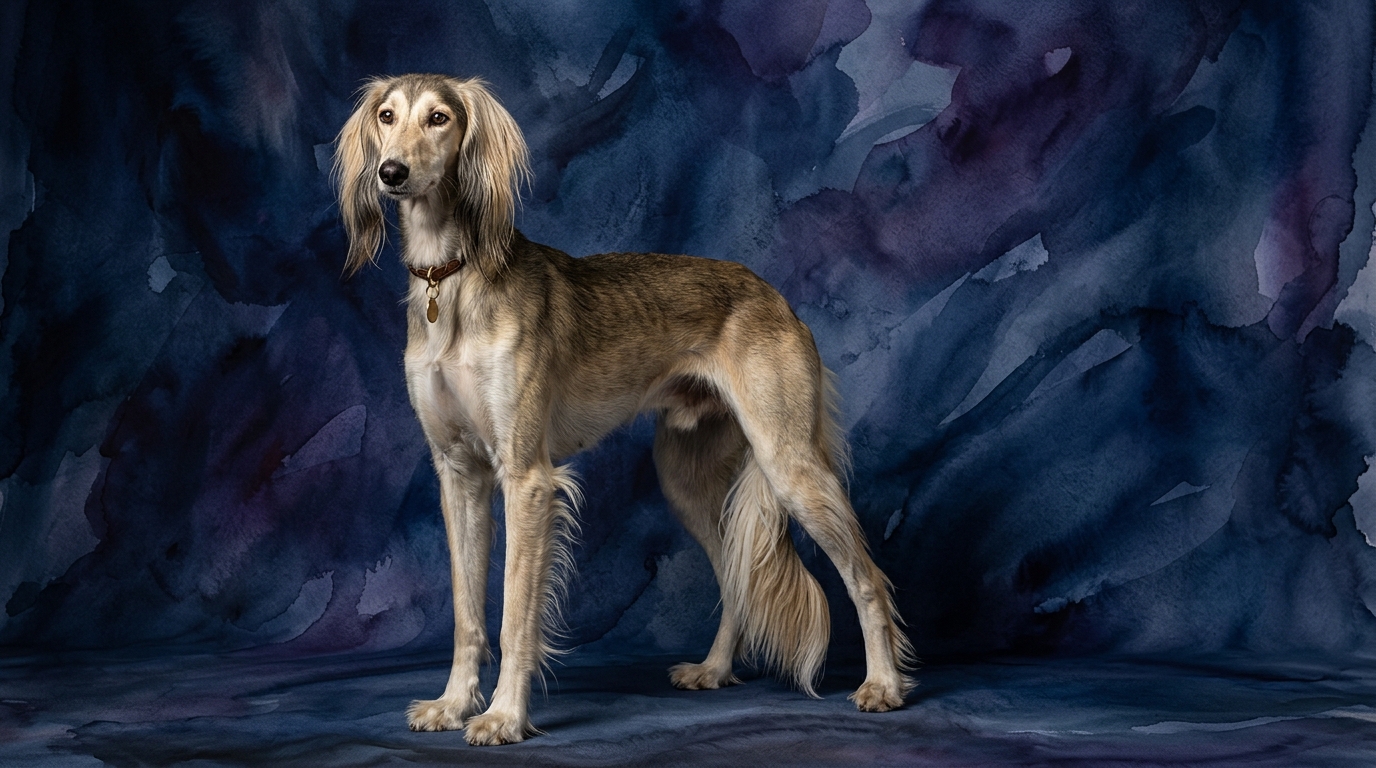
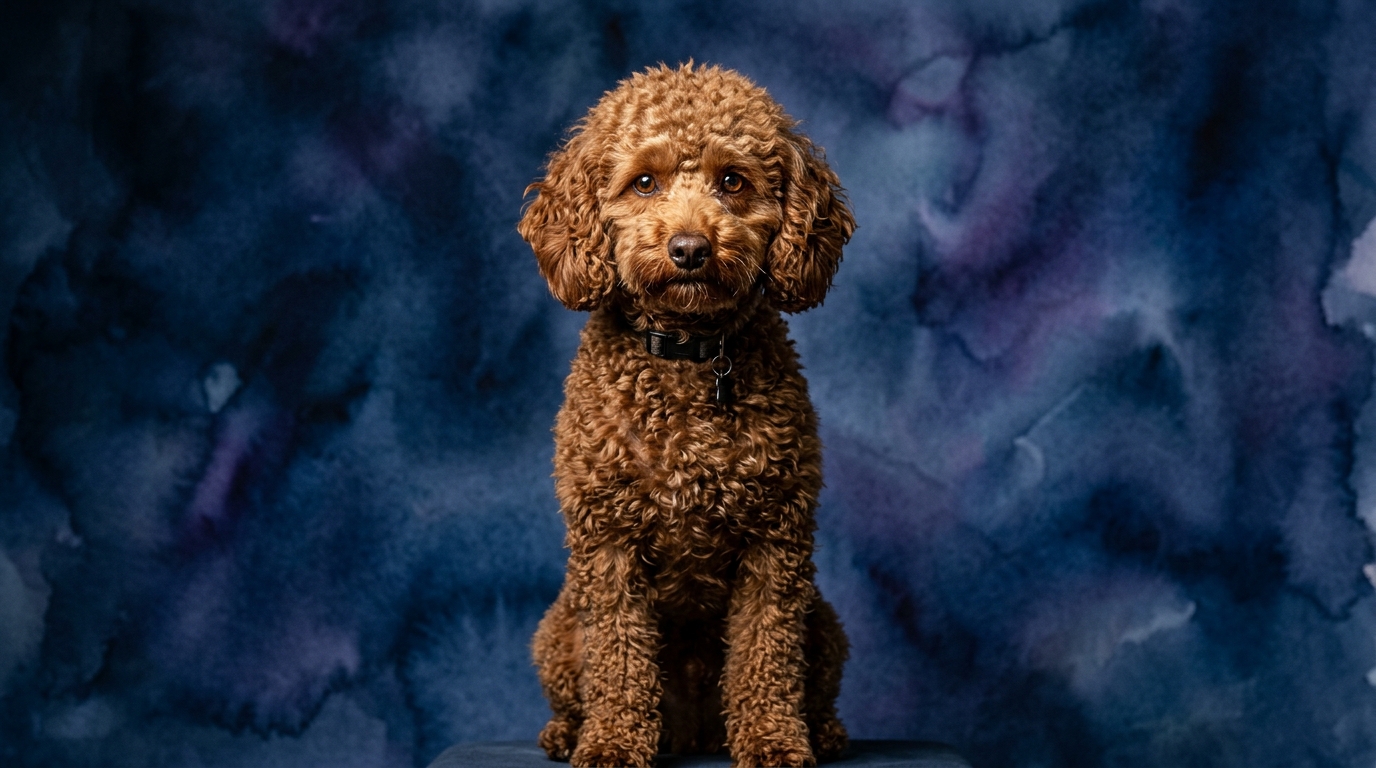
Side-by-Side Cognitive Profile: Saluki vs. Miniature Poodle
The Cosmic Pet Pet IQ Lab provides a unique lens through which to examine the cognitive landscapes of different breeds. For the Saluki, a hound breed not ranked by Coren, its scores paint a picture of an elegant, self-reliant thinker. Its Problem Solving stands at 3/5, indicating a methodical, often independent approach to challenges, preferring to figure things out on its own terms rather than seeking immediate human direction. Training Speed is also 3/5, suggesting that while capable of learning, it requires patience, consistency, and motivation tailored to its individualistic nature. Social Intelligence, at 3/5, reflects a discerning demeanor; Salukis form deep, loyal bonds but are not typically effusive with strangers. Their Instinctive Drive, also 3/5, is predominantly expressed through their sighthound heritage, focusing on pursuit and visual tracking. Finally, Memory at 3/5 means they retain routines and learned behaviors adequately, though perhaps not with the instantaneous recall seen in breeds eager for constant instruction.
In stark contrast, the Miniature Poodle, a Non-Sporting breed with an impressive Coren rank of #2, showcases a different set of cognitive strengths. Its Problem Solving is rated at a maximum 5/5, indicating a quick, adaptable mind capable of complex thought and abstract reasoning, often enjoying mental puzzles and novel situations. Training Speed also reaches 5/5, meaning Miniature Poodles grasp new commands and concepts with remarkable rapidity, eager to engage in cooperative learning. Their Social Intelligence, at 3/5, mirrors the Saluki in its discernment, but often manifests as a keen observation of human cues and environmental changes, sometimes leading to sensitivity. Instinctive Drive, rated 3/5, leans towards retrieving and companion-oriented behaviors rather than predatory pursuit. Crucially, their Memory is a stellar 5/5, allowing them to retain a vast repertoire of commands, routines, and experiences with exceptional clarity and recall.
Where the Saluki Cognitively Excels
While its scores may appear moderate compared to the Poodle's peaks, the Saluki's cognitive strengths lie in its independent thought and focused determination. Its 3/5 in Problem Solving signifies a dog that can assess situations and devise solutions without constant human intervention, a trait invaluable in its historical role as a sighthound navigating varied terrain to pursue game. This isn't a lack of ability, but a preference for self-directed action. For instance, a Saluki might methodically work out how to open a gate through observation and trial-and-error, driven by its own agenda, rather than waiting for a cue. This self-reliance means they are less prone to 'learned helplessness' and can often make astute decisions in novel environments.
Furthermore, the Saluki's 3/5 Instinctive Drive, while not the highest score, is intensely focused. This drive manifests as an unparalleled ability to spot, track, and pursue moving objects over long distances. This specialized cognitive function, honed over centuries, involves rapid visual processing, spatial reasoning, and sustained focus on a singular objective that few breeds can match. Their memory, at 3/5, is perfectly adequate for retaining the patterns and landmarks necessary for their sighthound activities, ensuring they remember effective hunting routes or safe boundaries in familiar spaces. Their social intelligence, though not outwardly demonstrative, allows for deep, nuanced bonds with their chosen few, built on mutual respect rather than overt eagerness to please.
Where the Miniature Poodle Cognitively Shines
The Miniature Poodle's cognitive prowess is evident across multiple dimensions, particularly in its capacity for rapid, complex learning and exceptional memory. With a 5/5 in Problem Solving, these dogs actively seek out mental challenges, demonstrating an almost insatiable curiosity. They excel at deciphering puzzle toys, learning multi-step commands, and adapting quickly to new environments or training methods. This high problem-solving ability means they don't just follow instructions; they understand the underlying concepts, allowing them to generalize learned behaviors to new contexts with ease, a hallmark of flexible intelligence. This cognitive agility makes them exceptional candidates for advanced obedience, agility, and even scent work, where understanding intricate rules and patterns is key.
Complementing their problem-solving skill is their 5/5 Training Speed. Miniature Poodles are renowned for their ability to pick up new cues and behaviors almost instantaneously, often requiring fewer repetitions than many other breeds. This rapid uptake stems from a combination of eagerness to please, attentiveness to human communication, and that powerful 5/5 Memory. They remember commands, routines, and even subtle social cues with remarkable fidelity, making them incredibly consistent once a behavior is learned. Their social intelligence, at 3/5, contributes to their trainability by allowing them to keenly observe and interpret human intentions, often anticipating what is being asked of them. This combination of cognitive traits makes the Miniature Poodle a highly cooperative and engaging partner in almost any activity involving human interaction.
Training Dynamics: Saluki vs. Miniature Poodle
When it comes to ease of training, the Miniature Poodle clearly holds an advantage due to its 5/5 Training Speed and 5/5 Problem Solving. Their eagerness to engage, coupled with their exceptional memory and ability to quickly grasp new concepts, means they often make rapid progress in obedience and trick training. They thrive on positive reinforcement, praise, and the mental stimulation of learning, often appearing to enjoy the process itself. Their cooperative nature means they are generally focused on their handler, making it easier to maintain attention even in distracting environments. Real behavioral differences include their tendency to offer behaviors readily, their ability to generalize a command learned in one context to another, and their excellent recall of an extensive vocabulary of cues, making them highly responsive companions.
The Saluki, with its 3/5 in both Training Speed and Problem Solving, presents a different training experience. It's not that Salukis are untrainable; rather, they require a more nuanced approach. Their independent spirit means they often need compelling reasons to comply, and their focus might be more on their environment than on their handler, particularly if their sighthound instincts are piqued. Training a Saluki often involves more patience, repetition, and creative motivation to capture their interest. They respond best to positive reinforcement and methods that respect their autonomy, rather than forceful commands. For instance, teaching a Saluki recall requires building a strong, positive association with coming when called, often over a longer period, recognizing that their instinctive drive to chase may momentarily override learned behaviors. Their memory, while good for routines, may not be as expansive for a vast array of complex commands as the Poodle's.
Ideal Owner Lifestyles: Active vs. Engagement-Focused
The Saluki, with its 3/5 Instinctive Drive centered on sighthound activities, thrives with owners who can provide consistent, structured outlets for its athletic capabilities. This often means secure, expansive areas for running, or participation in lure coursing. While elegant and quiet indoors, their need for physical exertion is significant. Owners who enjoy long, brisk walks, regular access to safely enclosed spaces for galloping, and appreciate a discerning, independent companion will find the Saluki a rewarding match. They are not necessarily 'active' in the sense of constantly seeking engagement from their owner, but rather require owners who understand and facilitate their need for specific types of exercise that align with their inherent drives. A relaxed owner who cannot provide these outlets may find a Saluki restless or prone to finding its own (potentially destructive) entertainment.
The Miniature Poodle, conversely, suits owners who are active in terms of engagement and mental stimulation. While they are athletic and enjoy physical exercise, their 5/5 Problem Solving and Training Speed mean they truly flourish when their minds are consistently challenged. Owners who enjoy teaching new tricks, participating in dog sports like agility or obedience, or even just engaging in daily puzzle play and interactive games will find the Miniature Poodle an eager and enthusiastic partner. Their social intelligence and memory make them excellent companions for varied activities and new experiences. A 'relaxed' owner for a Miniature Poodle is one who still prioritizes consistent mental enrichment and cooperative activities, as a lack of intellectual engagement can lead to boredom and undesirable behaviors, despite their adaptable nature.
The Verdict: When to Choose Each Companion
The Verdict
Choose a Saluki if you appreciate an independent, elegant companion with a quiet demeanor indoors, are prepared to provide secure, expansive areas for its unique sighthound exercise needs, and approach training with patience and respect for its self-reliant nature.
Opt for a Miniature Poodle if you seek a highly trainable, versatile companion eager for cooperative activities, mental challenges, and consistent engagement, thriving on learning new things and forming a close, interactive bond.
🧠 Find Your Pet's IQ Score
Our Pet IQ Lab assessment covers 25+ tests across 5 cognitive dimensions — personalized to your breed.
Take the Full IQ Test →Frequently Asked Questions
Is a Saluki difficult to train?
With a 3/5 training speed, Salukis are not inherently difficult but require more patience, consistency, and motivation than breeds eager to please. They respond best to positive reinforcement and methods that respect their independent, often self-directed nature.
What kind of mental stimulation does a Miniature Poodle need?
Given their 5/5 problem-solving and memory, Miniature Poodles thrive on constant mental engagement. This includes puzzle toys, learning new tricks, advanced obedience, agility, and engaging in interactive games that challenge their quick minds.
How do their social intelligence scores (3/5) compare in practical terms?
Both breeds are discerning, but a Saluki's 3/5 social intelligence often means deep, selective bonds and a reserved nature with strangers. A Miniature Poodle's 3/5 reflects their keen observation of their environment and people, sometimes leading to sensitivity or a tendency to be vocal about perceived changes, while still forming strong family bonds.