
Side-by-Side IQ Profile: Interpreting Identical Scores
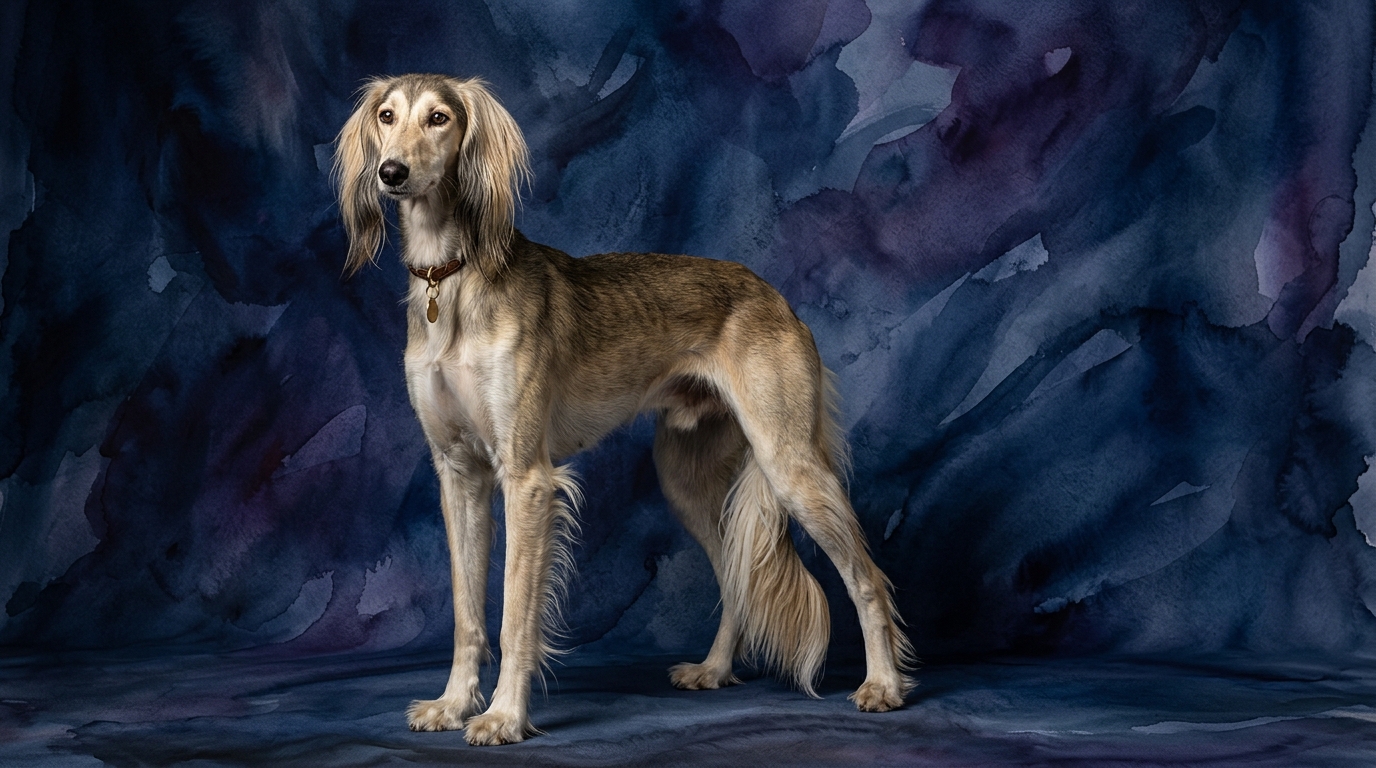
At first glance, the Saluki and Russian Toy present identical scores across all five intelligence dimensions: Problem Solving (3/5), Training Speed (3/5), Social Intelligence (3/5), Instinctive Drive (3/5), and Memory (3/5). However, these scores are not a measure of raw capacity alone, but rather an indication of how effectively and typically a breed utilizes these cognitive functions within its natural predispositions. For the Saluki, a sighthound bred for independent hunting across vast desert landscapes, a 3/5 in problem-solving often manifests as tactical decision-making in pursuit of prey, or navigating complex terrain with minimal human input. Their 3/5 training speed reflects a capacity to learn, but often tempered by a deeply ingrained independence that prioritizes self-directed action over immediate obedience to human command. Social intelligence at 3/5 means they form profound, albeit reserved, bonds with their chosen family, reading subtle cues within that intimate circle. Their 3/5 instinctive drive is a powerful, visual prey drive, compelling them to chase anything that moves swiftly. Finally, their 3/5 memory is adept at recalling hunting routes, the habits of local wildlife, and the specific nuances of their environment.
The Russian Toy, a delicate companion breed developed for aristocracy, expresses these same 3/5 scores through a very different lens. Their 3/5 problem-solving often involves figuring out how to manipulate their environment or their humans to achieve comfort or attention, such as strategically placing themselves for cuddles or navigating household obstacles. A 3/5 training speed for a Russian Toy means they are quick to pick up new commands, especially when motivated by positive reinforcement and a desire to please, but their small size and potential for distraction can make consistent, rapid training a nuanced affair. Their 3/5 social intelligence is often expressed through acute awareness of human emotions and household dynamics, making them highly attuned communicators of their needs and desires. The 3/5 instinctive drive, while not a sighthound's prey drive, manifests as intense alertness, a surprising territoriality for their size, and a strong desire for companionship. Their 3/5 memory is keen for routines, remembering command sequences, and recalling specific positive or negative interactions with individuals.
Where the Saluki Excels Cognitively
While their scores are numerically identical, the Saluki's cognitive strengths lean towards tasks requiring sustained, independent focus and decision-making over expansive areas. Their problem-solving at 3/5 is particularly sharp in scenarios demanding autonomous action, such as navigating a complex field without direct human guidance to intercept a moving target. This isn't about solving puzzles in a living room, but rather making split-second, effective choices in a dynamic, high-stakes outdoor environment. Their memory, also 3/5, is particularly robust when it comes to spatial recall and the intricacies of a hunting ground, allowing them to remember optimal routes and the locations of past encounters, which is a specialized form of cognitive mapping. This breed's instinctive drive, at 3/5, is a powerful engine for self-directed activity, making them exceptional at tasks that tap into their innate desire to pursue and explore independently.
Where the Russian Toy Shines Cognitively
The Russian Toy, despite sharing the same 3/5 scores, demonstrates a distinct cognitive edge in areas related to intricate social navigation and adapting within a domestic setting. Their 3/5 problem-solving is often expressed through clever strategies to gain human attention or comfort, such as figuring out how to open a cupboard door to access a treat, or subtly communicating their needs. Their social intelligence, also 3/5, is highly refined for reading human micro-expressions and moods, allowing them to anticipate their owner's desires or reactions with remarkable accuracy. This makes them exceptionally responsive companions within a close-knit family unit. Furthermore, their 3/5 memory is particularly strong for recalling daily routines, the specific habits of their human family members, and which interactions yield the most positive outcomes, allowing them to thrive in structured, predictable home environments.
Training Dynamics: Independence vs. Attentiveness
The identical 3/5 training speed scores for both breeds belie significant differences in their training experiences. A Saluki, with their strong independent streak and history as a self-reliant hunter, often requires a different motivational approach. Their learning speed is adequate, but their willingness to comply is deeply tied to their perception of the task's value and their bond with the trainer. They may quickly grasp a command but choose not to execute it if it conflicts with a more pressing instinct, such as chasing a squirrel. Training a Saluki often demands patience, understanding of their sighthound nature, and making training feel like a collaborative effort rather than a strict command-and-obey dynamic. Consistency and positive reinforcement are key, but results may appear slower due to their selective attention.
In contrast, the Russian Toy, while also scoring 3/5 in training speed, typically approaches training with a greater eagerness to engage with their human. Their desire for companionship and attention, coupled with a love for treats and praise, often makes them quick to pick up new cues. However, their small size can sometimes lead to a perception of fragility or a tendency for owners to overlook minor behavioral issues, which can inadvertently hinder consistent training progress. Their alertness, while a social asset, can also make them prone to distractions, requiring a trainer to maintain high engagement. While they learn quickly, their consistency in execution can vary depending on their mood or the immediate reward, making structured, short, and fun sessions most effective.
Lifestyle Suitability: Active Explorers vs. Engaged Companions
Understanding their cognitive profiles helps align these breeds with suitable lifestyles. The Saluki, with their 3/5 instinctive drive geared towards pursuit and exploration, is ideally suited for active owners who can accommodate their need for regular, vigorous exercise in a secure environment. Their problem-solving and memory excel in outdoor settings, making them excellent companions for long runs, lure coursing, or simply exploring vast, safe spaces. They thrive with owners who appreciate their independent spirit and don't require constant, overt displays of affection. A relaxed owner might struggle with their inherent need to run and their propensity to follow their instincts, potentially leading to frustration or escape attempts.
The Russian Toy, on the other hand, with their 3/5 social intelligence and memory attuned to domestic routines, generally suits owners who prioritize companionship and indoor engagement. Their cognitive strengths are best utilized within a home environment where they can actively participate in family life, offering alerts and receiving attention. They are content with shorter, regular walks and thrive on mental stimulation through interactive play and training within the home. While they possess an energetic spark, their exercise needs are modest compared to a Saluki. Relaxed owners who enjoy a close, interactive bond with their pet will find the Russian Toy a highly rewarding and adaptable companion, though they still require consistent mental engagement to prevent boredom and excessive alertness.
The Verdict
Choose a Saluki if you are an active, patient owner who appreciates a reserved yet deeply loyal companion, values independent spirit, and can provide ample safe space for them to express their natural athleticism and curiosity.
Choose a Russian Toy if you seek a highly attentive, engaged, and charming companion for a more relaxed, indoor-centric lifestyle, and are prepared to provide consistent social interaction and mental stimulation.
🧠 Find Your Pet's IQ Score
Our Pet IQ Lab assessment covers 25+ tests across 5 cognitive dimensions — personalized to your breed.
Take the Full IQ Test →Frequently Asked Questions
Do Salukis require a lot of mental stimulation?
Yes, while their independence might suggest otherwise, Salukis require mental engagement that taps into their sighthound instincts. Activities like lure coursing, exploring new, secure environments, or 'find it' games can keep their 3/5 problem-solving and memory sharp, preventing boredom and channeling their innate drives constructively.
Are Russian Toys good for first-time dog owners?
Russian Toys can be suitable for first-time owners who are committed to consistent training and socialization. Their 3/5 training speed means they learn readily, but their alert nature and potential for 'small dog syndrome' require an owner who can set clear boundaries and provide ample positive reinforcement to shape their social intelligence effectively.
How do their social intelligence scores of 3/5 translate to living with families?
For a Saluki, a 3/5 social intelligence means they form profound, loyal bonds with their immediate family, reading their cues intimately but often remaining reserved with strangers. A Russian Toy's 3/5 social intelligence translates to being highly attuned to family dynamics, often acting as a 'little shadow' keenly aware of everyone's moods and movements, though they may be more vocal in expressing their observations.