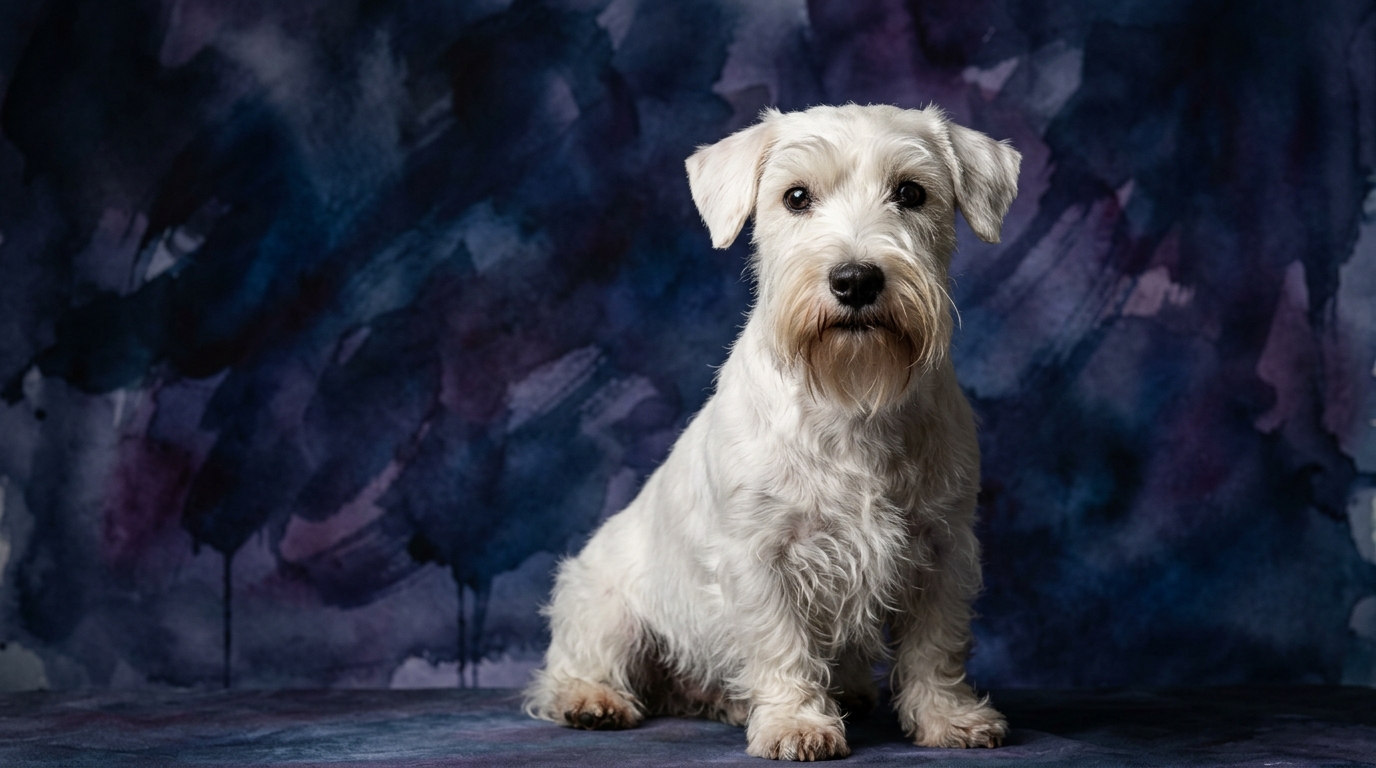

Side-by-Side IQ Profile: Digging Deeper than the Numbers
At first glance, the IQ profiles of the Sealyham Terrier and the English Toy Spaniel appear identical, each scoring 3 out of 5 in Problem Solving, Training Speed, Social Intelligence, Instinctive Drive, and Memory. However, these identical scores belie a rich tapestry of cognitive differences rooted in their very distinct breed histories and purposes. The Sealyham, a tenacious terrier developed for hunting small game, and the English Toy Spaniel, a companion dog bred for aristocracy, interpret and apply these cognitive strengths through entirely different lenses.
For the **Sealyham Terrier**, a 3/5 in **Problem Solving** speaks to their independent, persistent nature when facing challenges. This isn't about solving complex puzzles for human amusement, but rather figuring out how to navigate tight spaces, outsmart a burrowing creature, or determine the quickest route to an intriguing scent. Their 3/5 **Training Speed** reflects a capacity to learn commands efficiently, yet often with a need for consistent, engaging motivation due to their inherent independence and focus on their own objectives. Their **Social Intelligence** at 3/5 is often directed toward understanding pack dynamics within their human family, discerning who is in charge, and how to effectively communicate their needs, sometimes with a confident, assertive flair. The 3/5 **Instinctive Drive** is prominently displayed in their unwavering prey drive, digging tendencies, and alertness to their environment, a direct link to their working heritage. Finally, a 3/5 in **Memory** allows them to recall locations of interesting scents, past interactions, and established routines, crucial for effective independent work.
The **English Toy Spaniel**, conversely, expresses its 3/5 scores in ways tailored to companionship. Their 3/5 in **Problem Solving** often manifests in navigating the social intricacies of a household, figuring out how to secure a comfortable lap, or gently persuading their human for attention and treats. Their 3/5 **Training Speed** is often fueled by a desire to please and a sensitivity to human cues, making them responsive to positive reinforcement and gentle guidance. The 3/5 **Social Intelligence** is a cornerstone of their breed, enabling them to keenly read human emotions, adapt to various social settings, and form deep, empathetic bonds with their family members. Their 3/5 **Instinctive Drive**, while not focused on prey, is powerfully expressed through their profound need for companionship, comfort-seeking behaviors, and a natural inclination towards gentle play and interaction. A 3/5 in **Memory** supports their ability to recognize familiar faces, remember routines, and recall specific comfort spots or preferred play objects, reinforcing their role as devoted companions.
Where the Sealyham Terrier Excels Cognitively
The Sealyham Terrier's cognitive strengths shine particularly in scenarios demanding independent thought and tenacious execution. Their 3/5 problem-solving ability, coupled with their strong instinctive drive, means they are adept at tasks requiring persistence and self-direction. For example, a Sealyham might meticulously work to uncover a hidden toy or find a way through a small gap in a fence, demonstrating an impressive resolve that stems from their historical role in bolting quarry from dens. This breed excels in tasks that require spatial reasoning and a certain level of physical determination, making them quick studies when it comes to navigating complex terrain or remembering the layout of an outdoor space.
Furthermore, their social intelligence, while perhaps more focused on establishing their place within a structured 'pack,' gives them an edge in situations where clear, assertive communication is beneficial. They are not easily deterred and possess a robust memory for past successes and failures in their independent endeavors, allowing them to refine their approaches to challenges over time. This cognitive profile makes them particularly suited for activities that tap into their natural drive for exploration and investigation, where a less self-reliant breed might falter without direct human guidance.
Where the English Toy Spaniel Excels Cognitively
The English Toy Spaniel's cognitive advantages are deeply rooted in their refined social and emotional understanding. Their 3/5 social intelligence is exceptional in its nuanced interpretation of human body language, tone, and emotional states, allowing them to adapt their behavior to maintain harmony and closeness. They possess a remarkable ability to anticipate human needs and desires, often offering comfort or seeking interaction at precisely the right moment. This makes them particularly adept at forming deep, intuitive bonds and thriving in environments where emotional connection is paramount.
Their problem-solving, while not geared towards hunting, is acutely applied to social navigation and comfort. An English Toy Spaniel might quickly learn which family member is most likely to share a treat, or how to position themselves for optimal petting. Their memory supports this by allowing them to recall preferred human interactions, established household routines, and the specific sounds or sights that precede positive experiences like walks or meals. This breed's intelligence is geared towards creating and maintaining a rich, symbiotic relationship with their human companions, making them masters of domestic harmony and emotional support.
Which is Easier to Train and Why
When considering ease of training, the English Toy Spaniel generally presents a more straightforward path for the average owner compared to the Sealyham Terrier. The English Toy Spaniel's 3/5 training speed is often amplified by their inherent desire to please their human companions and their sensitivity to emotional cues. They respond exceptionally well to positive reinforcement, praise, and gentle guidance, eager to earn approval. Their social intelligence means they are often attuned to their owner's intentions and are typically less prone to independent stubbornness, making them more pliable in formal training settings.
The Sealyham Terrier, while also scoring 3/5 in training speed, often requires a different approach. Their strong instinctive drive and independent problem-solving skills mean they can be highly motivated by their own interests, which may not always align with an owner's commands. While capable of learning quickly, a Sealyham might choose to 'optimize' a command or follow an interesting scent rather than immediate compliance. Training a Sealyham demands consistency, patience, and creative methods to make learning engaging and rewarding, tapping into their natural drive without allowing it to override their responsiveness to commands. Owners must understand that a Sealyham's 'no' is often a well-reasoned (from their perspective) 'why?' or 'what's in it for me?'
Which Suits Active Owners vs. Relaxed Owners
The distinction between these two breeds becomes particularly clear when matching them with an owner's lifestyle. The Sealyham Terrier, with its robust instinctive drive and problem-solving prowess, is generally better suited for active owners. While not requiring marathon runs, they thrive on regular, engaging physical activity that provides mental stimulation. Daily walks, opportunities for digging (in designated areas), and interactive play that mimics hunting behaviors are crucial for their well-being. Owners who enjoy training for dog sports like earthdog trials or agility, or who simply appreciate a spirited companion for outdoor adventures, will find a Sealyham's cognitive and physical needs align well with their own active pursuits. Their memory and problem-solving skills are best utilized when given tasks and challenges to overcome.
The English Toy Spaniel, on the other hand, is an ideal match for more relaxed owners. Their profound social intelligence and lower physical activity requirements mean they are content with moderate daily walks and ample time spent in the company of their human family. They excel in environments where their primary 'job' is to be a loving companion, offering comfort and enjoying quiet moments. Their cognitive strengths are fully realized in the context of a close, emotionally rich relationship, where they can observe, interpret, and respond to the nuances of human interaction. Owners who cherish a gentle, devoted lap dog and who can provide consistent affection and a predictable, calm household will find the English Toy Spaniel to be a perfectly suited companion.
The Verdict
Choose the Sealyham Terrier if you are an active owner who values independent spirit, enjoys engaging in mentally stimulating activities, and can provide consistent, creative training to channel their tenacious drive.
Opt for the English Toy Spaniel if you seek a devoted, gentle companion, appreciate deep emotional connections, and offer a relaxed home environment where their social intelligence and affectionate nature can truly flourish.
🧠 Find Your Pet's IQ Score
Our Pet IQ Lab assessment covers 25+ tests across 5 cognitive dimensions — personalized to your breed.
Take the Full IQ Test →Frequently Asked Questions
Do Sealyham Terriers and English Toy Spaniels learn commands at the same rate?
While both breeds score 3/5 in training speed, the English Toy Spaniel often appears to learn commands more readily due to their strong desire to please and sensitivity to their owner's emotions. Sealyhams learn quickly but may require more motivation and consistency to overcome their independent streak.
How does 'problem-solving' differ between these two breeds with the same score?
For Sealyhams, 3/5 problem-solving often involves independent strategizing to achieve a goal, like finding a hidden object or navigating obstacles. For English Toy Spaniels, it's more about solving social puzzles, such as figuring out how to gain attention or comfort from their human companions.
Which breed is better for a family with children?
The English Toy Spaniel, with their gentle temperament and high social intelligence, often adapts well to families with considerate children, thriving on companionship. Sealyham Terriers can be good with children but require careful socialization and supervision due to their robust terrier nature and independent play style.