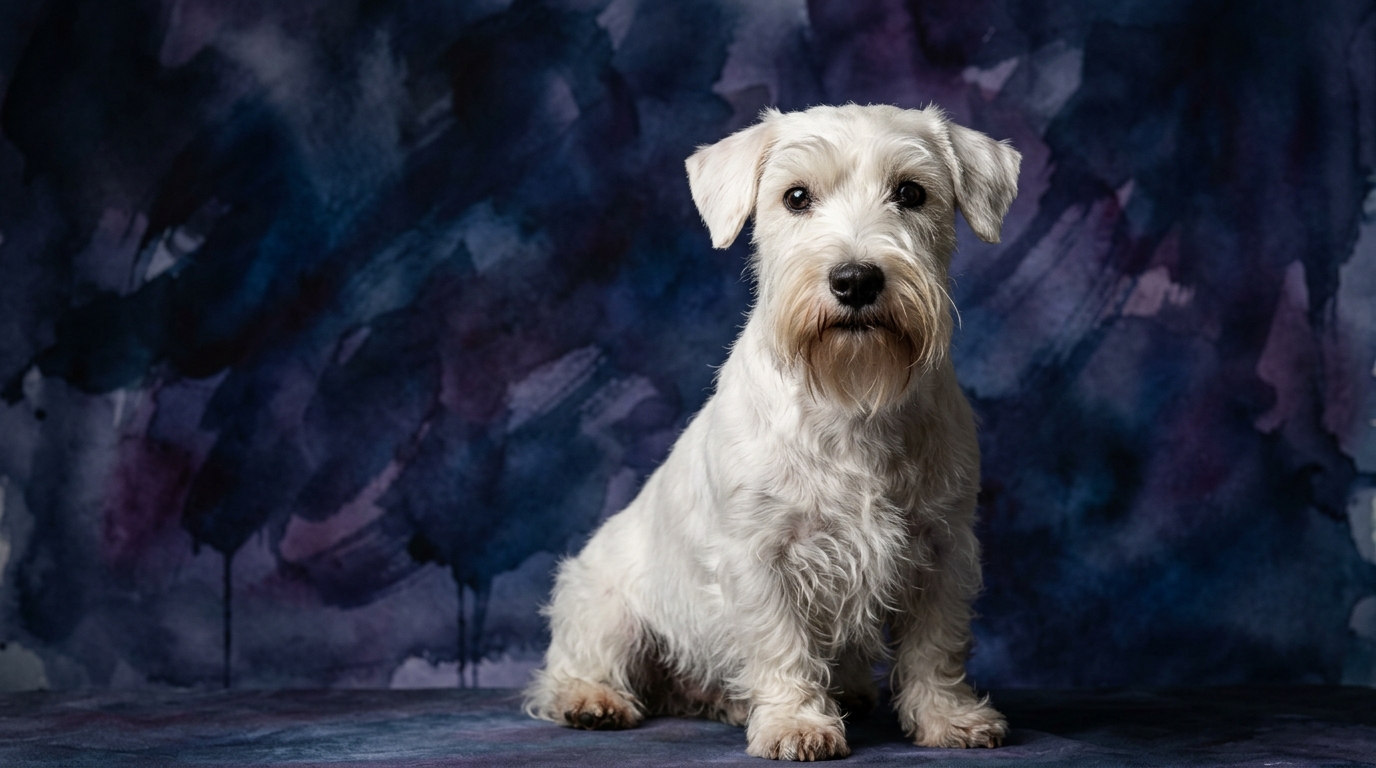
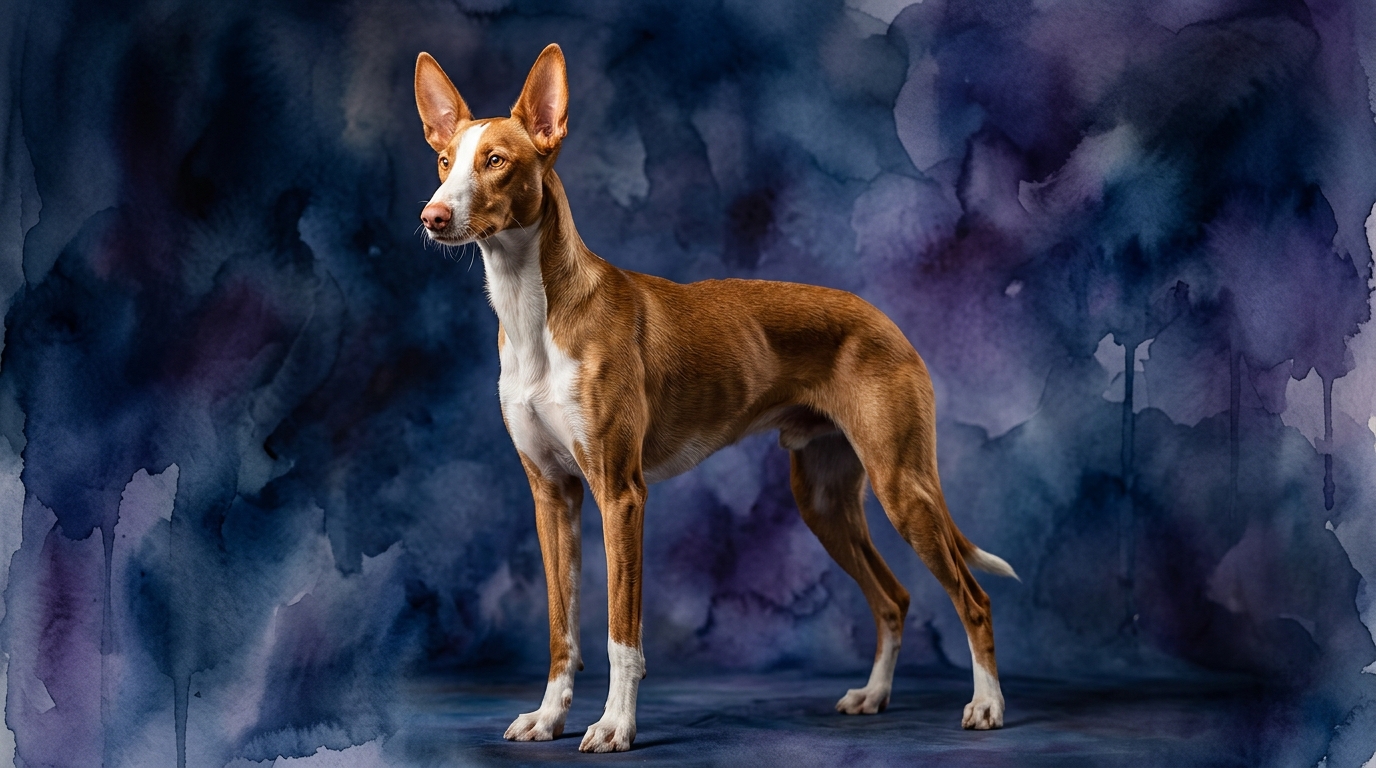
Side-by-Side Cognitive Profile
Delving into the Cosmic Pet Pet IQ Lab's assessments, both the Sealyham Terrier and the Ibizan Hound register a consistent 3/5 across all five cognitive dimensions. While these numerical scores might suggest parity, the underlying behavioral manifestations of these ratings differ significantly due to each breed's historical role and inherent characteristics. Understanding these nuances is key to appreciating their individual cognitive strengths.
**Problem Solving (3/5):** For the Sealyham Terrier, a 3/5 in problem-solving often manifests as a persistent, hands-on approach. Faced with a puzzle, a Sealyham might not be the quickest to deduce a complex multi-step solution, but they will apply a relentless trial-and-error method, often involving digging, nudging, or vocalizing until they achieve their goal. This tenacity is rooted in their terrier heritage, where overcoming obstacles to reach prey was paramount. They excel at practical, physical challenges rather than purely abstract ones, demonstrating a determined focus on a tangible objective. The Ibizan Hound’s 3/5 in problem-solving typically involves keen observation and a strategic, rather than brute-force, approach. They might analyze a situation, such as how to navigate a complex environment or outmaneuver a squirrel, using their visual acuity and understanding of movement. Their solutions are often elegant and efficient, reflecting their sighthound lineage built for spotting and pursuing fast-moving targets over open terrain. They are less likely to engage in repetitive, unrewarding actions, preferring to find a path of least resistance or a more direct route.
**Training Speed (3/5):** A 3/5 for training speed in a Sealyham suggests they are capable learners but require consistent, engaging methods. Their independent nature means they aren't always looking to please; instead, they weigh the value of compliance against their own desires. Training sessions need to be kept short, positive, and varied to prevent boredom and harness their natural curiosity. They learn best when the task feels like a game or a challenge they can 'win,' rather than a strict command to obey, often testing boundaries. The Ibizan Hound's 3/5 training speed is influenced by their sensitive disposition and strong prey drive. They respond well to gentle, positive reinforcement and can grasp concepts quickly when motivated. However, distractions, particularly visual ones, can easily sidetrack them, making focused training challenging in stimulating environments. Their sighthound independence means they might understand a command but choose not to execute it if their interest lies elsewhere, demanding patience and a strong, trust-based relationship with their handler.
**Social Intelligence (3/5):** A Sealyham's 3/5 social intelligence is characterized by strong bonds with their immediate family and a discerning approach to strangers and other animals. They are typically affectionate and devoted to their human companions, often displaying a keen awareness of household routines and emotional states. However, their terrier assertiveness means they might be reserved or even dominant with unfamiliar dogs and can be wary of new people, requiring careful introductions and socialization to foster positive interactions. The Ibizan Hound's 3/5 social intelligence often presents as a dignified, sometimes reserved, nature. They form deep attachments with their chosen family and can be surprisingly playful and clownish in a familiar setting. With strangers, they tend to be polite but aloof, observing rather than immediately engaging. Their social understanding allows them to navigate complex pack dynamics within their family unit, but their sighthound heritage means they are not typically 'people-pleasers' in the same way some other breeds are, valuing companionship on their own terms.
**Instinctive Drive (3/5):** The Sealyham's 3/5 instinctive drive is heavily influenced by their terrier roots. This translates into a robust drive to dig, chase small scurrying creatures, and vocalize when excited or alerting. Their instincts are geared towards independent hunting and exploration, often leading them to investigate intriguing scents or sounds with unwavering focus. This drive requires appropriate outlets to prevent unwanted behaviors, such as providing designated digging areas or engaging in scent work. For the Ibizan Hound, a 3/5 instinctive drive is dominated by their sighthound heritage. Their primary instinct is to spot, chase, and pursue moving objects, often with incredible speed and agility. This means they possess a powerful urge to run and hunt, requiring secure environments where they can safely express this drive. Their focus is primarily visual, making them highly attuned to movement in their surroundings and often less interested in scent-based pursuits compared to a terrier.
**Memory (3/5):** A Sealyham's 3/5 memory suggests they retain information about routines, learned commands, and significant experiences. They will remember where they last saw a favorite toy, the schedule for meals, and the people they encounter regularly. Their memory is practical, serving their daily needs and reinforcing learned behaviors, though they might 'forget' a command if a more compelling instinct takes over in the heat of the moment. The Ibizan Hound's 3/5 memory allows them to recall training cues, their environment, and the people they trust. They can remember complex routes, preferred running paths, and the locations of various points of interest in their territory. Their memory is often tied to spatial awareness and visual cues, helping them navigate their surroundings and recall successful hunting strategies or safe play areas.
Where the Sealyham Terrier Wins Cognitively
The Sealyham Terrier often exhibits a cognitive edge in tasks demanding persistent, independent investigation and a degree of physical problem-solving. Their terrier tenacity means they are less likely to give up on a puzzle that requires repeated effort or minor physical manipulation, such as pushing objects aside to reach a hidden treat. This relentless drive to 'get to' something, coupled with a pragmatic trial-and-error approach, allows them to succeed where a more sensitive or visually-oriented dog might become frustrated or lose interest. They also demonstrate a singular focus on a chosen objective, filtering out distractions to achieve their goal, a trait invaluable for their original purpose.
Where the Ibizan Hound Wins Cognitively
The Ibizan Hound typically excels in cognitive tasks requiring quick visual processing, spatial reasoning, and agile decision-making in dynamic environments. Their sighthound heritage grants them superior ability to track moving objects, anticipate trajectories, and adapt their movements instantaneously. This translates into a cognitive strength for activities like lure coursing or navigating complex agility courses, where rapid interpretation of visual cues and precise physical execution are paramount. They also show a nuanced understanding of their environment, remembering terrain features and potential escape routes with a clarity that aids their pursuit of fast-moving targets.
Which is Easier to Train and Why
Neither the Sealyham Terrier nor the Ibizan Hound are typically described as 'easy' to train in the sense of eager-to-please breeds, but their training challenges stem from different behavioral roots. The Sealyham's primary hurdle is their inherent independence and terrier stubbornness. They understand commands but often weigh them against their own desires or perceived fun. Training a Sealyham requires immense patience, creativity, and a consistent, firm approach that makes compliance more rewarding than self-directed action. They learn best through positive reinforcement and games that tap into their prey drive, but expect them to test boundaries regularly.
The Ibizan Hound's training presents a different set of considerations, largely due to their sensitivity and powerful prey drive. While they can learn commands quickly with gentle, positive methods and a strong bond, their attention can be easily diverted by visual stimuli, making focus in distracting environments a significant challenge. They are not as overtly stubborn as a terrier but can be easily 'lost' to a fleeing squirrel or a distant movement. Training requires a calm demeanor, minimal pressure, and a focus on building trust and engagement before introducing distractions. Therefore, 'easier' is subjective: the Ibizan might grasp a command faster with the right approach, but the Sealyham might be more consistently reliable indoors once they decide to comply, given proper motivation.
Suitability for Active vs. Relaxed Owners
When considering lifestyle, these two breeds diverge significantly. The Ibizan Hound is undeniably suited for active owners. Their physiological build demands regular, intense bursts of exercise, ideally in a securely fenced area where they can sprint freely. Owners who enjoy running, hiking, or participating in dog sports like lure coursing or agility will find a compatible partner in an Ibizan. A 'relaxed' owner who cannot provide ample opportunities for their breed's inherent need to run will likely encounter behavioral issues stemming from pent-up energy.
Conversely, while the Sealyham Terrier is a tenacious and energetic dog for their size, they are more adaptable to a 'moderately active' owner. They require daily walks, engaging play sessions, and mental stimulation to satisfy their curiosity and prey drive, but they do not demand the vast open spaces or sustained high-speed exercise of a sighthound. A Sealyham is often content to curl up on the couch after a good walk and a vigorous play session, making them a better fit for owners who appreciate structured activity but also value downtime. A truly 'relaxed' owner might still find their terrier's persistent digging or vocalization challenging without sufficient outlets.
The Verdict
Choose a Sealyham Terrier if you appreciate a resilient, independent companion with a charmingly tenacious spirit, and are prepared for consistent, engaging training and moderate daily activity that satisfies their terrier instincts.
Opt for an Ibizan Hound if you lead a highly active lifestyle, can provide extensive, secure opportunities for them to run and express their sighthound instincts, and value a sensitive, elegant, and reserved companion.
🧠 Find Your Pet's IQ Score
Our Pet IQ Lab assessment covers 25+ tests across 5 cognitive dimensions — personalized to your breed.
Take the Full IQ Test →Frequently Asked Questions
Are Sealyham Terriers good apartment dogs despite their IQ scores?
Sealyham Terriers can adapt to apartment living if their exercise and mental stimulation needs are consistently met. Their moderate size helps, but their instinctive drive for digging and vocalization means owners must provide structured activities and training to prevent boredom and unwanted behaviors.
How do Ibizan Hounds typically interact with children or other pets?
Ibizan Hounds generally do well with older, respectful children and can live peacefully with other dogs, especially if raised together. However, their strong prey drive means careful supervision is essential around smaller pets like cats or rodents, as their instincts might override learned behaviors.
What specific training challenges might an owner face with an Ibizan Hound's 3/5 training speed?
An owner might find an Ibizan Hound's training challenging due to their sensitivity to harsh corrections, which can make them shut down, and their powerful prey drive, which causes significant distraction outdoors. Consistency, positive reinforcement, and making training feel like a game are crucial, especially in controlled environments before introducing distractions.