
Side-by-Side Cognitive Profiles
At The Cosmic Pet Pet IQ Lab, we evaluate canine intelligence across five key dimensions. For the Shih Tzu, a charming Toy breed ranked #70 by Coren, its cognitive makeup reflects its heritage as a devoted companion. Its Problem Solving is rated 3/5, indicating a moderate capacity for figuring out novel situations, often relying on learned cues or human assistance. Training Speed is 2/5, suggesting they generally require more repetition and patience during training sessions. However, its Social Intelligence is an outstanding 5/5, signifying an exceptional ability to read human emotions and adapt to social dynamics. Instinctive Drive is low at 2/5, reflecting a focus away from hunting or herding, and Memory is 3/5, indicating moderate recall of learned behaviors and experiences.
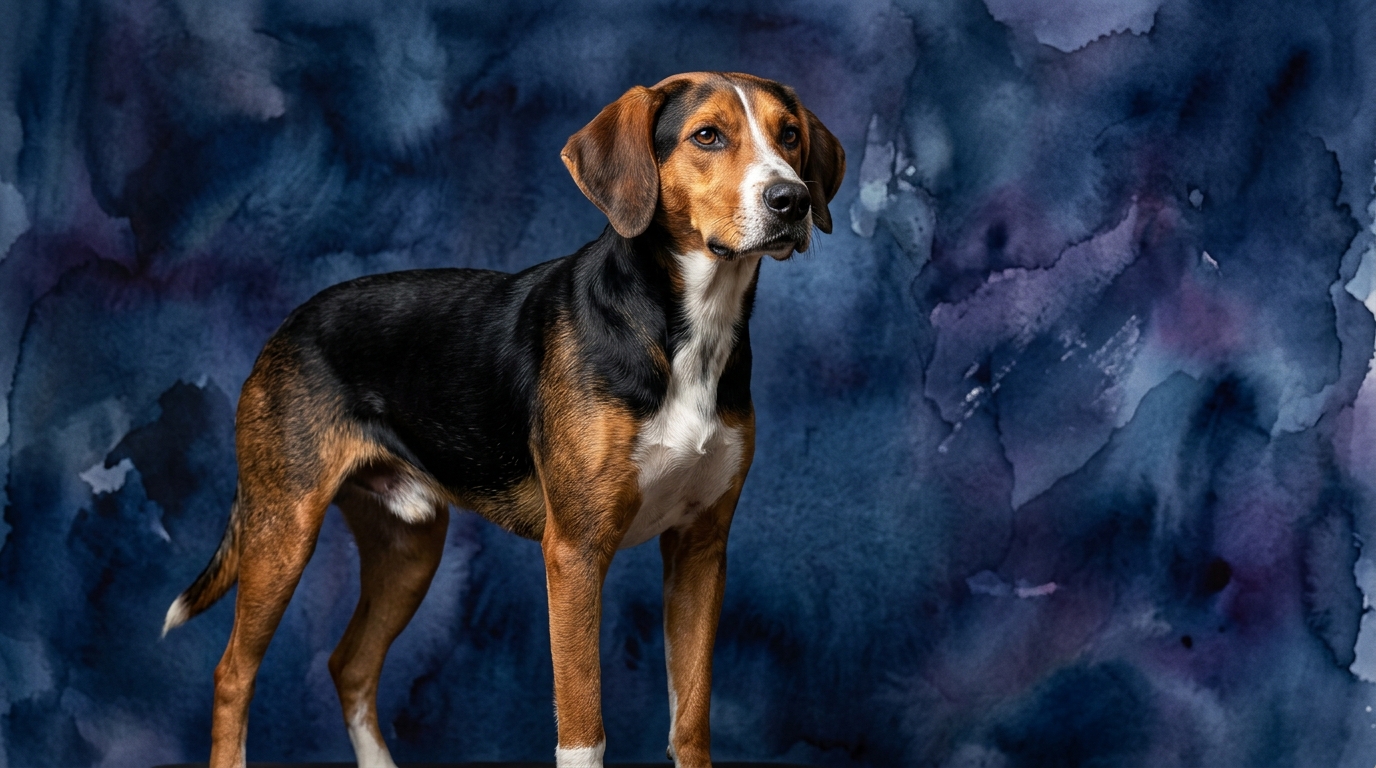
The American Foxhound, a robust Hound breed not formally Coren-ranked, presents a different cognitive landscape tailored to its working lineage. Its Problem Solving is also 3/5, but this often manifests in practical, environment-based challenges like navigating complex terrain while tracking. Training Speed is 3/5, suggesting a moderate pace of learning, though often influenced by its independent nature and strong drives. Its Social Intelligence is 3/5; while capable of forming strong bonds, it’s less intensely focused on subtle human cues than the Shih Tzu. Instinctive Drive is a notable 3/5, highlighting its powerful urge for scent work and endurance, and its Memory is 3/5, particularly effective for recalling scent trails and routines associated with its outdoor pursuits.
Where the Shih Tzu Wins Cognitively
The Shih Tzu's most prominent cognitive advantage lies in its exceptional social intelligence, scoring a perfect 5/5. This isn't just about being friendly; it reflects a profound capacity to read and respond to human emotions, making them incredibly intuitive companions. They excel at understanding subtle shifts in mood, anticipating desires for comfort or play, and adapting their behavior to fit various social situations. This acute social awareness means a Shih Tzu often forms deep, empathetic bonds, thriving on interaction and providing comfort through their attuned presence. Their ability to integrate seamlessly into diverse family dynamics, often becoming the emotional anchor, is a testament to this highly developed social cognition. While their problem-solving and training speed are moderate, their mastery of social navigation allows them to effortlessly maneuver human environments and elicit desired responses through charm and connection.
Where the American Foxhound Wins Cognitively
The American Foxhound's cognitive strengths are deeply rooted in its heritage as a working scent hound. While its problem-solving and memory scores are on par with the Shih Tzu at 3/5, the *nature* of these abilities differs significantly. The Foxhound's instinctive drive (3/5) is its defining characteristic, manifesting as an unwavering focus on scent detection and pursuit. This drive isn't about abstract puzzle-solving but rather complex environmental navigation and persistent tracking. Their problem-solving skills shine when deciphering a faint trail, determining the most efficient path through varied terrain, or overcoming obstacles to maintain a scent. Their moderate training speed (3/5) is often tied to this drive; they learn quickly when the task aligns with their natural inclinations, particularly in activities involving their nose. This breed excels in endurance and sustained mental engagement during long outdoor expeditions, demonstrating a specific form of cognitive persistence that is less about human-centric social cues and more about independent, task-oriented focus.
Which Is Easier to Train and Why
When evaluating ease of training, a superficial glance at the scores might suggest the American Foxhound (Training Speed 3/5) holds a slight edge over the Shih Tzu (Training Speed 2/5). However, the reality is more nuanced, influenced by their core motivations and cognitive profiles. The Shih Tzu, despite its slower training speed, often responds well to positive reinforcement due to its high social intelligence (5/5). They are eager to please their human companions and thrive on attention, making them receptive to training methods that leverage this bond. Consistency, patience, and a reward system centered on praise and affection can yield steady progress, though it may take more repetitions for commands to stick. Their lower instinctive drive means fewer external distractions from scents or prey, allowing them to focus more on the trainer.
Conversely, the American Foxhound's moderate training speed (3/5) is heavily influenced by its powerful instinctive drive (3/5) for scent work. While capable of learning, their attention can be easily diverted by an intriguing smell, making recall particularly challenging in open environments. Training a Foxhound often requires a deep understanding of their independent nature and a highly motivating reward system, often food-based, to compete with their natural urges. They are not as inherently driven to 'please' as the Shih Tzu; their motivation is more task-oriented. Therefore, while a Foxhound might pick up a scent-related task quicker, a Shih Tzu might be more consistently compliant in general obedience within a home setting due to its social focus, despite requiring more initial repetitions.
Which Suits Active Owners vs. Relaxed Owners
The choice between these two breeds dramatically shifts based on an owner's lifestyle and activity levels. For the relaxed owner seeking a devoted, low-impact companion, the Shih Tzu is an ideal match. Their modest instinctive drive (2/5) and preference for indoor living mean they are content with moderate daily walks and ample cuddle time. Their high social intelligence makes them excellent companions for quiet evenings, movie nights, or simply sharing a comfortable space. They thrive in environments where they receive consistent human interaction and can fulfill their role as an attentive lap dog.
Conversely, the American Foxhound is unequivocally suited for active owners. With its strong instinctive drive (3/5) and heritage as an endurance hunter, this breed requires significant physical and mental exercise to be truly content. Long, vigorous runs, extensive hikes, or participation in scent work and tracking sports are not just beneficial but essential for their well-being. A sedentary lifestyle will lead to boredom, frustration, and potentially destructive behaviors. Owners who enjoy exploring the outdoors, have ample space, and are committed to providing consistent, challenging activities will find the American Foxhound to be an energetic and rewarding partner.
The Verdict
Choose the Shih Tzu if you seek an emotionally intuitive companion, content with moderate exercise and thriving on close human interaction within a home environment.
Opt for the American Foxhound if you lead an active, outdoor-centric life and are prepared to engage a dog with a strong, independent drive in consistent physical and mental challenges.
🧠 Find Your Pet's IQ Score
Our Pet IQ Lab assessment covers 25+ tests across 5 cognitive dimensions — personalized to your breed.
Take the Full IQ Test →Frequently Asked Questions
Is a Shih Tzu difficult to house train?
While their training speed is moderate (2/5), Shih Tzus can be successfully house trained with consistent routine, positive reinforcement, and patience. Their desire to please their human companions, stemming from high social intelligence, can aid in this process.
Can an American Foxhound live in an apartment?
An American Foxhound is generally not well-suited for apartment living due to its strong instinctive drive and high energy requirements. They need ample space for vigorous exercise and mental stimulation to prevent boredom and potential destructive behaviors.
Which breed is better with children?
The Shih Tzu's high social intelligence and gentle nature often make them excellent family companions, adapting well to children who are taught respectful interaction. An American Foxhound can be good with children but requires more supervision due to its larger size and independent, sometimes boisterous, play style.