
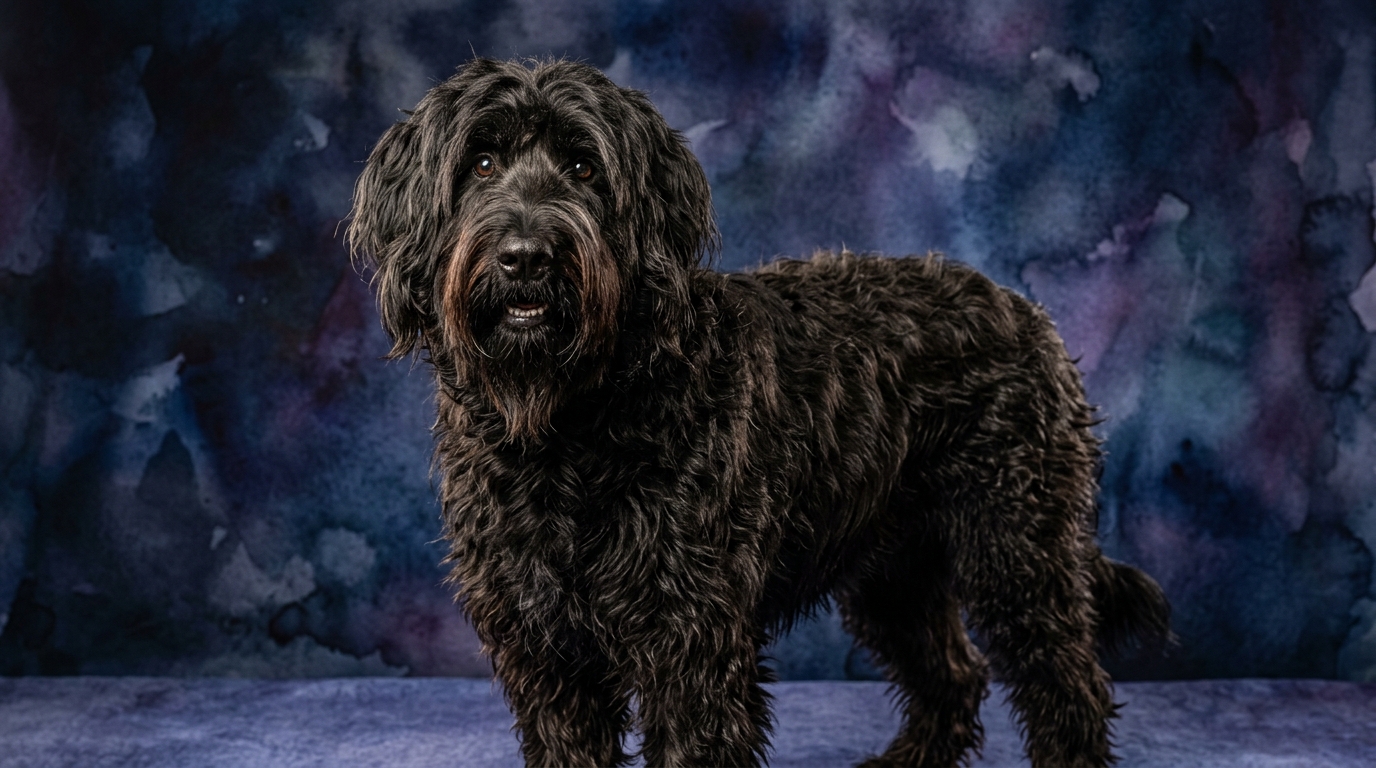
Side-by-Side IQ Profile: Shih Tzu vs. Briard
The Cosmic Pet Pet IQ Lab employs a five-dimensional framework to assess canine cognition, providing a granular view of each breed's mental landscape. For the Shih Tzu, classified as a Toy breed with a Coren rank of #70, their cognitive scores lean heavily into companionship, reflecting centuries of selective breeding for close human interaction.
The Shih Tzu's Problem Solving is rated at 3/5, indicating a moderate ability to navigate novel situations or figure out simple puzzles, often relying on learned patterns rather than innovative solutions. Their Training Speed stands at 2/5, suggesting they may take longer to grasp new commands or complex routines, requiring consistent and patient reinforcement. Where the Shih Tzu truly shines is in Social Intelligence, scoring a perfect 5/5; they are exceptionally attuned to human emotions and social cues, making them highly empathetic and responsive companions. Instinctive Drive is low at 2/5, meaning they possess minimal inclination for tasks like herding or guarding, preferring comfort and interaction. Finally, their Memory is 3/5, allowing them to recall familiar routines and people reliably, but perhaps not extensive sequences of commands or events.
In stark contrast, the Briard, a Herding breed with a significantly higher Coren rank of #30, exhibits a cognitive profile geared towards utility and independent action. Their intelligence is rooted in centuries of managing livestock and protecting flocks, demanding a different set of mental tools.
The Briard's Problem Solving is rated 4/5, showcasing a strong capacity for independent thought and the ability to strategize solutions to environmental challenges, such as figuring out how to move a flock or overcome an obstacle. Their Training Speed is 4/5, indicating a quick aptitude for learning and retaining complex commands, making them highly trainable for various tasks. Social Intelligence for the Briard is 3/5; while they are certainly aware of their human counterparts and form strong bonds, their primary focus isn't necessarily on nuanced emotional mirroring but rather on partnership and task execution. Instinctive Drive is 3/5, a moderate score reflecting their innate herding and protective tendencies that can be channeled effectively. Their Memory is also strong at 4/5, enabling them to retain intricate command sequences, remember past experiences, and apply lessons learned to new situations.
Where the Shih Tzu Wins Cognitively
The Shih Tzu's preeminent cognitive strength lies in their exceptional Social Intelligence, scoring a full 5/5. This isn't merely about being friendly; it reflects a profound capacity to read human body language, facial expressions, and vocal tones, allowing them to anticipate needs and offer comfort with uncanny accuracy. A Shih Tzu can often sense a change in a human's mood and respond accordingly, whether by offering a gentle nudge or settling quietly nearby. This deep emotional attunement fosters an unparalleled bond, making them highly intuitive companions who excel at providing emotional support.
Furthermore, their relatively lower Instinctive Drive (2/5) means they are less prone to task-oriented behaviors that might conflict with a relaxed home environment. They don't typically feel a strong urge to herd family members or patrol boundaries with intensity, making them naturally content with a less structured daily routine focused on companionship. This cognitive predisposition contributes to their adaptability as house pets, requiring less intricate mental stimulation tied to specific jobs.
Where the Briard Wins Cognitively
The Briard's cognitive advantages are rooted in their heritage as a working breed, excelling in areas that demand strategic thinking and rapid learning. Their Problem Solving ability, rated 4/5, means they are adept at assessing situations and devising effective plans, whether it's navigating a complex agility course or figuring out how to open a gate. This capacity for independent thought allows them to make sound judgments in dynamic environments, a crucial trait for a herding dog.
Coupled with their high Training Speed (4/5) and strong Memory (4/5), Briards demonstrate a remarkable ability to acquire and retain a vast repertoire of commands and behaviors. They grasp new concepts quickly and can execute long sequences of instructions reliably, making them prime candidates for advanced obedience, dog sports, and service roles. This combination of mental agility and retentive memory allows them to be highly effective partners in tasks that require precision and consistency, far beyond basic household manners.
Which is Easier to Train and Why?
When considering ease of training, the Briard generally presents a more straightforward path for owners due to their higher Training Speed (4/5) and stronger Memory (4/5). Briards are typically eager to learn and respond well to clear, consistent instruction, often grasping new commands in fewer repetitions. Their moderate Instinctive Drive (3/5) also provides a natural inclination towards purpose-driven activities, meaning they often thrive on having a 'job' and respond positively to training that engages their problem-solving skills. Their capacity to remember complex sequences makes cumulative training highly effective, building upon previously learned behaviors.
The Shih Tzu, with a Training Speed of 2/5 and Memory of 3/5, requires a different training approach. While they are certainly capable of learning, they may take longer to process and internalize new commands. Their lower Instinctive Drive (2/5) means they might not always be intrinsically motivated by task-oriented work; instead, training needs to be made exceptionally fun, positive, and reward-driven to maintain their interest. Owners might encounter moments of stubbornness if the Shih Tzu doesn't perceive immediate value or enjoyment in the task. Short, frequent training sessions tailored to their attention span, focusing on positive reinforcement and building a strong bond, are crucial for success with a Shih Tzu, whereas a Briard often thrives on more structured, longer sessions that challenge their mental faculties.
Which Suits Active Owners vs. Relaxed Owners?
The cognitive profiles of these two breeds clearly delineate their suitability for different owner lifestyles. The Shih Tzu, with its low Instinctive Drive (2/5) and supreme Social Intelligence (5/5), is an ideal match for relaxed owners seeking a devoted companion whose primary joy is close human interaction. They are content with moderate indoor activity, short walks, and ample cuddle time. Their cognitive focus on social cues means they thrive in environments where they are central to family life and can offer emotional support, making them perfect for those seeking a loving, empathetic presence without demanding extensive physical or mental exertion for task-oriented work. They adapt well to apartment living and quieter routines, preferring to be a warm, comforting presence.
Conversely, the Briard's Problem Solving (4/5), Training Speed (4/5), and Memory (4/5) make them an exceptional fit for active owners who enjoy engaging in structured activities and providing consistent mental challenges. Briards flourish when given a purpose, whether it's participating in dog sports like agility or obedience, undertaking extensive hiking, or even fulfilling roles in therapy or search and rescue. Their independent thinking and capacity for learning complex behaviors mean they require owners who are prepared to dedicate time to training, enrichment, and physical exercise. They are best suited for homes with ample space, active lifestyles, and owners who appreciate a canine partner capable of intricate work and independent decision-making.
The Verdict
Choose a Shih Tzu if you prioritize an emotionally attuned companion who excels at social interaction and thrives in a relaxed, affectionate home environment, appreciating their gentle nature and minimal demand for strenuous activities.
Opt for a Briard if you are an active owner seeking a capable, intelligent partner for structured activities and complex training, valuing their problem-solving prowess and willingness to engage in purposeful work.
🧠 Find Your Pet's IQ Score
Our Pet IQ Lab assessment covers 25+ tests across 5 cognitive dimensions — personalized to your breed.
Take the Full IQ Test →Frequently Asked Questions
Is a Shih Tzu truly difficult to train, or do they just learn differently?
Shih Tzus are not inherently difficult, but they do learn at a slower pace (Training Speed 2/5) and respond best to positive reinforcement and short, engaging sessions. Their motivation is often more about pleasing their human and enjoying the interaction rather than performing a 'job,' so patience and fun are key.
Do Briards require a lot of mental stimulation to be content?
Yes, Briards definitely benefit from significant mental stimulation due to their high Problem Solving (4/5) and Memory (4/5) scores. Without engaging activities like training, puzzle toys, or dog sports, they can become bored and potentially develop undesirable behaviors. They thrive on having a purpose.
Which breed is generally better suited for first-time dog owners?
For first-time owners seeking a low-maintenance companion, the Shih Tzu might be easier to manage due to their lower exercise needs and strong social intelligence. However, if a first-time owner is committed to consistent training and an active lifestyle, the Briard's trainability and eagerness to learn can also be rewarding, though they require more experienced guidance.