
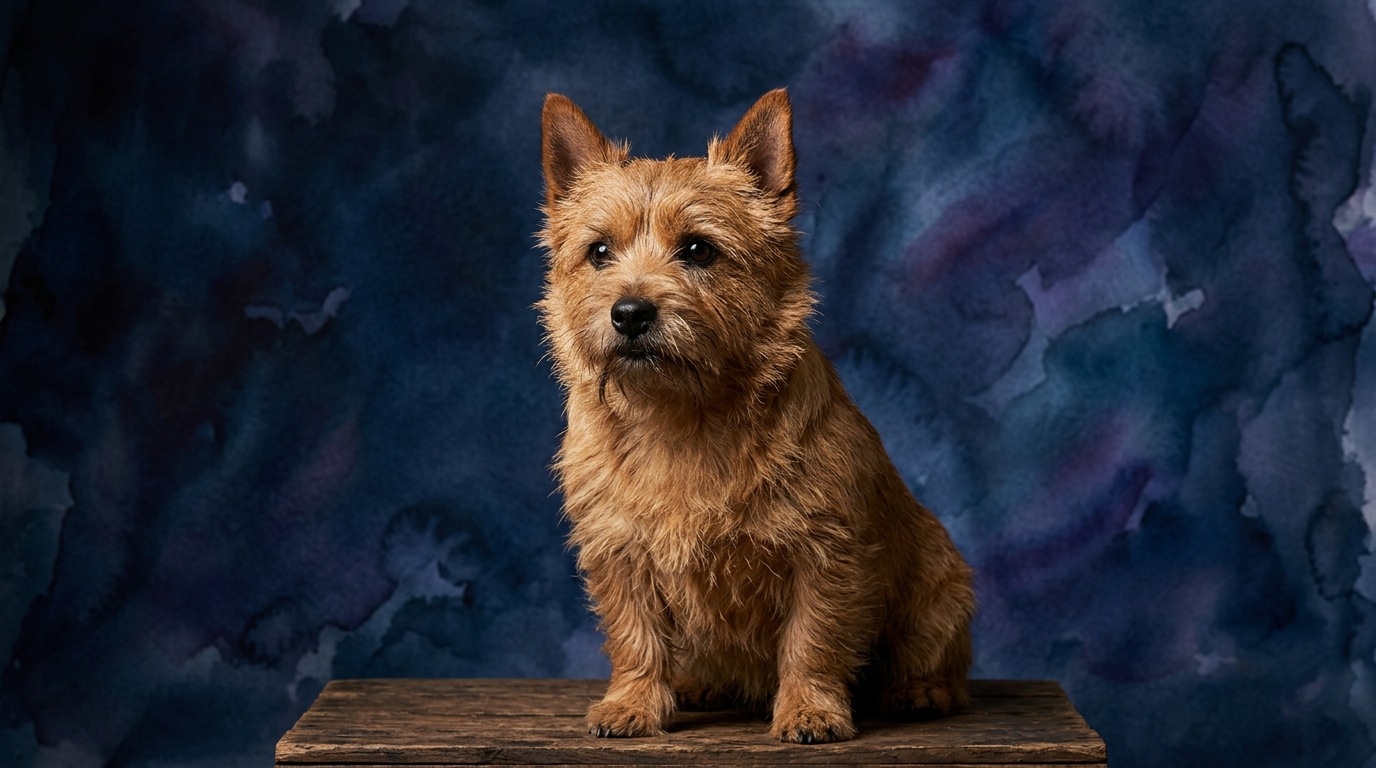
Side-by-Side Cognitive Profile: Shih Tzu vs. Norwich Terrier
The Cosmic Pet Pet IQ Lab assesses canine intelligence across five key dimensions, offering a nuanced view of how breeds think and interact. For the Shih Tzu, a breed ranked #70 by Coren, its cognitive profile is distinct. Its Problem Solving ability is rated 3/5, indicating a moderate capacity to navigate challenges, often through charming human assistance. Training Speed stands at 2/5, suggesting a more leisurely learning pace that requires consistent, patient methods. Where the Shih Tzu truly shines is in Social Intelligence, earning a perfect 5/5, reflecting an exceptional ability to read and respond to human emotions. Its Instinctive Drive is 2/5, a lower score consistent with its historical role as a companion, and its Memory is 3/5, solid for retaining routines and social cues.
The Norwich Terrier, while not Coren-ranked, presents a different set of cognitive strengths. Its Problem Solving ability also rates 3/5, similar to the Shih Tzu, but often manifested through independent action. Training Speed is a respectable 3/5, indicating a quicker grasp of commands driven by a terrier's eagerness. Its Social Intelligence is 3/5, marking them as sociable and interactive, though less complexly intuitive than the Shih Tzu. Instinctive Drive scores 3/5, reflecting their heritage as working terriers with a natural inclination for exploration and scent work. Like the Shih Tzu, their Memory is 3/5, serving them well in recalling tasks and learned behaviors within their active lifestyle.
Where the Shih Tzu Excels Cognitively
The Shih Tzu's unparalleled social intelligence, rated a perfect 5/5 in the Pet IQ Lab, is its clearest cognitive advantage. This isn't merely about being friendly; it reflects a deep, intuitive capacity to understand and respond to human emotional states and social cues. A Shih Tzu can often “read the room,” adjusting its demeanor to match the mood of its household, whether it's offering a comforting presence during quiet moments or playfully demanding attention when spirits are high. Their problem-solving, while rated 3/5, often manifests through this social lens; they might “solve” the problem of being hungry not by figuring out how to open a treat jar, but by charming their human into providing sustenance. This breed excels at forming profound, almost symbiotic emotional connections, making them exceptional companions who seem to anticipate needs and offer precisely the right kind of interaction. Their lower instinctive drive (2/5) further enhances this, as their mental energy is almost entirely dedicated to human-centric interaction rather than external environmental stimuli.
Where the Norwich Terrier Shows Cognitive Strength
The Norwich Terrier demonstrates distinct cognitive strengths, particularly in training speed and instinctive drive, both rated 3/5. Their training speed is notably quicker than the Shih Tzu’s, reflecting a more direct and eager approach to learning tasks and responding to cues. This isn't just about obedience; it's about a readiness to engage with their environment and a desire to participate in activities that offer mental and physical stimulation. Their instinctive drive, while not as high as some working breeds, is a significant part of their cognitive makeup. This drive manifests as a keen interest in exploration, a natural inclination to investigate novel scents, and a playful, persistent determination when engaging with toys or puzzles. While their problem-solving ability is on par with the Shih Tzu (3/5), a Norwich Terrier is more likely to use its physical prowess and persistence to overcome a challenge, perhaps digging under a fence rather than waiting to be let out. Their memory, also 3/5, serves their active nature well, allowing them to recall routes, learned commands, and the location of interesting smells.
Training Dynamics: Which Breed is Easier to Guide?
When comparing ease of training, the Norwich Terrier generally presents a more straightforward path. Their training speed of 3/5, coupled with a discernible instinctive drive, means they often approach learning with enthusiasm and a desire to please or to engage in a task. They respond well to consistent, reward-based training and enjoy the mental stimulation that comes with mastering new commands. Their terrier nature, while sometimes stubborn, is also characterized by a willingness to work alongside their human, especially when the activity involves a bit of challenge or “hunting” for rewards. This breed thrives on structured engagement and can quickly pick up on what's expected.
In contrast, the Shih Tzu, with a training speed of 2/5, can be more challenging. Their primary cognitive focus is on social interaction and comfort, not necessarily on performing tasks. While they understand commands, their motivation often hinges on whether the task aligns with their desire for affection or a comfortable spot. Training a Shih Tzu requires immense patience, creativity, and a deep understanding of their social dynamics, often needing to frame commands as requests for interaction rather than strict directives. Their lower instinctive drive also means they are less motivated by task-oriented rewards or complex problem-solving games that might appeal to a Norwich Terrier. Success with a Shih Tzu often involves making training feel like a bonding experience rather than a chore.
Owner Compatibility: Active vs. Relaxed Lifestyles
The distinct cognitive profiles of the Shih Tzu and Norwich Terrier naturally align with different owner lifestyles. The Shih Tzu, with its exceptional social intelligence (5/5) and lower instinctive drive (2/5), is an ideal match for relaxed owners who prioritize companionship and emotional connection. These dogs thrive on being an integral part of family life, enjoying quiet evenings on the couch, gentle strolls, and extensive cuddle sessions. Their cognitive energy is directed inward, towards their human companions, making them content with a less physically demanding routine. They are perfect for individuals or families seeking a devoted, intuitive presence that offers constant, nuanced emotional support, often seeming to anticipate their human's emotional needs.
Conversely, the Norwich Terrier, with its balanced training speed (3/5) and instinctive drive (3/5), is better suited for active owners. While not requiring extreme athleticism, they benefit from regular mental and physical engagement. Owners who enjoy daily walks, interactive play, and perhaps even some dog sports like agility or earthdog trials will find a willing and enthusiastic partner in a Norwich Terrier. Their problem-solving (3/5) and memory (3/5) are best stimulated through varied activities that challenge their intellect and allow them to express their natural terrier instincts in appropriate ways. They require an owner who understands their need for purpose and structured activity, rather than just passive companionship, and who can provide outlets for their curious and persistent nature.
The Verdict
Choose a Shih Tzu if your priority is a deeply intuitive, emotionally responsive companion who excels at social bonding and thrives in a more relaxed, comfort-oriented home environment.
Opt for a Norwich Terrier if you seek an enthusiastic, trainable partner for varied activities, valuing their independent spirit and readiness to engage in stimulating tasks and outdoor exploration.
🧠 Find Your Pet's IQ Score
Our Pet IQ Lab assessment covers 25+ tests across 5 cognitive dimensions — personalized to your breed.
Take the Full IQ Test →Frequently Asked Questions
Is a Shih Tzu difficult to house train?
Shih Tzus can present a moderate challenge for house training due to their lower training speed (2/5) and a preference for comfort. Consistent routines, frequent potty breaks, and positive reinforcement are crucial for success, as they respond best when training is framed with patience and affection.
Do Norwich Terriers bark a lot?
Norwich Terriers do have a tendency to vocalize, often using barks to alert their owners to new sights, sounds, or to express their excitement, reflecting their instinctive drive (3/5). Early training focused on appropriate barking cues and positive reinforcement for quiet behavior can help manage this trait effectively.
Which breed is better with children?
Both breeds can be good with children, but their approaches differ. The Shih Tzu's high social intelligence (5/5) allows them to adapt well to respectful children, while the Norwich Terrier's robust and playful nature (instinctive drive 3/5) makes them a resilient playmate for older, considerate children who understand how to interact with an active terrier.