
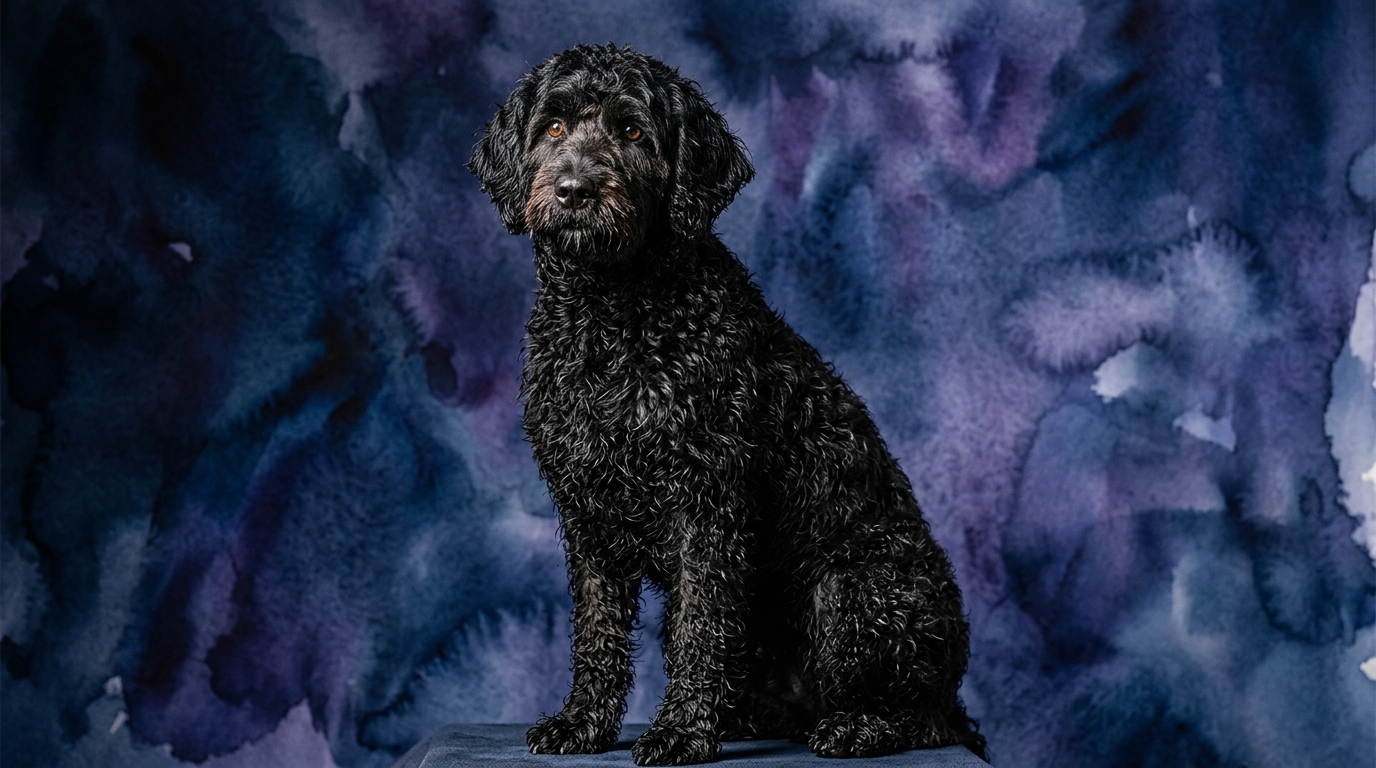
Side-by-Side Cognitive Profiles: Shih Tzu vs. Portuguese Water Dog
The Cosmic Pet's IQ Lab evaluates canine cognition across five crucial dimensions, revealing fascinating differences between these two breeds. The Shih Tzu, a Toy group member, is ranked #70 in Coren's intelligence study, while the Portuguese Water Dog (PWD), from the Working group, was not specifically included in that ranking, yet possesses a robust cognitive toolkit.
For the Shih Tzu, problem Solving stands at 3/5, indicating a moderate capacity for navigating novel challenges and figuring things out independently. Training Speed registers at 2/5, suggesting they may require more repetition and patience to grasp new commands. Their social Intelligence shines at an exceptional 5/5, reflecting a profound understanding of human emotions and social cues. Instinctive Drive is moderate at 2/5, meaning they typically have lower impulses for traditional working tasks. Memory for the Shih Tzu is a solid 3/5, allowing them to recall learned behaviors and experiences effectively.
The Portuguese Water Dog presents a different cognitive landscape. Their problem Solving ability matches the Shih Tzu at 3/5, demonstrating comparable aptitude for independent thought and overcoming obstacles. PWDs show a higher training Speed at 3/5, indicating they generally absorb new commands and routines more readily. Social Intelligence for the PWD is 3/5, suggesting they are responsive to human interaction but perhaps less intuitively attuned to subtle emotional shifts than the Shih Tzu. Instinctive Drive is stronger at 3/5, reflecting an inherent motivation for purposeful activity and engagement. Their memory, like the Shih Tzu, is rated 3/5, providing a reliable capacity for retaining information.
Where the Shih Tzu Exhibits Cognitive Superiority
The Shih Tzu's standout cognitive strength lies unequivocally in its social Intelligence, rated at an exceptional 5/5 compared to the Portuguese Water Dog's 3/5. This dimension isn't just about being friendly; it reflects a deep, intuitive understanding of human emotional states and social dynamics. A Shih Tzu can often sense a shift in an owner's mood, offering comfort or seeking interaction precisely when needed, demonstrating a profound capacity for emotional connection. They are adept at reading subtle facial expressions, body language, and vocal tones, allowing them to integrate seamlessly into a family's emotional rhythm.
This elevated social acuity means a Shih Tzu often forms incredibly strong, empathetic bonds, making them exceptionally responsive to the nuances of human companionship. While they may not excel in complex obedience tasks as quickly as some breeds, their ability to navigate the social landscape of a home environment with such finesse makes them masters of emotional engagement. This cognitive gift allows them to be remarkably adaptable to different household dynamics, primarily through their talent for tuning into and reflecting human social patterns.
Where the Portuguese Water Dog Demonstrates Cognitive Advantages
The Portuguese Water Dog exhibits clear cognitive advantages in areas related to learning efficiency and intrinsic motivation, particularly in Training Speed and Instinctive Drive. With a Training Speed of 3/5 versus the Shih Tzu's 2/5, PWDs generally absorb new commands and routines with greater rapidity. This indicates a quicker grasp of desired behaviors and a more efficient learning curve during training sessions, which translates into faster progress in obedience and skill acquisition.
Furthermore, the PWD's Instinctive Drive scores 3/5 compared to the Shih Tzu's 2/5. This higher drive signifies a robust inherent motivation for purposeful activity and engagement, reflecting their working dog heritage. PWDs are often more eager to participate in structured tasks, whether it's retrieving, agility, or complex trick training, driven by an internal desire to perform and collaborate. This combination of quicker learning and stronger inherent drive makes them particularly receptive to advanced training and activities that require consistent mental and physical output.
Ease of Training: Behavioral Differences Unpacked
When evaluating ease of training, the Portuguese Water Dog holds a notable edge due to its higher Training Speed (3/5 vs. Shih Tzu's 2/5) and stronger Instinctive Drive (3/5 vs. Shih Tzu's 2/5). A PWD's quicker absorption of new commands means fewer repetitions are typically needed for them to understand and execute a behavior consistently. Their robust instinctive drive translates into a greater eagerness to engage in training sessions, viewing them as purposeful activities rather than mere requests.
Conversely, the Shih Tzu's lower training speed means they may require more patience and consistency. While they are certainly capable of learning, they might not show the same immediate enthusiasm or quick comprehension, sometimes exhibiting a charming independence that can be perceived as stubbornness. Their lower instinctive drive means they might not always be self-motivated to perform tasks, often relying more on their strong social intelligence to guide their cooperation. For instance, a PWD might retrieve a toy repeatedly with gusto, driven by its natural instincts, whereas a Shih Tzu might only retrieve it a few times before deciding a cuddle is a more rewarding activity, reflecting their social priorities.
Matching Breeds to Lifestyles: Active vs. Relaxed Owners
The distinct cognitive profiles of the Shih Tzu and Portuguese Water Dog naturally align with different owner lifestyles. For individuals seeking a relaxed, emotionally attuned companion, the Shih Tzu is an excellent fit. Their exceptional social intelligence makes them masters of companionship, thriving on close human interaction and providing profound emotional support. While they enjoy short walks and play, their lower instinctive drive means they are perfectly content with a more sedentary lifestyle, making them ideal for apartment living or owners who prefer a calm home environment.
In contrast, the Portuguese Water Dog is better suited for active owners who relish engaging in consistent physical and mental activities. Their higher training speed and stronger instinctive drive mean they require regular stimulation beyond simple walks; they thrive on learning new skills, participating in dog sports like agility or dock diving, or even working alongside their human companions. Owners who enjoy hiking, running, or structured training will find a PWD to be an enthusiastic and capable partner, eager to participate in adventures and challenges that engage both their bodies and minds.
The Verdict
Choose a Shih Tzu if your priority is a deeply empathetic companion who excels in social connection and thrives in a tranquil home environment.
Opt for a Portuguese Water Dog if you seek an active, trainable partner eager for consistent mental stimulation and physical engagement in a dynamic lifestyle.
🧠 Find Your Pet's IQ Score
Our Pet IQ Lab assessment covers 25+ tests across 5 cognitive dimensions — personalized to your breed.
Take the Full IQ Test →Frequently Asked Questions
Do Shih Tzus learn tricks easily?
Shih Tzus can certainly learn tricks, but their training speed of 2/5 suggests they may require more patience and consistent repetition than some other breeds. Their strong social intelligence means they respond well to positive reinforcement and praise from their beloved humans.
Are Portuguese Water Dogs suitable for first-time dog owners?
Portuguese Water Dogs can be suitable for first-time owners who are committed to providing consistent training, mental stimulation, and plenty of exercise. Their 3/5 training speed makes them responsive, but their active nature and higher instinctive drive mean they need an owner ready for engagement.
How do their problem-solving abilities compare in daily life?
Both breeds share a 3/5 rating for problem-solving, meaning they possess a moderate ability to figure out challenges. A Shih Tzu might cleverly manipulate you for attention, while a PWD might strategically work to open a gate or find a hidden toy, each applying their intellect to different motivations.