
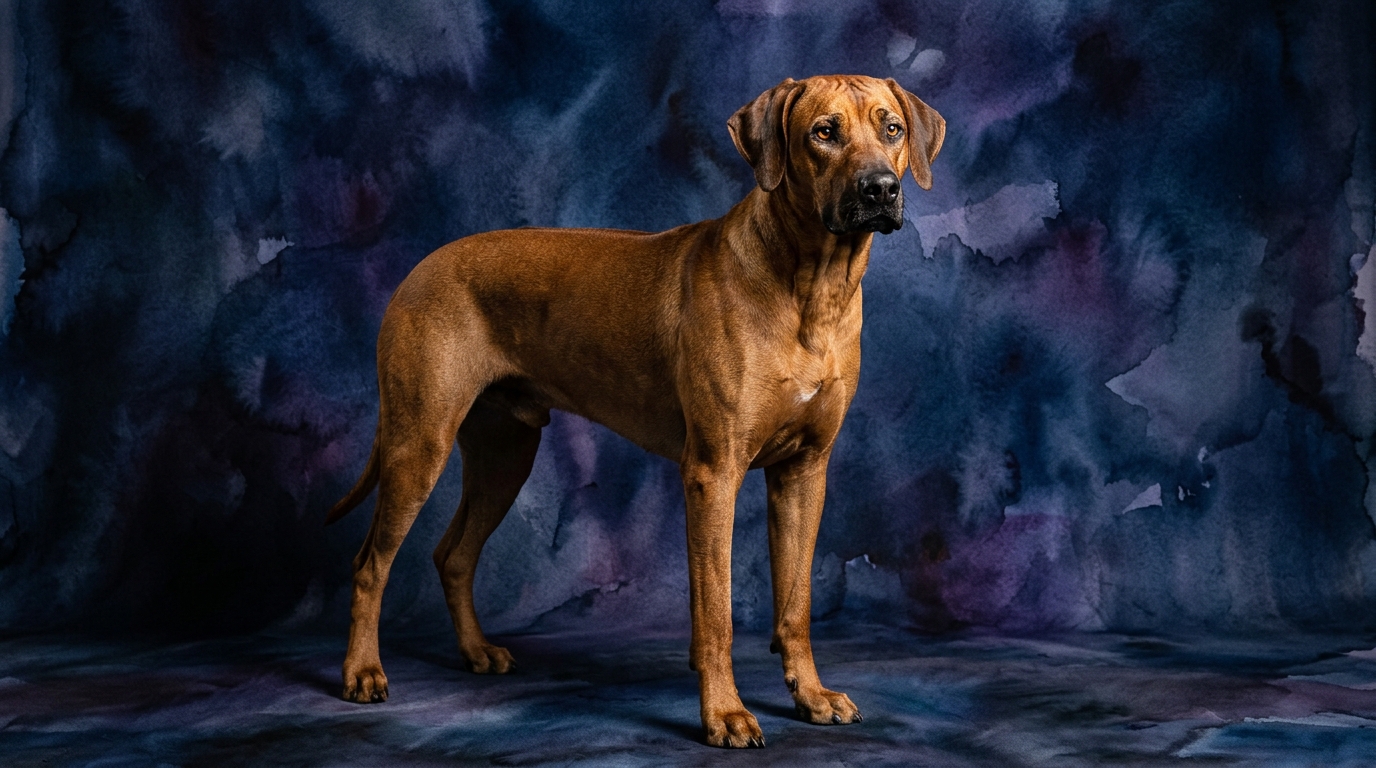
Side-by-Side IQ Profile: Shih Tzu vs. Rhodesian Ridgeback
At The Cosmic Pet Pet IQ Lab, we analyze canine intelligence across five key dimensions. The Shih Tzu, ranking #70 in Coren's intelligence scale, presents a unique cognitive blueprint. Their Problem Solving is rated 3/5, indicating a moderate ability to navigate their immediate environment and figure out basic routines, often relying on practical application rather than complex strategy. Training Speed scores 2/5, suggesting they may require more repetition and patience, sometimes due to a charmingly independent streak or a preference for comfort over strict obedience. However, their Social Intelligence is an outstanding 5/5, demonstrating an exceptional capacity to read and respond to human emotions and social cues, excelling at companionship. Instinctive Drive is 2/5, reflecting a low natural inclination for traditional 'work' or hunting tasks, with motivation primarily stemming from social interaction. Their Memory stands at 3/5, indicating a solid recall for routines, familiar people, and learned associations.
The Rhodesian Ridgeback, holding a higher Coren rank at #52, showcases a different set of cognitive strengths. Their Problem Solving also scores 3/5, demonstrating a thoughtful and observant ability to assess situations and adapt to new challenges with a measured approach. Training Speed is rated 3/5, meaning they generally grasp new commands and routines at a respectable pace, responding well to clear and consistent instruction. Their Social Intelligence is 3/5; while deeply loyal to their family, they often display a more reserved or independent social demeanor compared to the highly gregarious Shih Tzu. Instinctive Drive is 3/5, rooted in their historical role, manifesting as vigilance, a strong prey drive, and a natural inclination to explore and patrol. Like the Shih Tzu, their Memory is 3/5, providing a reliable capacity for recalling commands, experiences, and environmental boundaries.
Where the Shih Tzu Shines Cognitively
The Shih Tzu undeniably shines brightest in the realm of social intelligence, scoring an impressive 5 out of 5. This breed possesses an extraordinary capacity to read and respond to human emotions, often anticipating their owner's moods and offering comfort or companionship precisely when needed. Their keen observational skills allow them to quickly learn household dynamics and individual preferences, making them exceptionally empathetic and adaptable family members. This high social acumen translates into a profound ability to integrate seamlessly into human lives, often becoming intuitive emotional support animals without formal training. While their problem-solving and training speed scores are moderate, their unparalleled social awareness means they excel at forming deep, reciprocal bonds, understanding subtle cues that other breeds might miss. This isn't just about being affectionate; it's about a sophisticated understanding of interpersonal relationships within their family unit.
Where the Rhodesian Ridgeback Holds a Cognitive Edge
The Rhodesian Ridgeback demonstrates distinct cognitive advantages, particularly in training speed and instinctive drive. With a training speed score of 3 out of 5, they generally pick up new commands and routines more readily than the Shih Tzu, provided the training is consistent and engaging. Their historical background as hunting dogs has imbued them with a moderate instinctive drive (3/5), which translates into a natural curiosity, vigilance, and a desire to engage with their environment. This drive can be channeled into various activities, from scent work to agility, allowing them to thrive on tasks that require focus and purpose. While their problem-solving and memory scores match the Shih Tzu, the Ridgeback's slightly higher training receptiveness and inherent drive make them more inclined to participate in structured learning and outdoor exploration. They are often more motivated by tasks and challenges that tap into their natural inclinations, exhibiting a focused determination when engaged in an activity.
Which Breed is Easier to Train and Why?
When it comes to ease of training, the Rhodesian Ridgeback generally holds an edge. Their training speed score of 3/5 suggests they grasp concepts with reasonable efficiency, especially when motivation is high and methods are positive. Their moderate instinctive drive (3/5) means they can be more readily engaged in task-oriented training, often responding well to challenges that tap into their natural desire to work or explore. This drive, combined with their physical prowess, makes them apt pupils for activities like obedience, tracking, or even advanced canine sports. In contrast, the Shih Tzu's training speed of 2/5 indicates they may require more patience and consistency. Their lower instinctive drive (2/5) means they are less motivated by traditional 'work' and more by comfort or social interaction. While they are highly socially intelligent, this doesn't always translate into an eagerness to perform commands for the sake of it. Their training often benefits from making it feel like a game or a social interaction, rather than a task, and their independent streak can sometimes lead to selective hearing. Therefore, while both breeds are trainable, the Ridgeback typically offers a more straightforward and often faster training experience for those seeking a dog that enjoys structured learning.
Matching Breeds to Owner Lifestyles: Active vs. Relaxed
For active owners seeking a canine partner for adventures and structured activities, the Rhodesian Ridgeback is often a more fitting choice. Their moderate instinctive drive and robust physical build mean they thrive on regular exercise, mental stimulation, and purpose-driven engagement. Owners who enjoy long hikes, running, or participating in dog sports like agility or tracking will find a willing and capable companion in a Ridgeback. They require consistent outlets for their energy and curiosity to prevent boredom and potential behavioral issues. Conversely, the Shih Tzu is an ideal companion for more relaxed owners who prioritize companionship and comfort over strenuous physical activity. Their lower instinctive drive and moderate physical needs mean they are content with shorter walks, indoor play, and ample cuddle time. Their exceptional social intelligence makes them superb lap dogs and attentive companions, perfectly suited for individuals or families seeking a dog whose primary role is to offer gentle, empathetic presence. They are less demanding in terms of exercise, making them excellent choices for apartment living or for owners with less active lifestyles.
The Verdict
Choose the Shih Tzu if you prioritize an exceptionally empathetic, intuitive companion perfectly content with a relaxed home life and minimal strenuous activity, valuing deep emotional connection above all else.
Opt for the Rhodesian Ridgeback if you are an active owner seeking a capable, focused companion who thrives on structured training, outdoor adventures, and purposeful engagement.
🧠 Find Your Pet's IQ Score
Our Pet IQ Lab assessment covers 25+ tests across 5 cognitive dimensions — personalized to your breed.
Take the Full IQ Test →Frequently Asked Questions
Is a Shih Tzu truly less intelligent than a Rhodesian Ridgeback?
Not necessarily 'less intelligent' overall, but their cognitive strengths differ. The Shih Tzu excels in social intelligence and empathy, while the Rhodesian Ridgeback shows greater aptitude in training speed and instinctive drive for tasks, as reflected in their Coren ranks and specific IQ scores.
Can a Shih Tzu participate in dog sports?
While a Shih Tzu's lower instinctive drive and training speed might make them less inclined towards intense dog sports, they can certainly enjoy activities like beginner agility or trick training, especially when approached as fun social interactions. Their primary motivation often stems from pleasing their owner rather than the task itself.
Do Rhodesian Ridgebacks require a lot of mental stimulation?
Yes, Rhodesian Ridgebacks benefit significantly from consistent mental stimulation. Their moderate instinctive drive and problem-solving abilities mean they thrive on puzzles, training challenges, and opportunities to explore, which helps prevent boredom and channel their energy constructively.