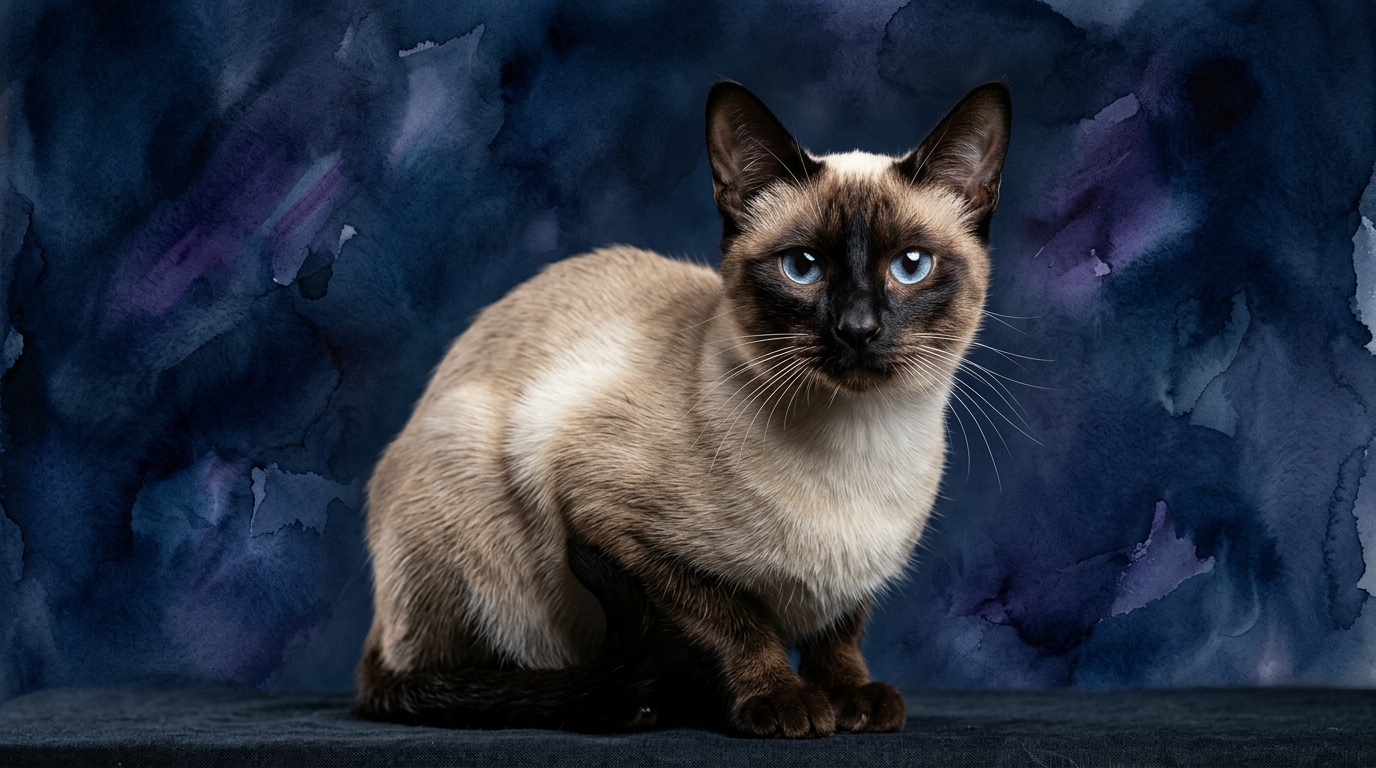
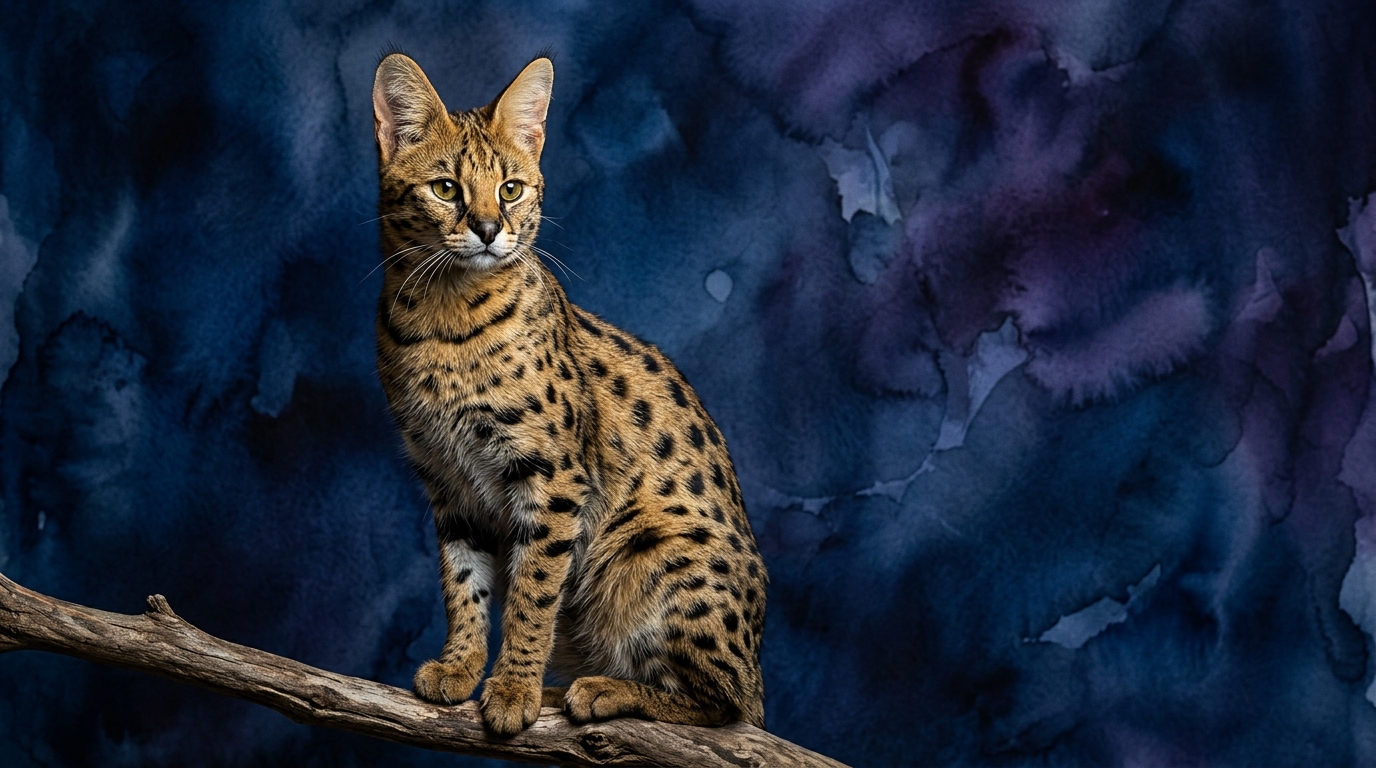
Side-by-Side IQ Profile: Siamese vs. Savannah
The Cosmic Pet Pet IQ Lab provides a granular look into feline cognition, assessing five key dimensions. For the Siamese, their Problem Solving is rated 5/5, indicating a keen ability to analyze situations and devise solutions, often involving sequence or manipulation. Their Training Speed stands at 4/5, reflecting a quick uptake of new behaviors and a willingness to engage in structured learning. Social Intelligence is a standout 5/5, underscoring their profound understanding of human cues and emotional states, alongside complex communication. An Instinctive Drive of 4/5 suggests a moderate yet engaging prey drive, manifesting in playful hunts. Finally, their Memory is rated 5/5, allowing for excellent recall of routines, individuals, and learned associations.
The Savannah presents a similar high score in Problem Solving at 5/5, though their approach often leans towards innovative, physically active solutions. Their Training Speed also rates 4/5, signifying a rapid learning curve, particularly when tasks involve physical challenge or high-value rewards. Where they diverge notably is in Social Intelligence, scoring 4/5; while they form deep bonds, their expression of social connection can be more independent or selective compared to the Siamese. Their Instinctive Drive is a robust 5/5, reflecting a powerful innate urge to explore, hunt, and engage with their environment with intense curiosity. Like the Siamese, their Memory is also a perfect 5/5, enabling them to retain intricate details about their surroundings and past experiences.
Where Siamese Wins Cognitively
The Siamese cat truly distinguishes itself in the realm of Social Intelligence, where its 5/5 rating surpasses the Savannah's 4/5. This manifests in their unparalleled ability to interpret subtle human cues, such as shifts in tone of voice, facial expressions, or body language. A Siamese might anticipate an owner's needs before they are even fully articulated, offering comfort or initiating play based on perceived emotional states. Their complex vocalizations are not merely sounds but often deliberate attempts to communicate specific desires or observations, demonstrating a sophisticated understanding of reciprocal interaction. They form profound, almost conversational bonds, often appearing to “talk” an owner through their day, reacting to every movement and sound with an engaged, empathetic awareness. This deep social attunement allows them to integrate seamlessly into human routines, becoming highly interactive and responsive members of the household.
Where Savannah Wins Cognitively
Conversely, the Savannah cat's cognitive strengths shine particularly bright in its elevated Instinctive Drive, scoring a perfect 5/5 compared to the Siamese's 4/5. This robust drive fuels an exceptional level of environmental awareness and a resourceful, often physically daring, approach to problem-solving. A Savannah might not just figure out how to open a cabinet but will do so with a calculated jump, a precise paw maneuver, or by employing an object as a tool to achieve its goal, all driven by an intense curiosity for what lies beyond. Their play often mimics intricate hunting scenarios, involving complex stalking, pouncing, and retrieval, far beyond simple chase games. This heightened instinct also means they possess an innate agility and a desire to explore vertical spaces, scale furniture, or even investigate running water, showcasing a powerful, intrinsic motivation to interact dynamically with their surroundings. Their solutions to challenges are frequently innovative and physically demanding, reflecting a deeply ingrained connection to their wild ancestry.
Which is Easier to Train and Why
Both Siamese and Savannah cats share an impressive Training Speed rating of 4/5, indicating they are both capable learners. However, the ease of training often hinges on their differing social and instinctive drives. Siamese cats, with their superior social intelligence, often respond exceptionally well to positive reinforcement and the desire to please their human companions. Their vocal nature can be channeled into specific responses or commands, and they thrive on the interactive component of training sessions. They readily grasp routines and enjoy the consistent engagement that training provides, making them appear more amenable to instruction.
Savannahs, while learning quickly, require a training approach that caters to their robust instinctive drive. Their motivation often stems from the challenge itself or the tangible reward, rather than solely from social appeasement. Training a Savannah might involve more agility-based tasks, puzzle-solving, or incorporating elements that simulate hunting behavior to keep them engaged. They are less likely to perform a trick purely for social affirmation and more likely to do so if it provides mental stimulation or a desired outcome. This means owners must be creative and persistent, finding ways to make training an engaging game rather than a mere command-and-response exercise, leveraging their innate curiosity and physical prowess.
Which Suits Active Owners vs. Relaxed Owners
The distinct cognitive profiles of the Siamese and Savannah cats mean they thrive in different home environments, suiting varied owner lifestyles. For individuals who lead an active lifestyle and are prepared to provide significant physical and mental enrichment, the Savannah is an ideal companion. Their high instinctive drive necessitates ample opportunities for exploration, climbing, and engaging in complex, interactive play that simulates hunting. They benefit immensely from outdoor access within a secure enclosure or regular, structured “adventure” play indoors that challenges their agility and problem-solving skills. A Savannah will actively seek out engagement and can become destructive if its robust physical and mental needs are not consistently met.
Conversely, the Siamese cat is often a better fit for more relaxed owners who cherish deep, interactive companionship over intense physical activity. While playful, their primary need is extensive human interaction, conversational exchanges, and consistent affection. Their superior social intelligence means they are content with lap time, following their owner from room to room, and engaging in vocal “discussions.” They do not possess the same intense need for complex environmental challenges or strenuous physical exertion as a Savannah, thriving instead on the predictability of routine and the warmth of a close, empathetic bond. They are perfectly happy to share a quiet evening, provided they are central to their human's attention.
The Verdict
Choose a Siamese if you desire a highly communicative, deeply empathetic cat who thrives on close human interaction, vocal exchanges, and the comfort of predictable routines.
Opt for a Savannah if you are an active owner prepared to engage with a physically dynamic, intensely curious cat that requires significant mental and physical outlets for its robust instinctive drives.
🧠 Find Your Pet's IQ Score
Our Pet IQ Lab assessment covers 25+ tests across 5 cognitive dimensions — personalized to your breed.
Take the Full IQ Test →Frequently Asked Questions
Do Siamese cats really "talk" more than Savannahs?
Yes, Siamese cats are renowned for their extensive vocal repertoire, employing various tones and volumes to communicate their needs and interact with their humans. This stems from their superior social intelligence, whereas Savannahs, while communicative, tend to be less vocally expressive in comparison, often using chirps or trills.
What specific types of problem-solving challenges do Savannahs enjoy?
Savannahs, with their strong instinctive drive, often relish challenges that mimic hunting or exploration. This includes puzzles that require manipulating objects to retrieve treats, navigating complex climbing structures, or figuring out how to open cabinets or doors, often demonstrating inventive physical solutions.
How does a Siamese cat's memory manifest in daily life?
A Siamese cat's exceptional memory often means they quickly learn household routines, anticipate meal times or play sessions, and remember specific interactions with people. They can recall complex sequences of events, such as which family member provides certain types of attention or where favorite toys are stored, displaying a strong awareness of their daily rhythm.