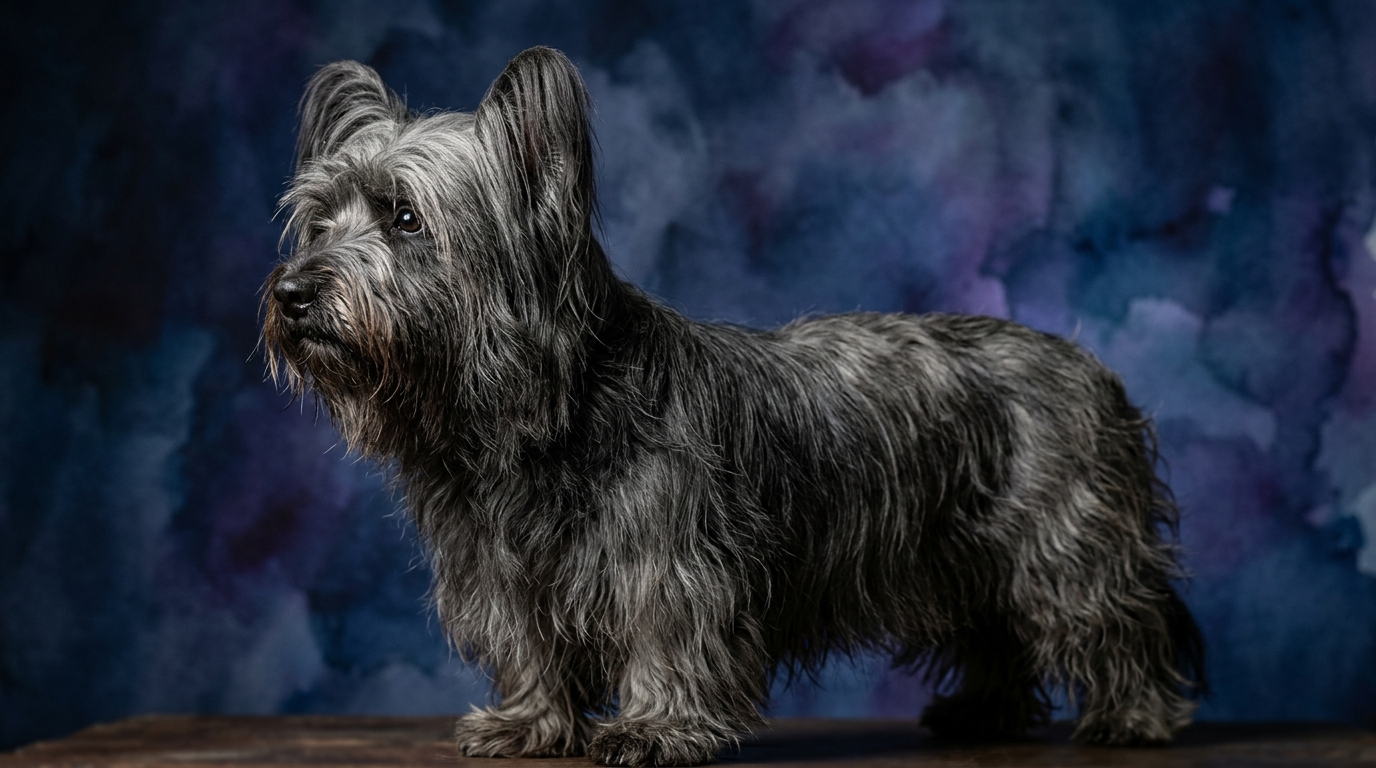
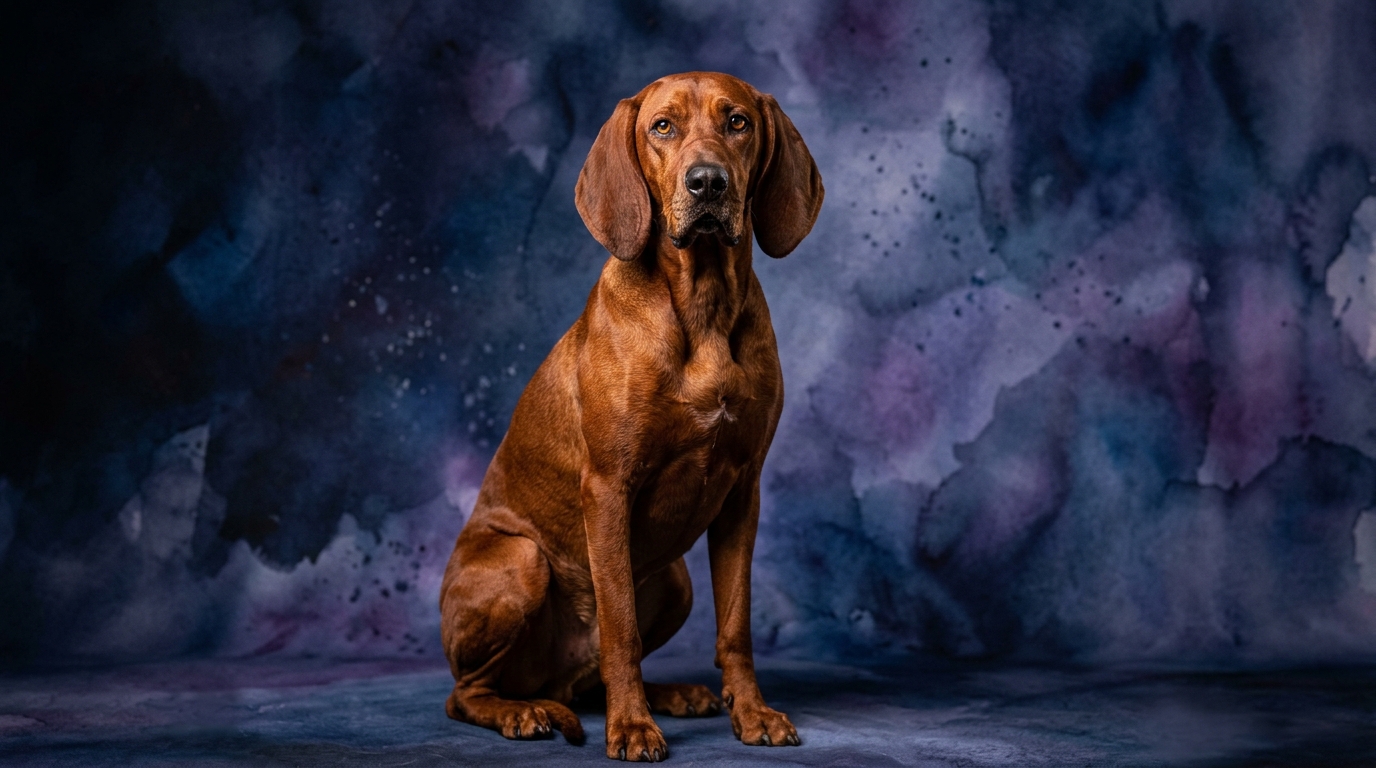
Side-by-Side IQ Profile: Unpacking Cognitive Parity
Despite their divergent breed groups—Terrier and Hound—both the Skye Terrier and the Redbone Coonhound surprisingly register identical scores across all five intelligence dimensions in The Cosmic Pet Pet IQ Lab. This isn't an indication of sameness, but rather a testament to how different evolutionary pressures can refine similar cognitive capacities for distinct applications. Let's delve into what each 3/5 score signifies for these unique canids.
For Problem Solving (3/5), the Skye Terrier demonstrates a determined, focused tenacity, particularly when faced with physical obstacles or the need to outwit small prey. Their historical role demanded independent thought to navigate complex burrows or strategize access to intriguing scents. This manifests as a thoughtful, persistent approach to challenges, often involving spatial reasoning and memory of past successes. The Redbone Coonhound's 3/5 in problem-solving, conversely, shines in their methodical, sustained tracking abilities. This isn't about brute force but about analyzing subtle environmental cues, remembering complex scent patterns over varying terrains, and strategically following a trail for hours. Their problem-solving is a sequential, sensory-driven process, relying heavily on environmental interpretation and the ability to extrapolate from limited information.
Regarding Training Speed (3/5), the Skye Terrier, with its independent Terrier spirit, learns commands and routines effectively but often weighs the personal benefit of compliance. They absorb new information at a moderate pace, but their inherent self-reliance means consistent, engaging methods are crucial to ensure learned behaviors are reliably executed. The Redbone Coonhound's 3/5 training speed is influenced by their powerful scent drive. While they can grasp concepts and commands with moderate repetition, their focus can be easily diverted by compelling olfactory stimuli. When engaged and motivated, especially through scent-based tasks, they demonstrate a keen ability to link actions with consequences, but distractions can slow the initial uptake and solidify of new behaviors.
Social Intelligence (3/5) in the Skye Terrier is marked by deep loyalty and a nuanced understanding of their immediate human family's dynamics. They are discerning with strangers, quickly assessing social cues to determine trust and safety, often forming strong, almost intuitive bonds with their chosen few. Their social awareness helps them navigate complex household interactions and anticipate family moods. The Redbone Coonhound's 3/5 social intelligence is more outwardly focused, stemming from their heritage as a working pack animal. They excel at reading human body language and vocalizations in a working context, understanding their role within a team, whether human or canine. They often display a cooperative nature, readily integrating into group activities and responding to directional cues from their handlers.
Instinctive Drive (3/5) in the Skye Terrier is dominated by a strong prey drive, expressed through digging, chasing, and a determined focus on small, moving targets. This drive also fuels their protective instincts, making them vigilant guardians of their territory and family. Their instinctual behaviors are precise and targeted. The Redbone Coonhound's 3/5 instinctive drive is overwhelmingly centered on scent tracking and pursuit. Their powerful noses dictate much of their behavior, compelling them to follow trails relentlessly and bay when they've located their quarry. This drive manifests as incredible stamina and single-minded dedication to a perceived 'job,' often overriding other stimuli.
Finally, Memory (3/5) for the Skye Terrier is robust for routines, specific locations of interest (like where a toy was buried or a squirrel was last seen), and the habits of their human companions. They retain complex sequences of events and spatial information effectively. The Redbone Coonhound's 3/5 memory is particularly acute for scent trails, mapping out familiar hunting grounds, and recalling successful past strategies. They possess an impressive recall for the nuances of their environment, building a rich internal database of olfactory information and spatial relationships over time.
Where the Skye Terrier Wins Cognitively
While both breeds score identically, the Skye Terrier's cognitive strengths offer distinct advantages in certain scenarios. Their 3/5 problem-solving, combined with a strong sense of self-preservation, often manifests as a superior ability to navigate complex, confined spaces or to independently resolve challenges without constant human guidance. A Skye might excel at figuring out how to retrieve a hidden treat from an intricate puzzle toy or finding a clever escape route from a secure enclosure, demonstrating a precise application of their wit. Their selective social intelligence means they are particularly adept at forming deep, nuanced bonds within a small family unit, often anticipating their owner's needs or moods with subtle cues, making them highly attuned companions in a close-knit environment. This precise application of intelligence means they are remarkably self-sufficient in their problem-solving, even if it's on their own terms.
Where the Redbone Coonhound Wins Cognitively
The Redbone Coonhound's identical 3/5 scores translate into a different set of cognitive triumphs. Their problem-solving and memory, primarily driven by their formidable instinctive drive, allow them to process and retain vast amounts of olfactory data, making them unparalleled in sustained tracking tasks. A Redbone's ability to follow a cold scent trail over miles, across varied terrain, and interpret subtle changes in odor demonstrates a cognitive persistence and analytical capability that is truly exceptional in its specific domain. Their social intelligence, geared towards cooperative work, makes them excellent team players in activities requiring coordinated effort, whether it's hunting or engaging in complex scent work games with multiple participants. They excel at understanding their role within a larger group dynamic, contributing their skills to a shared objective with unwavering focus.
Which is Easier to Train and Why?
Neither the Skye Terrier nor the Redbone Coonhound is inherently 'easier' to train given their matching 3/5 training speed, but the *approach* to training differs significantly due to their behavioral predispositions. The Skye Terrier's independence and strong-willed Terrier nature mean they learn quickly but often require motivation beyond simple obedience. They respond best to training that incorporates puzzle-solving, varied tasks, and positive reinforcement that makes them feel like they are making a choice, rather than simply obeying. Their prey drive can make recall challenging if a more compelling scent or movement captures their attention, demanding consistent, high-value rewards to maintain focus.
The Redbone Coonhound's training journey is heavily influenced by their powerful scent drive. While they can learn commands and routines, their focus during training sessions can be easily hijacked by environmental scents. Training is most effective when it integrates their natural instincts, such as scent work or tracking games, which channel their drive constructively. Consistent positive reinforcement and patience are key, as their attention span for non-scent-related tasks can fluctuate. For both breeds, early socialization is critical, and a trainer who understands the nuances of Terrier independence versus Hound single-mindedness will find the most success in shaping their 3/5 training speed into reliable behavior.
Which Suits Active Owners vs. Relaxed Owners?
The choice between a Skye Terrier and a Redbone Coonhound largely hinges on an owner's lifestyle and their willingness to engage with the breed's specific needs. A Skye Terrier, while not requiring the same vast acreage as a hound, still demands an owner who is prepared for consistent mental stimulation and moderate physical activity. Their problem-solving minds thrive on daily walks with opportunities to explore scents, engage in puzzle toys, and participate in short, engaging training sessions. They suit owners who enjoy focused, interactive activities and appreciate a dog with a distinct personality and a reserved, but deeply loyal, companionship style. They can adapt to apartment living if their cognitive and physical needs are met through structured activities, making them suitable for owners who might be less physically active but highly engaged mentally.
The Redbone Coonhound, conversely, is unequivocally suited for active, outdoorsy owners. Their immense instinctive drive and stamina necessitate significant daily exercise, ideally involving long walks, runs, or opportunities for off-leash exploration in secure areas where they can indulge their scenting instincts. They thrive when given a 'job' to do, such as participating in scent work, tracking sports, or even just extended hikes. A relaxed owner who cannot provide this level of physical and mental engagement will likely find a Redbone becomes restless and potentially destructive. They are best for individuals or families who embrace an adventurous lifestyle and can integrate their dog into their outdoor pursuits, offering a robust and enthusiastic companion.
The Verdict: When to Choose Each
The Verdict
Choose the Skye Terrier if you appreciate a discerning, independent companion who thrives on mental engagement within a close family unit and you can provide structured activities to channel their sharp wits.
Opt for the Redbone Coonhound if you lead an active, outdoor lifestyle and seek a tireless, enthusiastic partner for adventures, willing to dedicate significant time to their physical exercise and scent-driven pursuits.
🧠 Find Your Pet's IQ Score
Our Pet IQ Lab assessment covers 25+ tests across 5 cognitive dimensions — personalized to your breed.
Take the Full IQ Test →Frequently Asked Questions
Do identical IQ scores mean the breeds are equally easy to live with?
No, identical IQ scores indicate similar cognitive capacities, but how those capacities manifest behaviorally differs significantly between breeds. Their inherent drives and temperaments dictate their suitability for various lifestyles, requiring owners to understand their specific needs beyond just intelligence.
Can a Redbone Coonhound be a good apartment dog?
A Redbone Coonhound can potentially adapt to apartment living only if their owners are extremely committed to providing extensive daily exercise and mental stimulation outside the home. Their high energy and strong scent drive necessitate significant outdoor activity and enrichment to prevent boredom and destructive behaviors.
Are Skye Terriers good with children?
Skye Terriers can be good with older, respectful children who understand how to interact gently with dogs. They are typically reserved and prefer calm environments, so they may not be the best fit for very young or boisterous children who might overwhelm their sensitive nature.