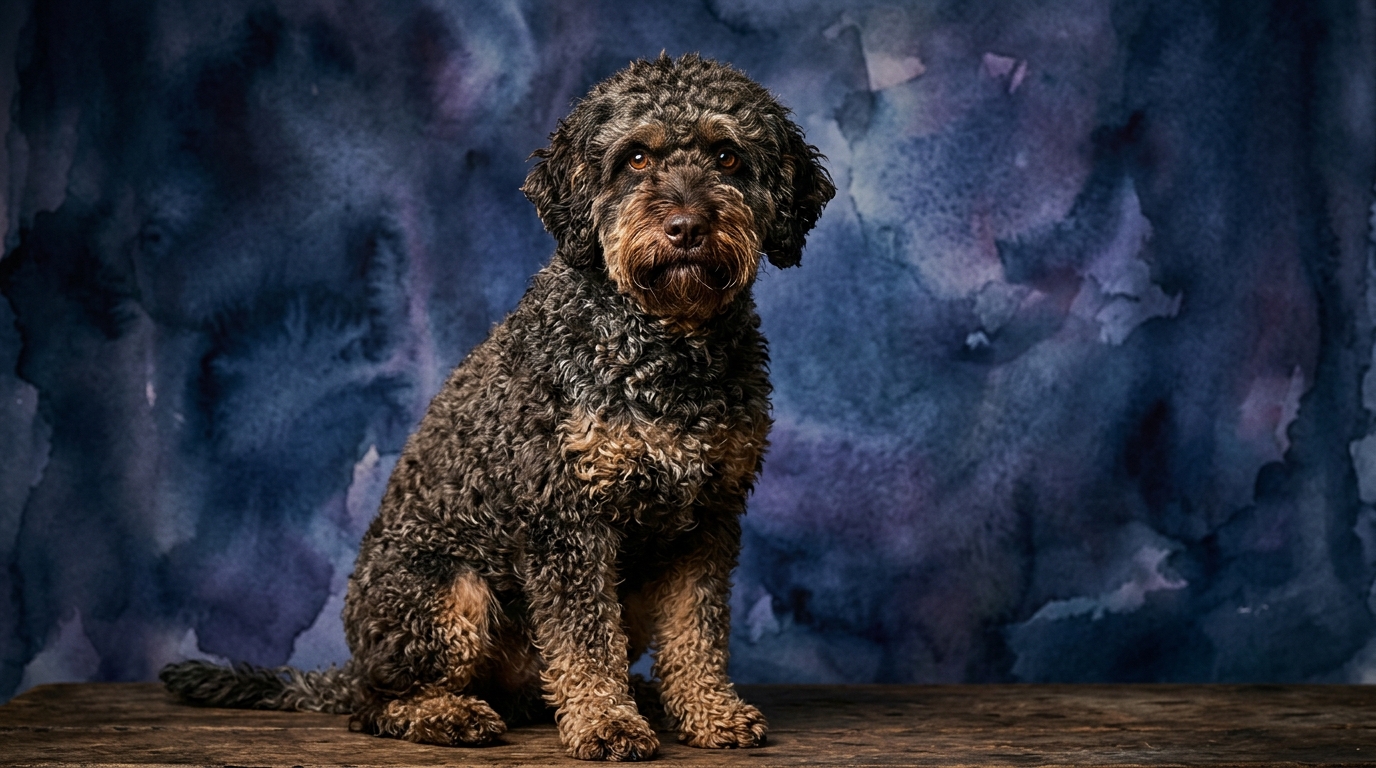
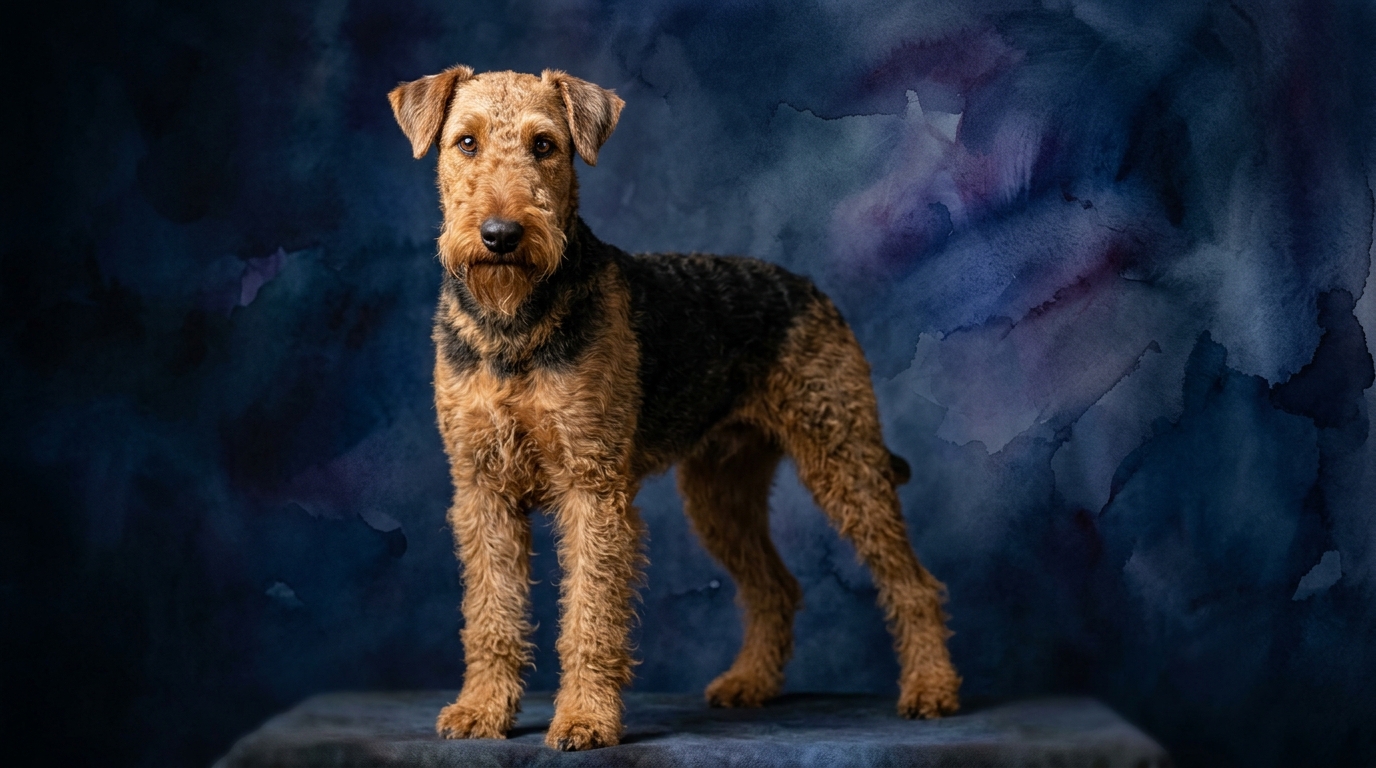
Side-by-Side IQ Profile: Spanish Water Dog vs. Airedale Terrier
The Cosmic Pet Pet IQ Lab employs five key dimensions to evaluate canine intelligence, offering a granular view of each breed’s cognitive strengths. For the Spanish Water Dog, a Herding group member not evaluated by Coren, all five categories register a consistent 3 out of 5. This score in Problem Solving indicates a capacity for figuring out novel situations, albeit potentially requiring more guidance or repetition than a dog with a higher rating. Their Training Speed at 3/5 suggests they are receptive to learning commands and behaviors, but the acquisition process may be steady rather than instantaneous. Social Intelligence, also at 3/5, points to a moderate ability to understand and respond to human cues and social dynamics within their environment. An Instinctive Drive of 3/5 reflects a functional level of inherent breed-specific behaviors, such as herding, without being overwhelmingly intense or difficult to redirect. Finally, a Memory score of 3/5 implies they retain learned information and experiences reasonably well over time, contributing to consistent behavior.
In contrast, the Airedale Terrier, a Terrier group stalwart and Coren-ranked #29, presents a different cognitive profile. They score a robust 4 out of 5 in Problem Solving, indicating a strong aptitude for independent thought and creative solutions when faced with challenges. Their Training Speed also reaches 4/5, suggesting a quicker grasp of new commands and a rapid learning curve, often picking up new tasks with fewer repetitions. Social Intelligence aligns with the Spanish Water Dog at 3/5, demonstrating a similar capacity for interpreting social signals and interacting appropriately within their family unit and with others. The Airedale’s Instinctive Drive is also rated 3/5, reflecting a pronounced terrier drive for chasing, digging, and exploring, but still within a manageable range for dedicated owners. Significantly, their Memory score is 4 out of 5, signifying an excellent ability to recall past lessons and experiences, which can be a boon for long-term training and consistent behavior.
Where the Spanish Water Dog Wins Cognitively
While the Airedale Terrier generally scores higher in several cognitive dimensions, the Spanish Water Dog exhibits unique strengths derived from its balanced 3/5 profile across the board and its herding heritage. The SWD’s consistent scores suggest a predictable and steady cognitive temperament. This can be a distinct advantage for owners who prioritize a dog with a stable learning pace and a less extreme cognitive drive, making their progress in training and adaptation more linear and less prone to bursts of independent problem-solving that might conflict with handler instruction. Their problem-solving, though rated 3/5, is specifically tuned to the complexities of managing flocks, involving subtle anticipation of movement and group dynamics rather than the Airedale’s more direct, independent approach to novel challenges. This means their cognitive efforts are often directed towards cooperative tasks, making them particularly adept at activities requiring a partnership mentality.
Furthermore, the SWD's 3/5 Instinctive Drive, rooted in herding, translates to a different kind of working focus. Unlike the Airedale’s terrier drive, which can manifest as intense prey pursuit or digging, the SWD’s drive is often geared towards controlling and gathering, making them naturally inclined to keep their 'flock' (their family) together and to respond to direction in a way that channels their energy productively. This specific application of their drive and social intelligence (also 3/5) means they often form very strong, attentive bonds with their primary handlers, seeking to understand and engage in joint activities. Their cognitive strengths lie in their nuanced ability to work in tandem, read environmental cues related to movement and presence, and maintain a consistent, cooperative presence, which for many owners, is a significant cognitive 'win' in a companion.
Where the Airedale Terrier Wins Cognitively
The Airedale Terrier’s cognitive profile clearly excels in areas demanding rapid learning, robust problem-solving, and superior recall. With a 4/5 in Problem Solving, Airedales are adept at navigating complex situations and devising their own solutions, often with an inventive flair. This makes them formidable partners in activities requiring independent thought, such as advanced obedience, agility, or even search and rescue, where quick, self-reliant decisions are valuable. Their higher score signifies a dog that can quickly assess a situation, understand cause and effect, and adapt its approach effectively, often surprising owners with their ingenuity.
The Airedale's 4/5 Training Speed is another significant cognitive advantage. This indicates they absorb new commands and routines with remarkable efficiency, often requiring fewer repetitions than many other breeds. This rapid learning curve makes them a rewarding choice for experienced trainers who enjoy pushing the boundaries of canine education and exploring complex sequences. Coupled with a 4/5 Memory, the Airedale retains these lessons over extended periods, ensuring that once a behavior is learned, it is likely to be remembered and performed consistently. This combination of quick learning and strong recall allows for a broad and deep repertoire of learned behaviors, making the Airedale a highly capable and adaptable working dog across various disciplines where cognitive sharpness is paramount.
Which is Easier to Train and Why
When considering ease of training, the Airedale Terrier's higher scores in Training Speed (4/5) and Memory (4/5) might initially suggest a straightforward path. Airedales indeed pick up new commands and concepts rapidly. However, their terrier heritage introduces a layer of complexity: an independent spirit and a pronounced instinctive drive (3/5) to hunt and explore. This means while they learn quickly, they might also choose to apply their problem-solving skills (4/5) to their own agenda, requiring a trainer who is consistent, engaging, and capable of channeling their intelligence and drive positively. Their independent nature means they respond best to clear, firm, yet positive reinforcement, and can become bored or obstinate if not challenged appropriately. For instance, an Airedale might quickly learn 'stay,' but its strong memory and problem-solving could lead it to test boundaries if the reward isn't compelling or if it perceives an opportunity for a more interesting activity.
The Spanish Water Dog, with a Training Speed of 3/5, may take a little longer to grasp new concepts, but their herding background fosters a strong desire to work with their handler. This inherent cooperativeness can make them more amenable to instruction, even if the initial learning phase is slightly slower. Their consistent 3/5 scores across the board suggest a more balanced and less extreme cognitive profile, which can be less challenging for a novice owner to manage. While they might not invent solutions as readily as an Airedale, their focus on partnership means they are often more inclined to look to their person for direction. Their instinctive drive (3/5), while present, is typically expressed through a desire to keep the 'flock' together, making them attentive companions who thrive on being involved in family activities rather than embarking on solo missions. Therefore, while the Airedale learns faster, the SWD's cooperative nature can make them feel 'easier' to train for owners who prefer a dog that is consistently eager to please and work alongside them.
Which Suits Active Owners vs. Less Active Owners
Neither the Spanish Water Dog nor the Airedale Terrier is suited for truly relaxed or sedentary owners; both breeds are working dogs with significant energy and cognitive needs. However, the *type* of activity and engagement they require differs. The Spanish Water Dog, with its herding background and consistent 3/5 scores, thrives on purposeful activity that engages its cooperative nature. Owners who enjoy structured training, dog sports like agility or obedience, and regular outdoor adventures where the dog can be an active participant in family life will find an ideal match. Their desire to be involved and work alongside their handler means they need mental stimulation that reinforces partnership and provides a 'job' to do, even if it's just fetching the mail or accompanying a hike. They need consistent physical exercise to prevent boredom, but their cognitive needs are often met through engaging with their people in shared tasks and learning.
The Airedale Terrier, with its higher problem-solving (4/5) and faster training speed (4/5), combined with a strong instinctive drive (3/5), demands an owner who can provide both vigorous physical exercise and stimulating mental challenges that cater to their independent, inventive nature. They excel in activities that allow them to use their intellect to solve problems, such as tracking, advanced obedience, or competitive dog sports. Airedales require an owner who understands their terrier drive and can channel it productively, preventing boredom which can lead to destructive behaviors. They need to be given opportunities to explore, dig, and chase (safely and appropriately), and thrive with owners who enjoy a dog that thinks for itself and is up for any adventure. While both breeds are active, the Airedale's cognitive profile means they benefit from an owner who actively engages their independent problem-solving skills, rather than solely relying on cooperative tasks.
The Verdict
Choose the Spanish Water Dog if you appreciate a consistently cooperative temperament, a dog that learns steadily, and thrives on being an integrated, working member of the family with a strong desire for partnership and shared activities.
Opt for the Airedale Terrier if you are an experienced owner who enjoys a quick-witted, independent thinker with rapid learning abilities and excellent memory, capable of excelling in complex tasks and requiring engaging mental and physical challenges.
🧠 Find Your Pet's IQ Score
Our Pet IQ Lab assessment covers 25+ tests across 5 cognitive dimensions — personalized to your breed.
Take the Full IQ Test →Frequently Asked Questions
Do Spanish Water Dogs or Airedale Terriers make better family pets?
Both breeds can be excellent family pets, but their suitability depends on the family's lifestyle and experience. Spanish Water Dogs often bond closely with their families and are generally good with children when properly socialized, thriving on inclusion in family activities. Airedale Terriers are also loyal and protective, but their independent nature and strong terrier drives require consistent guidance and clear boundaries, making them better suited for families with some prior dog experience.
Which breed requires more mental stimulation?
Both breeds require significant mental stimulation, but in different ways. The Airedale Terrier, with its higher problem-solving and memory scores, often needs more diverse and challenging mental tasks that engage its independent thought and terrier instincts. The Spanish Water Dog also needs stimulation, but often thrives on tasks that involve partnership and cooperative work, such as herding games or structured obedience, rather than solely independent problem-solving.
Are Spanish Water Dogs or Airedale Terriers prone to specific behavioral issues related to their intelligence?
The Spanish Water Dog's potential issues stem from under-stimulation or lack of purpose, leading to anxiety or excessive energy, as their cooperative intelligence needs an outlet. The Airedale Terrier's higher problem-solving and independent nature, if not channeled, can lead to destructive behaviors like digging, excessive barking, or creating their own 'fun' by ignoring commands, due to boredom or a perceived lack of adequate challenge.