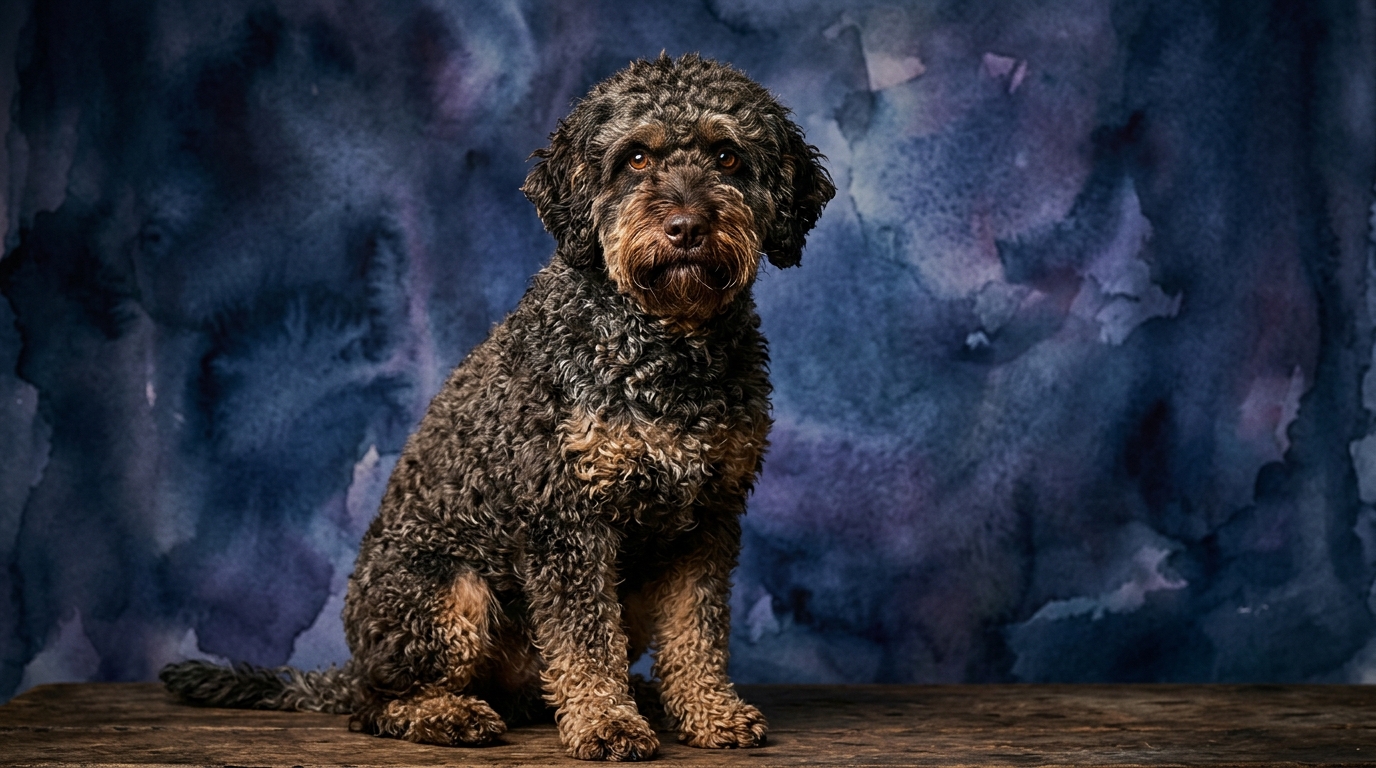
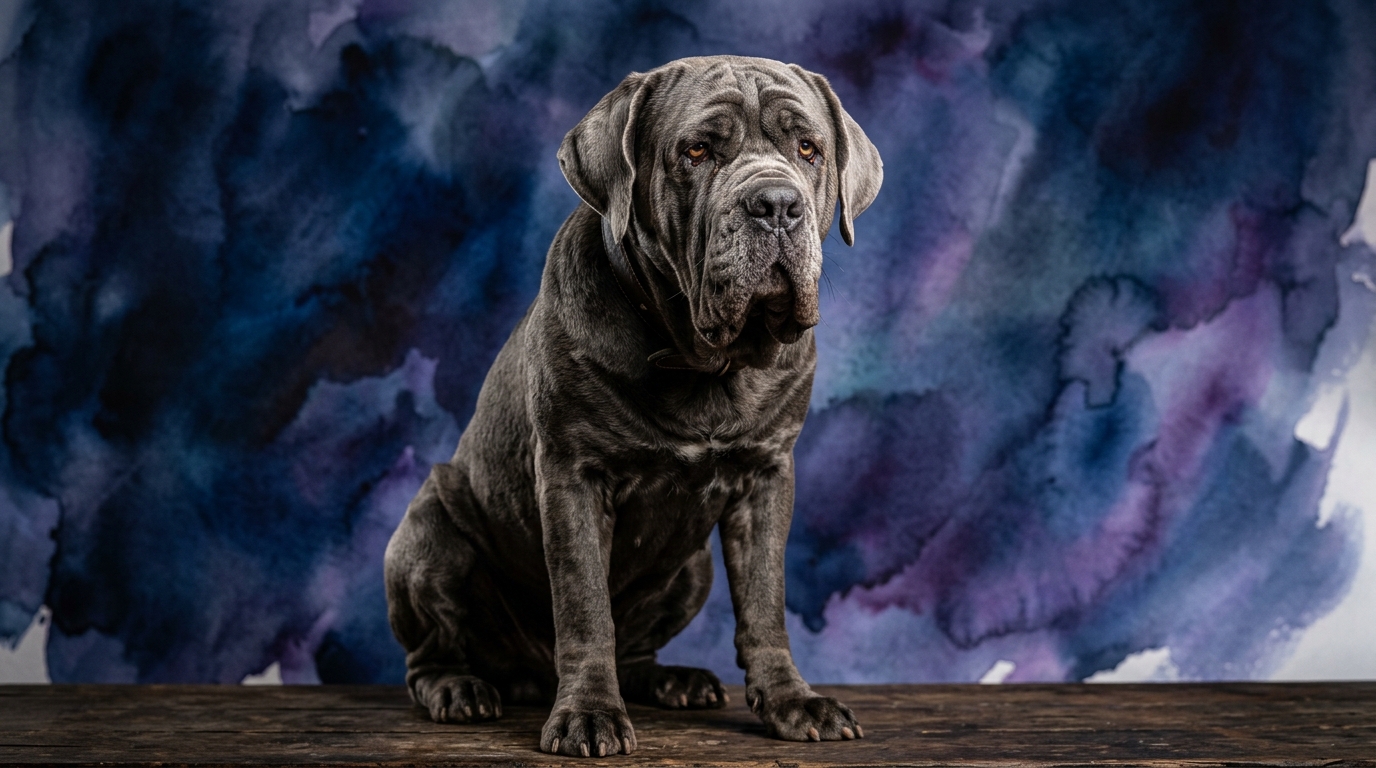
Side-by-Side IQ Profile: Spanish Water Dog vs. Neapolitan Mastiff
At The Cosmic Pet Pet IQ Lab, both the Spanish Water Dog and the Neapolitan Mastiff register a consistent 3/5 across all five cognitive dimensions. However, these identical scores belie unique manifestations of intelligence, deeply rooted in their breed origins and functions.
For the **Spanish Water Dog (Herding)**:
**Problem Solving (3/5):** This score reflects an ability to independently assess and adapt to dynamic herding scenarios, quickly re-routing stray animals or navigating complex terrain. Their problem-solving often involves spatial reasoning and rapid decision-making under pressure, crucial for managing livestock.
**Training Speed (3/5):** This breed typically learns new commands at a moderate pace, with their eagerness to engage and strong working drive contributing to their trainability. Consistent, engaging methods are key to maintaining their focus for complex sequences required in sports like agility.
**Social Intelligence (3/5):** Exhibits a balanced understanding of social cues from humans and other animals, effectively reading body language to anticipate intentions or herd movements. While devoted to their family, they are discerningly reserved with strangers, showcasing a selective social awareness.
**Instinctive Drive (3/5):** Their herding background manifests as a moderate yet persistent drive to gather and control, inclining them to keep family members close or react to fast-moving objects. This foundational drive directs their attention towards purposeful activity and engagement.
**Memory (3/5):** Allows them to retain complex command sequences, recall specific locations where livestock were last seen, and remember routines and boundaries. This robust memory is crucial for building upon learned experiences and navigating environments with precision.
For the **Neapolitan Mastiff (Working)**:
**Problem Solving (3/5):** Typically revolves around assessing situations impacting their home or family, discerning genuine threats from benign visitors, or strategically observing their territory. Their solutions often involve calculated action and patient observation rather than frantic activity.
**Training Speed (3/5):** Neapolitan Mastiffs learn at a moderate pace, requiring patience and consistent positive reinforcement. Their desire to please their family motivates them, but their independent nature means training must emphasize clear communication and cooperative ventures.
**Social Intelligence (3/5):** Displays a profound social intelligence centered on their family unit, adept at reading owner moods and intentions, often anticipating needs with quiet empathy. Towards strangers, it manifests as cautious assessment, distinguishing between welcome guests and potential intruders.
**Instinctive Drive (3/5):** Their primary drive is guarding—a moderate yet powerful territorial awareness and natural inclination to protect loved ones and property. This is a deeply ingrained sense of responsibility and vigilance, shaping their perception of their environment.
**Memory (3/5):** Exhibits a strong memory for people, places, and routines relevant to their security and family life. They recall past interactions and established boundaries, supporting their role as a steadfast protector and discerning companion.
Where the Spanish Water Dog Wins Cognitively
The Spanish Water Dog truly shines in cognitive scenarios demanding rapid adaptation and fluid movement, a legacy of their herding ancestry. Their problem-solving, rated 3/5, often manifests as spontaneous adjustments to changing environmental stimuli, such as a flock scattering unexpectedly or navigating varied terrain. This breed demonstrates a superior ability to process multiple pieces of information simultaneously—the movement of animals, the location of boundaries, and the handler's signals—and synthesize them into immediate, effective action. Their instinctive drive, also 3/5, is geared towards active engagement and control, making them particularly adept at tasks requiring sustained mental and physical coordination. For instance, they excel at learning and executing intricate agility courses, where remembering long sequences (memory 3/5) and making split-second decisions about obstacles are paramount. Their social intelligence, while rated 3/5, is finely tuned to cooperative work, allowing them to anticipate handler cues with precision during complex tasks, demonstrating a proactive rather than reactive cognitive style.
Where the Neapolitan Mastiff Wins Cognitively
Conversely, the Neapolitan Mastiff's cognitive strengths lie in their deliberate, discerning approach to their environment and their profound loyalty-driven understanding. Their problem-solving, also 3/5, excels in situations requiring calm assessment and strategic positioning, particularly when it concerns the security of their home and family. Unlike the quick, active adjustments of a herding dog, the Mastiff's intellect is geared towards observing, analyzing potential threats, and making calculated decisions about intervention. Their social intelligence, rated 3/5, is deeply rooted in reading the subtle cues of their family members, often anticipating needs or moods with a quiet empathy. This strong bond enhances their training speed (3/5) for tasks that reinforce their role as a protector or companion, as they are motivated by a desire to maintain harmony within their pack. Their instinctive drive (3/5) for guarding is not about frantic activity but about steady vigilance and a memory (3/5) that meticulously tracks who belongs and who doesn't, building a comprehensive mental map of their secure domain.
Which is Easier to Train and Why
When considering ease of training, the Spanish Water Dog generally presents a more straightforward path for the average owner, primarily due to their inherent biddability and higher energy levels. Their training speed (3/5) is often augmented by a natural eagerness to engage in activities and a desire to work alongside their human companions. They thrive on mental stimulation and purpose, making them highly receptive to positive reinforcement methods and varied training routines. A Spanish Water Dog's instinctual drive (3/5) for herding means they respond well to tasks that mimic problem-solving or require structured movement, such as agility or obedience. However, their sensitivity means harsh corrections are counterproductive, and their intelligence can lead to boredom if training isn't kept engaging.
Conversely, the Neapolitan Mastiff, while also rated 3/5 for training speed, typically requires a different approach. Their independent nature and profound self-possession mean they are less inclined to perform simply 'because you said so.' Training a Neapolitan Mastiff relies heavily on building a strong, respectful bond and making tasks feel like a cooperative effort. They are not as driven by repetitive drills or fast-paced activities; instead, they learn best when training is calm, consistent, and makes sense within their world. Their sheer size and power mean that while they may take longer to process and internalize commands, their memory (3/5) ensures deep retention once learned, making early and consistent socialization and obedience training absolutely vital for responsible ownership.
Which Suits Active Owners vs. Relaxed Owners
The lifestyle match between owner and dog is critical, and here the differences between these two breeds become pronounced. The Spanish Water Dog is unequivocally suited for active owners who relish outdoor adventures and can provide consistent mental and physical engagement. Their energetic disposition and instinctive drive (3/5) demand daily outlets for their vigor, whether through long hikes, swimming sessions, or participation in dog sports like agility, dock diving, or advanced obedience. Owners who enjoy training and can offer a variety of stimulating activities will find the Spanish Water Dog a willing and capable partner. Their problem-solving (3/5) and memory (3/5) thrive when challenged, making them ideal for individuals who are prepared to integrate their dog fully into an active, purpose-driven lifestyle.
In stark contrast, the Neapolitan Mastiff is an excellent fit for more relaxed owners who appreciate a calm, watchful presence. While they require regular, moderate exercise to maintain health, their endurance is significantly lower than that of a Spanish Water Dog. Their ideal day often involves quiet companionship, supervising their family from a comfortable spot, and patrolling a securely fenced yard. Owners who understand and respect the Mastiff's independent yet devoted nature, and who can provide a stable, predictable environment, will find immense satisfaction. Their social intelligence (3/5) makes them deeply attuned to their family's rhythm, making them ideal for those seeking a steady, protective, and less demanding canine companion in terms of sheer activity levels.
The Verdict
For those seeking a dynamic, engaged partner for outdoor activities and diverse training challenges, the Spanish Water Dog is an excellent choice.
If your lifestyle is more tranquil and you desire a profoundly loyal, watchful guardian who thrives on quiet companionship and a stable home environment, the Neapolitan Mastiff will be a deeply rewarding presence.
🧠 Find Your Pet's IQ Score
Our Pet IQ Lab assessment covers 25+ tests across 5 cognitive dimensions — personalized to your breed.
Take the Full IQ Test →Frequently Asked Questions
Are Spanish Water Dogs good with children?
Spanish Water Dogs can be wonderful family dogs, often forming strong bonds with children. However, their herding instinct might lead them to 'herd' children, so early socialization and supervision are crucial to teach appropriate interactions. They thrive in active households where children understand how to interact respectfully with a dog.
Do Neapolitan Mastiffs drool a lot?
Yes, Neapolitan Mastiffs are known for significant drooling, especially after eating, drinking, or during excitement, due to their loose jowls. Owners should be prepared for this characteristic and keep towels handy. While it's a part of their charm for many, it's an important consideration for potential owners.
What are the grooming needs for each breed?
The Spanish Water Dog has unique grooming needs; their woolly coat cords naturally if not brushed, and they should never be brushed or combed. Instead, they require occasional clipping down to about an inch or two, usually a few times a year. The Neapolitan Mastiff, with its short, dense coat, has minimal grooming requirements, primarily needing regular brushing to remove loose hair and occasional baths.