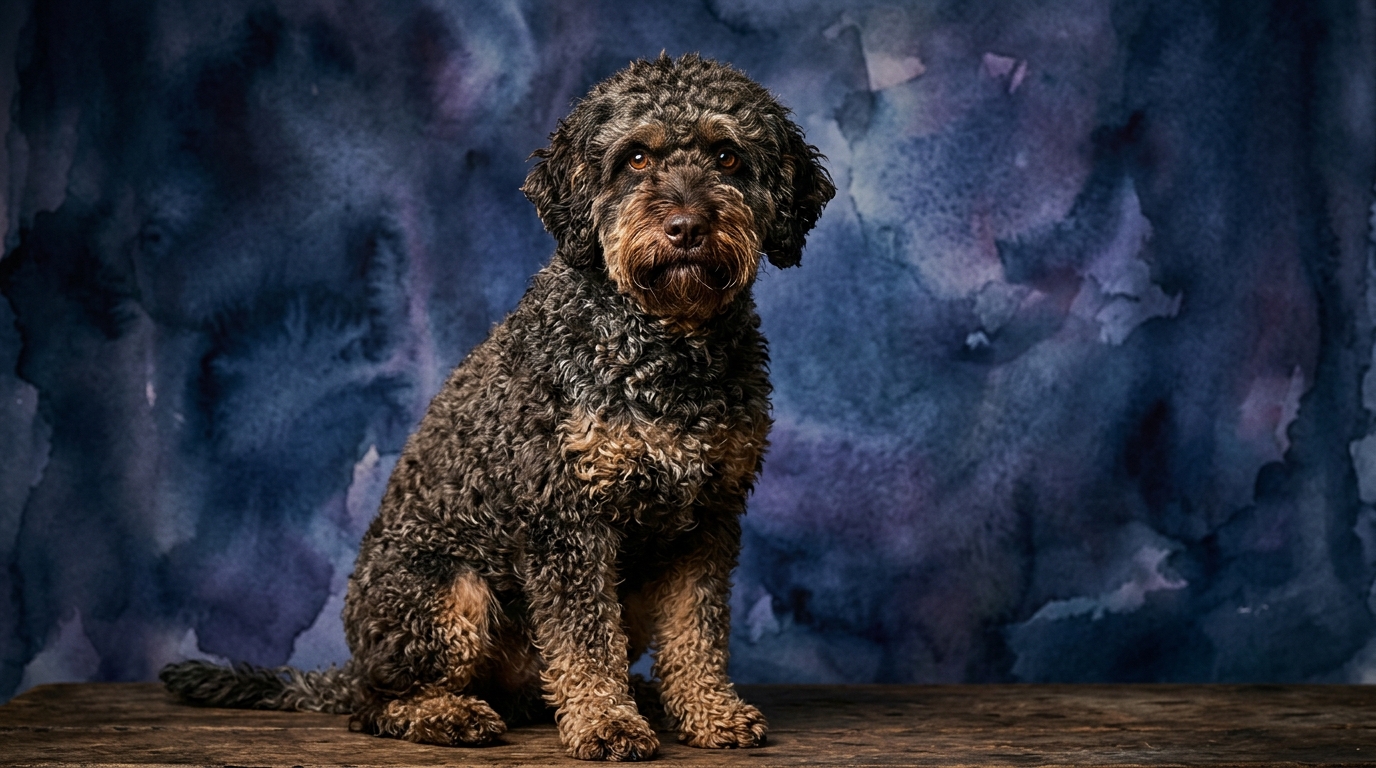
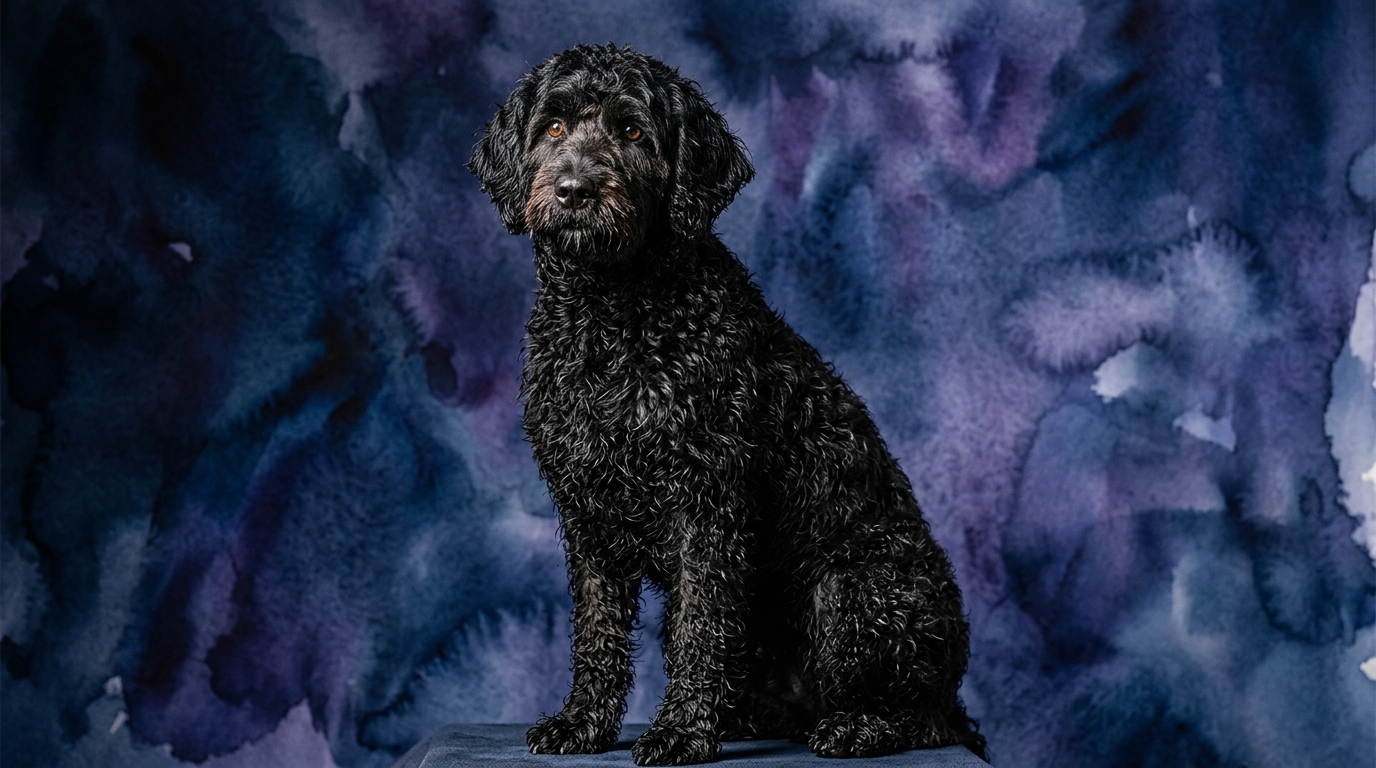
Side-by-Side IQ Profile: Diving into Canine Cognition
The Cosmic Pet IQ Lab evaluates canine intelligence across five key dimensions, providing a granular view of a breed's cognitive strengths. For both the Spanish Water Dog and the Portuguese Water Dog, each dimension registers a score of 3 out of 5, indicating a robust, yet distinctly applied, intellectual capacity.
**Problem Solving (3/5):** For the Spanish Water Dog, this score reflects a moderate capacity for independent thought, particularly valuable in their ancestral role of managing livestock across varied terrains. A Spanish Water Dog might intuitively figure out how to gather a scattered flock or navigate obstacles on their own, demonstrating practical, context-specific ingenuity. The Portuguese Water Dog also earns a 3/5, manifesting in their ability to overcome challenges specific to water work, such as retrieving items from complex environments or understanding multi-step tasks. Their problem-solving often involves a partnership with their human, seeking solutions to achieve a shared objective.
**Training Speed (3/5):** This indicates a moderate learning pace for the Spanish Water Dog. They absorb new commands and routines steadily, often excelling when tasks align with their natural herding instincts or provide a clear, practical purpose. They may require consistent, engaging methods to maintain focus and prevent boredom. Similarly, a Portuguese Water Dog learns at a moderate speed, readily grasping new concepts, especially those involving cooperation and physical activity. Their desire to engage with their handler can make training sessions productive, though consistent positive reinforcement is key to building a strong working relationship.
**Social Intelligence (3/5):** A Spanish Water Dog’s social acumen at 3/5 means they are observant of their environment and the dynamics within their human family or perceived 'flock.' They can read subtle cues from people and other animals, often reacting instinctively to maintain order or predict intentions. Also at 3/5, a Portuguese Water Dog exhibits a strong connection to their human companions, often anticipating needs and responding well to emotional nuances. Their social intelligence is geared towards forming deep bonds and understanding the intricate communication within their immediate family unit.
**Instinctive Drive (3/5):** The 3/5 in instinctive drive highlights the Spanish Water Dog's robust herding impulse, a fundamental aspect of their being. This drive compels them to manage, gather, and control, often translating into a keen interest in movement and a desire to 'organize' their surroundings, whether it's livestock, children, or even household objects. This score reflects a powerful natural inclination towards water activities and retrieving for the Portuguese Water Dog. They possess an innate urge to swim, dive, and bring items back to their handler, driven by centuries of working alongside fishermen. Their drive is often focused on purposeful, cooperative tasks.
**Memory (3/5):** A Spanish Water Dog's memory at 3/5 allows them to retain complex sequences, familiar routes, and past interactions effectively. This is vital for remembering livestock patterns or navigating changing landscapes, contributing to their efficiency and adaptability in their traditional roles. Also scoring 3/5, a Portuguese Water Dog demonstrates solid recall for commands, routines, and the location of objects. Their memory serves them well in learning intricate tasks, remembering specific signals from their handler, and performing multi-step operations with precision.
Where Spanish Water Dog Wins Cognitively
While sharing identical IQ scores, the Spanish Water Dog's cognitive profile shines particularly bright in situations demanding independent decision-making and keen environmental awareness. Their 3/5 Problem Solving, paired with their Herding group heritage, often manifests as a greater capacity for autonomous thought in fluid, less structured environments. A Spanish Water Dog, when faced with an unexpected obstacle or a shifting group dynamic, might be quicker to devise an on-the-spot solution without direct human input, relying on their own assessment of the situation. This independent streak, a hallmark of many herding breeds, allows them to excel in scenarios where quick, unassisted judgment is paramount. Their 3/5 Social Intelligence can lean towards reading subtle environmental cues and the 'mood' of a group, enabling them to anticipate movements or potential issues before they fully develop, a critical skill for managing livestock. This translates into a dog that is acutely aware of their surroundings and capable of making proactive adjustments based on observed patterns, rather than waiting for a direct command.
Where Portuguese Water Dog Wins Cognitively
The Portuguese Water Dog's cognitive strengths are particularly evident in cooperative tasks that require sustained focus and intricate communication with a handler. Their 3/5 Problem Solving, combined with their Working group background, shines when deciphering complex sequences of commands, demonstrating a sophisticated understanding of human intent and a drive to execute tasks collaboratively. Their 3/5 Social Intelligence is often directed towards their human partner, allowing them to pick up on nuanced body language, vocal inflections, and emotional states, which enhances their ability to work seamlessly as part of a team. This makes them particularly adept at activities requiring precise execution based on human direction, where their memory of learned sequences and signals is robustly applied to achieve a shared goal, such as competitive obedience or advanced water retrieval. They excel in environments where their intellect is engaged through partnership and shared objectives.
Which is Easier to Train and Why
The concept of 'easier to train' is nuanced, even with both breeds scoring a 3/5 in Training Speed. The Portuguese Water Dog often presents a more straightforward training journey for many owners due to their inherent desire to partner and please their human. Their Working group heritage has cultivated a dog that thrives on cooperative tasks, making them generally more biddable and handler-focused. They often possess a keen enthusiasm for structured learning and respond well to positive reinforcement, eager to understand and execute commands, making consistent progress in a variety of disciplines.
In contrast, the Spanish Water Dog, while equally capable of learning at a moderate pace, brings a distinct herding dog independence to the training arena. Their 3/5 Instinctive Drive pushes them towards autonomous decision-making, which can sometimes be interpreted as stubbornness if they don't perceive the immediate purpose of a command or if it conflicts with their own herding impulses. Training a Spanish Water Dog often requires more creativity, patience, and a deep understanding of their herding motivations to channel their intellect effectively. They may learn quickly if a task aligns with their natural drives but might require more convincing for repetitive drills or arbitrary commands, making their training experience potentially more challenging for a novice owner expecting immediate compliance.
Which Suits Active Owners vs Relaxed Owners
Both breeds possess a 3/5 Instinctive Drive, indicating a moderate to high need for physical and mental engagement, making neither truly suited for a relaxed, sedentary lifestyle. However, their drives manifest differently, influencing which type of active owner they best suit. The Portuguese Water Dog, with its strong water and retrieving drive, thrives with owners who enjoy active outdoor pursuits like swimming, dock diving, hiking, and engaging in structured dog sports such as agility or obedience. Their cognitive profile benefits from activities that involve problem-solving alongside their human, requiring sustained focus and a clear purpose. They are excellent companions for owners who want a dog to actively participate in their hobbies and enjoy a collaborative working relationship, making them ideal for individuals who are consistently engaged and provide regular mental and physical challenges.
The Spanish Water Dog, while also needing significant activity, leans towards more independent, purpose-driven engagement rooted in their herding instincts. Owners who appreciate a dog with a keen eye for movement, a desire to 'organize,' and who can provide outlets for their herding drive—such as herding trials, advanced scent work, or complex puzzle toys—will find a rewarding partner. They are well-suited for active owners who understand the need for both physical exertion and mental stimulation that taps into their problem-solving and environmental awareness, perhaps in less structured, more exploratory settings. A relaxed owner, for either breed, would quickly find themselves with a bored and potentially destructive companion, as their moderate drives demand consistent, enriching outlets.
The Verdict
Choose the Spanish Water Dog if you are an experienced, active owner who appreciates a dog's independent problem-solving abilities and can channel a strong herding drive through engaging, purpose-driven activities, valuing a partner who thinks for themselves.
Opt for the Portuguese Water Dog if you seek a highly cooperative, active companion eager to work alongside you in structured sports, water activities, or complex training, thriving on shared goals and a strong handler-dog partnership.
🧠 Find Your Pet's IQ Score
Our Pet IQ Lab assessment covers 25+ tests across 5 cognitive dimensions — personalized to your breed.
Take the Full IQ Test →Frequently Asked Questions
Do Spanish Water Dogs and Portuguese Water Dogs have the same intelligence?
According to The Cosmic Pet IQ Lab, both breeds score identically across the five cognitive dimensions, including Problem Solving, Training Speed, Social Intelligence, Instinctive Drive, and Memory, each at 3/5. While their numerical scores are the same, the practical manifestation and application of these cognitive traits differ based on their distinct breed histories and inherent drives, impacting how they interact with their environment and humans.
Which water dog is better for first-time owners?
Generally, the Portuguese Water Dog might be a more manageable choice for a first-time owner due to their typically more biddable nature and strong desire to please, which can make structured training more straightforward. The Spanish Water Dog's independent herding instincts can present a greater training challenge, requiring a more experienced hand to channel their drives effectively.
How do their instinctive drives differ, given both score 3/5?
Despite identical 3/5 scores, their instinctive drives are fundamentally different in nature. The Spanish Water Dog possesses a strong herding drive, compelling them to gather and control movement, often focusing on organizing their environment. The Portuguese Water Dog, conversely, exhibits a powerful drive for water work and retrieving, rooted in their history as fishermen's helpers, thriving on cooperative tasks with their handler. Both require significant outlets for these drives.