
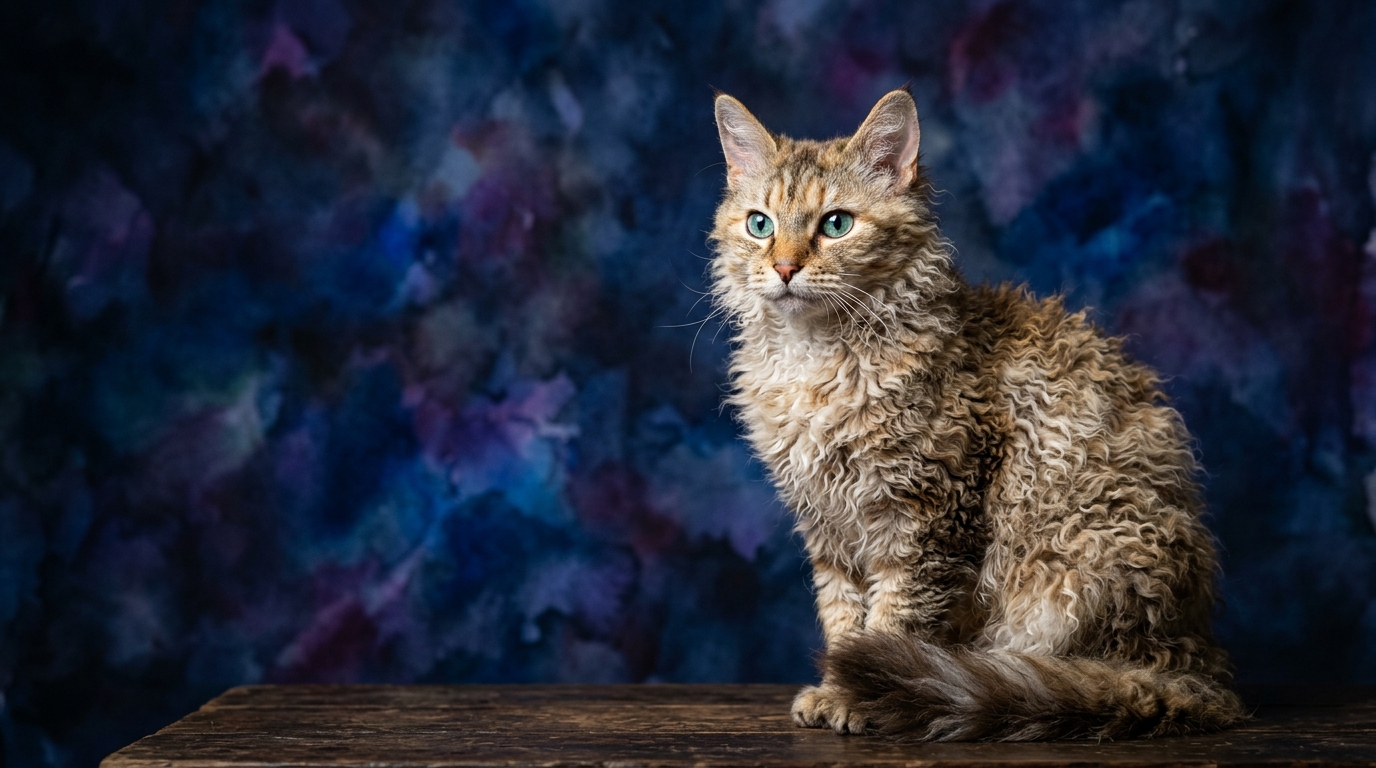
Side-by-Side IQ Profile: Sphynx vs. LaPerm
The Cosmic Pet Pet IQ Lab employs a five-dimensional framework to assess feline cognitive abilities, providing a nuanced view beyond mere anecdotal observations. For the Sphynx, this assessment paints a picture of a remarkably engaging and adaptable companion, while the LaPerm exhibits a more consistently moderate, yet balanced, cognitive profile across the board.
Let's examine the Sphynx's scores: its Problem Solving ability is rated at 4/5, indicating a strong capacity to strategize and overcome obstacles, perhaps by manipulating objects or figuring out complex sequences for rewards. Training Speed also stands at 4/5, suggesting a quick uptake of new commands and routines, often driven by their keen interest in human interaction. Social Intelligence is a standout at 5/5, reflecting an exceptional ability to interpret human cues, form deep bonds, and actively participate in household dynamics. Instinctive Drive is moderate at 3/5, meaning while they retain natural feline instincts, these are often integrated into their social routines rather than dominating their behavior. Finally, Memory is strong at 4/5, allowing them to recall learned behaviors, routines, and even specific people or places over extended periods.
The LaPerm, by contrast, presents a more uniform cognitive landscape. Its Problem Solving skill is rated at 3/5, indicating a competent but perhaps less inventive approach to challenges, often preferring direct methods over intricate manipulation. Training Speed is also 3/5, suggesting that while they are certainly trainable, they may require more consistent repetition and patience compared to their hairless counterparts. Social Intelligence scores 3/5, which points to a comfortable level of interaction with humans but perhaps less overt demonstrativeness or a slightly more independent streak than the highly social Sphynx. Instinctive Drive matches the Sphynx at 3/5, implying a similar balance of natural feline behaviors within a domestic setting. Memory, like several other categories, is rated at 3/5, meaning they can certainly learn and retain information, but perhaps not with the same vivid detail or long-term recall as a Sphynx might exhibit.
Where the Sphynx Excels Cognitively
The Sphynx's cognitive strengths are particularly evident in its capacity for social engagement and rapid learning. With a perfect 5/5 in Social Intelligence, these cats are acutely attuned to their human companions, often seeking out interaction, responding to emotional cues, and even initiating games. This high social aptitude means they thrive on participation, readily integrating into family activities and forming robust, communicative relationships. Their problem-solving capabilities (4/5) are frequently observed in their playful pursuit of hidden toys or their ingenious attempts to access coveted spaces, showcasing a persistent and creative approach to navigating their environment. This isn't just about curiosity; it's about a structured, often successful, method of achieving their desires. Furthermore, their superior Memory (4/5) contributes significantly to their ability to anticipate routines, remember specific commands, and recall previous interactions, making them predictable and responsive companions in a domestic setting. This combination of social acuity and sharp recall allows for a highly interactive and responsive pet, adept at understanding and engaging with its surroundings and its people.
Cognitive Advantages of the LaPerm
While the LaPerm doesn't boast higher individual scores than the Sphynx in any category, its balanced cognitive profile, particularly its consistent 3/5 across problem-solving, training speed, social intelligence, and memory, could be considered a distinct advantage for owners seeking a more uniformly predictable and less intensely demanding companion. Their moderate social intelligence (3/5) means they are affectionate and enjoy companionship without the constant, high-energy demand for interaction that a Sphynx might exhibit. This offers a comfortable middle ground for owners who appreciate a cat that is present and friendly but also content with periods of independent activity. The LaPerm's consistent 3/5 in Problem Solving and Training Speed suggests a reliable capacity for learning and adapting, albeit at a steady pace. They are not prone to overthinking or under-reacting; rather, they approach new situations with a sensible, manageable level of cognitive effort. Their Instinctive Drive, matching the Sphynx at 3/5, signifies a healthy balance of natural feline behaviors, like hunting play, integrated without being overwhelming. This overall cognitive consistency makes the LaPerm a wonderfully adaptable pet, less likely to exhibit extreme behaviors stemming from either profound intellectual demands or a lack thereof, instead offering a steady, agreeable presence.
Training Dynamics: Sphynx vs. LaPerm
When it comes to training, the Sphynx generally presents as an easier and more enthusiastic student due to its higher scores in Training Speed (4/5) and Social Intelligence (5/5). Their strong desire for human interaction and approval makes them highly motivated to learn tricks, respond to their names, and even walk on a leash. They are quick to grasp new concepts, often requiring fewer repetitions to solidify a behavior. Real behavioral differences include a Sphynx's tendency to actively engage with training sessions, treating them as another form of play and bonding. They are more likely to seek out human attention and respond to positive reinforcement with visible enthusiasm, making the training process feel more like a collaborative effort.
The LaPerm, with its 3/5 scores in both Training Speed and Social Intelligence, is certainly trainable but typically requires a more patient and consistent approach. While they enjoy human company, their motivation for learning may stem less from an intense desire to please and more from the prospect of a treat or a gentle reward. Behavioral differences include a LaPerm's potential to be less overtly demonstrative in their learning, taking a bit longer to process and internalize commands. They might not show the same immediate eagerness as a Sphynx, but with persistent, positive reinforcement and clear communication, they are perfectly capable of mastering a variety of tasks. Owners might find that LaPerms respond best to shorter, focused training sessions that respect their slightly more independent nature, gradually building up their repertoire of learned behaviors.
Matching Feline Intellect with Owner Lifestyles
For active owners seeking a highly interactive and cognitively stimulating companion, the Sphynx is an exceptional match. Their superior social intelligence (5/5) means they thrive on being an integral part of daily life, often following their owners from room to room, participating in conversations, and actively soliciting playtime. Their problem-solving abilities (4/5) and quick training speed (4/5) mean they benefit immensely from puzzle toys, interactive games, and consistent engagement, preventing boredom and channeling their considerable mental energy constructively. These cats enjoy learning new tricks and can even be taught to fetch, making them ideal for owners who enjoy spending dedicated time on mental enrichment and physical play. An active owner would appreciate the Sphynx's capacity for deep bonding and its almost dog-like devotion, constantly seeking connection and mental stimulation.
Conversely, the LaPerm caters beautifully to more relaxed owners who appreciate a cat that is affectionate but also content with periods of self-directed activity. While they certainly enjoy companionship, their moderate social intelligence (3/5) means they are not as intensely demanding of constant attention as a Sphynx might be. A LaPerm is happy to curl up nearby, observe household activities, and engage in play on its own terms, without requiring constant mental challenges or interactive games to stay content. Their balanced cognitive profile (mostly 3/5s) indicates they are adaptable and easygoing, not prone to excessive anxiety if left alone for reasonable periods, nor do they typically seek out complex mischief. A relaxed owner will find the LaPerm to be a charming, engaging, yet undemanding presence, offering comfort and companionship without the need for an elaborate daily regimen of cognitive stimulation.
The Verdict
Choose a Sphynx if you desire a highly interactive, socially intelligent cat eager to participate in your life and thrives on consistent mental engagement and companionship.
Opt for a LaPerm if you prefer a balanced, affectionate feline companion that is trainable and present, but also enjoys periods of independence without demanding constant cognitive stimulation.
🧠 Find Your Pet's IQ Score
Our Pet IQ Lab assessment covers 25+ tests across 5 cognitive dimensions — personalized to your breed.
Take the Full IQ Test →Frequently Asked Questions
Are Sphynx cats good at learning tricks?
Yes, Sphynx cats are generally quite adept at learning tricks due to their high training speed (4/5) and exceptional social intelligence (5/5). They are motivated by human interaction and positive reinforcement, making them eager and quick learners for various commands and behaviors.
Do LaPerms get along well with other pets?
LaPerms, with a social intelligence score of 3/5, typically adapt well to other pets, though their interactions might be less intense than a Sphynx. They are generally amiable and can coexist peacefully, especially if properly introduced, offering a comfortable and balanced presence in a multi-pet household.
Which breed requires more mental stimulation daily?
The Sphynx generally requires more consistent mental stimulation daily due to its higher problem-solving (4/5) and social intelligence (5/5). They thrive on interactive games, puzzle toys, and active engagement with their owners to keep their sharp minds occupied and prevent boredom, whereas LaPerms are content with more moderate stimulation.