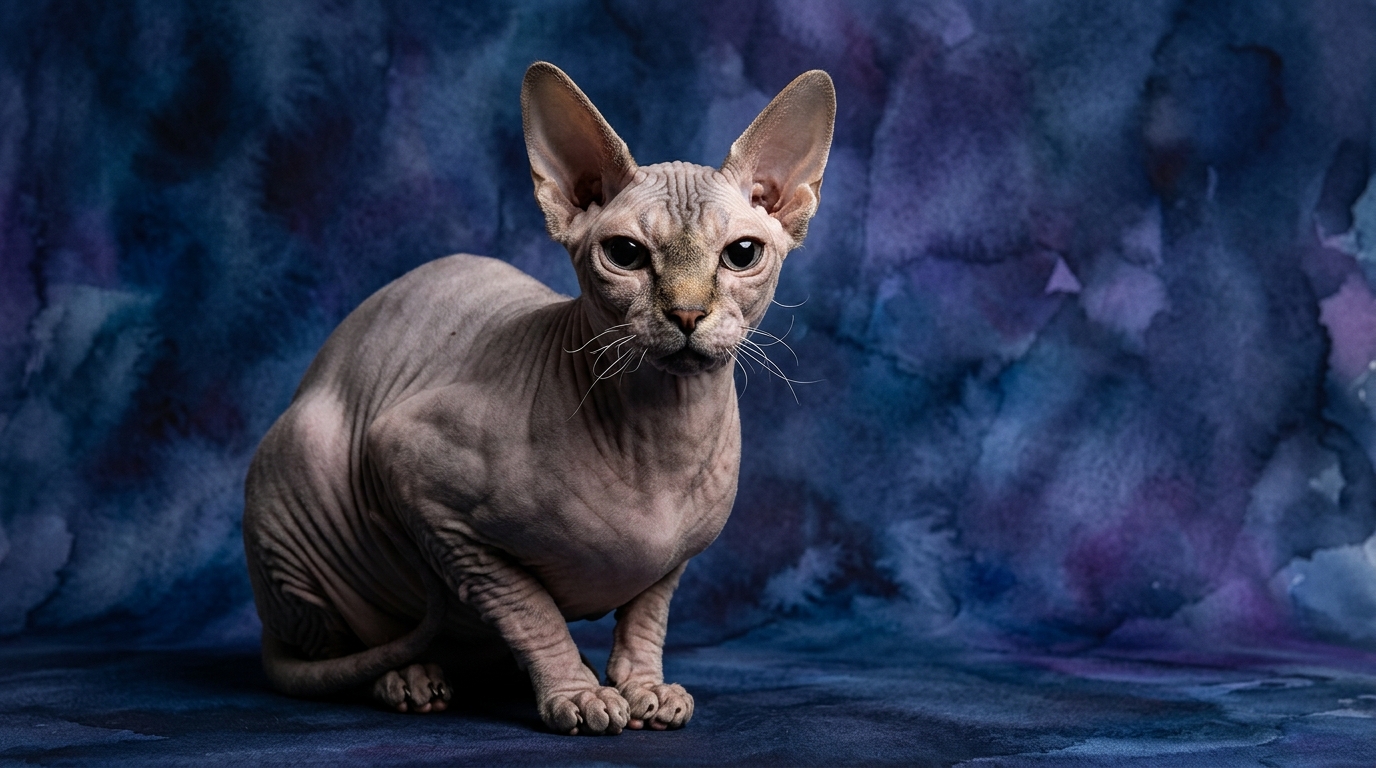
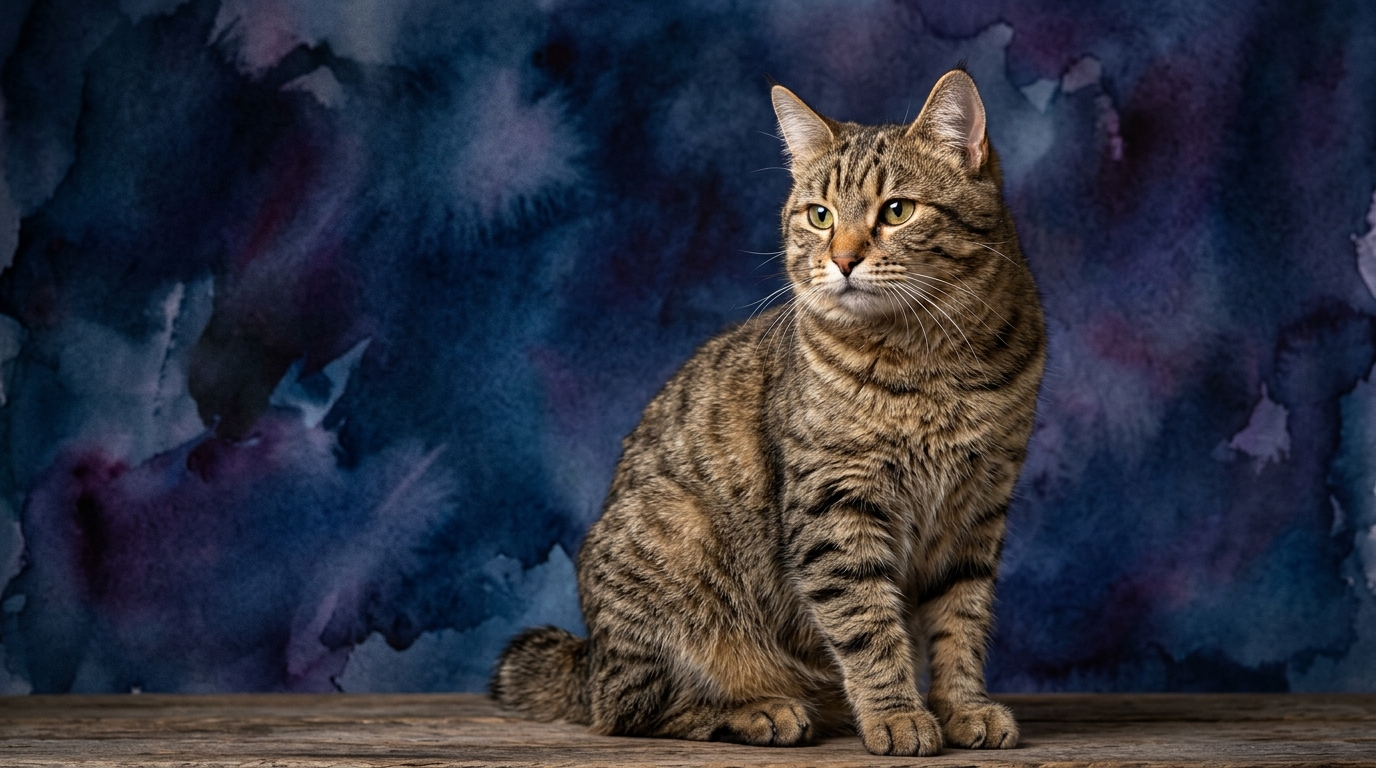
Side-by-Side IQ Profile: Sphynx vs. Pixiebob
The Cosmic Pet Pet IQ Lab provides a fascinating framework for understanding feline cognition across five key dimensions. For the Sphynx, these scores paint a picture of an exceptionally engaging and adaptive companion: Problem Solving 4/5, Training Speed 4/5, Social Intelligence 5/5, Instinctive Drive 3/5, and Memory 4/5. This profile suggests a cat that is not only capable of intricate thought but also deeply connected to its human companions and quick to learn.
In contrast, the Pixiebob presents a more balanced, grounded cognitive profile: Problem Solving 3/5, Training Speed 3/5, Social Intelligence 3/5, Instinctive Drive 3/5, and Memory 3/5. These scores indicate a competent and self-sufficient cat, perhaps less inclined towards complex cognitive manipulation than the Sphynx, but still fully capable of learning, interacting, and remembering. The Pixiebob’s consistent scores across the board suggest a more uniform cognitive approach, rooted in its naturalistic origins.
Where the Sphynx Excels Cognitively
The Sphynx clearly demonstrates a cognitive advantage in several key areas. Its Problem Solving score of 4/5 indicates a cat that actively seeks solutions to environmental challenges, often figuring out how to open cupboards, manipulate toys to extract treats, or even learn complex sequences to gain access to desired areas. This isn't passive observation; it's active engagement and strategic thinking.
With a Training Speed of 4/5, Sphynx cats exhibit a remarkable aptitude for learning new behaviors and commands quickly. This responsiveness stems from their high Social Intelligence (5/5), which makes them exceptionally attuned to human cues and desires. They are motivated by interaction and approval, making them eager participants in training sessions. Their Memory, also at 4/5, further supports this, allowing them to retain learned behaviors and associate specific actions with outcomes over extended periods, remembering tricks, routines, and even the schedules of their human companions.
The Sphynx's Social Intelligence, topping the chart at 5/5, is perhaps its most defining cognitive strength. This signifies an unparalleled ability to bond deeply with humans, understand social cues, and actively seek interaction. They aren't just present; they are participatory, often initiating contact, 'talking' to their owners, and displaying a nuanced understanding of household dynamics. This high social drive underpins much of their cognitive engagement, as problem-solving and training often revolve around their desire for human connection and attention.
Understanding the Pixiebob’s Distinct Cognitive Strengths
While the Pixiebob's numerical scores are generally more moderate compared to the Sphynx, its cognitive profile highlights a different kind of strength: a balanced, intuitive, and grounded intelligence. The consistent 3/5 across all categories — Problem Solving, Training Speed, Social Intelligence, Instinctive Drive, and Memory — suggests a cat that is capable and adaptable without being overtly 'needy' for complex cognitive stimulation from its environment.
The Pixiebob's Problem Solving at 3/5 indicates a practical approach; they can figure out how to navigate their surroundings and solve immediate issues, but they might not engage in elaborate schemes to outwit their owners for treats. Their Instinctive Drive, also 3/5, aligns with their naturalistic heritage, suggesting a cat more attuned to basic feline instincts like hunting and exploring, which forms a core part of their cognitive engagement. This drive is well-integrated with their other cognitive functions, providing a stable foundation for their interactions with the world.
Their Social Intelligence at 3/5 means they are affectionate and bond with their families, but perhaps with a slightly more reserved or independent demeanor than the highly social Sphynx. They are observant and present, enjoying companionship without necessarily demanding constant, intense interaction. This balanced profile makes them excellent companions for those who appreciate a cat with a steady, reliable temperament that is still capable of learning and forming strong bonds, just in a less overtly 'human-centric' way.
Which is Easier to Train and Why?
Based on The Cosmic Pet Pet IQ Lab scores, the Sphynx (Training Speed 4/5) is generally easier to train than the Pixiebob (Training Speed 3/5). This difference isn't merely a numerical one; it reflects fundamental behavioral inclinations. The Sphynx’s superior training speed is directly linked to its exceptionally high Social Intelligence (5/5). Sphynx cats thrive on interaction and attention, making them highly motivated to engage in activities that involve their human companions, including training.
A Sphynx is more likely to quickly grasp commands for 'sit,' 'stay,' or even more complex tricks because they are actively seeking to please and connect. Their strong memory (4/5) ensures that once a behavior is learned, it's retained efficiently. For instance, a Sphynx might learn to walk on a leash or play fetch with minimal repetition, driven by the desire for shared activity. The Pixiebob, while capable of learning (Training Speed 3/5), might require more patience and consistent reinforcement. Their moderate social intelligence means they are responsive, but perhaps less intensely focused on human approval as the primary motivator, making their learning process more deliberate and less overtly eager.
Active Owners vs. Relaxed Owners: Which Cat Suits Whom?
The Sphynx’s cognitive profile, particularly its high Social Intelligence (5/5) and Problem Solving (4/5), makes it an ideal companion for active owners who desire a highly interactive and engaged pet. These cats thrive on consistent mental stimulation and physical play. An owner who enjoys teaching tricks, providing puzzle toys, or simply engaging in long, communicative 'conversations' with their cat will find the Sphynx to be a reciprocative and rewarding partner. Their demanding social nature means they do not do well when left alone for extended periods and require an owner willing to invest significant time in their daily interaction and enrichment.
The Pixiebob, with its consistent 3/5 scores across most cognitive dimensions, is better suited for owners who appreciate a more balanced and perhaps slightly less intense feline companion. While still social and affectionate, their moderate Social Intelligence and Problem Solving suggest a cat that is content with regular but not constant interaction. They are observant and present, enjoying their family's company without demanding to be the center of attention at all times. This makes them a good fit for relaxed owners who want a loving pet that also possesses a degree of self-sufficiency and contentment in its own activities, without needing elaborate daily mental gymnastics.
The Verdict
Choose the Sphynx if you are an active, engaged owner seeking a highly interactive, communicative, and trainable companion that thrives on deep social connection and mental challenges.
Opt for the Pixiebob if you appreciate a more grounded, intuitive, and moderately interactive feline friend that offers steady companionship and a balanced temperament without constant demands for complex engagement.
🧠 Find Your Pet's IQ Score
Our Pet IQ Lab assessment covers 25+ tests across 5 cognitive dimensions — personalized to your breed.
Take the Full IQ Test →Frequently Asked Questions
Are Sphynx cats good with children?
Yes, Sphynx cats, with their 5/5 Social Intelligence, are typically very good with children. They enjoy being part of family activities and are often patient and affectionate, forming strong bonds with all household members, including younger ones.
Do Pixiebob cats require a lot of grooming?
Pixiebob cats, despite their wild-cat appearance, have relatively low grooming needs compared to many long-haired breeds. Their short, dense coat typically requires only weekly brushing to remove loose hair and maintain its condition, aligning with their more naturalistic profile.
Can Sphynx cats be left alone for long periods?
Sphynx cats, due to their exceptional Social Intelligence (5/5), generally do not do well when left alone for extended periods. They crave human interaction and can become lonely or stressed without sufficient companionship, making them ideal for households where someone is often present.