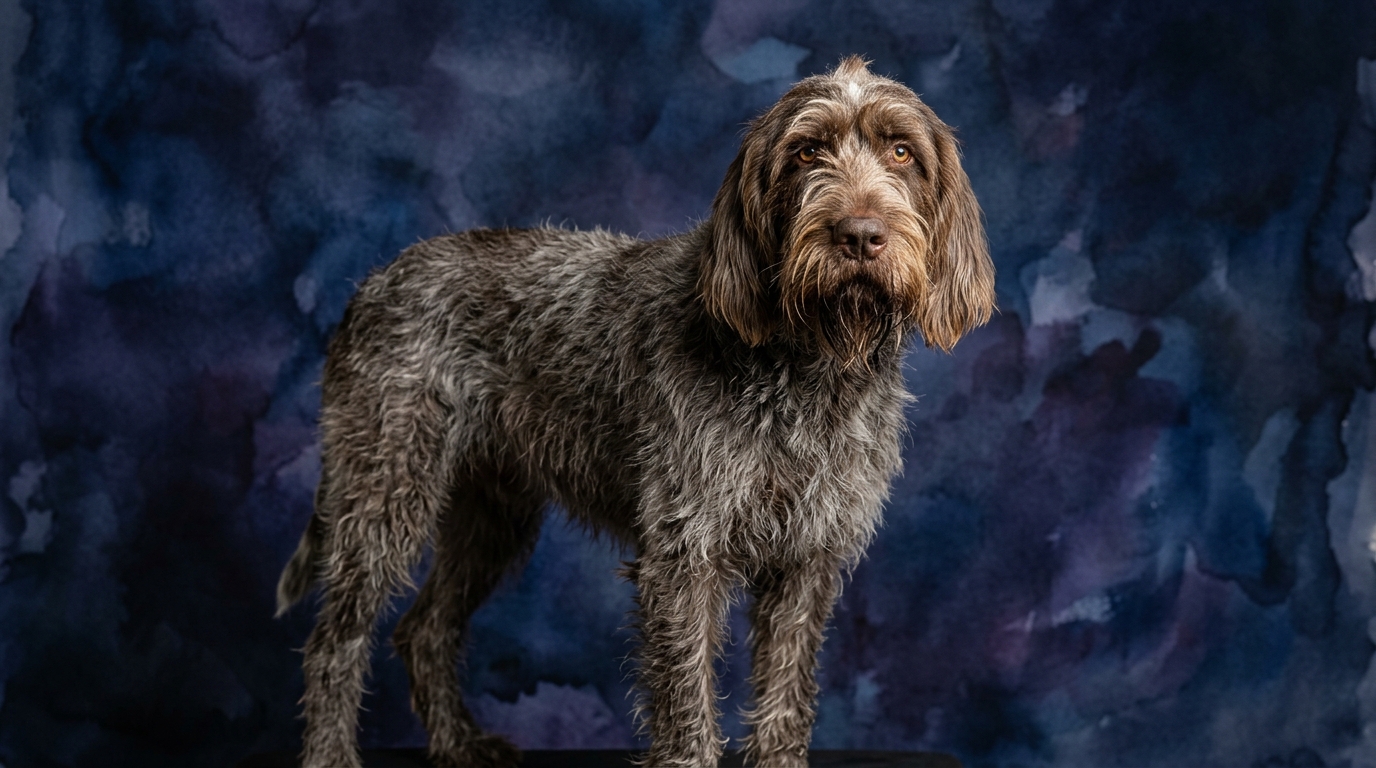

Side-by-Side IQ Profile: Unpacking Identical Scores
On paper, the Spinone Italiano and the Lhasa Apso present an intriguing cognitive mirror image, each scoring 3/5 in Problem Solving, Training Speed, Social Intelligence, Instinctive Drive, and Memory within The Cosmic Pet Pet IQ Lab framework. However, these identical scores belie profound differences in how these breeds apply their inherent capabilities, shaped by centuries of distinct purpose and selective breeding.
For the Spinone Italiano, a Sporting breed, a Problem Solving score of 3/5 often reflects their capacity to independently navigate complex terrain during a hunt, locate game, or strategize a retrieve, demonstrating practical, task-oriented intelligence. Their Training Speed at 3/5 speaks to a willing, cooperative nature, eager to understand and execute commands when engaged in a partnership with their handler, often for a shared objective. Social Intelligence at 3/5 manifests as a patient, affable disposition, forming strong bonds within their human family and generally getting along well with others, crucial for a dog that works closely with people. An Instinctive Drive of 3/5 is deeply rooted in their scenting, pointing, and retrieving heritage, expressed as a persistent, focused drive for work in the field. Finally, their Memory at 3/5 supports retaining intricate sequences of commands, locations of game, or learned behaviors over time, vital for a working companion.
The Lhasa Apso, a Non-Sporting breed with a history as a sentinel in Tibetan monasteries, interprets these same scores through a very different lens. Their Problem Solving score of 3/5 might reveal itself in their cunning ability to manipulate situations for comfort or attention, or their sharp observation skills to discern changes in their environment, rather than physical tasks. A Training Speed of 3/5 for a Lhasa Apso indicates they are capable of learning, but their independent streak means they require consistent, patient, and engaging methods; they learn quickly when motivated, but may choose when to comply. Social Intelligence at 3/5 often translates to a deep, discerning loyalty to their inner circle, coupled with a more reserved or watchful demeanor towards strangers, reflecting their protective instincts. Their Instinctive Drive of 3/5 is primarily expressed as a vigilant, alert nature, quick to notice and warn of perceived threats, rather than a drive to hunt or retrieve. Their Memory at 3/5 allows them to recall routines, people, and specific situations with remarkable accuracy, contributing to their role as a steadfast companion and guardian.
Where the Spinone Italiano Wins Cognitively
The Spinone Italiano's cognitive strengths distinctly align with their working heritage, particularly in tasks requiring collaborative problem-solving and sustained focus. Their 3/5 Problem Solving capacity shines brightest in dynamic outdoor environments, where they must assess changing conditions, track subtle scents, and make decisions to successfully locate and retrieve game. This isn't abstract puzzle-solving, but rather an intuitive, practical intelligence geared towards achieving a tangible goal in partnership with a human.
Furthermore, their 3/5 Instinctive Drive, while matching the Lhasa Apso numerically, represents a profoundly different manifestation of cognitive purpose. For the Spinone, this drive is channelled into purposeful work, providing a consistent motivation for learning and performance in activities like scent work, field trials, or even complex obedience routines. This innate desire to work alongside their handler, combined with a patient and docile temperament, gives them a cognitive edge in structured, goal-oriented activities where sustained effort and teamwork are paramount.
The Spinone's 3/5 Social Intelligence also presents a distinct advantage in situations requiring broad adaptability and easy integration. Their naturally affable and tolerant nature allows them to form comfortable relationships not just with their primary family, but also with extended social circles, other animals, and even new people encountered during activities. This makes them cognitively adept at navigating varied social landscapes without undue stress or reservation, fostering a cooperative and harmonious interaction style that is highly valued in family and working environments.
Where the Lhasa Apso Wins Cognitively
The Lhasa Apso's cognitive strengths are rooted in their long history as discerning companions and vigilant sentinels, emphasizing independence and astute observation. Their 3/5 Problem Solving ability often manifests as a clever, sometimes subtle, manipulation of their environment or their human companions to achieve desired outcomes, such as securing the most comfortable spot on the sofa or demanding attention. This isn't about retrieving game, but about navigating complex social dynamics within a household with a keen understanding of cause and effect.
Their 3/5 Social Intelligence, while different from the Spinone's broad affability, represents a profound depth of discernment. Lhasas are highly perceptive of household changes, moods, and routines, making them exceptional at reading their specific human companions. This acute awareness allows them to form incredibly strong, devoted bonds with their chosen family, providing a unique form of companionship built on deep understanding and unwavering loyalty, rather than expansive social engagement. They excel at 'knowing' their people.
Moreover, the Lhasa Apso's 3/5 Instinctive Drive, channeled into vigilance, gives them a cognitive edge in their role as a watchful guardian. Their keen senses and inherent alert nature mean they are often the first to notice and react to unusual sounds or presences, making them effective 'doorbells' or early warning systems. This drive isn't about pursuing an external task, but about maintaining the security and stability of their immediate environment, a cognitive function that requires constant, focused awareness and quick assessment of novel stimuli.
Which is Easier to Train and Why
When considering ease of training, despite both breeds scoring 3/5 in Training Speed, their fundamental approaches to learning and cooperation diverge significantly due to their behavioral predispositions. The Spinone Italiano, a Sporting breed, generally presents as easier to train for a wide range of commands and activities. Their inherent desire to please and their cooperative nature, honed over generations for working closely with humans, means they are typically more responsive to direction and eager to engage in structured training sessions. They thrive on positive reinforcement and tasks that allow them to utilize their natural instincts, making them enthusiastic participants in obedience, agility, or field work. Their patience and docility make them forgiving of handler errors and consistent in their efforts.
The Lhasa Apso, conversely, while equally capable of learning (3/5 Training Speed), often requires a more nuanced and patient approach. Their historical role as independent sentinels means they possess a strong-willed and sometimes stubborn streak; they learn quickly but may choose when to apply that learning based on their own assessment of the situation's value. Training a Lhasa Apso often involves convincing them that cooperation is their idea, or that the reward is sufficiently compelling to override their independent judgment. This isn't a lack of intelligence, but a difference in cognitive motivation. They respond best to positive, engaging methods that respect their autonomy, and consistency is paramount to overcome their occasional selective hearing. While capable of excelling in obedience, their training journey often demands more creativity and persistence from their human counterpart compared to the Spinone's more readily compliant nature.
Which Suits Active Owners vs. Relaxed Owners
The choice between a Spinone Italiano and a Lhasa Apso largely hinges on an owner's lifestyle and energy levels. The Spinone Italiano is an ideal match for active owners who enjoy outdoor pursuits and are committed to providing ample physical and mental stimulation. Their sporting background means they thrive on regular, vigorous exercise such as long walks, hikes, swimming, or engaging in dog sports like scent work or agility. An owner who can channel their 3/5 Instinctive Drive into purposeful activities will find a happy, well-adjusted companion. They are not suited for a sedentary lifestyle, as lack of engagement can lead to boredom and undesirable behaviors.
In contrast, the Lhasa Apso is generally better suited for more relaxed owners, though 'relaxed' does not mean neglecting their needs. While their exercise requirements are moderate – daily walks and indoor play are usually sufficient – they deeply value companionship and mental engagement within the home. They enjoy being a part of the family's daily routine, often content to observe from a comfortable perch or snuggle on a lap. Owners who appreciate a devoted, watchful companion and are willing to engage in consistent, positive training to manage their independent nature will find a rewarding relationship with a Lhasa Apso. Their cognitive strengths are best nurtured in an environment that prioritizes comfort, routine, and close human interaction without demanding extensive physical exertion.
The Verdict
Choose the Spinone Italiano if you are an active individual or family seeking a patient, cooperative, and robust companion for outdoor adventures and structured training, valuing a dog that eagerly works alongside you.
Opt for the Lhasa Apso if you prefer a devoted, watchful, and somewhat independent companion who thrives on routine, close companionship, and a cozy home environment, appreciating a dog with a discerning loyalty.
🧠 Find Your Pet's IQ Score
Our Pet IQ Lab assessment covers 25+ tests across 5 cognitive dimensions — personalized to your breed.
Take the Full IQ Test →Frequently Asked Questions
Do Spinone Italianos shed a lot?
Spinone Italianos have a coarse, single coat that sheds minimally, but they do require regular hand-stripping to maintain coat health and texture. This grooming regimen helps manage loose hair and keeps their coat in optimal condition.
Are Lhasa Apsos good with children?
Lhasa Apsos can be good with respectful, older children who understand how to interact gently with dogs, but their independent and sometimes reserved nature means they may not tolerate boisterous play. Early socialization and supervision are crucial for positive interactions.
What kind of mental stimulation do these breeds need?
The Spinone Italiano benefits from mental challenges like scent games, puzzle toys, and advanced obedience training that taps into their problem-solving and instinctive drive for work. The Lhasa Apso thrives on consistent routines, interactive toys, and short, engaging training sessions that cater to their cleverness and desire for companionship, often enjoying 'thinking' games that don't require extensive physical exertion.