
Side-by-Side IQ Profile: Unpacking Cognitive Dimensions
At The Cosmic Pet Pet IQ Lab, we assess canine intelligence across five key dimensions. While both the Staffordshire Bull Terrier and the Norfolk Terrier register a consistent 3/5 across all categories, the manifestation of these scores differs significantly due to their inherent breed characteristics and historical roles. Understanding these nuances is crucial for appreciating their unique cognitive landscapes.
The Staffordshire Bull Terrier (SBT) demonstrates a practical approach to problem-solving (3/5), often employing their physical strength and persistence to achieve goals. They are capable of figuring out how to access desired objects or navigate physical barriers, driven by a strong motivation, with solutions tending to be direct rather than intricate. Their training speed (3/5) is moderate; they are often eager to please but their strong will and occasional stubbornness mean that consistent, positive reinforcement methods are most effective, learning best when training is engaging and rewards are motivating. Social intelligence (3/5) is generally good, forming strong bonds and adept at reading human emotions, though interactions with other dogs can vary and may require careful management due to their robust play style. The breed's instinctive drive (3/5) is pronounced, manifesting as a strong desire to chase, engage in vigorous play, or guard loved ones, requiring appropriate outlets and constructive channeling. SBTs also possess a solid memory (3/5) for commands, routines, and experiences, particularly those associated with strong emotional reinforcement, with consistency in training helping solidify their recall abilities.
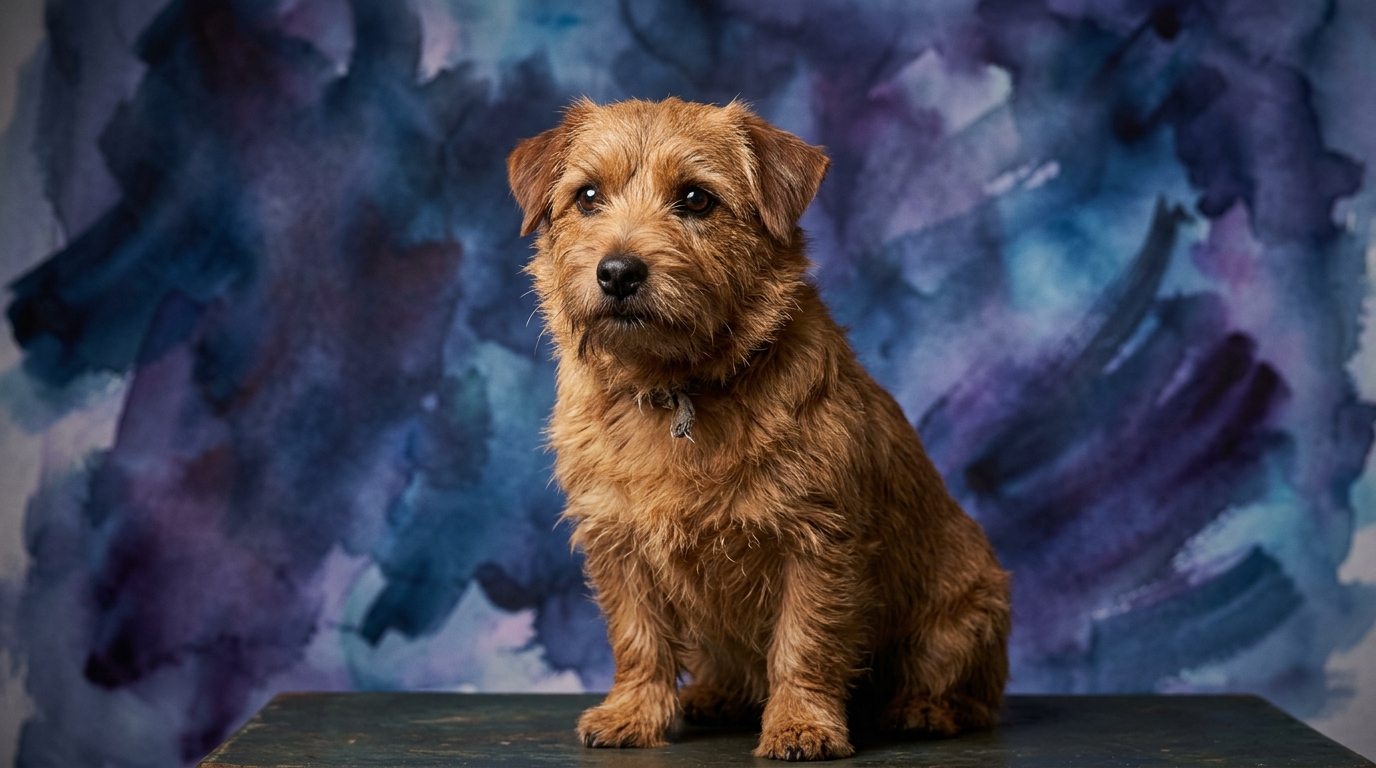
The Norfolk Terrier (NT) displays a clever and often independent problem-solving style (3/5), particularly when it involves navigating their environment or pursuing perceived 'prey.' They can be resourceful in finding ways around obstacles or accessing interesting smells, often relying on their agility and keen senses. With a moderate training speed (3/5), Norfolk Terriers are capable learners, though their independent spirit means they respond best to engaging, varied training sessions; repetitive drills can bore them, so a creative approach with positive reinforcement is crucial. Social intelligence (3/5) is typically good, being quite perceptive of human moods and intentions and generally amiable with people, though their terrier nature means they can be selective or spirited when interacting with other dogs, benefiting greatly from early and consistent socialization. The instinctive drive (3/5) in Norfolk Terriers is strong, characteristic of their working terrier heritage, often translating into a keen desire to dig, chase small animals, and explore, requiring consistent management and appropriate outlets like earthdog trials. Norfolk Terriers have a reliable memory (3/5), particularly for routines, favorite places, and commands learned through positive reinforcement, remembering specific locations for successful hunting opportunities, demonstrating a practical application of their recall abilities.
Where the Staffordshire Bull Terrier Excels Cognitively
Given their sturdy build and historical role, Staffordshire Bull Terriers often demonstrate a superior ability to solve problems requiring physical engagement and resilience. For instance, an SBT might be more inclined to persistently push open a heavy gate or retrieve an object from a challenging spot, relying on their tenacity and strength rather than seeking an intricate workaround. Their cognitive edge lies in applying brute force and unwavering determination to overcome physical obstacles, where a smaller, less physically robust dog might give up or seek a different, less direct solution. This particular strength highlights their practical, action-oriented intelligence in situations demanding physical fortitude.
Where the Norfolk Terrier Excels Cognitively
The Norfolk Terrier's cognitive strengths often manifest in their environmental awareness and their capacity for intricate, independent exploration. They excel at deciphering complex scent trails, navigating varied terrains with agility, and identifying subtle changes in their surroundings that might indicate the presence of small game or novel opportunities. Their problem-solving in this context is less about sheer power and more about quick assessment, spatial reasoning, and adaptability, allowing them to outmaneuver or outwit in situations demanding finesse and quick wits. They might figure out a more circuitous, clever route to a desired location, demonstrating a nuanced, investigative form of intelligence.
Training Dynamics: Which is Easier to Train and Why?
While both breeds share a '3/5' for training speed, the underlying behavioral nuances dictate differing ease of training for various owners. The Staffordshire Bull Terrier, often characterized by a strong desire to please its human, can be highly motivated by positive reinforcement and affection. Their physical robustness means they require a firm yet fair hand, and their occasional stubborn streak necessitates consistent, patient guidance to ensure commands are followed reliably. However, once an SBT understands a command and its reward, they tend to be reliable in execution, driven by their bond with their owner and their focused attention when engaged, making them receptive to structured, reward-based learning.
In contrast, the Norfolk Terrier's independent and spirited nature means training requires a more creative and engaging approach. While equally capable of learning, their attention span can be shorter for repetitive tasks, and their strong instinctive drives, particularly for chasing and exploring, can easily distract them from formal lessons. Training a Norfolk Terrier often feels like a partnership where you need to convince them that participating is more rewarding and interesting than pursuing their own agenda. They thrive on variety, games, and puzzle-based learning, which taps into their innate cleverness rather than relying solely on compliance. Therefore, for an owner seeking a more straightforward, compliance-driven training experience, the SBT might initially seem 'easier' due to their eagerness to please, while the NT demands a more dynamic and imaginative trainer to fully unlock their learning potential and maintain their engagement.
Matching Energy Levels: Active vs. Relaxed Owners
For active owners seeking a robust companion for adventures, the Staffordshire Bull Terrier often presents a fitting choice. Their moderate energy levels, coupled with their physical stamina, make them excellent partners for long walks, hikes, and active playtime. They genuinely enjoy engaging in physical activities that allow them to expend energy and channel their strength, such as fetch, tug-of-war, or even entry-level agility courses. Their resilience and sturdy build mean they can keep up with a reasonably active lifestyle, thriving on consistent exercise and mental stimulation that prevents boredom and potential destructive behaviors. After a good workout, they are typically content to settle down and be a central part of family activities.
The Norfolk Terrier, while possessing a spirited nature, can also adapt well to owners with a slightly more relaxed definition of 'active.' They certainly require daily walks and opportunities for off-leash exploration in secure areas to satisfy their instinctive drives, but their smaller size means their exercise needs can often be met with less strenuous activity compared to an SBT. They delight in exploring new environments, engaging in scent work, and playing interactive games indoors or in a backyard. A relaxed owner who enjoys shorter, frequent outings and appreciates a clever, curious companion who is also content to cuddle on the couch after their mental and physical needs are met would find the Norfolk Terrier a delightful match. Their adaptability allows them to thrive in various living situations, provided their core needs for mental and physical stimulation are consistently met.
The Verdict
Choose the Staffordshire Bull Terrier if you value a physically robust companion eager to engage in structured activities and form a deep, compliant bond, and are prepared for consistent, patient training to manage their strong will.
Opt for the Norfolk Terrier if you appreciate an independent, clever companion who thrives on varied, engaging mental challenges and enjoys active exploration, and you are willing to embrace a creative, partnership-based training approach.
🧠 Find Your Pet's IQ Score
Our Pet IQ Lab assessment covers 25+ tests across 5 cognitive dimensions — personalized to your breed.
Take the Full IQ Test →Frequently Asked Questions
Do Staffordshire Bull Terriers and Norfolk Terriers learn at the same pace?
While both breeds score 3/5 for training speed, their learning styles differ significantly. SBTs are often driven by a desire to please and respond well to consistent, reward-based training, showing reliability once learned. Norfolk Terriers, with their independent spirit, learn best through engaging, varied sessions that appeal to their curiosity and prevent boredom, requiring a more dynamic approach.
Which breed is better at problem-solving?
Both score 3/5 in problem-solving, but their strengths diverge based on their physical and historical traits. SBTs excel at physical problem-solving, using persistence and strength to overcome obstacles. Norfolk Terriers are adept at navigating complex environments and outsmarting situations through agility, keen sensory input, and clever, often less direct, solutions.
Are there significant social intelligence differences between the two breeds?
Both breeds score 3/5 in social intelligence, generally showing good perception of human cues and forming strong bonds. SBTs often form intense family bonds and can be robust in play, while Norfolk Terriers are perceptive but can be more selective or spirited when interacting with other dogs, benefiting from extensive early socialization to refine their social interactions.