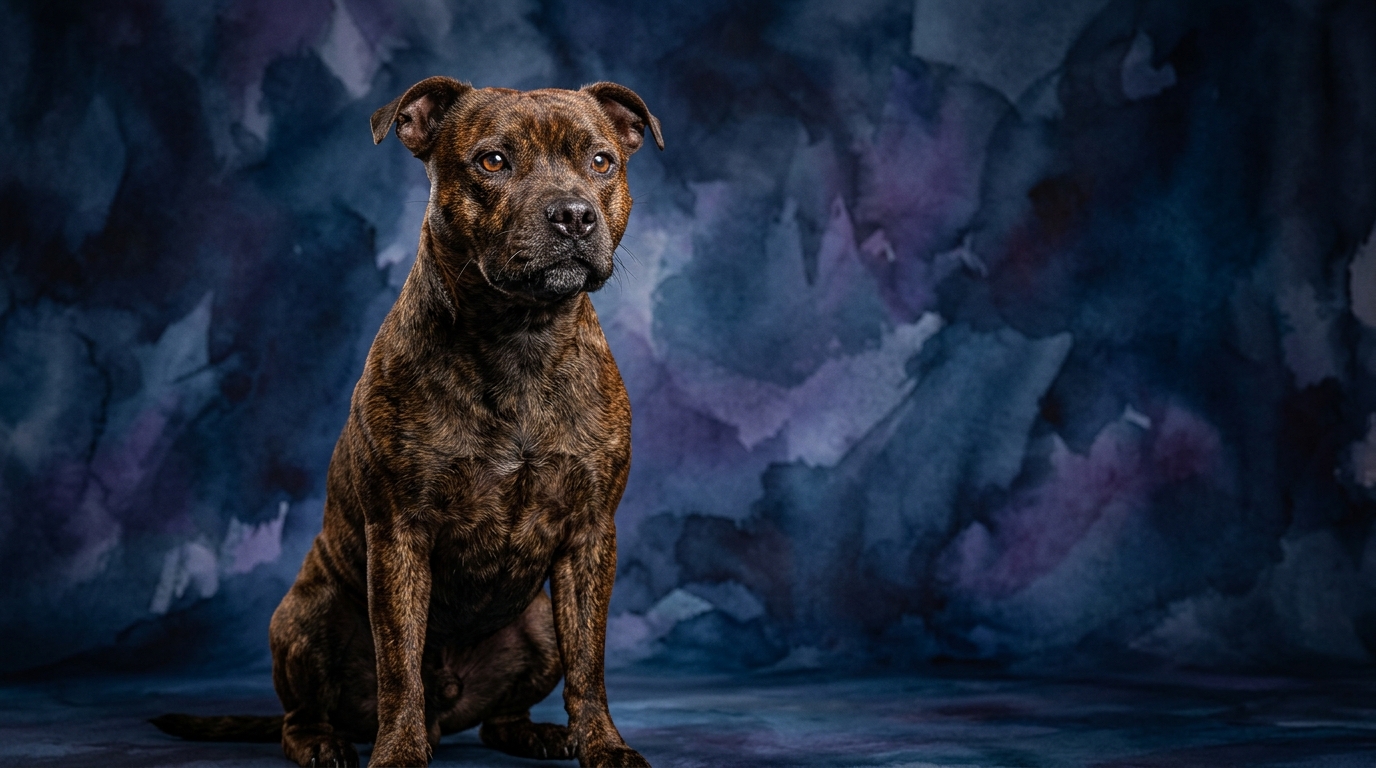
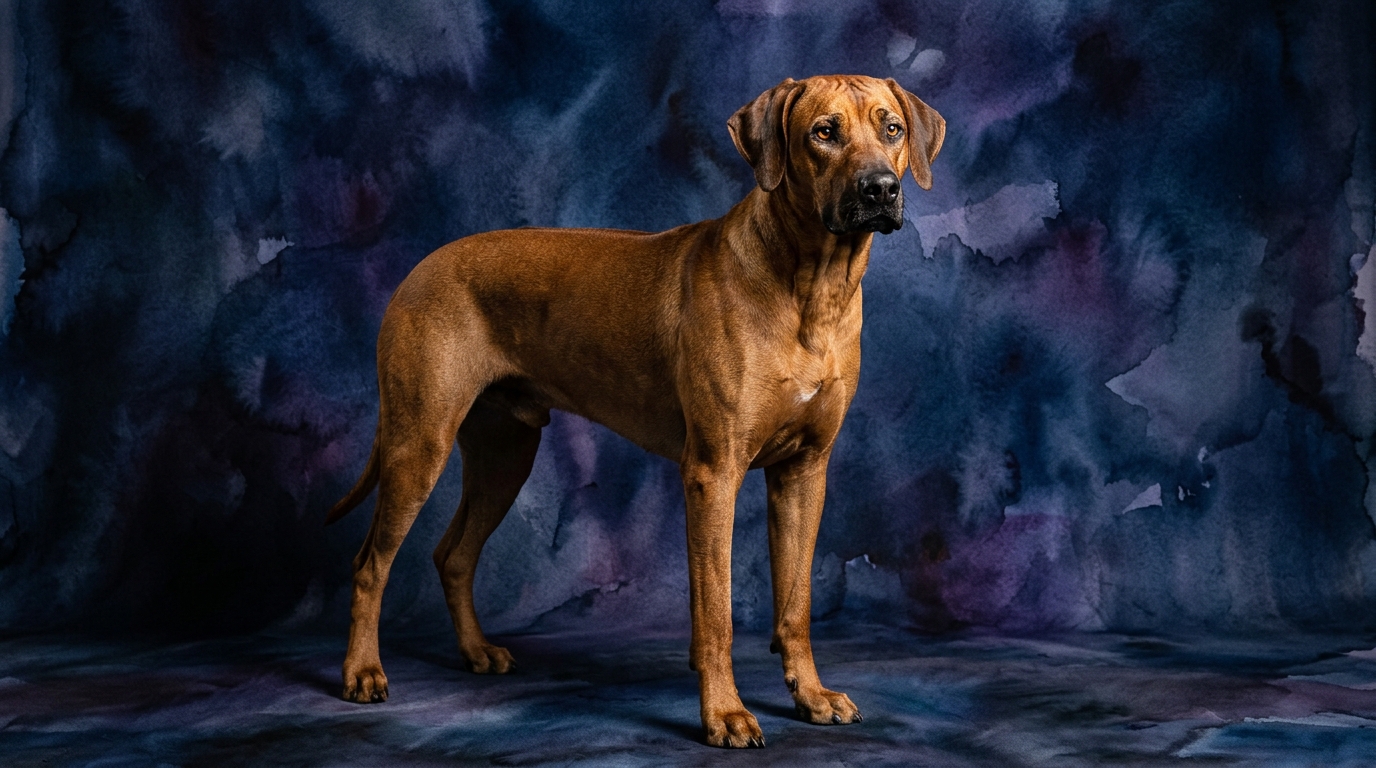
Side-by-Side IQ Profile: Understanding the 3/5 Score
Both the Staffordshire Bull Terrier and the Rhodesian Ridgeback register a consistent 3 out of 5 across all five cognitive dimensions in The Cosmic Pet Pet IQ Lab. This uniformity suggests a balanced, moderate level of intellect rather than a specialized cognitive strength or weakness in any single area. For 'Problem Solving (3/5),' this indicates an ability to figure out novel situations through trial and error or guided learning, but not necessarily with rapid, intuitive leaps. They can learn to navigate obstacles or solve simple puzzles over time, benefiting from repetition and clear cues, rather than spontaneously devising complex solutions.
Regarding 'Training Speed (3/5),' both breeds absorb new commands and routines at a moderate pace. They are neither instant learners requiring minimal repetition nor particularly slow, resistant pupils. Consistent, patient training using positive reinforcement methods will yield steady progress. Owners should be prepared for a sustained commitment to training without expecting immediate mastery of complex tasks. This score implies that while they are certainly trainable, they may not be the ideal candidates for highly intricate obedience work or competitive dog sports that demand exceptional speed in acquiring new behaviors.
Their 'Social Intelligence (3/5)' rating suggests a moderate capacity to understand and respond to social cues, both from humans and other animals. They can integrate into a family structure, learn household rules, and generally interact appropriately within established social hierarchies. However, they may require careful socialization to navigate ambiguous or highly complex social scenarios, and might not instinctively pick up on the subtle nuances of canine or human communication without prior experience or guidance. They form bonds and react to emotional states, but might not be highly empathic or intuitive social readers.
The 'Instinctive Drive (3/5)' for both breeds indicates a moderate level of inherent, breed-specific behaviors. For the Staffordshire Bull Terrier, this manifests as a moderate terrier tenacity, a drive to engage with objects or perceived 'prey' (like squeaky toys), and a robust desire for interaction. For the Rhodesian Ridgeback, this reflects a moderate hound drive, encompassing a natural inclination towards tracking, independence, and a watchful disposition. These drives are present enough to require channeling through appropriate activities but are generally manageable and not overwhelming. They are not as intensely driven as some working breeds, yet their instincts are a significant part of their personality.
Finally, a 'Memory (3/5)' score means both breeds possess a moderate ability to retain learned information and experiences. They will remember commands, routines, and the consequences of their actions over time. However, like their training speed, their memory is not exceptional; occasional refreshers of commands and consistent reinforcement of desired behaviors will help maintain their understanding. They won't forget their basic training, but intricate sequences or infrequently practiced behaviors might fade without periodic practice.
Where the Staffordshire Bull Terrier Wins Cognitively
Despite identical scores, the Staffordshire Bull Terrier's cognitive strengths often manifest uniquely, particularly within a family context. Their moderate 'Social Intelligence' (3/5) is frequently expressed as a profound devotion and an exceptional ability to attune to their primary owner's emotional state, making them remarkably responsive companions. This isn't about complex social problem-solving, but rather a deep, instinctual connection that allows them to anticipate needs or offer comfort based on subtle human cues. Their tenacity, an aspect of their 'Instinctive Drive' (3/5) as a terrier, translates cognitively into a focused persistence during play or when attempting to 'solve' a physical puzzle, like retrieving a favorite toy from a tight space. They might not quickly strategize, but they will apply sustained effort, demonstrating a resilient approach to challenges. This same tenacity, when channeled into training, can make them incredibly dedicated learners once they understand the expectation, often driven by their desire for human approval and interaction, which their social intelligence reinforces.
Where the Rhodesian Ridgeback Wins Cognitively
The Rhodesian Ridgeback's cognitive profile, while numerically similar, shines in different applications, largely influenced by their heritage as independent hunters. Their 'Problem Solving' (3/5) capacity is often expressed through their discerning nature and ability to assess situations before acting, particularly in new environments or when encountering strangers. This isn't a quick, reactive problem-solving, but a thoughtful, often reserved evaluation. Their 'Instinctive Drive' (3/5) leans towards self-reliance and strategic thinking, crucial for a hound bred to track and manage large game without constant human direction. This translates into a dog that can make independent decisions and navigate complex territories, relying on their moderate memory (3/5) to recall routes or past experiences. Their social intelligence, while moderate, often manifests as a dignified watchfulness and selective affection, forming deep bonds with their chosen family while maintaining a more aloof stance with others, indicating a careful assessment of social interactions rather than an immediate, effusive response. This independent assessment is a cognitive strength, allowing them to function effectively in less structured environments.
Which is Easier to Train and Why
Given both breeds share a 'Training Speed' of 3/5, neither is inherently 'easy' or 'difficult' to train, but their underlying motivations and cognitive manifestations dictate different approaches. The Staffordshire Bull Terrier, with its deep social intelligence and strong desire for human connection, often responds very well to positive reinforcement rooted in praise, play, and affection. Their terrier tenacity, while sometimes perceived as stubbornness, can also translate into focused effort once they understand and commit to a task, especially if it involves interaction with their beloved family. They tend to thrive in training environments that emphasize partnership and reward their eagerness to please, making them generally responsive to consistent, engaging sessions. Their moderate memory ensures they retain commands, though occasional refreshers are beneficial.
The Rhodesian Ridgeback, conversely, presents a different training dynamic. Their historical role demanded independent thought and decision-making, which can translate into a tendency to question commands or require a clear 'reason' for compliance. Their moderate 'Instinctive Drive' leans towards self-reliance, meaning they may not possess the same fervent desire to please as a Staffy. Training a Ridgeback often requires more creativity, leveraging their problem-solving skills and making training feel like a collaborative challenge rather than rote obedience. They respond best to fair, consistent, and engaging methods that appeal to their intelligence and respect their independent spirit. Without clear leadership and interesting tasks, their moderate training speed can feel slower, as they may choose not to comply if they don't perceive value or if the training is monotonous. Both breeds require patience, but the Staffy often gains momentum from social rewards, while the Ridgeback benefits from mental engagement and understanding the 'why' behind the command.
Which Suits Active Owners vs. Relaxed Owners
When considering activity levels, the Staffordshire Bull Terrier offers a degree of adaptability that can appeal to a broader range of owners. While they possess moderate energy and 'Instinctive Drive' (3/5), enjoying vigorous play sessions, daily walks, and mental engagement, they are often equally content to relax with their family. Their profound social intelligence means they thrive on human companionship and will adjust their energy output to match their owners' lifestyle to a reasonable extent, provided their basic exercise and mental stimulation needs are met. A moderately active family who enjoys daily outdoor excursions and interactive play will find a Staffy a suitable companion, as they can transition smoothly between energetic bursts and quiet cuddle sessions.
The Rhodesian Ridgeback, by contrast, is generally better suited for truly active owners. Their heritage as a hunting hound, combined with their larger size and inherent physical stamina, means their moderate 'Instinctive Drive' and problem-solving abilities demand significant and consistent outlets. They require more than just a casual stroll; long hikes, jogging, extensive playtime, or participation in dog sports are crucial to their well-being. Without sufficient physical and mental exercise, their independent nature can lead to boredom and potentially destructive behaviors. While they are capable of relaxing, their baseline requirement for sustained activity is considerably higher than that of a Staffy. Owners who lead an active outdoor lifestyle and are prepared to integrate their dog into these activities will find a Ridgeback a robust and fulfilling partner. Their moderate memory also benefits from consistent routines and ample opportunities to explore and engage with their environment.
The Verdict
Choose the Staffordshire Bull Terrier if you seek a devoted, robust companion who thrives on close family interaction, is adaptable to varying activity levels, and enjoys both energetic play and quiet companionship.
Choose the Rhodesian Ridgeback if you are an experienced, active owner who can provide consistent training, ample physical and mental exercise, and appreciate a dignified, independent companion with a strong sense of self.
🧠 Find Your Pet's IQ Score
Our Pet IQ Lab assessment covers 25+ tests across 5 cognitive dimensions — personalized to your breed.
Take the Full IQ Test →Frequently Asked Questions
Are Staffordshire Bull Terriers suitable for first-time dog owners?
With consistent training and early socialization, a Staffy can be a good choice for first-time owners who are committed to understanding their breed-specific needs for companionship and mental stimulation. Their moderate training speed and social intelligence make them responsive to patient, positive reinforcement.
What kind of mental stimulation do Rhodesian Ridgebacks need?
Rhodesian Ridgebacks benefit from activities that engage their problem-solving skills and instinctive drive, such as scent work, puzzle toys, advanced obedience training, or exploring new environments. Regular mental challenges help prevent boredom and channel their independent thinking constructively.
How do these breeds typically interact with other dogs?
Both breeds require early and consistent socialization to ensure appropriate interactions with other dogs. Staffies, with their moderate social intelligence, can form strong bonds but may have a strong play style. Ridgebacks, due to their independent nature, often prefer the company of their own family but can coexist peacefully with other well-socialized dogs if introduced carefully and managed correctly.