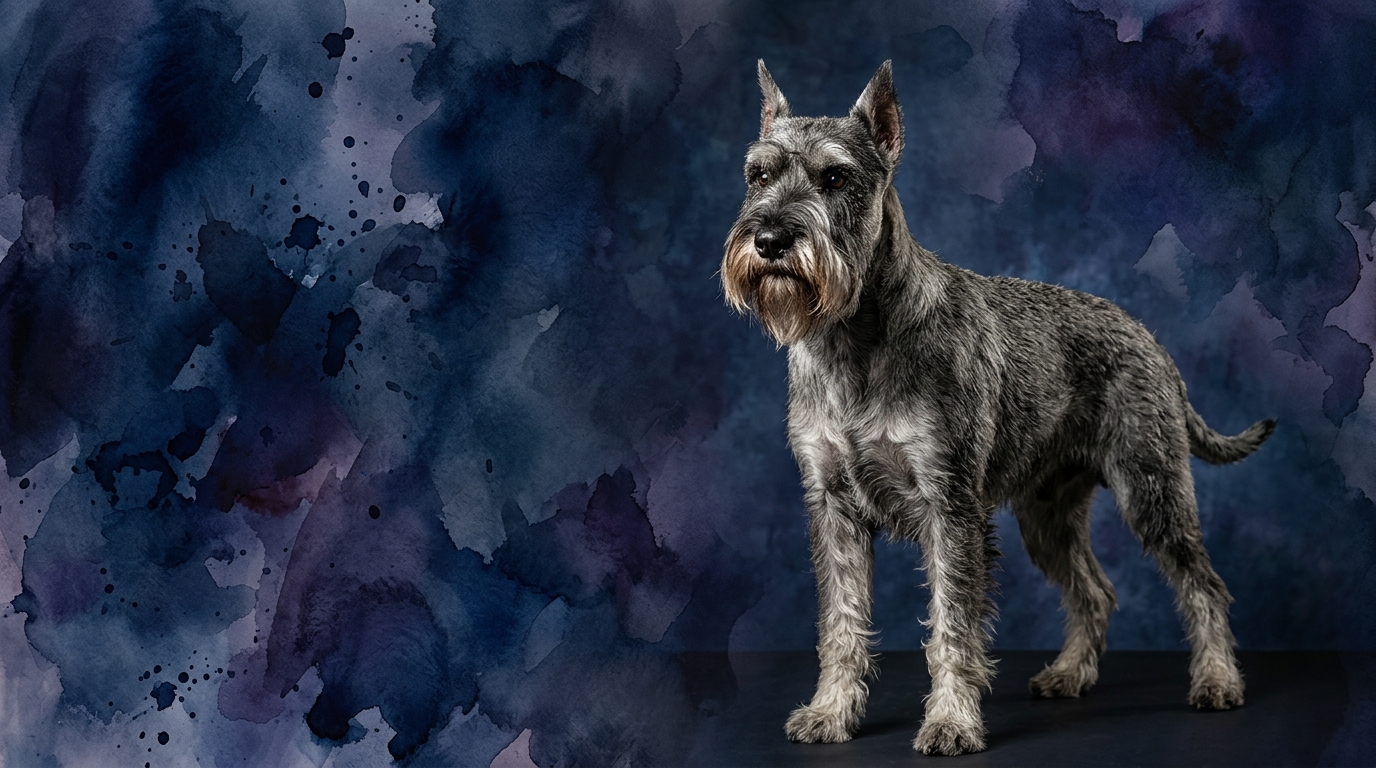

Side-by-Side Cognitive Profiles
At The Cosmic Pet Pet IQ Lab, we analyze canine cognition across five key dimensions. The Standard Schnauzer, holding a respectable Coren rank of #22 among working dogs, presents a profile marked by agility and quick processing. The Boerboel, while not Coren-ranked, offers a distinct cognitive makeup shaped by its guardian role.
For Problem Solving, the Standard Schnauzer scores 4/5. This reflects its heritage as a versatile farm dog, often tasked with independent vermin control and general farm duties, requiring creative solutions to obstacles. The Boerboel scores 3/5, indicating a more direct and less exploratory approach to novel challenges, often relying on established patterns or owner guidance.
In Training Speed, the Standard Schnauzer again scores 4/5. Their eagerness to engage and process new information quickly translates into a relatively swift understanding and execution of commands. The Boerboel, with a score of 3/5, typically requires more repetition and a patient, consistent approach, preferring to internalize lessons thoroughly before reliable demonstration.
Social Intelligence sees both breeds scoring 3/5. This suggests both dogs possess a capable understanding of human and canine social cues, sufficient for their respective roles. The Schnauzer uses this to engage effectively with its family and navigate various social settings, while the Boerboel applies it to discerning friend from potential threat within its perceived territory.
Instinctive Drive is also rated 3/5 for both breeds. For the Standard Schnauzer, this drive manifests in its historical roles of guarding, herding, and pest control, fueling its energetic and purpose-driven nature. For the Boerboel, this drive is predominantly channeled into its profound protective instincts, vigilance, and territorial defense.
Finally, Memory sees the Standard Schnauzer at 4/5. This allows them to retain complex sequences of commands and recall past experiences with precision, aiding in advanced training and adaptability. The Boerboel scores 3/5, demonstrating solid memory for routines, people, and territory-specific details, though perhaps with less emphasis on intricate behavioral sequences.
Where the Standard Schnauzer Excels Cognitively
The Standard Schnauzer’s cognitive strengths are particularly evident in its capacity for rapid information processing and its resourceful approach to novel situations. Their 4/5 score in Problem Solving means they are adept at figuring out puzzles, navigating complex environments, and even outsmarting perceived challenges. This isn't just about raw processing power; it's about a terrier-like tenacity combined with analytical thought, allowing them to devise solutions independently rather than waiting for direction.
Furthermore, their superior Training Speed (4/5) and Memory (4/5) combine to create a dog that absorbs new commands and routines with impressive efficiency. A Schnauzer can quickly grasp multi-step tasks and remember them accurately over time, making them suitable for advanced obedience, agility, or even trick training. Their mental agility allows them to pivot quickly between tasks and adapt their learning strategies based on feedback, engaging enthusiastically in ongoing cognitive challenges.
Where the Boerboel Demonstrates Unique Cognitive Strengths
While the Boerboel's scores might appear lower in some areas, their cognitive profile represents a different, equally valuable set of strengths, particularly suited to their role as a guardian. Their 3/5 in Problem Solving, for instance, doesn't imply inability, but rather a preference for a steady, methodical assessment of situations, prioritizing security and stability over exploratory innovation. This measured approach can be a cognitive asset when a calm, unwavering presence is paramount.
The Boerboel's Instinctive Drive (3/5) is profoundly rooted in its protective nature, enabling a heightened awareness of its surroundings and a deep commitment to its family and territory. This manifests as a specialized form of social intelligence and memory, where they excel at discerning familiar faces from strangers and recalling potential threats or changes in their environment. Their memory, while rated 3/5, is particularly strong for routines, boundaries, and the nuances of their perceived domain, contributing to their steadfast reliability as a protector. They might not learn a new trick as fast, but they will remember their duty with unwavering focus.
Training: Schnauzer's Zest vs. Boerboel's Deliberate Pace
The difference in Training Speed between these two breeds (Schnauzer 4/5, Boerboel 3/5) translates directly into their ease of training. The Standard Schnauzer's inherent zest for engagement and its quick processing allow it to pick up new commands and behaviors with relative speed. They often enjoy the mental stimulation of training sessions and respond well to varied techniques and positive reinforcement, quickly connecting actions with desired outcomes. Their problem-solving acumen means they can sometimes anticipate what's expected.
Conversely, training a Boerboel requires more consistent patience and repetition. While certainly capable of learning, their deliberate nature means they prefer to thoroughly process and internalize commands before demonstrating reliable execution. They aren't as prone to impulsive responses and might require more time to form strong associations. Owners should be prepared for a longer, more structured training journey, focusing on clarity and consistency rather than expecting rapid results. Their social intelligence allows them to form deep bonds, which is a powerful motivator when training.
Matching Canine Cognition to Owner Lifestyles
For active owners seeking a dynamic, mentally agile companion, the Standard Schnauzer is an excellent match. Their 4/5 scores in Problem Solving, Training Speed, and Memory indicate a dog that thrives on consistent mental engagement, enjoys learning new skills, and appreciates varied activities like obedience, agility, or even canine sports. Owners who are prepared to provide daily intellectual challenges alongside physical exercise will find the Schnauzer a responsive and endlessly engaging partner, eager to participate in family activities and problem-solving games.
The Boerboel, with its more measured cognitive profile, is better suited for owners who appreciate a steadfast, composed, and protective presence. While they still require consistent training and socialization, their intellectual strengths lie in their unwavering focus on duty and their methodical approach to their environment. These dogs are ideal for relaxed owners seeking a devoted guardian, comfortable with a dog that values routine, clear boundaries, and a calm, confident handler. They will thrive in a home where their profound loyalty and protective instincts are understood and channeled appropriately, rather than constantly seeking novel mental challenges.
The Verdict
Choose the Standard Schnauzer if you desire a mentally agile, quick-learning companion eager for diverse cognitive challenges and active participation in family life.
Opt for the Boerboel if you seek a steadfast, protective presence, valuing a composed dog with a deliberate learning style and deep-seated loyalty to its family and territory.
🧠 Find Your Pet's IQ Score
Our Pet IQ Lab assessment covers 25+ tests across 5 cognitive dimensions — personalized to your breed.
Take the Full IQ Test →Frequently Asked Questions
Is the Standard Schnauzer difficult to live with due to its high problem-solving skills?
Not necessarily difficult, but their problem-solving ability means they require consistent mental stimulation to prevent boredom, which could lead to them finding their own 'problems' to solve. Engaging them in training, puzzles, and interactive play channels their intellect productively.
How does the Boerboel's instinctive drive impact its daily behavior?
The Boerboel's instinctive drive is primarily geared towards protection and vigilance, making them naturally watchful and territorial. This translates into a calm, observant demeanor indoors, but requires early and consistent socialization to ensure they differentiate between normal visitors and actual threats appropriately.
Can a Boerboel learn complex tasks despite a lower training speed score?
Absolutely. While their training speed score is 3/5, Boerboels are capable of learning complex tasks, but it requires more patience, consistency, and positive reinforcement from the owner. Their strong memory for routines means once a behavior is learned, it is typically retained reliably.