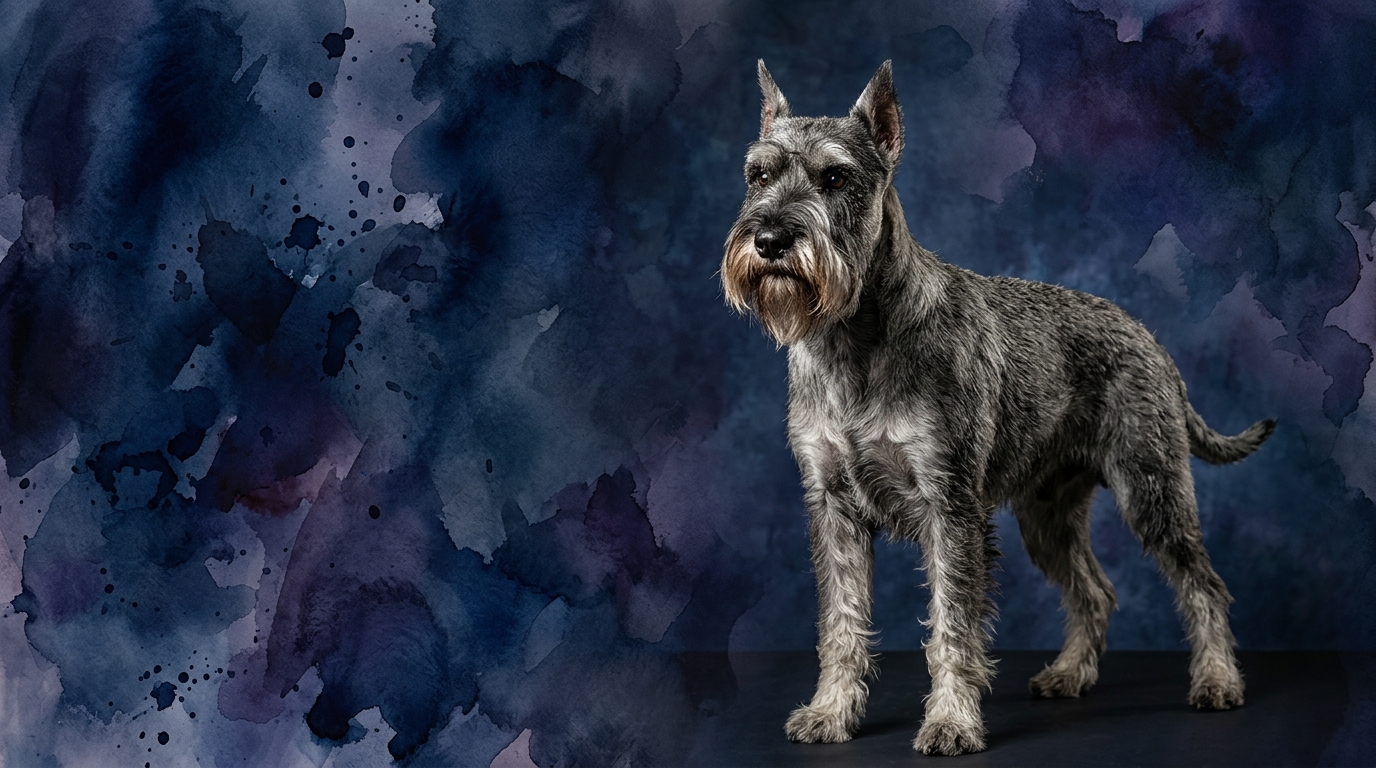

Side-by-Side Cognitive Profiles
The Standard Schnauzer, a dog from the Working group, holds a notable Coren rank of #22, indicating its strong capacity for obedience and working intelligence. Its cognitive profile includes a Problem Solving score of 4/5, reflecting a keen ability to figure out novel situations and overcome challenges. Training Speed is also high at 4/5, meaning these dogs typically grasp new commands and routines quickly. Social Intelligence is rated 3/5, suggesting they are capable of understanding human cues but may exhibit a degree of independence. An Instinctive Drive of 3/5 points to a moderate inherent inclination for tasks such as guarding or tracking, while a Memory score of 4/5 highlights their excellent retention of learned information and experiences.
In contrast, the English Toy Spaniel, a delightful member of the Toy group, is not currently Coren-ranked, which is common for breeds primarily developed for companionship rather than complex tasks. Its cognitive scores are consistently moderate across the board: Problem Solving 3/5, Training Speed 3/5, Social Intelligence 3/5, Instinctive Drive 3/5, and Memory 3/5. These balanced ratings suggest a dog that is adequately adaptable to its environment, learns at a steady pace, forms strong bonds with its human family, possesses a manageable level of inherent canine instincts, and retains information reliably, making it a well-rounded and agreeable companion.
Where the Standard Schnauzer Cognitively Excels
The Standard Schnauzer's superior scores in Problem Solving (4/5), Training Speed (4/5), and Memory (4/5) mark it as a cognitively agile breed. This translates into a dog that can quickly assess and resolve practical dilemmas, such as figuring out how to open a gate or retrieve a hidden toy from a complex setup. Their rapid training speed means they pick up new commands and multi-step tasks with fewer repetitions than many other breeds, often delighting owners with their capacity for advanced obedience or dog sports. Furthermore, their robust memory ensures that once a lesson is learned or a routine established, it tends to stick, leading to reliable long-term recall and consistent performance in activities like agility or rally obedience. This blend of quick wit and strong retention makes them adept at navigating structured learning environments and applying past knowledge to new situations.
Where the English Toy Spaniel Cognitively Shines
While not boasting the same high scores as the Schnauzer in specific cognitive dimensions, the English Toy Spaniel's consistent 3/5 ratings across Problem Solving, Training Speed, Social Intelligence, Instinctive Drive, and Memory signify a breed whose cognitive profile is perfectly attuned to its primary role: devoted companionship. Its 3/5 Social Intelligence indicates a strong capacity for understanding human emotions and intentions, fostering deep, intuitive bonds that are paramount for a companion dog. They excel at reading their owner's mood and providing comforting presence, a cognitive strength that might not involve complex task execution but is invaluable for emotional support. Their moderate instinctive drive means they are generally less prone to independent pursuits like extensive hunting or guarding, preferring to remain close and engaged with their human family, which is a cognitive 'win' for a home-centric lifestyle. This balanced intelligence makes them adaptable and pleasant housemates, capable of learning household routines and enjoying interactive play without requiring intense mental exertion or constant novel challenges.
Training Dynamics: Which is Easier and Why
When it comes to formal training, the Standard Schnauzer's 4/5 Training Speed and 4/5 Memory suggest a dog that can learn commands and behaviors quite rapidly and retain them effectively over time. They are often quick to understand what is being asked of them and can progress through training levels at an impressive pace. However, their 4/5 Problem Solving and 3/5 Instinctive Drive also mean they possess a degree of independent thought and can sometimes choose to apply their intelligence to their own agendas if not consistently motivated and directed. This means while they learn quickly, they also require an owner who can be equally sharp, consistent, and engaging to keep them focused and prevent them from outsmarting the training process.
The English Toy Spaniel, with its 3/5 Training Speed and 3/5 Memory, typically learns at a more moderate, steady pace. They may require more repetition to solidify new commands, but their balanced Social Intelligence (3/5) means they are generally eager to please and highly motivated by positive reinforcement and connection with their owner. Their moderate instinctive drive makes them less likely to be distracted by strong independent urges, allowing for a more focused and biddable training experience. For a novice owner or someone seeking a dog that is generally compliant and enjoys shared learning experiences without demanding intense intellectual sparring, the English Toy Spaniel might present a less challenging, albeit slower, training journey, relying more on patience and positive relationship building.
Matching Breeds to Owner Lifestyles
For active owners seeking a canine partner for structured activities and mental engagement, the Standard Schnauzer is often an excellent fit. Its high problem-solving capacity, quick training speed, and strong memory mean it thrives on consistent mental challenges, whether through advanced obedience, agility, tracking, or even learning complex tricks. These dogs require an owner who is committed to providing regular mental stimulation and physical exercise to channel their considerable cognitive energy. They are not content with merely being present; they want to participate, learn, and apply their intellect, making them ideal for individuals who enjoy a collaborative and dynamic relationship with their dog.
Conversely, the English Toy Spaniel's balanced cognitive profile makes it a superb choice for more relaxed owners who prioritize companionship and gentle interaction over intense activity. Their moderate needs for problem-solving and instinctive drive mean they are generally content with regular, pleasant walks and engaging in calm, interactive play within the home. Their strong social intelligence makes them exceptionally sensitive and attuned to their human companions, desiring close proximity and shared moments of quiet affection. They flourish in environments where their primary role is that of a beloved family member, offering comfort and loyalty without demanding a rigorous schedule of intellectual or physical exertion, perfectly suiting those who appreciate a devoted, low-key presence.
The Verdict
Choose the Standard Schnauzer if you are an active owner seeking a highly trainable, problem-solving partner for dog sports, advanced obedience, or a mentally stimulating lifestyle.
Opt for the English Toy Spaniel if you desire a devoted, adaptable companion for a relaxed home environment, valuing steady learning and strong emotional connection over intense cognitive challenges.
🧠 Find Your Pet's IQ Score
Our Pet IQ Lab assessment covers 25+ tests across 5 cognitive dimensions — personalized to your breed.
Take the Full IQ Test →Frequently Asked Questions
Does the Standard Schnauzer's high problem-solving score mean it's prone to mischief?
The Standard Schnauzer's 4/5 problem-solving acumen indicates it can figure out complex situations, which, if not channeled through appropriate mental stimulation, could lead to creative solutions for unwanted behaviors like opening cabinets or escaping yards. Consistent training and enrichment are key to directing this intelligence positively.
Is the English Toy Spaniel difficult to train because it's not Coren-ranked?
No, the English Toy Spaniel's lack of a Coren rank doesn't imply difficulty; it simply means it wasn't developed for the same type of working obedience tasks. Its 3/5 training speed and memory indicate it learns steadily, and its strong social intelligence makes it eager to please, responding well to patient, positive reinforcement.
Which breed is better for first-time dog owners based on cognitive factors?
For first-time owners, the English Toy Spaniel might be more forgiving due to its moderate energy, balanced drives, and biddable nature, requiring less intense cognitive management. The Standard Schnauzer's higher cognitive demands and independent streak often benefit from an owner with some prior experience in structured training.