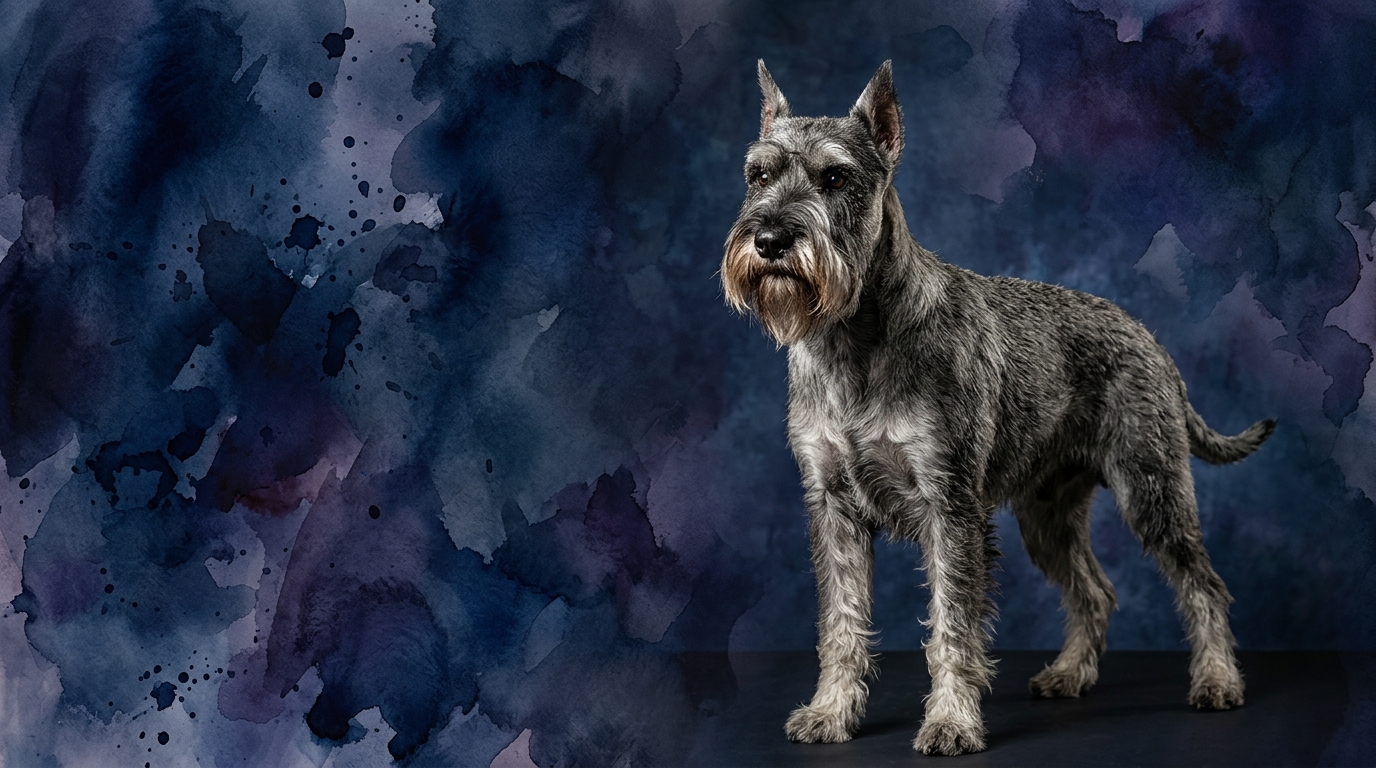

Side-by-Side IQ Profile: Standard Schnauzer vs. Toy Fox Terrier
The Cosmic Pet Pet IQ Lab employs five key dimensions to evaluate canine intelligence, offering a detailed look into the mental landscape of our beloved companions. For the Standard Schnauzer, a breed ranked #22 by Coren, its profile paints a picture of a mentally robust dog: Problem Solving 4/5, Training Speed 4/5, Social Intelligence 3/5, Instinctive Drive 3/5, and Memory 4/5. This suggests a dog that is not only quick to learn but also adept at navigating complex situations and retaining information over time.
In contrast, the Toy Fox Terrier, while not included in Coren's specific ranking, presents a profile of balanced, moderate intelligence: Problem Solving 3/5, Training Speed 3/5, Social Intelligence 3/5, Instinctive Drive 3/5, and Memory 3/5. These consistent scores indicate a capable and adaptable companion, perhaps less intensely focused on complex tasks than the Schnauzer, but certainly not lacking in mental acumen for its role as a lively household member.
Delving deeper into the Standard Schnauzer's specific cognitive strengths, a 4/5 in Problem Solving means these dogs excel at figuring out how to achieve goals, whether it's manipulating latches, strategizing to get a favorite toy from a high shelf, or understanding multi-step commands. Their Training Speed of 4/5 reflects an eagerness and ability to grasp new commands with minimal repetition, making them highly responsive learners. A Memory score of 4/5 ensures that once a lesson is learned, it tends to stick, contributing to their reliability and consistency in behavior. Their Social Intelligence at 3/5 indicates they are attuned to human cues and bond well, though their focus can sometimes be more on a perceived task than pure social interaction. Finally, their Instinctive Drive of 3/5 speaks to their historical roots as farm dogs and ratters, giving them a moderate but present desire for purpose and vigilance.
The Toy Fox Terrier's consistent 3/5 scores across all dimensions highlight a different kind of cognitive strength: adaptability and balanced engagement. A Problem Solving score of 3/5 means they can handle typical household challenges and simple puzzles, learning through experience without becoming overly fixated on intricate intellectual tasks. Their Training Speed of 3/5 indicates they learn at a steady pace, responding well to engaging, positive reinforcement sessions, though they might require more repetitions than a Schnauzer. Social Intelligence at 3/5 shows they are affectionate and responsive to their families, understanding social cues within their pack, albeit sometimes with a charmingly independent terrier streak. An Instinctive Drive of 3/5 reflects their terrier heritage, manifesting as a lively spirit and a natural inclination for chasing small, quick objects, which translates into playful energy rather than a demanding 'job' requirement. Their Memory at 3/5 means they retain commands and routines adequately, making them reliable companions in day-to-day life.
Where the Standard Schnauzer Wins Cognitively
The Standard Schnauzer clearly demonstrates superior cognitive agility in several key areas. Its 4/5 score in Problem Solving means these dogs are exceptionally adept at navigating complex environments and devising strategies to overcome obstacles, making them effective partners in advanced training and canine sports. This isn't just about following commands, but about true understanding and adaptive thinking when faced with novel situations or multi-step challenges.
Furthermore, the Schnauzer's 4/5 Training Speed allows for a remarkably efficient learning process. Owners will find that new commands, routines, and even intricate sequences are grasped with fewer repetitions, accelerating their progress in obedience, agility, or any task-oriented activity. This rapid assimilation of information, coupled with their 4/5 Memory, ensures that once a skill is acquired, it is retained for the long term, building a robust foundation of learned behaviors that can be consistently relied upon. For owners seeking a dog capable of mastering a vast repertoire of commands and skills, the Schnauzer's mental architecture offers a distinct advantage.
Where the Toy Fox Terrier Wins Cognitively
While the Toy Fox Terrier's scores are consistently 3/5, this represents a unique cognitive advantage in terms of manageability and suitability for a variety of lifestyles. Their balanced intelligence across all dimensions means they are mentally capable and engaging without requiring the intense, constant intellectual stimulation that a higher-scoring breed might demand. This makes them an excellent choice for owners who desire a bright, interactive companion but may not be able to commit to the rigorous daily mental exercises a Schnauzer thrives on.
Their moderate Instinctive Drive (3/5) is also a cognitive 'win' for many households. While they possess the spirited tenacity of a terrier, this drive is often channeled into playful pursuits and charming assertiveness rather than an overwhelming need for a specific, demanding job. This balance ensures they are mentally content with regular play, basic training, and ample human interaction, integrating seamlessly into family life without the potential for frustration that can arise in dogs with more specialized, intense cognitive drives that go unfulfilled. Their intelligence is perfectly tuned for being a delightful and responsive companion, offering engagement without excessive cognitive burden.
Which is Easier to Train and Why
When considering ease of training, the Standard Schnauzer's 4/5 Training Speed suggests a dog that will grasp commands quickly, often with fewer repetitions compared to many other breeds. However, their 4/5 Problem Solving and 3/5 Instinctive Drive can introduce a layer of complexity: they are intelligent enough to sometimes challenge commands or prefer their own 'solution' if they perceive it as more efficient or rewarding. This means while they learn fast, training requires a confident, consistent, and engaging handler who can channel their mental energy and occasionally outwit their independent streak, turning potential stubbornness into focused cooperation.
The Toy Fox Terrier, with a 3/5 Training Speed, learns at a moderate but steady pace. They may require more consistent repetition than a Schnauzer to solidify new commands. However, their slightly lower Problem Solving and Instinctive Drive scores (both 3/5) mean they are generally less inclined to challenge authority or devise their own workarounds. They often respond well to positive reinforcement and short, fun training sessions, making them quite amenable to learning basic obedience and tricks without the same level of intellectual negotiation required by a Schnauzer. Their smaller size also makes any minor training challenges more manageable in a practical sense.
Which Suits Active Owners vs. Relaxed Owners
For active owners seeking a true mental partner, the Standard Schnauzer is an ideal match. Their 4/5 Problem Solving and 4/5 Memory mean they require consistent and varied mental stimulation beyond just physical exercise. These dogs thrive when given 'jobs,' whether it's learning advanced obedience routines, participating in dog sports like agility or rally, or engaging with complex puzzle toys. Owners who enjoy teaching new skills, providing intricate challenges, and integrating their dog into a mentally stimulating lifestyle will find the Schnauzer a highly rewarding and capable companion. Their moderate instinctive drive means they appreciate having a purpose and can become bored or mischievous if their sharp minds are left undirected.
Relaxed owners, or those seeking a spirited but less mentally demanding companion, might find the Toy Fox Terrier a better fit. While they possess the lively energy characteristic of terriers, their consistent 3/5 scores across all IQ dimensions indicate a dog that is content with regular, but not necessarily intense, mental engagement. Daily walks, interactive play sessions, and basic obedience training usually suffice to keep their minds stimulated. They are adaptable to various living situations, including apartments, provided their needs for attention and occasional bursts of energy are met. They offer vibrant companionship and entertainment without requiring the constant, high-level cognitive engagement that a Standard Schnauzer thrives upon, making them a charming and manageable presence in many homes.
The Verdict: When to Choose Each Breed
The Verdict
Choose the Standard Schnauzer if you are an active owner who desires a highly engaged, mentally stimulating companion capable of complex tasks and consistent advanced training, and are prepared to provide significant mental exercise.
Opt for the Toy Fox Terrier if you seek a spirited, adaptable companion that thrives on moderate mental engagement and possesses a charming, independent streak, fitting well into various home environments without overwhelming cognitive demands.
🧠 Find Your Pet's IQ Score
Our Pet IQ Lab assessment covers 25+ tests across 5 cognitive dimensions — personalized to your breed.
Take the Full IQ Test →Frequently Asked Questions
Are Standard Schnauzers difficult due to their intelligence?
Standard Schnauzers are not inherently difficult, but their high problem-solving ability and moderate instinctive drive mean they require consistent mental stimulation and clear leadership. Without adequate engagement, their intelligence can lead to boredom and self-directed, potentially mischievous behaviors.
Do Toy Fox Terriers need a lot of mental stimulation?
Toy Fox Terriers require regular mental stimulation to stay happy and well-adjusted, but their consistent 3/5 IQ scores suggest they are generally content with moderate engagement. Daily training, puzzle toys, and interactive play sessions are usually sufficient to satisfy their cognitive needs.
How does Coren's ranking relate to these breeds' IQ profiles?
Coren's ranking primarily assesses a breed's working and obedience intelligence, placing the Standard Schnauzer at #22 for its rapid learning and command retention. The Toy Fox Terrier, not specifically Coren-ranked, still demonstrates capable intelligence across our five dimensions, highlighting that intelligence manifests in diverse ways beyond just obedience in a working context.