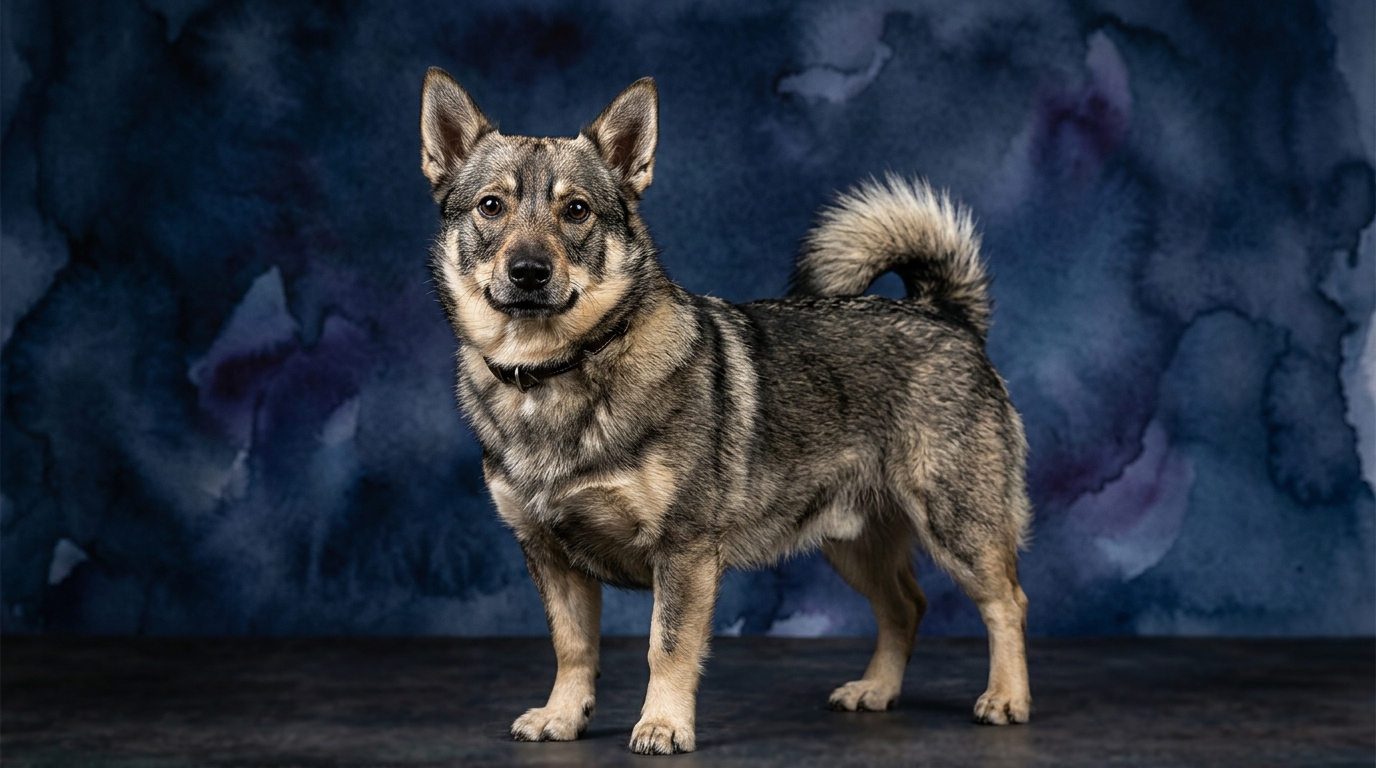

IQ Profile: Swedish Vallhund vs. Irish Setter
The Swedish Vallhund, a resilient herding dog with a history spanning over a millennium, presents a balanced and practical cognitive profile. Our assessment rates its Problem Solving at 3/5, indicating a resourceful approach to challenges, while its Training Speed is also 3/5, suggesting a steady and consistent learning pace. Its Social Intelligence stands at 3/5, reflecting an awareness of social cues, and its Instinctive Drive is likewise 3/5, showcasing a moderate, purposeful inclination towards its ancestral tasks. Finally, its Memory is rated at 3/5, signifying a reliable retention of learned information.
In contrast, the Irish Setter, a striking sporting dog recognized for its elegance and field prowess, demonstrates a higher aptitude in several cognitive dimensions. It achieves a 4/5 in Problem Solving, suggesting a more advanced capacity for navigating complex situations and devising effective solutions. Its Training Speed is also 4/5, indicating a quicker grasp of new commands and concepts, complemented by a Memory score of 4/5, which points to superior retention. Its Social Intelligence is a balanced 3/5, similar to the Vallhund, and its Instinctive Drive is also 3/5, reflecting a strong but manageable urge for its inherent sporting activities.
Where the Swedish Vallhund Excels Cognitively
The Swedish Vallhund's strength lies in its uniformly balanced cognitive scores, a reflection of its historical role as an all-around farm dog rather than a specialist. Its consistent 3/5 across Problem Solving, Training Speed, Social Intelligence, Instinctive Drive, and Memory indicates an adaptive cognitive approach. This breed isn't overly specialized in one area but possesses a pragmatic intellect that allows it to effectively handle a diverse range of situations, from herding cattle to vermin control, by applying consistent, reliable mental faculties.
This balanced profile means the Vallhund is rarely overwhelmed by tasks requiring a blend of different cognitive skills. Its moderate instinctive drive, combined with its problem-solving ability, allows it to make sensible, independent decisions in dynamic environments, such as guiding livestock without constant handler intervention. This self-reliance, born from a practical working history, means the Vallhund brings a consistent, dependable cognitive presence to any task, capable of adapting its learned behaviors to slightly varied contexts with steady reliability.
Where the Irish Setter Shows Greater Cognitive Aptitude
The Irish Setter demonstrates a clear cognitive advantage in areas crucial for its sporting heritage, specifically in Problem Solving, Training Speed, and Memory, where it scores a 4/5. This higher aptitude means the Setter can not only grasp complex sequences of commands more rapidly but also retain them with greater precision over time. Its enhanced problem-solving capacity allows it to navigate intricate field scenarios, such as tracking game through varied terrain or retrieving fallen birds from challenging cover, by strategically applying learned solutions.
The Setter's superior memory and quicker training speed enable it to build a broader repertoire of learned behaviors and responses, making it more amenable to advanced obedience or intricate field trial work. This breed is adept at connecting cause and effect, learning from past experiences, and applying that knowledge to future challenges. Its capacity for sequential learning and long-term retention means that once a task is understood and practiced, the Irish Setter is likely to perform it consistently, even after a period of inactivity, which is a significant asset in performance disciplines.
Training Dynamics: Vallhund vs. Setter
Training a Swedish Vallhund requires a consistent and engaging approach, aligning with its 3/5 Training Speed. While it learns reliably, its independent herding instincts and moderate instinctive drive mean it can sometimes prioritize its own assessment of a situation over immediate handler commands. Owners must provide clear, positive reinforcement and make training stimulating to keep the Vallhund focused, leveraging its problem-solving abilities to make learning a collaborative process rather than rote memorization. Engagement is key to overcoming its inherent self-sufficiency.
The Irish Setter, with its 4/5 Training Speed and Memory, generally picks up new commands and concepts more quickly than the Vallhund. This makes it a rewarding student in many training scenarios, especially those involving complex sequences. However, its 3/5 instinctive drive, coupled with its energetic sporting nature, means it can be prone to environmental distractions. Effective training for a Setter must be consistent, positive, and structured, channeling its natural exuberance and focus into desired behaviors while building a strong bond that encourages compliance even amidst tempting external stimuli.
Matching Breeds to Lifestyles: Active vs. Relaxed Owners
The Swedish Vallhund, with its well-rounded yet persistent cognitive profile and working background, is best suited for active owners. This breed thrives when given a 'job' or consistent mental and physical challenges. Its moderate instinctive drive means it needs daily opportunities to exercise its body and mind, whether through herding games, agility, or extensive walks with purpose. A Vallhund requires an owner who can provide structure, engage its problem-solving skills, and appreciate its independent yet devoted nature, making it a poor fit for a truly relaxed, sedentary lifestyle.
The Irish Setter, characterized by its higher problem-solving and training speed alongside its sporting drive, is unequivocally a breed for active owners. Its boundless energy and desire to work demand significant daily exercise, including vigorous runs, long hikes, or participation in dog sports like field trials, obedience, or agility. While it learns quickly, its mental and physical needs are substantial; a relaxed owner might find themselves overwhelmed by an under-exercised Setter prone to boredom-induced behaviors. This breed flourishes with individuals or families who can dedicate ample time to its physical and cognitive enrichment.
The Verdict
Choose the Swedish Vallhund if you appreciate a consistently adaptable, self-reliant working dog with a pragmatic intellect, and you can provide engaging, structured activities.
Opt for the Irish Setter if you desire a quick-learning, highly trainable partner for complex tasks and active adventures, and you can commit to fulfilling its substantial exercise and mental stimulation needs.
🧠 Find Your Pet's IQ Score
Our Pet IQ Lab assessment covers 25+ tests across 5 cognitive dimensions — personalized to your breed.
Take the Full IQ Test →Frequently Asked Questions
Are Swedish Vallhunds good for first-time owners?
Swedish Vallhunds can be suitable for first-time owners who are committed to consistent training, socialization, and providing ample mental and physical stimulation. Their independent nature requires an owner willing to invest time in understanding and channeling their working drive.
How much exercise does an Irish Setter need daily?
An Irish Setter typically requires a significant amount of daily exercise, often 1-2 hours of vigorous activity, such as running, brisk walks, or interactive play. Without sufficient exercise, they can become restless and develop undesirable behaviors.
Do both breeds get along well with children?
Both Swedish Vallhunds and Irish Setters can be excellent family pets and generally get along well with children, especially when raised together and properly socialized. Supervision is always recommended, and children should be taught how to interact respectfully with dogs.