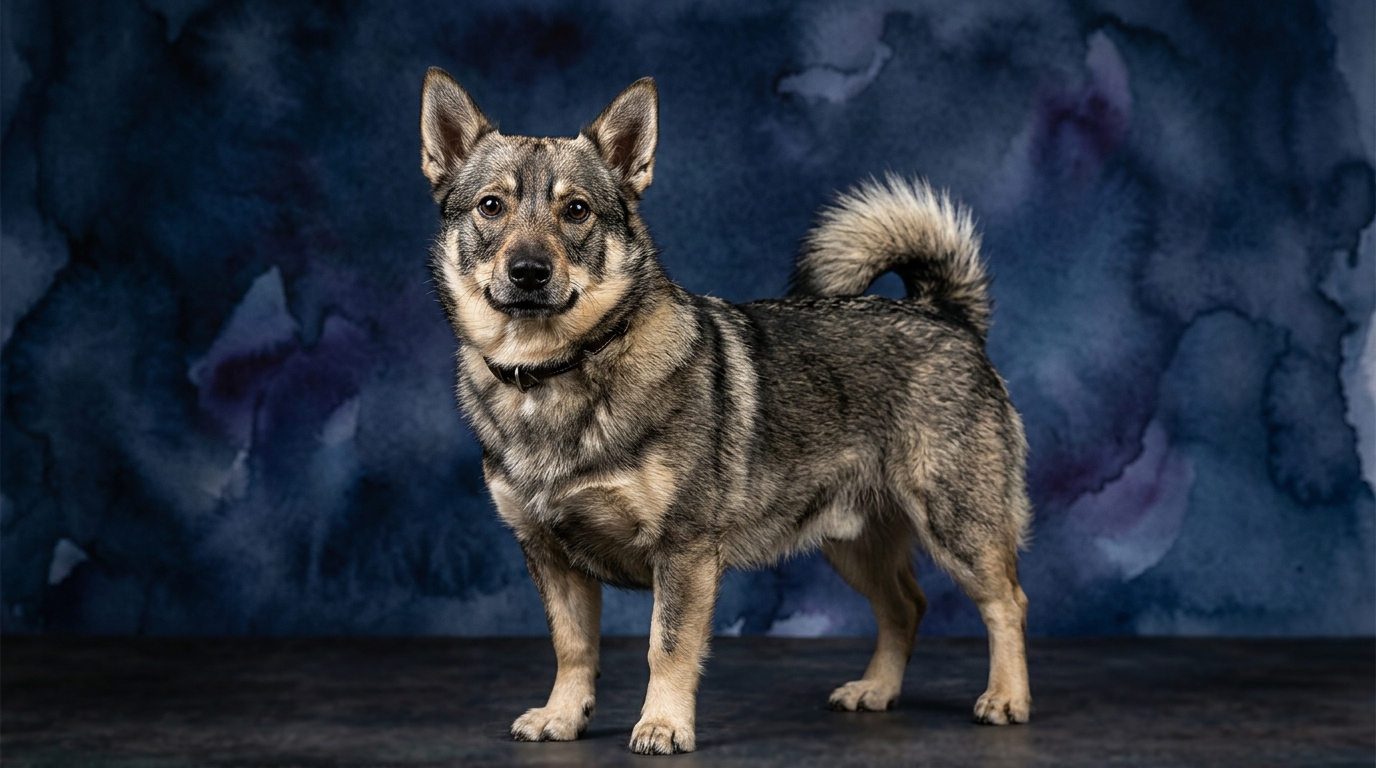
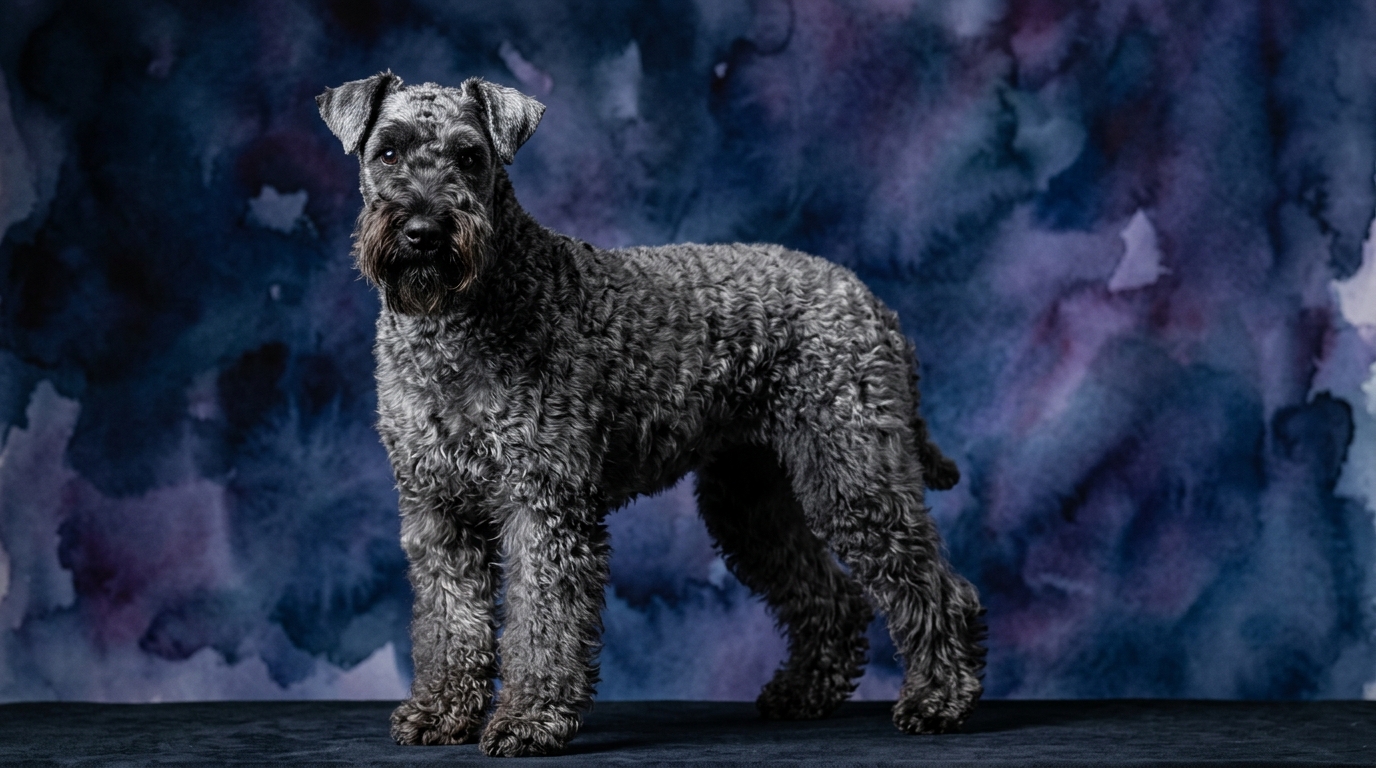
Side-by-Side IQ Profile: Swedish Vallhund vs. Kerry Blue Terrier
While both the Swedish Vallhund and Kerry Blue Terrier score a consistent 3 out of 5 across all five cognitive dimensions in The Cosmic Pet Pet IQ Lab, it's crucial to understand how these scores translate into real-world behavior, deeply influenced by their breed origins and intended functions.
The Swedish Vallhund, a legacy of Viking farms, exhibits a practical, contextual problem-solving ability (3/5) honed by generations of herding. This isn't about abstract puzzles, but rather dynamically assessing a situation, like maneuvering livestock through a gate or navigating a complex agility course. They excel at understanding spatial relationships and cause-and-effect within a working scenario. Their training speed (3/5) is typically moderate and steady; their biddable nature means they are generally receptive to instruction, valuing cooperation with their handler, and tend to retain learned behaviors effectively. Essential for their collaborative herding role, Vallhunds possess a solid understanding of human cues and social dynamics (3/5), adept at reading body language and tone for effective partnership. Their instinctive drive (3/5) is a central part of their cognitive makeup, manifesting as a desire to gather, chase, and control movement, strong enough to motivate them for work yet generally manageable. Finally, Vallhunds demonstrate a robust memory (3/5) for commands, routines, and experiences, supporting their reliability in repeated tasks.
Conversely, the Kerry Blue Terrier, an Irish farm dog originally tasked with pest control, approaches intelligence with a different cognitive emphasis. For the Kerry Blue, problem-solving (3/5) is characterized by ingenious, independent resourcefulness. Their historical role demanded finding and dispatching vermin, leading to a cognitive approach focused on overcoming obstacles, outsmarting prey, and achieving goals through clever, often self-directed, means, excelling at persistence in pursuit of an objective. Their training speed (3/5) is also moderate, but their terrier temperament means training often requires a more engaging and motivational approach; while capable of mastering complex commands, their independent spirit means owners must make training rewarding and demonstrate clear, consistent leadership. Kerry Blues possess a keen social awareness (3/5), particularly within their immediate family, often forming deep bonds, but their social intelligence is geared towards understanding their 'pack' and asserting their strong personality, rather than an immediate desire for broad cooperation with all individuals. Their instinctive drive (3/5) is powerful and rooted in their prey drive and territorial nature, manifesting as a strong desire to chase, dig, and explore, fueled by a tenacious focus. Lastly, Kerry Blues have a good memory (3/5) for learned behaviors and experiences, especially those that yielded a desired outcome, supporting their independent problem-solving by recalling past strategies to achieve their objectives.
Where the Swedish Vallhund Wins Cognitively
The Swedish Vallhund often demonstrates a subtle cognitive edge in tasks requiring cooperative problem-solving and spatial awareness within a structured environment. Their ancestral role as herders of cattle and sheep demanded an innate ability to read and anticipate the movements of livestock, often working in concert with a human handler. This translates into a capacity for understanding complex patterns and sequences, making them adept at agility courses where precise navigation and quick decisions are crucial. Their social intelligence, while rated 3/5, leans towards active partnership, enabling them to interpret nuanced human body language and vocal cues more readily in a working context, allowing for smoother collaboration in tasks that require synchronized effort. They excel at understanding the 'big picture' of a task and their role within it, a cognitive strength rooted in their history of managing a moving flock.
Where the Kerry Blue Terrier Wins Cognitively
Conversely, the Kerry Blue Terrier often shines in cognitive challenges demanding independent thought, tenacity, and a resourcefulness born from their pest-control heritage. While their problem-solving is also rated 3/5, it manifests differently: a terrier's ingenuity is geared towards outsmarting prey or overcoming obstacles to reach a desired outcome, often without direct human instruction. This breed frequently displays a remarkable ability to 'figure things out' on their own, whether it's opening a gate, finding a hidden treat, or devising a strategy to corner a critter. Their instinctive drive, also 3/5, fuels a persistent mental focus on a task, making them formidable in activities requiring sustained effort and individual initiative, such as scent work or lure coursing where their prey drive can be channeled. They possess a unique brand of cleverness, often expressed through determination and a creative approach to achieving their objectives.
Training Dynamics: Which is Easier to Train?
When assessing ease of training, the distinction between the Swedish Vallhund and the Kerry Blue Terrier becomes more apparent, despite both having a 3/5 training speed. The Vallhund, with its herding lineage, generally exhibits a higher degree of biddability and a natural inclination to work cooperatively with its human companion. They are often eager to please and respond well to consistent, positive reinforcement, viewing training as a shared activity. While their herding instincts can sometimes lead to 'nipping' at heels or attempting to 'gather' children, these behaviors are typically manageable with early socialization and redirection, as their underlying desire is to control and organize, which can be channeled into obedience or agility. Their memory helps solidify learned behaviors efficiently.
The Kerry Blue Terrier, on the other hand, presents a different training dynamic. While equally capable of learning, their terrier nature imbues them with a strong independent streak and a formidable will. Training a Kerry Blue often requires a more creative and engaging approach, as they are less likely to comply simply to please. Owners must demonstrate clear leadership and make training sessions exciting, often incorporating elements that appeal to their instinctive drive for chasing or 'hunting' games. Their persistence, while a cognitive strength for independent tasks, can translate into stubbornness if they don't perceive the value of a command. Consequently, while both breeds learn at a moderate pace, the Vallhund's inherent cooperativeness often makes the *process* of training feel smoother and less challenging for the average owner, whereas the Kerry Blue demands a more experienced, patient, and inventive trainer.
Lifestyle Match: Active vs. Relaxed Owners
For owners seeking an active companion, both breeds certainly fit the bill, but with differing energy profiles. The Swedish Vallhund, stemming from its herding duties, thrives on regular physical activity and mental engagement. They require daily walks, opportunities to run, and structured activities like obedience, agility, or herding trials to keep their minds and bodies satisfied. An active owner who enjoys hiking, dog sports, or simply spending quality time training will find the Vallhund a delightful and responsive partner. However, once their needs are met, they are generally content to relax indoors with their family, making them suitable for active owners who also appreciate downtime.
The Kerry Blue Terrier, conversely, demands a more intensely active lifestyle. Their terrier heritage means they possess a formidable amount of energy and a relentless drive that needs consistent outlets. They are not dogs content with just a leisurely stroll around the block; they require vigorous exercise, opportunities to run, dig (in designated areas!), and engage in challenging mental tasks daily. Without sufficient physical and mental stimulation, a Kerry Blue can become bored and channel their problem-solving skills into less desirable behaviors, such as destructive chewing or incessant digging. Therefore, the Kerry Blue is best suited for highly active, experienced owners who are committed to providing substantial daily exercise and ongoing mental challenges, and who understand the nuances of managing a spirited, driven terrier.
The Verdict
Choose the Swedish Vallhund if you appreciate a biddable, cooperative companion eager for structured activities like obedience or agility, and a dog that can transition gracefully from active outdoor play to relaxed indoor companionship.
Opt for the Kerry Blue Terrier if you are an experienced, highly active owner who thrives on the challenge of a spirited, independent dog requiring vigorous exercise and creative mental engagement to satisfy its tenacious terrier instincts.
🧠 Find Your Pet's IQ Score
Our Pet IQ Lab assessment covers 25+ tests across 5 cognitive dimensions — personalized to your breed.
Take the Full IQ Test →Frequently Asked Questions
Are Swedish Vallhunds good family dogs?
Yes, Swedish Vallhunds are typically good family dogs, known for being affectionate and playful with their families. Their social intelligence allows them to integrate well into household dynamics, though their herding instincts mean they might try to 'gather' children or small pets. Early socialization and training are key to ensuring a harmonious home environment.
What kind of exercise does a Kerry Blue Terrier need?
Kerry Blue Terriers require significant, vigorous exercise daily to satisfy their high energy and instinctive drives. This includes long runs, challenging play sessions, structured training, and opportunities for mental stimulation like puzzle toys or scent work. Without adequate outlets, they can become bored and destructive.
Do either of these breeds shed a lot?
The Swedish Vallhund has a double coat and sheds moderately year-round, with heavier shedding twice a year during seasonal coat blows. The Kerry Blue Terrier, on the other hand, has a single, non-shedding coat, which makes them a popular choice for allergy sufferers, but requires regular grooming to prevent matting.