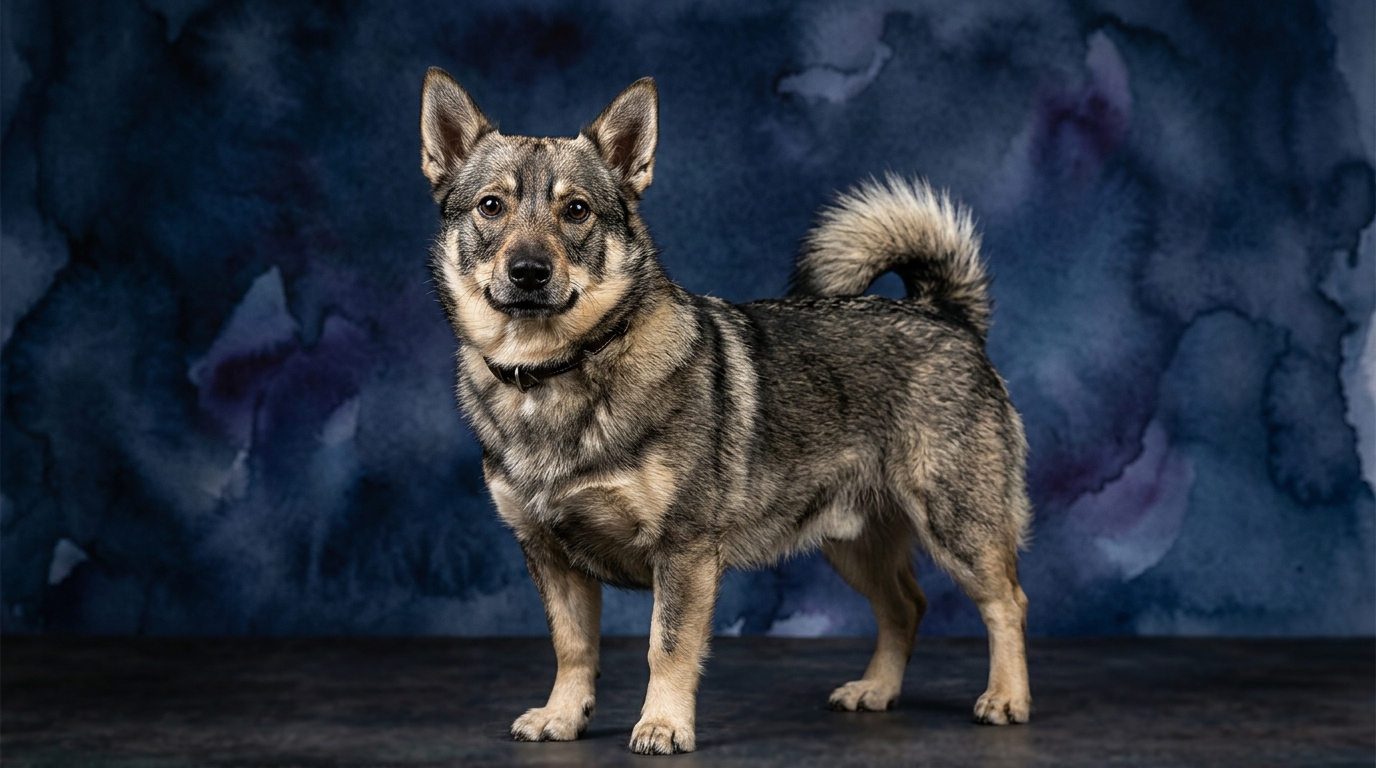

Side-by-Side IQ Profile: Herding Wit vs. Scenting Acuity
The Swedish Vallhund, a resilient herding dog from Sweden, and the Redbone Coonhound, a dedicated scent hound from the American South, both register a 3/5 across problem solving, training speed, social intelligence, instinctive drive, and memory. This indicates a solid, functional level of cognitive ability in each dimension, but the *application* of these skills differs significantly based on their genetic predispositions and historical work.
For the Swedish Vallhund, a 3/5 in **Problem Solving** often manifests as an ability to strategize livestock movement, navigate complex environments efficiently, or figure out how to access a desired toy. Their solutions typically involve spatial reasoning and understanding cause-and-effect within a structured context. Their **Training Speed** at 3/5 reflects a good capacity to learn new commands and routines, often motivated by a desire to work alongside their human companions, though they can have a stubborn streak if not properly engaged. **Social Intelligence** at 3/5 means they are generally adept at reading human cues and interacting appropriately with their family, forming close bonds and understanding household dynamics. Their **Instinctive Drive** of 3/5 is strongly tied to herding, which includes nipping at heels, gathering, and maintaining control over a 'flock,' even if that 'flock' is a family of humans or other pets. Finally, their **Memory** at 3/5 allows them to recall intricate command sequences, familiar routes, and past experiences, aiding in their consistent performance of tasks.
The Redbone Coonhound's 3/5 in **Problem Solving** is primarily geared towards independent tracking: discerning a specific scent from a multitude of others, navigating varied and challenging terrain, and overcoming obstacles to follow a trail. Their solutions are often self-directed and driven by olfactory information rather than human direction. Their **Training Speed** at 3/5 means they can learn, but their independent nature and powerful scent drive can make general obedience training require more patience and consistency; they learn best when training aligns with their innate motivations. **Social Intelligence** at 3/5 sees them as generally friendly and affable with people and other dogs, but their primary social focus might be on their 'pack' during a hunt rather than constant human interaction, though they are affectionate companions. Their **Instinctive Drive** at 3/5 is overwhelmingly focused on scenting, trailing, and vocalizing (baying) once a quarry is treed; this drive is powerful and consuming. Their **Memory** at 3/5 is particularly strong for scent trails, remembering the success of past hunts, and associating specific environmental cues with their hunting objectives.
Where the Swedish Vallhund Excels Cognitively
The Swedish Vallhund's cognitive strengths lie in their capacity for collaborative problem-solving and their responsiveness to human direction. Their 3/5 in problem-solving shines brightest when tasks require an understanding of human intent, such as navigating an agility course or performing complex trick sequences. They excel at learning and executing multi-step commands, demonstrating a cognitive flexibility that allows them to adapt their actions based on subtle human signals. This makes them particularly adept at structured activities where precision and teamwork are valued, such as herding trials or competitive obedience, where their moderate memory helps them retain intricate patterns and cues over time. Their social intelligence contributes to their ability to anticipate and respond to their owner's moods and commands, fostering a partnership that is central to their working style.
Where the Redbone Coonhound Shows Unique Cognitive Prowess
The Redbone Coonhound's cognitive advantages are rooted in their exceptional sensory processing and independent decision-making, particularly concerning scent. Their 3/5 in problem-solving manifests as an unwavering focus and determination to follow a scent trail, even in the face of significant environmental distractions or physical challenges. This requires sophisticated cognitive mapping based on olfactory information, a skill far beyond what most breeds possess. Their moderate memory is powerfully linked to scent, allowing them to recall specific trails, differentiate between various animal scents, and remember successful hunting strategies. While their social intelligence supports their pack dynamics, their true cognitive strength is in their autonomous pursuit, making complex judgments about scent direction and intensity without constant human input, demonstrating a specialized form of self-reliance and environmental mastery.
Training Dynamics: Vallhund's Eagerness vs. Coonhound's Drive
Despite both breeds scoring 3/5 for training speed, the *approach* and *perceived ease* of training differ due to their fundamental motivations. The Swedish Vallhund, with its herding background, often possesses a natural inclination to work with humans and respond to direction. They generally pick up new commands with moderate repetition, especially when positive reinforcement and engaging methods are employed, as their social intelligence and desire for partnership make them attentive pupils. Their herding drive can be channeled into focused training, making them responsive to shaping behaviors and learning complex sequences.
Conversely, the Redbone Coonhound's 3/5 in training speed is heavily influenced by their powerful instinctive drive for scenting. While capable of learning, their independent nature means they can be more challenging to train for general obedience, particularly when a compelling scent is present. Their focus can be singularly directed towards a trail, making recall or 'leave it' commands difficult in high-distraction environments. Training a Redbone Coonhound requires immense patience, consistency, and an understanding of their deep-seated motivations, often leveraging their scent drive to make training rewarding. They may learn specific hunting commands quickly, but generalizing obedience behaviors across various situations can take more time and effort compared to the more biddable Vallhund.
Matching Canine Companions to Lifestyles
The Swedish Vallhund generally suits active owners who enjoy engaging in structured activities and want a canine partner deeply involved in family life. Their moderate problem-solving and social intelligence mean they thrive with mental stimulation such as obedience, agility, or herding sports, and appreciate consistent interaction. They are adaptable to various living situations as long as their physical and mental needs are met, making them suitable for owners who enjoy a dynamic, interactive relationship with their dog.
The Redbone Coonhound, while affectionate indoors, requires owners who are prepared for significant outdoor activity and can provide an outlet for their potent scenting drive. They are ideal for active individuals or families who enjoy long hikes, scent work, or even hunting, allowing the hound to fulfill its natural instincts. While they can be relaxed and calm in the home after sufficient exercise, owners must understand their need for independent exploration through scent, making them a better fit for those who appreciate a dog with a powerful, specialized drive and are willing to accommodate it.
The Verdict
Choose a Swedish Vallhund if you seek a collaborative partner for structured activities and appreciate a dog that is generally eager to please and responsive to human direction.
Opt for a Redbone Coonhound if you are an active owner who can provide ample opportunity for scent work and value a dog with a profound, independent drive to explore the world through its nose.
🧠 Find Your Pet's IQ Score
Our Pet IQ Lab assessment covers 25+ tests across 5 cognitive dimensions — personalized to your breed.
Take the Full IQ Test →Frequently Asked Questions
Do identical IQ scores mean these breeds are equally easy to train for any task?
No, identical IQ scores of 3/5 indicate a moderate capacity for learning, but the *nature* of that learning and the *motivation* behind it differ significantly. A Swedish Vallhund might learn obedience commands more readily due to its desire to please, while a Redbone Coonhound excels in scent-related tasks fueled by its strong instinctive drive, making general obedience a different challenge.
How does 'instinctive drive' at 3/5 differ between a Herding dog and a Hound?
For a Herding dog like the Vallhund, a 3/5 instinctive drive means a moderate but consistent urge to gather, control, and move things, often expressed through nipping or circling. For a Hound like the Coonhound, a 3/5 instinctive drive means a powerful, almost consuming urge to follow a scent trail, bay, and pursue, often overriding other learned behaviors. The *focus* of the drive is the key differentiator.
Can a Redbone Coonhound participate in agility or obedience competitions effectively?
Yes, a Redbone Coonhound *can* participate in agility or obedience, and some excel, but it often requires more dedicated and creative training to maintain their focus compared to breeds more inherently biddable. Their strong scent drive can be a significant distraction, so success often depends on an owner's patience and ability to make the training as rewarding as following a trail.