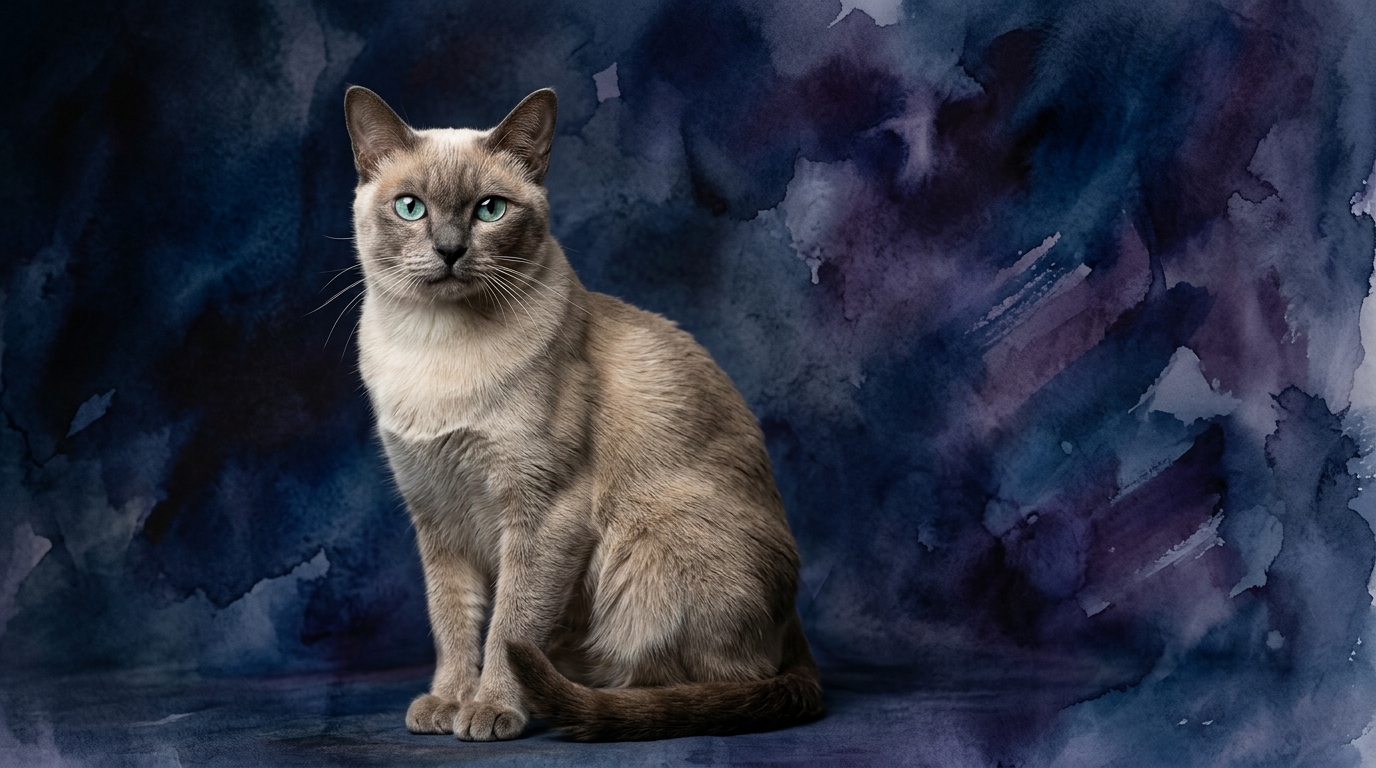
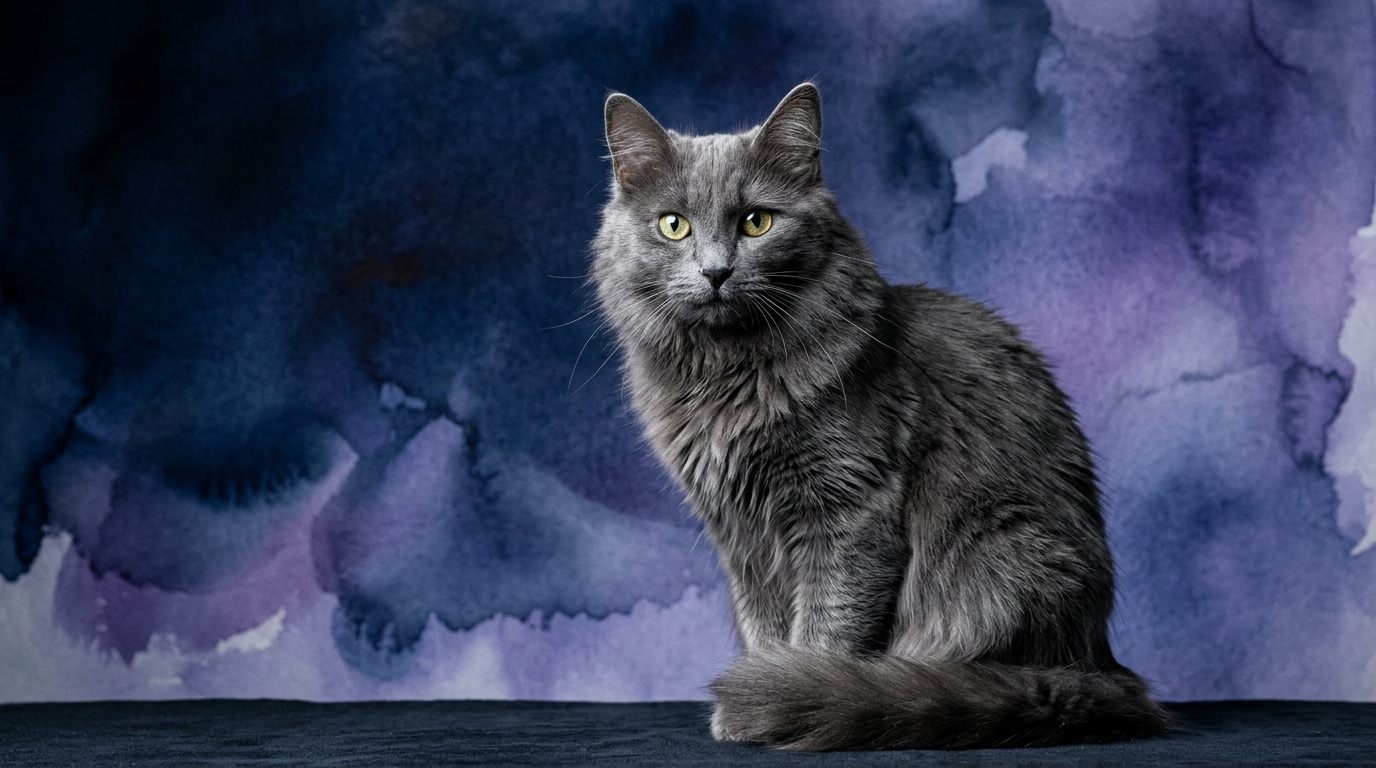
Side-by-Side Cognitive Profiles
The Cosmic Pet Pet IQ Lab provides a unique framework for understanding feline cognition, breaking down intelligence into five key dimensions. Let's examine how the Tonkinese and Nebelung measure up across these specific areas, offering a detailed look at their inherent mental aptitudes.
The Tonkinese presents a remarkably consistent and elevated cognitive profile. Their Problem Solving is rated at 5/5, indicating an exceptional ability to navigate complex situations and strategize solutions. Training Speed also stands at a perfect 5/5, suggesting a rapid assimilation of new commands and routines. Social Intelligence, another critical dimension, scores 5/5, reflecting a deep understanding of social cues and interactions. Instinctive Drive is a robust 4/5, providing a healthy balance of natural feline behaviors without overwhelming intensity. Finally, Memory is an impressive 5/5, allowing for excellent retention of experiences and learned behaviors.
In contrast, the Nebelung exhibits a more uniform, moderate cognitive landscape. Their Problem Solving is rated at 3/5, demonstrating an adequate capacity for navigating daily challenges without the same level of complex strategizing. Training Speed is also 3/5, meaning they are receptive to learning but require more consistent effort and patience. Social Intelligence scores 3/5, indicating they are capable of forming bonds and understanding basic social dynamics, though perhaps with less nuance or breadth. Instinctive Drive is a balanced 3/5, providing a natural level of activity and predatory interest. Memory, at 3/5, suggests they retain important information and routines, but may not recall every detail with the same precision as their Tonkinese counterparts.
Where the Tonkinese Excels Cognitively
The Tonkinese's cognitive strengths are evident across nearly all evaluated dimensions. Their 5/5 Problem Solving score means they are adept at figuring out how things work, from opening cabinet doors to mastering intricate puzzle feeders. This isn't just about curiosity; it's about a systematic approach to overcoming obstacles, often surprising owners with their ingenuity. Owners might find a Tonkinese quickly learning to manipulate door handles to gain access to forbidden rooms or devising novel ways to retrieve a toy from an inaccessible spot.
Their 5/5 Training Speed and Memory combine to create a cat that is exceptionally receptive to learning. A Tonkinese can pick up clicker training commands, leash walking, or even complex tricks like 'fetch' or 'sit' with remarkable speed and retain them over long periods. This capacity for rapid acquisition and recall means they are not just performing actions, but truly understanding the association between cues and behaviors. Furthermore, their 5/5 Social Intelligence allows them to deeply interpret human moods and intentions, often anticipating needs or reacting empathetically, fostering a profound communicative bond. They engage in complex social play and can navigate multi-pet households with remarkable diplomacy, reading the body language of other animals as skillfully as they do human expressions.
Cognitive Advantages of the Nebelung
While the Nebelung's scores are consistently moderate, these traits collectively offer distinct advantages for certain companion dynamics. Their 3/5 Problem Solving, for instance, means they are less likely to be involved in elaborate mischief or persistently attempting to deconstruct their environment. They navigate their world effectively, but without the intense drive to constantly experiment with boundaries that a higher problem-solving score might imply, leading to a more predictable and less 'cat-proof' intensive home environment.
The Nebelung's 3/5 Social Intelligence often translates to a deeply devoted, yet not overly demanding, companionship. They typically form strong bonds with one or two trusted individuals, offering a profound sense of loyalty without the need for constant, boisterous interaction. This focused social capacity means they are less prone to the anxieties that can sometimes accompany highly social breeds when their primary human is absent. Their moderate Instinctive Drive (3/5) also contributes to a balanced demeanor; they enjoy play and engagement in hunting simulations but are generally satisfied with regular, rather than constant, stimulation, making them less likely to exhibit destructive behaviors from unfulfilled predatory urges.
Trainability: Tonkinese vs. Nebelung
When it comes to trainability, the Tonkinese stands out with its 5/5 Training Speed and 5/5 Memory. These cats are often described as 'dog-like' in their eagerness and ability to learn. They respond enthusiastically to positive reinforcement, quickly connecting a command or action with a reward. Owners can successfully teach a Tonkinese a wide array of behaviors, from coming when called to performing complex agility courses. Their high social intelligence further aids training, as they are motivated by interaction and praise, making the training process a bonding experience rather than a chore. They grasp new concepts quickly and reliably recall them, making consistency the primary variable in their learning journey.
The Nebelung, with a 3/5 Training Speed and Memory, requires a different approach. While certainly trainable, they will necessitate greater patience and repetition from their owners. They may not pick up new tricks in a single session, but with consistent, positive reinforcement, they can learn essential commands and routines. Their learning style is more about steady reinforcement and building trust rather than rapid assimilation. Owners should focus on short, engaging training sessions and celebrate small successes. While they might not be performing elaborate trick routines, a Nebelung can reliably learn to use a litter box, respond to their name, and even walk on a leash with dedication.
Matching Cognitive Profiles to Lifestyles: Active vs. Relaxed Owners
The distinct cognitive profiles of the Tonkinese and Nebelung naturally align with different owner lifestyles. For the active, engaged owner who thrives on interaction and mental stimulation, the Tonkinese is an ideal match. Their high scores across problem-solving, social intelligence, and memory mean they flourish in environments where they are consistently challenged, taught new things, and included in daily activities. They are not merely observers; they want to be participants, demanding intellectual engagement through puzzle toys, interactive games, and learning opportunities. An owner who enjoys teaching tricks, taking their cat on adventures (like leash walks), and having a communicative companion will find the Tonkinese incredibly rewarding.
Conversely, the Nebelung's balanced and moderate cognitive scores make them a superb choice for the relaxed owner who appreciates a quieter, more independent, yet deeply affectionate companion. They are content with a predictable routine, enjoying focused one-on-one attention without the constant need for novelty or complex mental tasks. Their moderate instinctive drive means they will enjoy playtime but won't become anxious if not constantly stimulated. An owner who values a serene home environment, a cat that offers gentle companionship, and a pet that is less likely to engage in elaborate mischief will find the Nebelung's calm and consistent nature to be a perfect fit. They are present and loving, but not overwhelmingly demanding of an owner's every moment.
The Verdict
Choose the Tonkinese if you are an active owner seeking a highly interactive, quick-witted companion eager for mental challenges and deep social engagement.
Opt for the Nebelung if you prefer a calm, consistent, and gently affectionate companion who thrives on routine and offers devoted companionship without intense demands.
🧠 Find Your Pet's IQ Score
Our Pet IQ Lab assessment covers 25+ tests across 5 cognitive dimensions — personalized to your breed.
Take the Full IQ Test →Frequently Asked Questions
Are Tonkinese cats difficult to manage due to their high cognitive scores?
While Tonkinese cats possess exceptional mental agility, this translates to a need for enrichment, not necessarily difficulty. Owners who provide ample mental stimulation and interactive play will find them engaging and well-behaved, channeling their cognitive strengths positively.
Can a Nebelung cat learn tricks or be trained effectively?
Yes, Nebelung cats can certainly learn tricks and be trained effectively, though they require more patience and consistency than a Tonkinese. Their moderate training speed means short, positive reinforcement sessions over time will yield good results, focusing on routine and trust.
Which breed is better for a multi-pet household based on social intelligence?
The Tonkinese, with its 5/5 social intelligence, is generally more adaptable to multi-pet households, often excelling at navigating complex social dynamics. The Nebelung (3/5 social intelligence) can thrive in such environments too, but may prefer a smaller, more consistent social circle and require careful, gradual introductions.