A Side-by-Side Look at Feline IQ Profiles
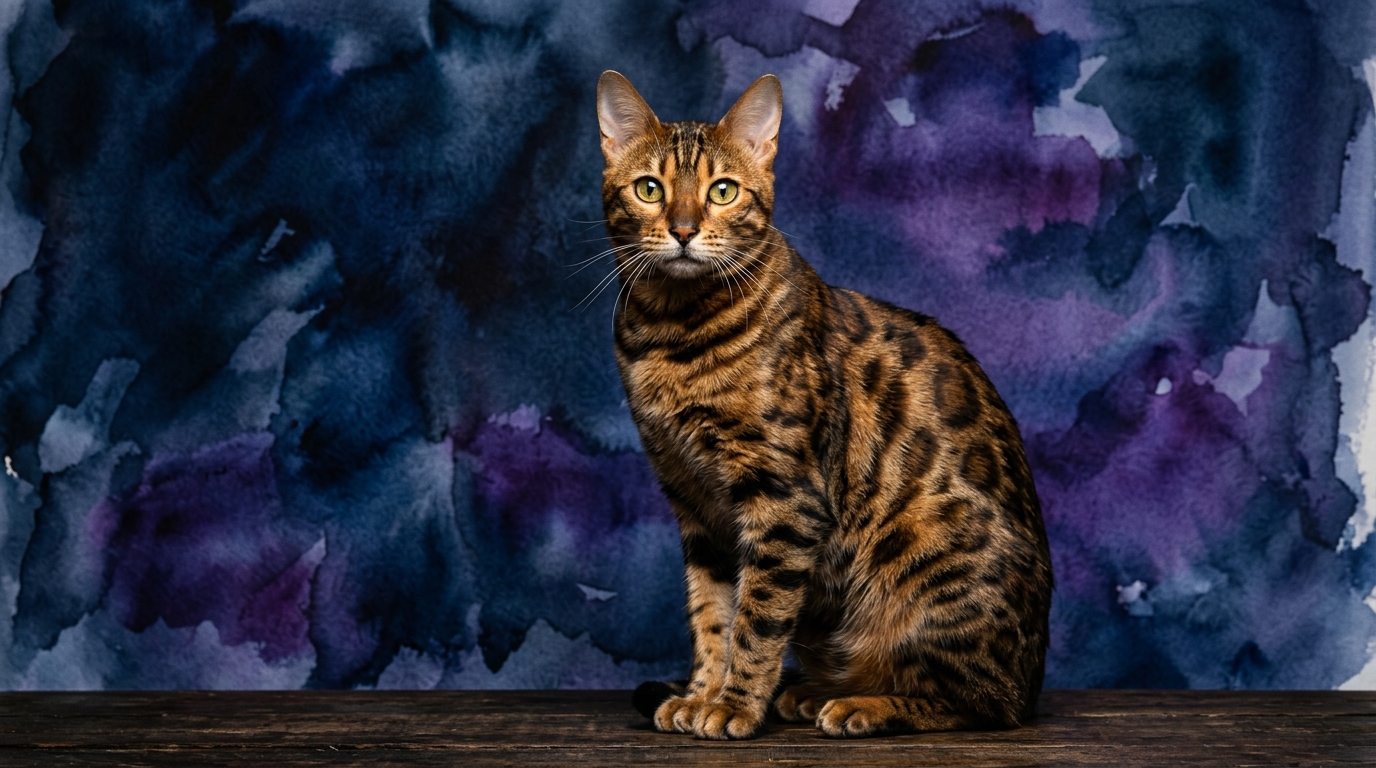
The Cosmic Pet Pet IQ Lab provides a detailed framework for understanding the cognitive strengths of our feline companions across five key dimensions. For the Bengal, a breed famed for its wild appearance, its profile is: Problem Solving 5/5, Training Speed 4/5, Social Intelligence 4/5, Instinctive Drive 5/5, and Memory 5/5. This suggests a cat with a formidable capacity for independent thought and action, rooted deeply in its ancestral heritage.
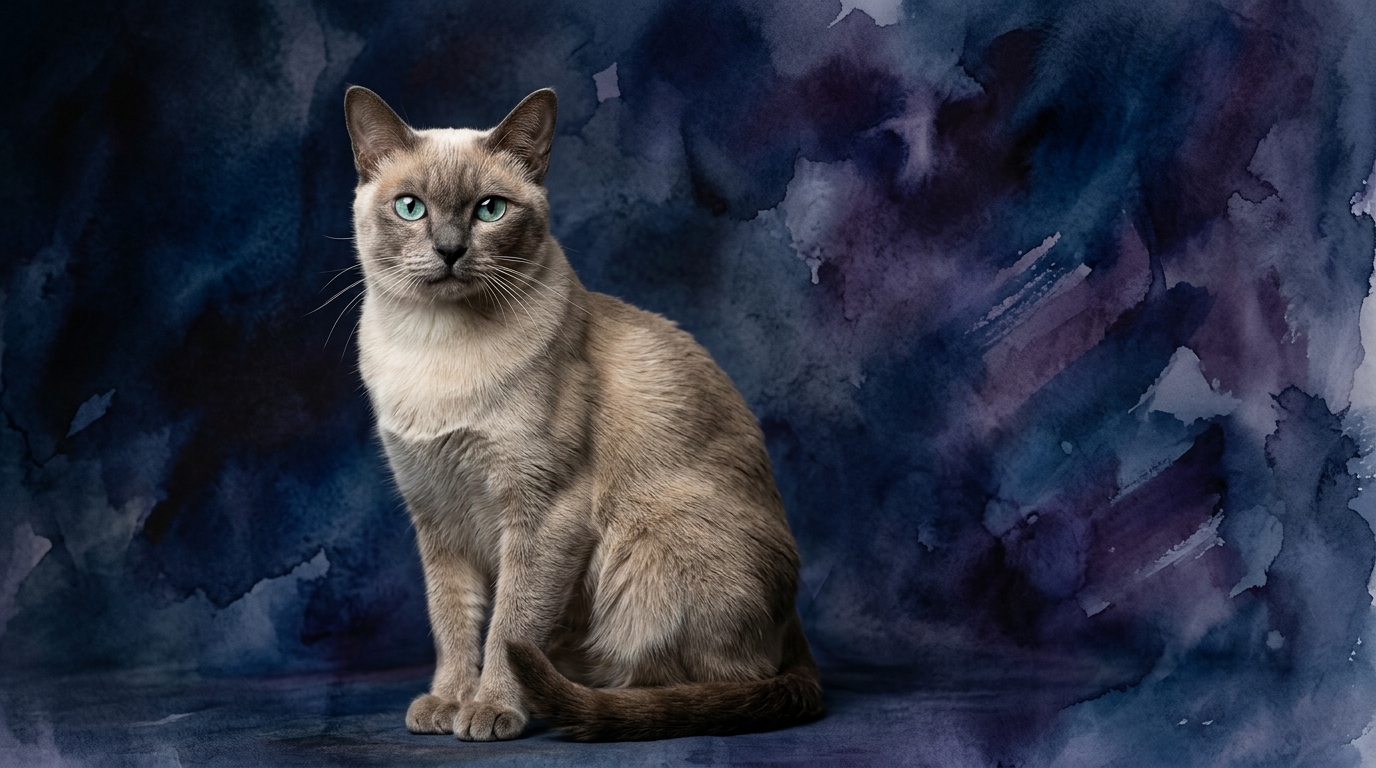
In contrast, the Tonkinese, a hybrid of the Siamese and Burmese, presents a slightly different yet equally compelling cognitive signature: Problem Solving 5/5, Training Speed 5/5, Social Intelligence 5/5, Instinctive Drive 4/5, and Memory 5/5. This profile points to a cat that excels in interactive learning and social dynamics, thriving on engagement and rapid acquisition of new behaviors. Both breeds share an exceptional capacity for problem-solving and an enduring memory, yet their approaches and motivations differ significantly in other cognitive areas.
Where the Bengal's Cognition Shines Brightest
The Bengal's cognitive strengths are particularly evident in its Instinctive Drive (5/5) and its robust Problem Solving (5/5) and Memory (5/5) scores. These cats exhibit a profound connection to their primal instincts, manifesting as a keen predatory drive and an insatiable curiosity about their environment. They are adept at figuring out intricate mechanisms, such as opening cabinets or manipulating puzzle feeders, often employing a trial-and-error approach combined with an exceptional ability to remember successful sequences. Their problem-solving isn't just about figuring things out; it's often driven by an innate desire to explore, hunt, or access novel stimuli.
A Bengal will meticulously observe and recall the steps required to achieve a goal, whether it's navigating a complex obstacle course to reach a favorite toy or understanding the routine for outdoor access. This deep-seated drive means they often create their own entertainment, turning everyday objects into challenges to be conquered. Their physical prowess complements their mental agility, allowing them to execute complex plans that involve climbing, jumping, and intricate paw dexterity, all guided by their sharp memory and unyielding instinctive curiosity.
Where the Tonkinese Excels in Cognitive Prowess
The Tonkinese truly excels in areas of social interaction and rapid learning, highlighted by its perfect scores in Training Speed (5/5) and Social Intelligence (5/5), alongside its equally impressive Problem Solving (5/5) and Memory (5/5). These cats possess a remarkable ability to understand and respond to human cues, often appearing to anticipate their owners' intentions. Their social intelligence allows them to form exceptionally strong bonds, leading to a desire to participate actively in household life and engage directly with their human companions.
Their superior training speed means they pick up new tricks, commands, and routines with striking alacrity. This isn't just rote memorization; it's often a result of their keen observational skills and their motivation to interact positively. A Tonkinese will quickly learn to fetch, walk on a leash, or perform complex sequences of behaviors, driven by the reward of interaction and praise. Their problem-solving abilities are often channeled through social means, such as communicating their needs effectively or figuring out how to gain attention through clever antics, all remembered with perfect clarity.
Trainability: Bengal's Curiosity vs. Tonkinese's Eagerness
When it comes to trainability, the Tonkinese (Training Speed 5/5) generally presents a more straightforward experience than the Bengal (Training Speed 4/5), primarily due to their differing social motivations. Tonkinese cats are often described as 'people-pleasers,' eager to engage and respond to human instruction. Their high social intelligence means they thrive on positive reinforcement, praise, and interactive play, making them quick studies for leash training, clicker tricks, and even complex agility courses. Their desire for companionship fuels their willingness to learn and cooperate.
Bengals, while certainly capable of learning due to their high problem-solving and memory, require a different approach. Their training is often more successful when it taps into their strong instinctive drives and curiosity. Rather than an eagerness to please, a Bengal's motivation to learn might stem from the challenge itself, the promise of a 'hunt' (a toy), or the satisfaction of manipulating an object. They can be taught complex behaviors, but owners might need more patience and creativity in finding the right motivators, often needing to make training feel like a game or an exploration rather than a structured lesson.
Matching Feline Intellect to Owner Lifestyles
Understanding these cognitive distinctions is key to finding the right match for your lifestyle. The Bengal, with its pronounced Instinctive Drive and independent problem-solving, is ideally suited for active owners who can provide consistent, stimulating engagement. These cats require ample opportunities for exploration, puzzle toys that challenge their intellect, and interactive play sessions that mimic hunting behaviors. Owners who enjoy teaching complex sequences, providing vertical climbing spaces, and engaging in robust play will find a Bengal's cognitive demands rewarding. A relaxed owner might find a Bengal's relentless curiosity and need for stimulation overwhelming, potentially leading to inventive (and sometimes destructive) self-entertainment if not properly channeled.
The Tonkinese, with its exceptional Social Intelligence and Training Speed, thrives with owners who prioritize companionship and interactive bonding. While also active and playful, their energy is often directed towards human interaction. They benefit from owners who enjoy direct play, conversation, and including their cat in daily activities. They are excellent candidates for leash walking, trick training, and simply being a constant, engaging presence. A relaxed owner who desires a conversational and affectionate companion, willing to engage in regular interactive play and petting, will find the Tonkinese's cognitive profile a perfect fit, as their mental stimulation is often satisfied through social means.
The Verdict
Choose a Bengal if you are an active, experienced cat owner prepared to provide extensive environmental enrichment and engage with a cat driven by powerful instincts and independent thought.
Opt for a Tonkinese if you seek an exceptionally social, trainable, and affectionate companion who thrives on direct interaction and quickly learns new behaviors through positive engagement.
🧠 Find Your Pet's IQ Score
Our Pet IQ Lab assessment covers 25+ tests across 5 cognitive dimensions — personalized to your breed.
Take the Full IQ Test →Frequently Asked Questions
Are Bengals good with other pets given their high instinctive drive?
Bengals can coexist with other pets, especially if introduced thoughtfully and socialized early. Their strong instinctive drive means they might view smaller pets as prey, so careful supervision and separate spaces are crucial for harmony.
Do Tonkinese cats vocalize a lot, considering their social intelligence?
Yes, Tonkinese cats are known for their conversational nature, often using a range of vocalizations to communicate their needs and desires. Their high social intelligence means they enjoy 'talking' with their owners and express themselves quite clearly.
What kind of enrichment is best for a Bengal cat to satisfy its problem-solving and instinctive drive?
Bengals benefit greatly from puzzle feeders, interactive wand toys that simulate prey, climbing trees, cat wheels, and supervised outdoor access or 'catios'. These activities channel their natural hunting instincts and challenge their sharp problem-solving abilities.