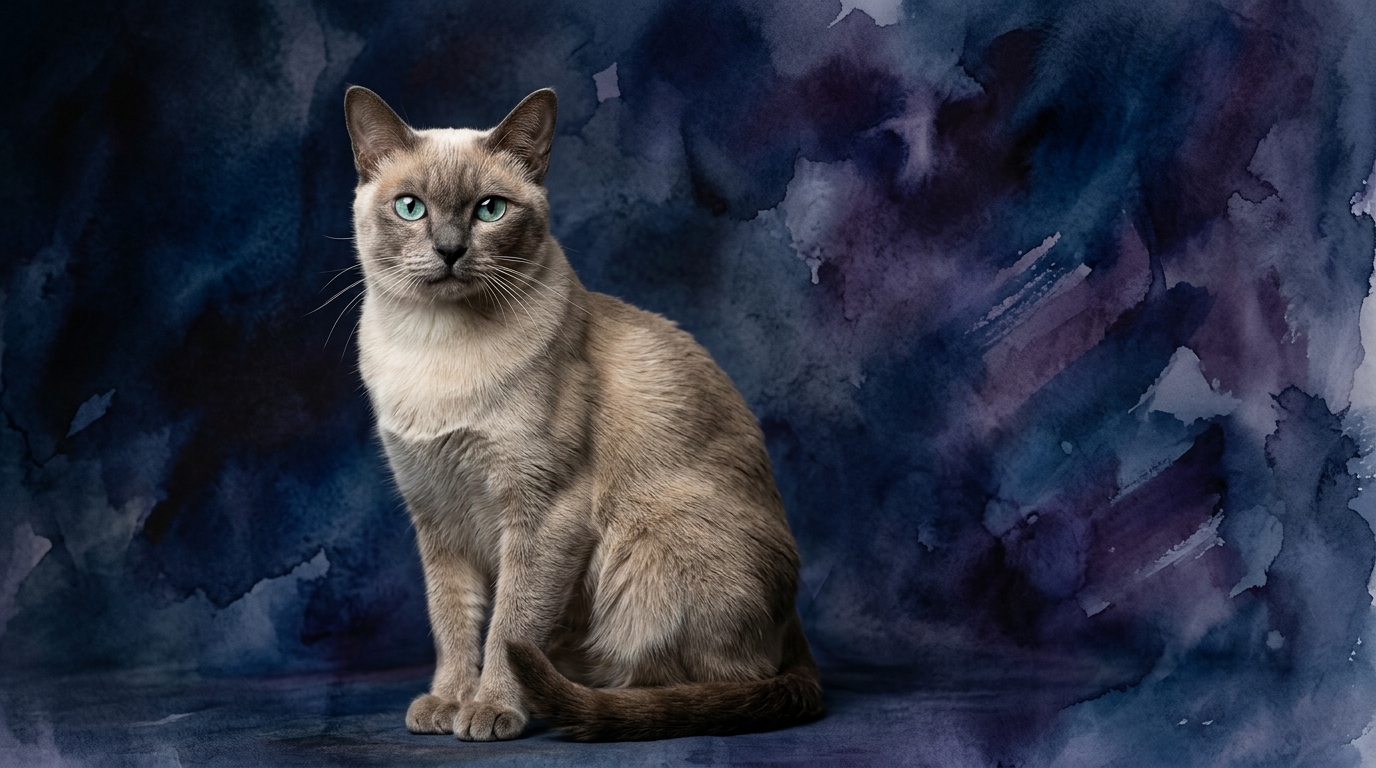
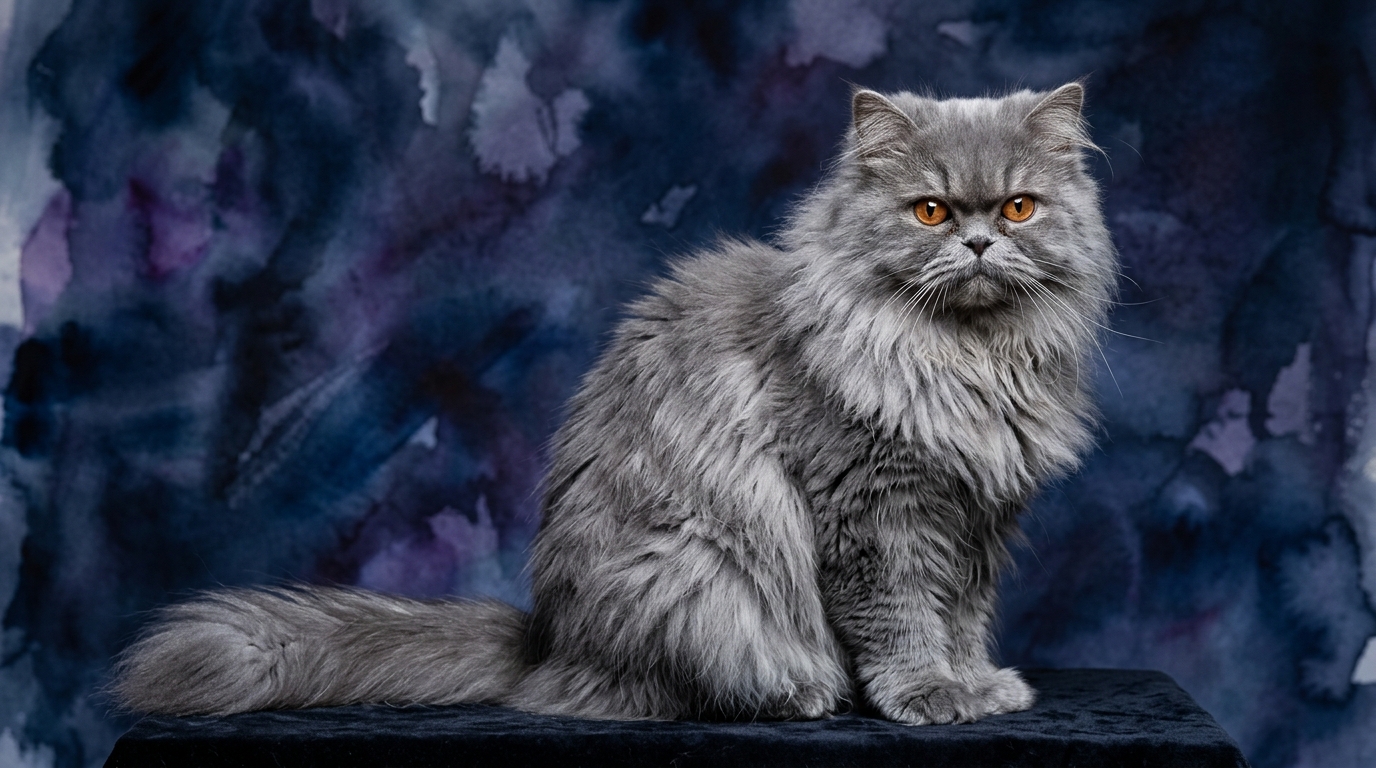
Side-by-Side Cognitive Profiles: Tonkinese vs. Persian
The Tonkinese cat presents a cognitive profile of remarkable mental agility and active engagement, scoring 5/5 in Problem Solving, Training Speed, Social Intelligence, and Memory, with a robust 4/5 in Instinctive Drive. Their top-tier Problem Solving indicates a breed that actively seeks to understand and manipulate its environment, readily figuring out complex mechanisms like latches or puzzle feeders. This natural curiosity drives them to experiment and learn from outcomes, showcasing an innate drive for mental challenge.
In contrast, the Persian cat's cognitive landscape suggests a more placid and less overtly exploratory nature, with scores of 2/5 for Problem Solving, Training Speed, and Instinctive Drive, alongside moderate 3/5 scores for Social Intelligence and Memory. Their lower Problem Solving score means they are less inclined to tackle mental challenges or devise innovative solutions, generally preferring simplicity and relying on established routines rather than active environmental manipulation. This contributes to their serene demeanor and less “investigative” approach to daily life.
The Tonkinese's perfect 5/5 Training Speed highlights an exceptional capacity for rapid learning, quickly forming associations and responding to cues, making them highly receptive to complex training. Paired with their 5/5 Social Intelligence, they exhibit a profound ability to interpret human emotions and engage in deep, reciprocal interactions, often initiating communication. The Persian's 2/5 Training Speed, however, indicates a slower learning curve, demanding more patience, while their 3/5 Social Intelligence suggests a preference for quiet companionship, appreciating presence without the intense interactive demands.
A strong 4/5 Instinctive Drive in the Tonkinese fuels their natural hunting prowess and desire for exploration and climbing, necessitating ample outlets for physical and mental energy. Their 5/5 Memory ensures they retain complex routines, learned commands, and social interactions over long periods. Conversely, the Persian's 2/5 Instinctive Drive means a much lower inclination towards extensive exploration or active hunting, making them content with a more sedentary indoor life. Their 3/5 Memory, while sufficient for daily routines and recognizing familiar individuals, suggests less retention of intricate sequences or less recall of past events that do not directly impact their immediate comfort.
Where the Tonkinese Excels Cognitively
The Tonkinese's cognitive strengths lie in their dynamic engagement with the world, particularly their exceptional Problem Solving (5/5). This means they are adept at manipulating objects and environments, often figuring out how to open doors, operate simple mechanisms, or retrieve hidden toys without direct instruction. This is not mere mischief, but a genuine application of their mental faculties to achieve goals, driven by a persistent curiosity.
Furthermore, their perfect 5/5 in Social Intelligence allows them to form incredibly nuanced connections with their human family. They are known to “talk” to their owners, interpret moods, and even offer comfort, demonstrating a reciprocal understanding that goes beyond basic recognition. This profound social awareness makes them highly attuned companions who actively participate in family life, often initiating play or seeking interaction, fostering a truly interactive bond.
The combination of their rapid Training Speed (5/5) and robust Memory (5/5) means a Tonkinese can learn a wide repertoire of commands and tricks swiftly, retaining them reliably. They are prime candidates for clicker training, agility courses, or even performing complex sequences, showcasing a remarkable capacity for cognitive processing and behavioral adaptation that makes them highly responsive to consistent guidance.
Where the Persian's Cognitive Traits Offer Unique Advantages
While the Persian's scores might appear lower on a scale emphasizing active problem-solving and rapid learning, their cognitive profile offers distinct advantages for specific household environments. Their lower Instinctive Drive (2/5) means they are generally less inclined to climb curtains, chase small prey, or embark on extensive explorations of forbidden countertops. This translates to a calmer, more predictable presence in the home, requiring less active management of their natural predatory urges and minimizing potential household disruptions.
The Persian's moderate Problem Solving (2/5) means they are less likely to outsmart childproof latches or devise elaborate schemes to access food or off-limits areas. This cognitive preference for simplicity contributes to a more placid and less demanding household dynamic, as they are less driven by an incessant need to investigate or manipulate their surroundings. Owners seeking a cat that is less prone to mischievous exploration will appreciate this trait.
Their 3/5 Social Intelligence, while not as overtly demonstrative as a Tonkinese, allows them to form gentle, affectionate bonds. Persians appreciate quiet companionship, often content to merely be in the same room as their owners, offering a comforting presence without the persistent demands for interaction that might characterize a more cognitively active breed. This makes them ideal for individuals seeking a serene, less intrusive feline companion.
Trainability: A Clear Distinction
When it comes to ease of training, the Tonkinese (Training Speed 5/5) has a distinct advantage over the Persian (Training Speed 2/5). The Tonkinese's rapid association skills mean they can grasp new concepts and commands in fewer repetitions. For instance, teaching a Tonkinese to fetch a toy or walk on a leash can be a relatively quick and rewarding process, as they are motivated by interaction and the challenge of learning, quickly understanding cause-and-effect.
The Persian, by contrast, requires a significantly more patient and consistent approach to training. Their slower uptake means that what might take a Tonkinese a few sessions could take a Persian weeks or even months. While they can certainly learn basic litter box habits and routines, complex tricks or intricate behavioral modifications are often met with less enthusiasm and slower progress due to their lower intrinsic motivation for mental exertion and less rapid memory formation for novel tasks. Their preference for comfort and routine often outweighs a desire to engage in structured learning.
Matching Breeds to Lifestyles: Active vs. Relaxed Owners
The Tonkinese is an ideal match for active owners who relish interactive pets and are prepared to provide consistent mental stimulation. Their high Problem Solving, Social Intelligence, and Instinctive Drive mean they thrive on engagement, requiring daily play sessions with puzzle toys, opportunities for climbing, and interactive games that challenge their nimble minds. Owners who enjoy teaching tricks, taking their cat on adventures, or simply having a constantly engaged companion will find the Tonkinese incredibly rewarding and fulfilling.
Conversely, the Persian cat is perfectly suited for owners seeking a more relaxed, tranquil companion. Their lower scores in Problem Solving, Training Speed, and Instinctive Drive translate into a cat that is content with a predictable environment and less demanding in terms of active play or constant mental challenges. They are often happy to lounge in a sunbeam, observe household activities from a comfortable perch, or enjoy quiet petting sessions. This makes them an excellent choice for individuals who prefer a serene presence and a cat that thrives on a calm, unhurried pace of life.
The Verdict
Opt for a Tonkinese if you desire a highly interactive, mentally agile feline partner eager to learn, solve puzzles, and engage deeply in family life, requiring consistent stimulation.
Select a Persian if you prefer a calm, dignified companion content with a predictable environment and quiet affection, offering a serene presence without demanding extensive mental or physical engagement.
🧠 Find Your Pet's IQ Score
Our Pet IQ Lab assessment covers 25+ tests across 5 cognitive dimensions — personalized to your breed.
Take the Full IQ Test →Frequently Asked Questions
Are Tonkinese cats prone to destructive behavior due to their high energy?
Tonkinese cats, with their high instinctive drive and problem-solving abilities, require ample mental and physical outlets. Without sufficient enrichment and interaction, their curiosity can lead to exploratory behaviors like opening cabinets or climbing where they shouldn't; however, with proper engagement, this energy is channeled constructively.
Do Persian cats require less attention than Tonkinese cats?
While Persians are less demanding in terms of interactive play and mental stimulation, they still appreciate and require affection and companionship. Their social intelligence allows them to form bonds, but their expression of affection is typically more subdued, favoring quiet presence over boisterous interaction, making them less overtly needy.
Can a Persian cat learn tricks or walk on a leash?
A Persian cat can indeed learn tricks and leash walk, but it will generally require significantly more patience and consistent positive reinforcement due to their slower training speed and lower motivation for complex tasks. Success is more likely with simpler commands and a gentle, unhurried approach focused on their comfort and willingness to participate.