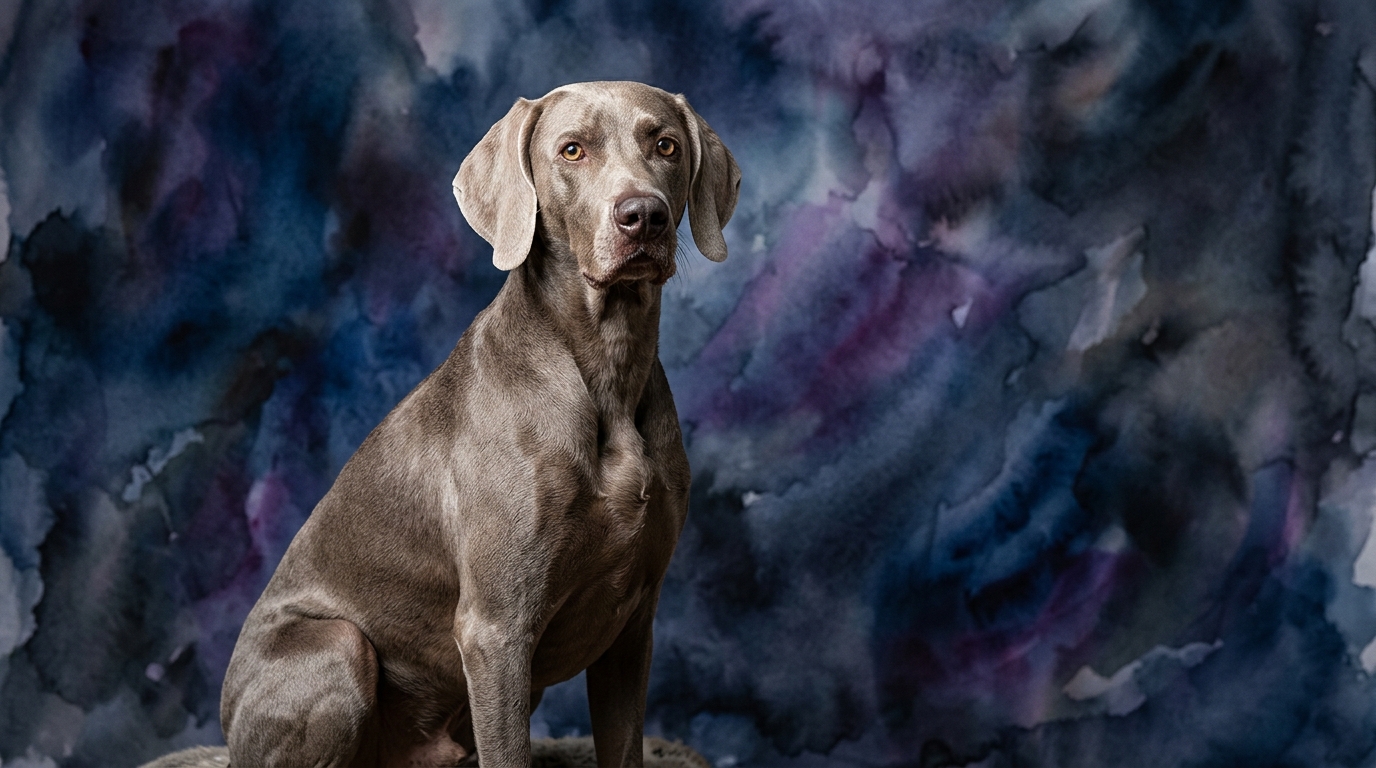
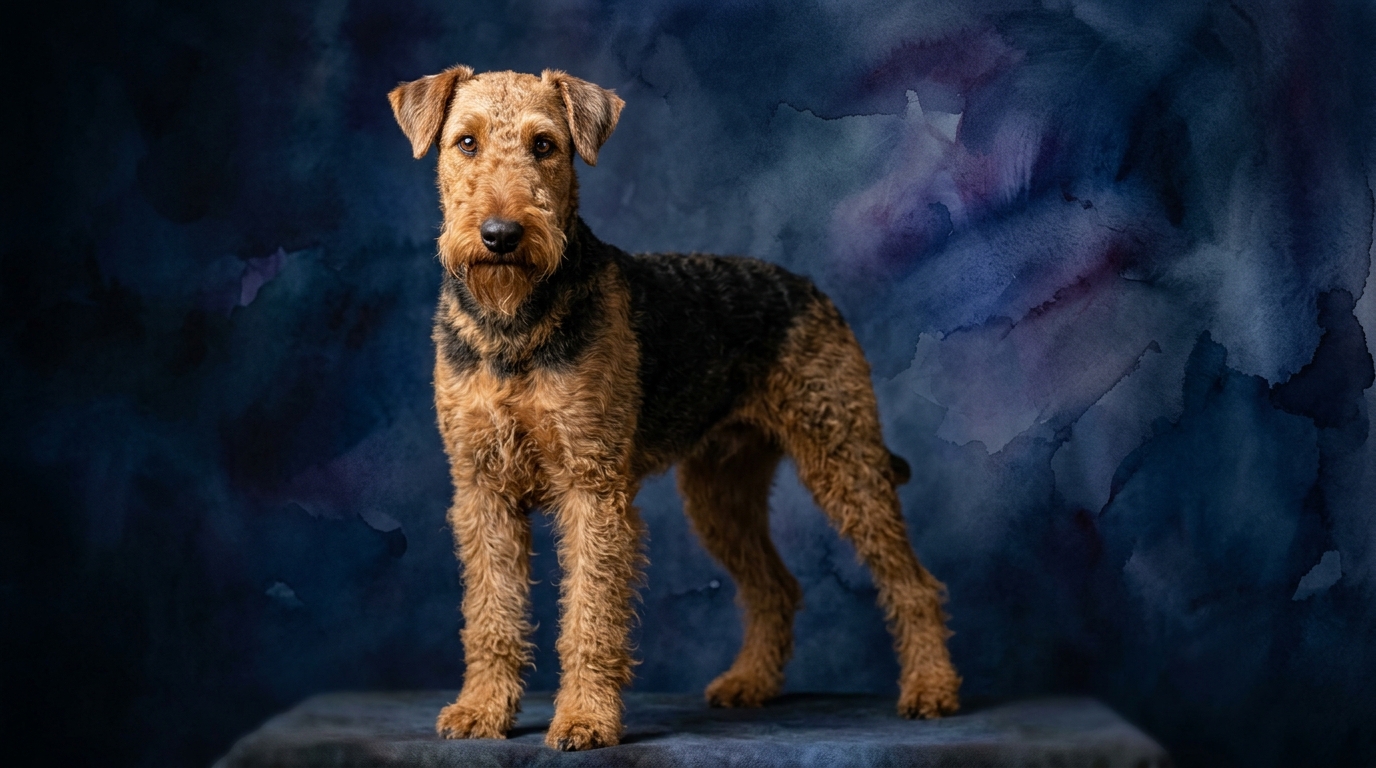
Side-by-Side Cognitive Profile: Weimaraner vs. Airedale Terrier
The Weimaraner, a sleek Sporting group member, holds a respectable Coren rank of #21, indicating a strong capacity for learning and obedience. Our IQ lab assessment details their cognitive strengths: Problem Solving at 4/5, reflecting their ability to navigate complex tasks and situations; Training Speed at 4/5, showing a quick grasp of new commands and concepts; Social Intelligence at 4/5, highlighting their attentiveness to human cues and a desire for partnership; Instinctive Drive at an impressive 5/5, pointing to an intense, focused drive for hunting and work; and Memory at 4/5, signifying robust retention of learned behaviors and routines.
In contrast, the Airedale Terrier, a robust member of the Terrier group, stands at Coren rank #29, a solid placement reflecting their unique brand of cleverness. Their IQ profile reveals: Problem Solving at 4/5, demonstrating a resourceful and often independent approach to challenges; Training Speed at 4/5, indicating they can learn quickly when motivated; Social Intelligence at 3/5, suggesting a more self-reliant disposition compared to the Weimaraner; Instinctive Drive at 3/5, representing the tenacious, independent spirit typical of terriers rather than a cooperative hunting drive; and Memory at 4/5, confirming their ability to recall information and experiences effectively.
Where the Weimaraner Excels Cognitively
The Weimaraner's cognitive strengths truly shine in scenarios demanding a high degree of partnership and purpose-driven activity. Their superior Instinctive Drive of 5/5, combined with a strong 4/5 Social Intelligence, means they are exceptionally attuned to working alongside their human companions, often anticipating commands or seeking direction. This makes them formidable partners in activities like field trials, advanced obedience, or search and rescue, where their intense focus and desire to fulfill a 'job' are paramount.
Their cognitive makeup allows them to excel in sustained, complex tasks that require both physical exertion and mental engagement directed by a handler. For instance, a Weimaraner's memory (4/5) and training speed (4/5) are leveraged by their instinctive drive to consistently perform multi-step retrieves or intricate tracking patterns. They are often described as 'thinking hunters' because they don't just react; they process information from their environment and their handler to achieve a goal efficiently, making them highly effective collaborators in structured environments.
Where the Airedale Terrier Excels Cognitively
The Airedale Terrier's cognitive prowess is best observed in situations that reward independent thought and tenacious problem-solving. With a 4/5 rating in Problem Solving, they are adept at figuring things out on their own, often employing creative strategies to overcome obstacles. This isn't the directed problem-solving of a Weimaraner, but rather a self-initiated exploration and manipulation of their environment, a hallmark of their terrier heritage.
Their strength lies in their mental agility and resourcefulness, even with a lower 3/5 Instinctive Drive compared to the Weimaraner. This drive manifests as a persistent, often individualistic pursuit of interesting scents or perceived 'prey,' requiring them to use their memory (4/5) and problem-solving skills to navigate complex terrains or situations without constant human input. An Airedale might excel in earthdog trials or agility courses where their cleverness in navigating obstacles and their independent spirit are assets, rather than a strong desire to please a handler.
Training Dynamics: Weimaraner vs. Airedale Terrier
When it comes to ease of training, the Weimaraner generally presents a more straightforward path for handlers. Their 4/5 Training Speed is significantly bolstered by their 4/5 Social Intelligence and powerful 5/5 Instinctive Drive. This combination means they are highly motivated by human interaction, eager to please, and possess a strong inherent desire to work and learn structured tasks. Weimaraners often form a deep bond with their primary handler, making them highly responsive to guidance and consistent in their performance once a behavior is learned. Their 'Velcro dog' tendency, while demanding, makes them incredibly receptive to handler-led training.
The Airedale Terrier, while also scoring 4/5 in Training Speed, presents a different training dynamic. Their 3/5 Social Intelligence and 3/5 Instinctive Drive suggest a more independent and spirited approach to learning. They can grasp commands quickly, but their strong-willed terrier nature means they might decide whether or not to comply based on their own assessment of the situation or their current level of interest. Training an Airedale requires more creativity, consistency, and a clear understanding of their independent mindset, focusing on making training engaging and rewarding to maintain their attention and willingness to cooperate, rather than relying solely on a desire to please.
Matching Breeds to Lifestyles: Active vs. Relaxed Owners
For active owners, both breeds offer engagement, but with different nuances. The Weimaraner is an ideal fit for individuals or families who lead a truly dynamic lifestyle, offering consistent, high-intensity exercise and mental challenges daily. Their 5/5 Instinctive Drive means they crave a 'job' and thrive in environments where they can burn off considerable energy through activities like running, hiking, swimming, or competitive dog sports. A Weimaraner needs an owner who is not only active but also committed to channeling their intense focus and drive into productive outlets, preventing boredom and potential destructive behaviors.
The Airedale Terrier also demands an active owner, but their activity needs are rooted more in exploration and independent engagement. While they enjoy vigorous exercise, their 3/5 Instinctive Drive and 4/5 Problem Solving mean they benefit from varied environments, opportunities for scent work, and challenging puzzle toys that cater to their clever, resourceful nature. They are less about sustained, handler-directed work and more about engaging their environment on their own terms. Neither breed is suitable for truly relaxed owners; both require significant time investment in exercise, training, and mental stimulation, though the Weimaraner demands a more integrated, partnership-focused activity regimen.
The Verdict: When to Choose Each Breed
The Verdict
Choose the Weimaraner if you're an active, dedicated owner seeking a highly biddable, intensely focused, and deeply bonded canine partner for demanding activities like hunting, competitive obedience, or canine sports.
Opt for the Airedale Terrier if you appreciate an independent, resourceful, and clever companion who thrives on variety, self-directed challenges, and requires an owner prepared to engage with a spirited terrier nature.
🧠 Find Your Pet's IQ Score
Our Pet IQ Lab assessment covers 25+ tests across 5 cognitive dimensions — personalized to your breed.
Take the Full IQ Test →Frequently Asked Questions
Are Weimaraners or Airedale Terriers better for first-time dog owners?
Neither breed is typically recommended for novice dog owners without prior experience with active, strong-willed breeds. Both require consistent training, significant exercise, and experienced handling to thrive, making them better suited for those with a deeper understanding of canine behavior and dedication to their needs.
Which breed is more adaptable to different living situations?
Both breeds require ample space and exercise, making them generally less suited for small apartments. However, the Airedale Terrier's more independent nature might make them slightly more adaptable to varied routines, provided their mental and physical needs are met, while the Weimaraner often struggles without constant human companionship and a consistent, demanding routine.
How do their social intelligence scores impact their interactions with other pets?
The Weimaraner's 4/5 Social Intelligence often translates to a greater willingness to integrate into a multi-pet household, especially if socialized early, as they are generally more people-focused and less prone to territoriality. The Airedale Terrier's 3/5 Social Intelligence, combined with their strong prey drive, might require more careful and supervised introductions to other small pets, and their independent nature can lead to less harmonious cohabitation if not managed effectively from a young age.