
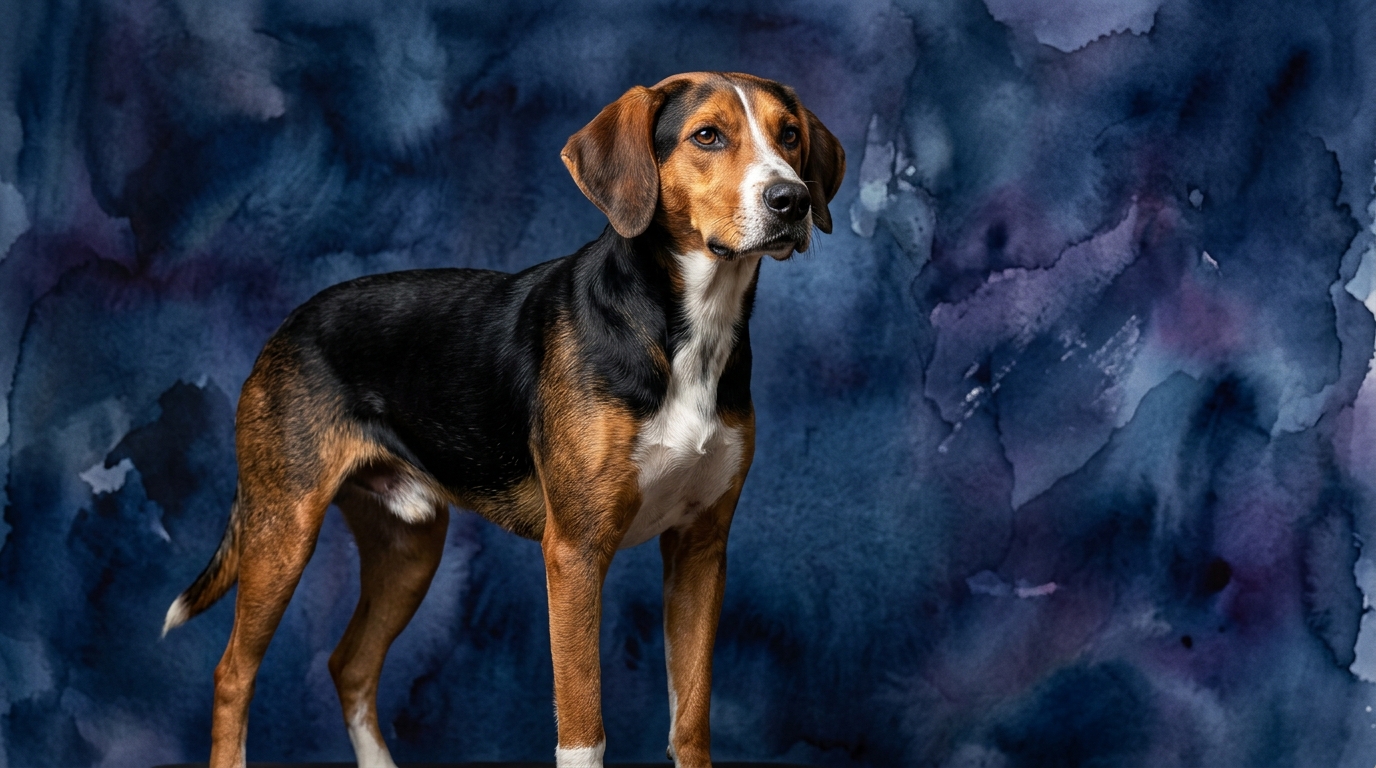
Side-by-Side IQ Profile: Weimaraner vs. American Foxhound
The Cosmic Pet Pet IQ Lab employs a multi-faceted approach to assess canine intelligence, looking beyond simple obedience to encompass problem-solving, training speed, social intelligence, instinctive drive, and memory. For the Weimaraner, a breed originally developed for hunting big game and later birds, we observe a robust cognitive profile. Their Problem Solving is rated at 4/5, indicating a strong capacity to figure out novel situations and overcome obstacles. Training Speed stands at 4/5, reflecting their eagerness and ability to grasp new commands and routines quickly. Social Intelligence, essential for a close working partner, is also 4/5, suggesting a good understanding of human cues and emotional states. Their Instinctive Drive is a powerful 5/5, speaking to their deeply ingrained desire to hunt, retrieve, and work, while Memory is rated 4/5, signifying a strong retention of learned experiences and commands.
In contrast, the American Foxhound, a breed primarily developed for endurance hunting in packs, presents a distinct cognitive blueprint. Their Problem Solving is rated 3/5, showing a functional ability to navigate challenges, though perhaps with less spontaneous innovation than the Weimaraner. Training Speed is 3/5, indicating a moderate pace for learning new behaviors, often influenced by their independent nature. Social Intelligence is 3/5, suggesting they are generally amicable but may not be as attuned to subtle human intentions as breeds bred for close partnership. Their Instinctive Drive is 3/5, which, while lower than the Weimaraner's, is still a significant force primarily directed towards scent tracking and pursuit. Memory is also 3/5, meaning they retain information adequately for their tasks but might require more repetition for complex sequences compared to their Weimaraner counterparts.
Where the Weimaraner Excels Cognitively
The Weimaraner's cognitive strengths are evident across multiple dimensions, particularly in their capacity for intricate interaction and task execution. Their 4/5 rating in Problem Solving means they can often independently assess a situation and devise a solution, whether it's figuring out how to open a gate or retrieve a toy from a challenging spot. This cognitive flexibility allows them to adapt rapidly to new environments or training scenarios. The Weimaraner's 4/5 Training Speed is a direct asset for owners seeking a companion capable of mastering a wide array of commands and sports, like advanced obedience or agility, with relatively few repetitions. This quick assimilation of information stems from their eagerness to engage and their drive to work alongside their human partners.
Furthermore, their 4/5 Social Intelligence makes them particularly adept at reading human body language and vocal cues, fostering a highly responsive partnership. They often anticipate their owner's next move, making them intuitive companions in both work and daily life. The Weimaraner's standout 5/5 Instinctive Drive fuels their desire for activity and purpose, making them tireless partners for hunting, running, or any task that engages their physical and mental energy. This strong drive, combined with a 4/5 Memory, means they reliably recall complex sequences of commands or hunting patterns, allowing for sophisticated training and consistent performance over time. This overall profile positions the Weimaraner as a highly engaged and versatile canine mind.
Understanding the American Foxhound's Unique Cognitive Strengths
While the American Foxhound's scores appear lower in a direct comparison, it's crucial to understand that their cognitive profile is finely tuned for their specific, historical purpose: sustained, independent scent-trailing over vast distances. Their 3/5 Instinctive Drive, though not as universally intense as the Weimaraner's, is singularly powerful when it comes to following a scent. This means they possess an unwavering focus and endurance for their primary function, capable of ignoring distractions that might deter other breeds once a compelling scent is engaged. This specialized drive allows them to operate with remarkable autonomy, making decisions based on scent information rather than constant human direction, a trait essential for their work.
The American Foxhound's 3/5 Problem Solving and Memory, while moderate, are entirely sufficient for the sequential nature of tracking a trail and remembering routes or familiar scents. Their cognitive process is geared towards persistence and methodical progression through a scent puzzle, rather than rapid-fire human-directed problem-solving. Their 3/5 Social Intelligence, indicating a more independent nature, allows them to maintain focus on their task even when separated from their human hunting partners or pack members, demonstrating a self-reliance critical for long hunts. These attributes collectively highlight a cognitive design optimized for stamina, scent discrimination, and independent action, making them exceptionally good at what they were bred to do, even if it doesn't align with traditional metrics of 'trainability' in a domestic setting.
Training Dynamics: Weimaraner vs. American Foxhound
When considering ease of training, the Weimaraner generally presents a more straightforward experience for the average owner due to their higher scores in Training Speed (4/5), Problem Solving (4/5), and Social Intelligence (4/5). Their strong desire to please and work alongside their human, coupled with their ability to quickly understand new concepts, means they often pick up commands rapidly and respond well to positive reinforcement. Weimaraners thrive on engagement and mental stimulation, making them receptive to varied training methods and eager to participate in structured learning. Their memory also supports the retention of complex sequences, allowing for advanced training.
The American Foxhound, with its 3/5 ratings across these same categories, typically requires more patience, consistency, and a deep understanding of their innate motivations during training. Their independent nature, driven by an instinct to follow scent, means they can be less inclined to defer to human commands if a compelling scent distraction is present. Training often needs to be framed in a way that appeals to their natural instincts, such as scent work or endurance activities, rather than purely obedience-based tasks. Their moderate training speed and problem-solving abilities suggest that while they can learn, the process may be slower and require more creative approaches to maintain their focus, especially when competing with their powerful scent drive.
Suitability for Active vs. Relaxed Owners
For active owners seeking a dynamic and highly engaged companion, the Weimaraner is an exceptional match. Their 5/5 Instinctive Drive demands significant physical exercise and mental engagement daily, making them ideal for individuals who enjoy running, hiking, hunting, or participating in dog sports. Owners who are committed to providing consistent training and varied activities will find the Weimaraner’s sharp cognitive abilities and responsive nature incredibly rewarding. Their need for a 'job' means that a relaxed, sedentary lifestyle would likely lead to boredom and potential behavioral challenges, as their cognitive and physical energy needs are substantial.
The American Foxhound, while possessing a moderate 3/5 Instinctive Drive, still requires a considerable amount of physical activity, primarily related to long, sustained periods of movement. Their ideal owner is active, enjoys long walks, runs, or even trail riding, and appreciates a dog that can cover ground with endurance. However, their drive is often less about human-directed tasks and more about independent exploration via scent. A relaxed owner might struggle with their need for consistent exercise and their tendency to follow their nose, but a moderately active owner who enjoys exploring outdoors and can provide secure, expansive areas for movement could find a harmonious partnership. They are not suited for highly structured, fast-paced dog sports in the same way a Weimaraner might be, but excel in activities that leverage their endurance and scenting abilities.
The Verdict
Choose the Weimaraner if you desire a highly responsive, versatile partner for diverse activities and complex training, and are committed to providing extensive mental and physical engagement. Their sharp cognitive abilities make them excellent companions for active, hands-on owners.
Opt for the American Foxhound if you appreciate an independent, scent-driven companion with exceptional endurance for long outdoor excursions, and are prepared to work with a dog whose motivations are deeply rooted in their ancestral hunting instincts. They suit owners who value autonomy in their canine partners and can provide ample opportunities for scent work and sustained exercise.
🧠 Find Your Pet's IQ Score
Our Pet IQ Lab assessment covers 25+ tests across 5 cognitive dimensions — personalized to your breed.
Take the Full IQ Test →Frequently Asked Questions
Do Weimaraners require more mental stimulation than American Foxhounds?
Yes, Weimaraners, with their higher scores in problem-solving and social intelligence, generally thrive on more varied and complex mental challenges. While both breeds need engagement, the Weimaraner's cognitive profile suggests a greater aptitude and desire for learning diverse tasks and interacting closely in problem-solving scenarios.
How does the instinctive drive differ between these two breeds?
The Weimaraner's 5/5 instinctive drive is broad and intense, encompassing a strong desire for retrieving, hunting, and general work in partnership with humans. The American Foxhound's 3/5 instinctive drive, while lower overall, is highly specialized and singularly focused on scent tracking and endurance, making them less inclined towards varied human-directed tasks but exceptionally persistent on a trail.
Are American Foxhounds difficult to train off-leash due to their independence?
American Foxhounds can be challenging to train for reliable off-leash recall, particularly in environments with compelling scents, due to their strong independent nature and powerful scent drive. Their focus on a scent trail often overrides other commands, requiring significant and consistent training in secure areas to develop a reliable recall.