
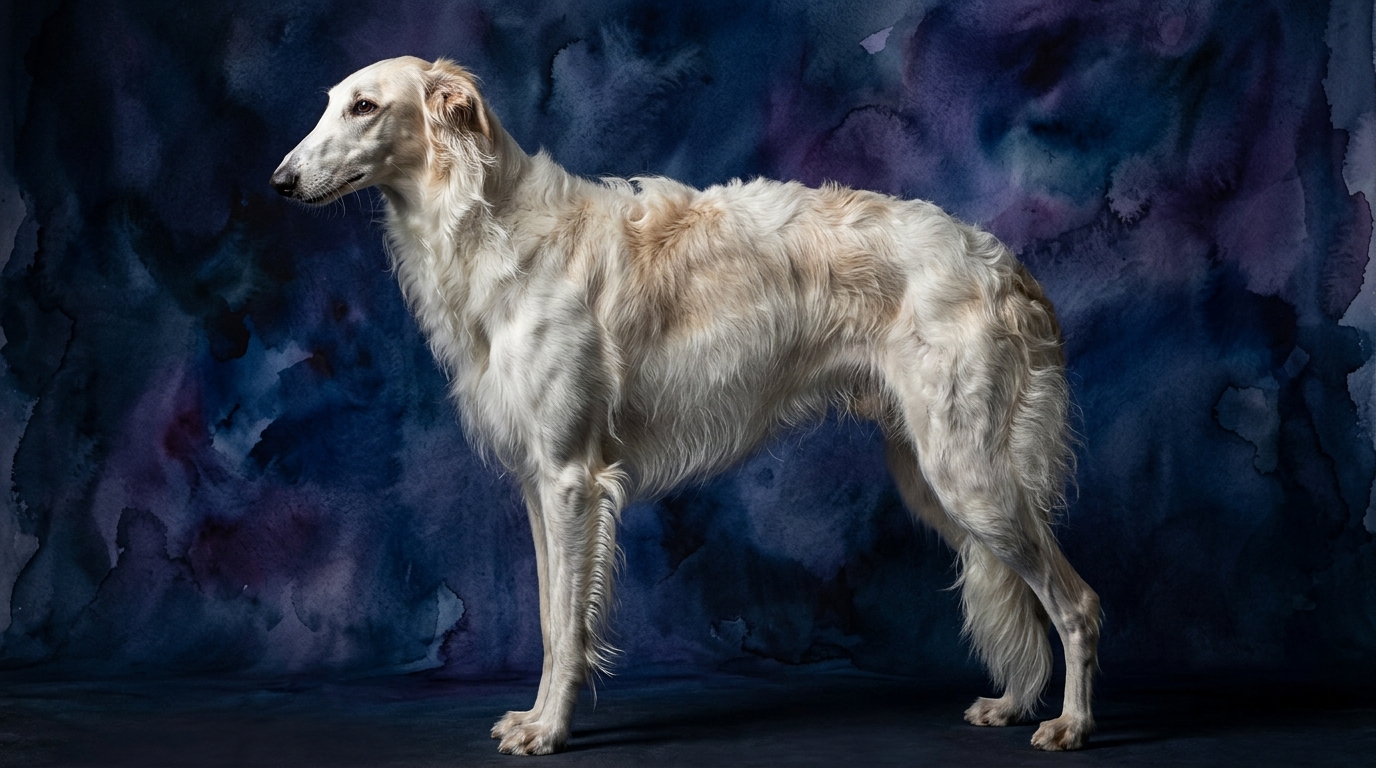
Side-by-Side IQ Profile: Weimaraner vs. Borzoi
The Cosmic Pet IQ Lab evaluates canine cognition across five crucial dimensions, revealing unique strengths for each breed. The Weimaraner, a Sporting group dog, consistently demonstrates high scores: Problem Solving 4/5, Training Speed 4/5, Social Intelligence 4/5, Instinctive Drive 5/5, and Memory 4/5. This profile paints a picture of a dog built for purpose, collaboration, and rapid learning.
In contrast, the Borzoi, a member of the Hound group, presents a different cognitive blueprint. Its scores are Problem Solving 3/5, Training Speed 3/5, Social Intelligence 3/5, Instinctive Drive 3/5, and Memory 3/5. These scores reflect a breed whose intelligence is geared towards independent action and situational awareness, rather than intense human-centric collaboration or rapid obedience learning.
The Weimaraner's 4/5 in Problem Solving indicates a resourceful dog adept at figuring out puzzles or navigating complex tasks to achieve a goal, often with enthusiasm. Its 4/5 in Training Speed means it typically grasps new commands and concepts quickly, eager to engage. A Social Intelligence of 4/5 highlights its capacity to read human cues and form strong, interactive bonds. The 5/5 Instinctive Drive speaks to an intense, persistent drive for hunting, retrieving, and working. Finally, its 4/5 Memory ensures it retains lessons and routines effectively. The Borzoi's 3/5 across the board suggests it can solve problems, learn, bond, and remember, but often with a more independent approach, less urgency, or requiring more specific motivation. Its Instinctive Drive of 3/5 is still formidable for sighthound pursuits but differs from the collaborative drive of a sporting dog.
Where the Weimaraner Excels Cognitively
The Weimaraner's cognitive strengths are deeply rooted in its heritage as a versatile hunting dog, requiring close partnership with humans. Its 4/5 Problem Solving ability shines when presented with tasks that require sequence learning, such as multi-stage retrieves or complex scent discrimination. They are adept at manipulating objects to achieve a desired outcome, like opening latches or accessing hidden treats, often with a trial-and-error approach that quickly leads to success.
With a 4/5 in Training Speed and Social Intelligence, Weimaraners process and respond to human directives with noticeable quickness. They are attuned to their owner's expressions and tone, using this social feedback to adjust their behavior. This makes them particularly responsive in dynamic environments like agility courses or competitive obedience, where rapid decision-making and precise execution are paramount. Their 4/5 Memory also ensures that once a lesson is learned, it tends to stick, contributing to their reputation for consistent performance in trained tasks.
Where the Borzoi's Intelligence Shines Uniquely
While the Borzoi's cognitive scores may appear lower when compared to the Weimaraner, its intelligence is not lesser, but rather differently specialized. Its 3/5 in Problem Solving reflects a capacity for independent thought, often in pursuit of comfort or self-preservation, rather than a desire to please. A Borzoi might not eagerly solve a puzzle for a treat if it can simply observe and find an easier path, or if the perceived effort outweighs the reward. Their problem-solving is often efficient and self-directed, focused on navigating their environment effectively during a chase or finding the most comfortable sunbeam.
The Borzoi's 3/5 Instinctive Drive is a testament to its sighthound lineage, manifesting as an explosive, highly focused chase response to moving objects. This drive, while not collaborative in the same way as a retriever's, requires immense cognitive processing: rapid visual tracking, judging speed and distance, and making split-second decisions about trajectory and obstacles in open fields. Their 3/5 Social Intelligence means they form deep, though often more reserved, bonds, exhibiting a subtle understanding of their chosen family without the overt eagerness of other breeds. Their memory, while rated 3/5, is sufficient for remembering routes, familiar faces, and past experiences that have personal relevance.
Training Dynamics: Weimaraner vs. Borzoi
The differences in their IQ profiles translate directly into their trainability. The Weimaraner, with its 4/5 Training Speed and 4/5 Social Intelligence, is generally perceived as more receptive and easier to train. They thrive on structure, consistency, and positive reinforcement, often eager to engage in training sessions as a form of mental and physical stimulation. Their strong desire to work alongside their human and their excellent memory mean they pick up commands quickly and reliably, making them strong candidates for advanced obedience, field trials, or even service work.
The Borzoi, on the other hand, with 3/5 in both Training Speed and Social Intelligence, requires a more patient, creative, and understanding approach to training. They are not inherently driven to please and can find repetitive drills tedious. Training must be engaging, fair, and often incorporate their sighthound instincts, such as lure coursing, to capture their attention. While they are capable of learning, their independence means they will weigh the perceived value of a command against their own desires. Consistency is key, but so is making training a rewarding experience that respects their unique, sometimes aloof, personality, rather than forcing compliance.
Lifestyle Match: Active Owners vs. Relaxed Owners
For the active owner, the Weimaraner is an ideal match. Its 5/5 Instinctive Drive and high cognitive engagement demand consistent, vigorous physical exercise and mental stimulation. These dogs excel with owners who enjoy activities like hiking, running, dog sports (agility, flyball), or field work. A Weimaraner needs a 'job' or a structured outlet for its energy and intelligence; without it, their problem-solving skills might be directed towards less desirable behaviors like counter-surfing or destructive chewing. They thrive on being an integral part of an active lifestyle, needing daily engagement beyond a simple walk.
The Borzoi offers a different kind of companionship. While they possess an intense chase drive and require regular opportunities for full-speed sprinting in a safe, enclosed area, they are remarkably calm and relaxed indoors once their exercise needs are met. This makes them surprisingly suitable for owners who appreciate a quiet, elegant presence in the home but can commit to providing those necessary bursts of high-intensity activity. A 'relaxed' owner who understands and provides for these specific exercise requirements, rather than expecting a jogging partner for miles, could find a wonderful companion in the Borzoi, appreciating their independent nature and serene demeanor.
The Verdict
Choose a Weimaraner if you seek a highly engaged, collaborative canine partner for sports, tasks, and consistent interaction, and are prepared to meet their intense physical and mental drive with purpose and consistency.
Choose a Borzoi if you appreciate an independent, elegant companion who enjoys intense sprints followed by calm relaxation, and you're prepared for a nuanced training approach that respects their sighthound nature and selective motivations.
🧠 Find Your Pet's IQ Score
Our Pet IQ Lab assessment covers 25+ tests across 5 cognitive dimensions — personalized to your breed.
Take the Full IQ Test →Frequently Asked Questions
Are Weimaraners difficult to live with due to their high drive?
Weimaraners require significant mental and physical stimulation to prevent boredom and destructive behaviors. They are not 'difficult' for owners who can provide consistent exercise, training, and a sense of purpose, but they will become challenging if under-stimulated.
Do Borzoi require a lot of exercise despite their calm indoor demeanor?
Borzoi need regular opportunities for intense, full-speed running in a securely fenced area to satisfy their sighthound instincts. While they are calm indoors, these bursts of exercise are crucial for their well-being, though they are not endurance athletes like many sporting breeds.
Can a Borzoi excel in obedience or agility competitions?
A Borzoi can certainly learn and perform in obedience or agility with patient, positive reinforcement and an understanding of their independent nature. They may not exhibit the same eager-to-please enthusiasm as a Weimaraner, but their intelligence allows them to grasp concepts, often with a unique, self-assured flair.