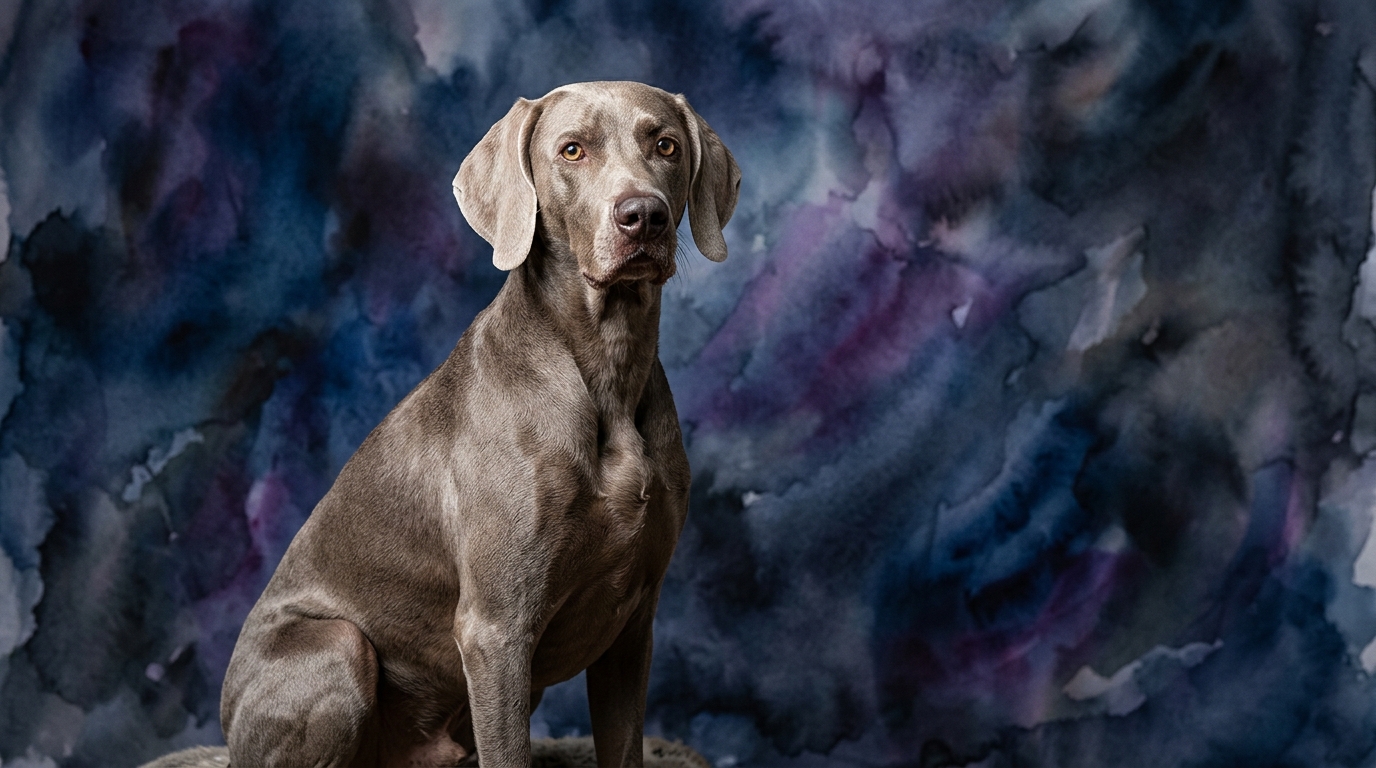

Side-by-Side IQ Profile: Weimaraner vs. Manchester Terrier
The Cosmic Pet Pet IQ Lab employs a multi-dimensional approach to assess canine cognition, moving beyond singular metrics to understand the nuances of breed-specific intelligence. For the Weimaraner, a Sporting group dog, its Coren rank of #21 already hints at a formidable cognitive capacity, while the Manchester Terrier, a Terrier group dog, does not have a Coren ranking, suggesting different priorities in its cognitive makeup.
Breaking down the Weimaraner's profile, we see a Problem Solving score of 4/5. This reflects their aptitude for navigating complex environments, devising strategies to achieve goals like retrieving game, or figuring out puzzle toys with significant effort. Their Training Speed, also 4/5, indicates a breed that absorbs new commands and routines with remarkable alacrity, often eager to please and quick to form associations. Social Intelligence at 4/5 highlights their keen awareness of human cues, pack dynamics, and the ability to adapt their behavior within social structures. An Instinctive Drive of 5/5 underscores their powerful hunting instincts, encompassing scent work, tracking, and a relentless pursuit, which forms a core part of their cognitive processing. Finally, their Memory, rated 4/5, allows them to retain a vast repertoire of commands, remember past experiences, and recall complex sequences of actions.
In contrast, the Manchester Terrier presents a distinct cognitive blueprint. Their Problem Solving score of 3/5 suggests competence in practical, immediate challenges, such as finding a hidden treat or navigating a familiar obstacle, but perhaps less inclination towards abstract or multi-step strategic thinking. Training Speed for the Manchester Terrier is 3/5, meaning they are capable learners but may require more repetitions, varied approaches, and consistent motivation compared to faster-learning breeds. Social Intelligence, at 3/5, indicates they are capable of forming strong bonds and understanding basic social cues, but might exhibit a more independent streak, less driven by constant human interaction or group dynamics. Their Instinctive Drive, also 3/5, points to a heritage of vermin control, manifesting as a keen chase drive and focused determination on small prey, though not with the broad, sustained hunting intensity of a Weimaraner. Lastly, their Memory, rated 3/5, supports learning and recall of essential commands and routines, but might not extend to the same depth or breadth of complex, long-term sequences as a Weimaraner's memory.
Where the Weimaraner Wins Cognitively
The Weimaraner's cognitive strengths distinctly shine in areas demanding intricate strategizing and rapid assimilation of new information. Their 4/5 Problem Solving ability allows them to excel in tasks requiring multiple steps or adapting to changing conditions, such as navigating complex agility courses or executing nuanced retrieving patterns in varied terrains. This breed doesn't just react; they often anticipate and plan, utilizing their environment and learned experiences to achieve objectives.
Furthermore, their superior Training Speed (4/5) combined with their robust Social Intelligence (4/5) makes them exceptionally receptive to advanced obedience and specialized work. Weimaraners quickly grasp what is expected of them and are motivated by the desire to work alongside their human companions, making them prime candidates for competitive dog sports like obedience, rally, or tracking. Their strong memory (4/5) underpins this, ensuring that once a skill is learned, it is retained with impressive fidelity, allowing for the building of complex behavioral chains.
Where the Manchester Terrier Wins Cognitively
The Manchester Terrier's cognitive advantages manifest in a more independent and tenacious form of intelligence, particularly in tasks requiring focused determination and self-reliance. While their Problem Solving is rated 3/5, this often translates into a practical, 'get it done' approach, especially when motivated by their innate drives. They excel at figuring out immediate, tangible problems, such as how to access a desired object or outsmart a small critter, relying on their wit and persistence rather than broad strategic planning.
Their Instinctive Drive (3/5), though lower than the Weimaraner's, is highly concentrated on specific tasks, making them formidable in activities like earthdog trials or focused scent work for small objects. This drive, coupled with their independent nature, means they can work autonomously on a task, demonstrating a cognitive endurance that might be less apparent in breeds more reliant on constant human direction. Their moderate Social Intelligence (3/5) allows them to be discerning in their interactions, valuing quality over quantity, and demonstrating a self-possessed intelligence that doesn't always seek to please but rather to achieve its own objectives.
Which is Easier to Train and Why
When it comes to ease of training, the Weimaraner generally presents a more straightforward path for owners, primarily due to their higher Training Speed (4/5) and strong Social Intelligence (4/5). These dogs possess a natural eagerness to learn and cooperate, often showing a strong desire to please their handlers. They pick up new commands quickly, respond well to positive reinforcement, and thrive on consistent, engaging training sessions that challenge their problem-solving abilities. Their high memory score also means that once a behavior is learned, it tends to stick, reducing the need for constant reteaching and allowing for rapid progression to more complex tasks. Behavioral differences include their inclination towards cooperative work and their ability to generalize learned behaviors to new situations rapidly.
The Manchester Terrier, with a Training Speed of 3/5 and Social Intelligence of 3/5, requires a different approach. While capable of learning, they can exhibit the typical terrier independence and a certain stubbornness, sometimes testing boundaries or getting bored with repetitive drills. Training a Manchester Terrier demands patience, creativity, and a consistent, firm yet fair hand. Owners often need to make training feel like a game and keep sessions short and engaging to maintain their focus. Their lower instinctive drive score in a broad sense means their motivation might be more specific, requiring trainers to tap into their chase instincts or love for play. Behavioral differences include a tendency to be more selective in their compliance and a need for strong motivation to perform tasks that don't immediately appeal to their independent nature.
Which Suits Active Owners vs. Relaxed Owners
For active owners, especially those seeking a canine partner for demanding physical and mental pursuits, the Weimaraner is an exceptional match. Their high instinctive drive (5/5) means they require significant daily exercise, not just physical exertion but also mentally stimulating activities like scent work, advanced obedience, or field trials. These dogs thrive when given a 'job' to do, and an owner who can commit to rigorous training, long hikes, running, or dog sports will find a highly engaged and cooperative companion. Their robust problem-solving and memory skills mean they can handle complex routines and excel in competitive environments, making them ideal for individuals who lead a very active lifestyle and want their dog to be an integral part of it.
The Manchester Terrier, while certainly not a couch potato, is better suited for owners who are active but perhaps not seeking the same intensity or commitment level as a Weimaraner. They enjoy daily walks, playtime, and engaging in activities that tap into their natural chase drive, such as fetch or lure coursing. Owners who appreciate a dog with an independent streak and a tenacious spirit will find the Manchester Terrier rewarding. They require consistent, engaging training to channel their energy and intelligence, but their needs are often met with focused bursts of activity rather than sustained, high-intensity work throughout the day. This makes them suitable for active individuals or families who enjoy regular outdoor activities and focused training sessions, but also appreciate a dog that can settle down indoors after their needs are met, without the constant demand for a 'job'.
The Verdict
Choose a Weimaraner if you are an experienced, highly active owner eager to provide consistent, high-level mental and physical stimulation, potentially engaging in dog sports or working roles. Their cooperative nature and rapid learning make them excellent partners for demanding tasks.
Opt for a Manchester Terrier if you appreciate an independent, spirited companion who enjoys focused bursts of activity and engaging training, and you are prepared for a dog that thrives on tenacity and cleverness rather than constant eagerness to please.
🧠 Find Your Pet's IQ Score
Our Pet IQ Lab assessment covers 25+ tests across 5 cognitive dimensions — personalized to your breed.
Take the Full IQ Test →Frequently Asked Questions
Do Weimaraners make good family pets?
Yes, Weimaraners can be wonderful family pets, known for forming strong bonds with their human companions. Their high social intelligence means they enjoy being part of family activities, but they require consistent training and plenty of exercise to prevent boredom and destructive behaviors.
Are Manchester Terriers difficult to train due to their independence?
Manchester Terriers are not necessarily 'difficult' but require a specific training approach. Their independence means they respond best to engaging, positive reinforcement methods, and owners must be patient and consistent. Making training fun and varied helps prevent boredom and harnesses their cleverness effectively.
Which breed is better for apartment living?
Neither breed is ideal for small apartment living without significant commitment to outdoor activity. However, a Manchester Terrier might adapt slightly better if its exercise needs are rigorously met, as their intensity of drive, though present, is generally less broad and sustained than a Weimaraner's, which demands vast space for its hunting instincts.