Side-by-Side IQ Profile
The Cosmic Pet Pet IQ Lab employs a rigorous five-dimensional framework to assess canine intelligence, encompassing problem-solving, training speed, social intelligence, instinctive drive, and memory, providing a granular view of cognitive aptitudes. This comprehensive approach, alongside external benchmarks like Stanley Coren's intelligence ranking, allows for a nuanced understanding of each breed's inherent cognitive strengths and predispositions, moving beyond generic labels to specific functional capabilities.
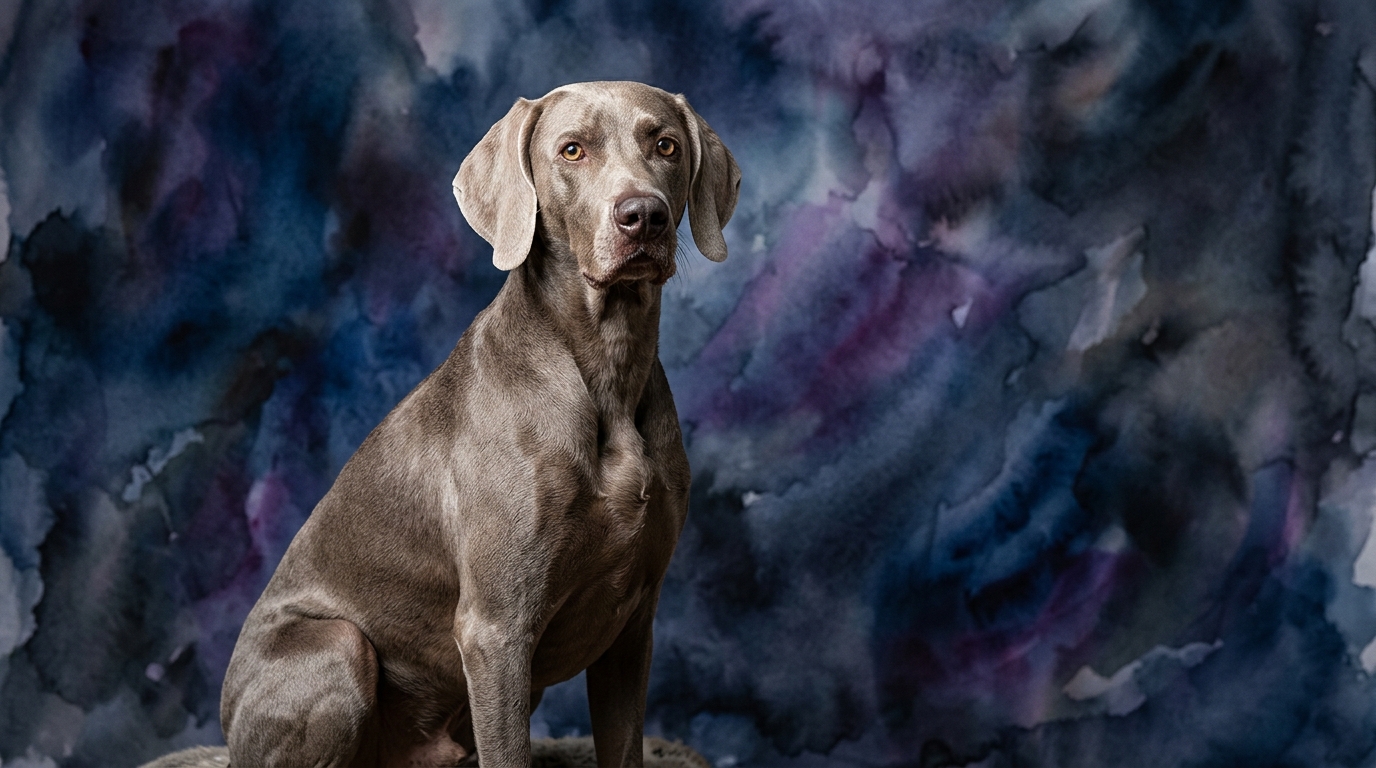
The Weimaraner, a highly regarded sporting breed originating from Germany, secures a notable Coren rank of #21, placing it among the more responsive and capable working dogs. Our IQ Lab assessment robustly reflects this, rating them 4/5 for problem-solving, indicating a strong capacity for navigating novel challenges, strategizing solutions, and adapting to new situations. Their training speed also scores 4/5, suggesting a remarkably quick grasp of new commands and routines, supported by a 4/5 in social intelligence which highlights their cooperative nature, attentiveness to human cues, and desire for engagement. An impressive 5/5 in instinctive drive points to their profound intrinsic motivation, particularly for their historical roles in hunting and retrieving, complemented by a solid 4/5 in memory for efficiently retaining learned behaviors, complex sequences, and past experiences.
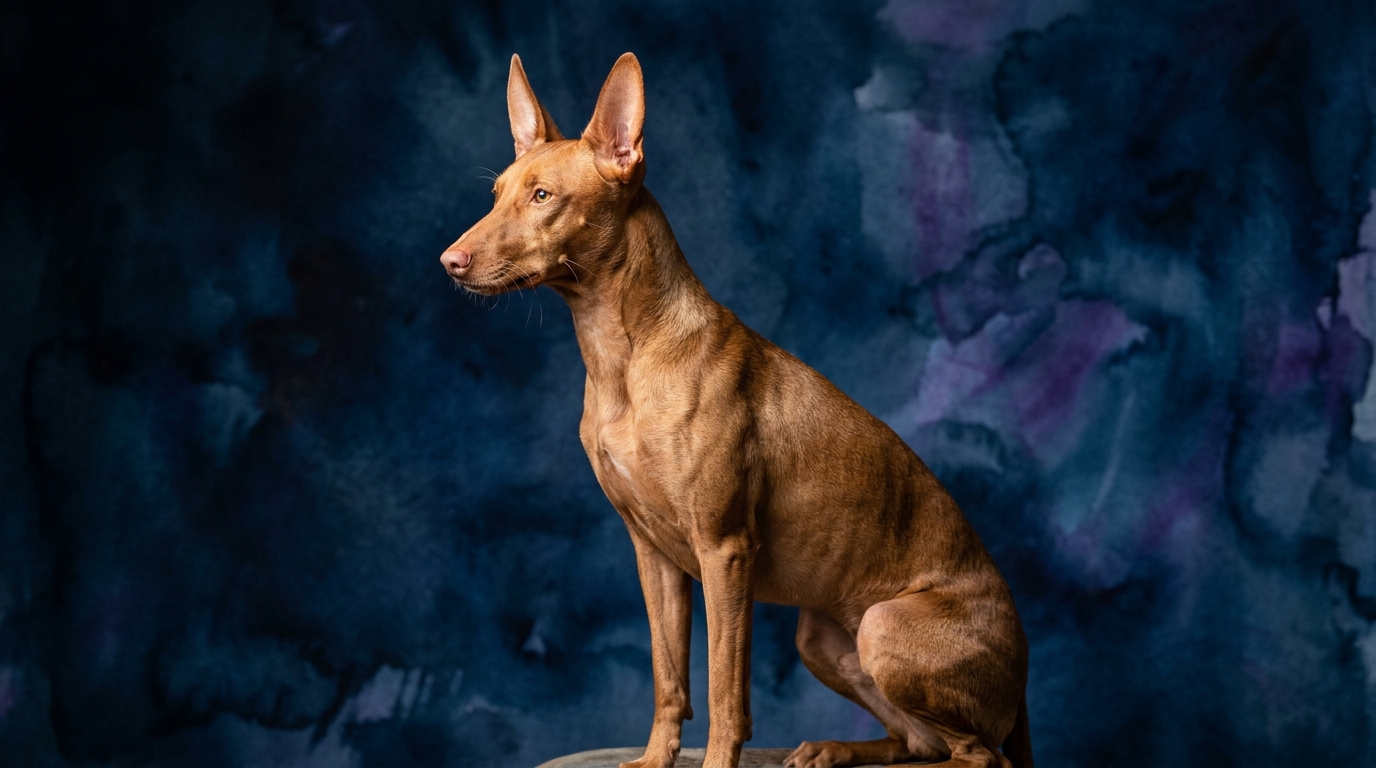
In contrast, the Pharaoh Hound, a breed steeped in ancient sighthound tradition with roots in Malta, does not feature on Coren's established ranking, reflecting a different set of priorities in its cognitive makeup. The IQ Lab profile for this elegant breed consistently places them at 3/5 across all five dimensions: problem-solving, training speed, social intelligence, instinctive drive, and memory. This uniform scoring suggests a balanced, yet distinctly more independent and less overtly cooperative cognitive style compared to many working breeds, reflecting their historical role as self-reliant hunters who operate with minimal human intervention. Their intelligence is geared towards independent observation and pursuit.
Where Weimaraner Wins Cognitively
The Weimaraner clearly outshines the Pharaoh Hound in several key cognitive domains, particularly those involving cooperative effort, directed learning, and complex task execution. Their 4/5 in problem-solving means they are significantly more inclined to actively engage with and resolve puzzles presented by their human companions, whether it involves figuring out a new game, mastering an agility course, or overcoming an obstacle during a training exercise. This proactive mental engagement and willingness to collaborate are hallmarks of their working breed heritage, making them excellent partners for intricate activities.
Furthermore, the Weimaraner's superior scores in training speed (4/5) and social intelligence (4/5) underscore their remarkable readiness to integrate human instructions and desires into their behavioral repertoire with enthusiasm. They exhibit a stronger desire to understand and comply, making them exceptionally receptive to complex commands, nuanced communication, and consistent routines. Their robust memory, also rated 4/5, ensures that once a lesson or skill is learned, it is retained effectively over time, contributing significantly to their reputation as capable, reliable, and versatile partners in various dog sports and working roles.
Where Pharaoh Hound Shines Uniquely
While the Pharaoh Hound's IQ Lab scores are uniformly 3/5, it's crucial to understand that their cognitive profile represents a different, highly specialized form of intelligence, rather than a general deficiency. Their 3/5 in problem-solving, for instance, manifests not as a desire to solve human-designed puzzles, but as quick, independent decision-making in the field, crucial for a sighthound tracking fast-moving prey across varied terrain without constant human direction. This innate self-reliance and immediate environmental assessment are unique strengths, enabling them to rapidly assess situations and react instinctively based on their acute senses of sight and sometimes smell.
Their 3/5 instinctive drive, while numerically lower than the Weimaraner's, is intensely focused and highly refined towards sight-based hunting, a profound cognitive specialization that emphasizes keen observation and pursuit. This means their attention and problem-solving skills are often directed outwards, scanning the environment for subtle movements and patterns, rather than inwards towards human-centric tasks or abstract commands. Their social intelligence, also 3/5, speaks to an independence that values companionship but doesn't necessarily seek constant human instruction or validation, allowing them to operate effectively as solitary or small-group hunters where self-sufficiency is paramount.
Which is Easier to Train and Why
The Weimaraner generally proves to be the more straightforward and rewarding breed to train for most owners, a direct result of their higher scores in training speed (4/5) and social intelligence (4/5). Their inherent desire to work alongside their human companion and their strong instinct to please make them highly receptive to instruction and guidance. They quickly connect actions with consequences, are motivated by praise and positive reinforcement, and often exhibit an eagerness to engage in repeated training sessions that challenge both their mental and physical capabilities, thriving on purpose and engagement.
In contrast, training a Pharaoh Hound, with its consistent 3/5 across all cognitive dimensions, typically requires significantly more patience, creativity, and a profound understanding of sighthound psychology. Their independent nature means they are less inclined to blindly follow commands, especially when their powerful prey drive is activated by a compelling sight or scent, making off-leash reliability a significant challenge in unsecured areas. While they are certainly capable of learning and can be well-mannered companions, their training often demands unwavering consistency, innovative methods, and a willingness to adapt approaches to suit a dog that thinks for itself and is less driven by a constant need for human approval or cooperative partnership in the same vein as a Weimaraner.
Which Suits Active Owners vs Relaxed Owners
The Weimaraner, with its commanding 5/5 instinctive drive and historical role as an all-around gundog, is unequivocally suited for highly active, experienced, and deeply engaged owners. This breed thrives on structured activity, demanding mental challenges, and consistent, vigorous physical exertion, requiring an owner who can commit significant daily time to training, dog sports like agility or retrieving, or extensive outdoor adventures. Their boundless energy and need for purpose demand a partnership where the owner actively participates in channeling their formidable drive, making them an entirely unsuitable choice for a relaxed, sedentary, or inexperienced lifestyle.
The Pharaoh Hound presents a more nuanced picture for potential owners, balancing bursts of energy with periods of calm. While their 3/5 instinctive drive is numerically lower, it translates into a specific need for intense, short bursts of activity, primarily running at full speed in securely fenced areas where they can safely express their sighthound instincts without risk of pursuit. However, once their unique exercise requirements are met, they are often surprisingly calm, elegant, and relaxed indoors, appreciating comfortable lounging on a sofa. This makes them suitable for owners who can provide dedicated sprint opportunities and understand their independent outdoor nature, but also appreciate a serene, affectionate, and relatively low-maintenance indoor companion, rather than a dog requiring constant, varied mental and physical tasks.
The Verdict
Choose a Weimaraner if you seek a highly engaged, cooperative, and trainable partner eager for consistent mental and physical challenges in various activities.
Opt for a Pharaoh Hound if you appreciate an elegant, independent companion who enjoys intense bursts of exercise followed by quiet indoor relaxation, and you're prepared for their unique sighthound instincts.
🧠 Find Your Pet's IQ Score
Our Pet IQ Lab assessment covers 25+ tests across 5 cognitive dimensions — personalized to your breed.
Take the Full IQ Test →Frequently Asked Questions
Are Weimaraners good for first-time dog owners?
Weimaraners typically require an experienced owner due to their high energy, strong drive, and need for consistent training and socialization. Their intelligence can lead to mischief if not properly channeled.
Do Pharaoh Hounds need a lot of exercise?
Pharaoh Hounds need regular exercise, but it's specific: intense bursts of running in a secure, fenced area to satisfy their sighthound instincts. They are generally calm indoors once their exercise needs are met.
What's the biggest training challenge for a Pharaoh Hound?
The biggest challenge is their independent nature and powerful prey drive, which can make off-leash reliability difficult in open spaces. Consistent, positive reinforcement training is key to managing their instincts.