
Side-by-Side Cognitive Profiles: Weimaraner vs. Pomeranian
The Cosmic Pet Pet IQ Lab employs five key dimensions to evaluate canine intelligence, offering a nuanced perspective beyond simple obedience. For the Weimaraner, a Sporting breed with a Coren rank of #21, its profile reveals a Problem Solving score of 4/5, indicating a strong capacity to analyze situations and devise effective solutions to environmental challenges. Its Training Speed, also at 4/5, suggests a quick grasp of new commands and routines, responding well to consistent instruction. Social Intelligence at 4/5 demonstrates an adeptness at reading human cues and adapting within social structures, forming deep bonds. A standout Instinctive Drive of 5/5 highlights a profound genetic predisposition for its original purpose, likely involving tracking and retrieving, which powers its engagement. Finally, a Memory score of 4/5 signifies excellent retention of learned behaviors and experiences over time.
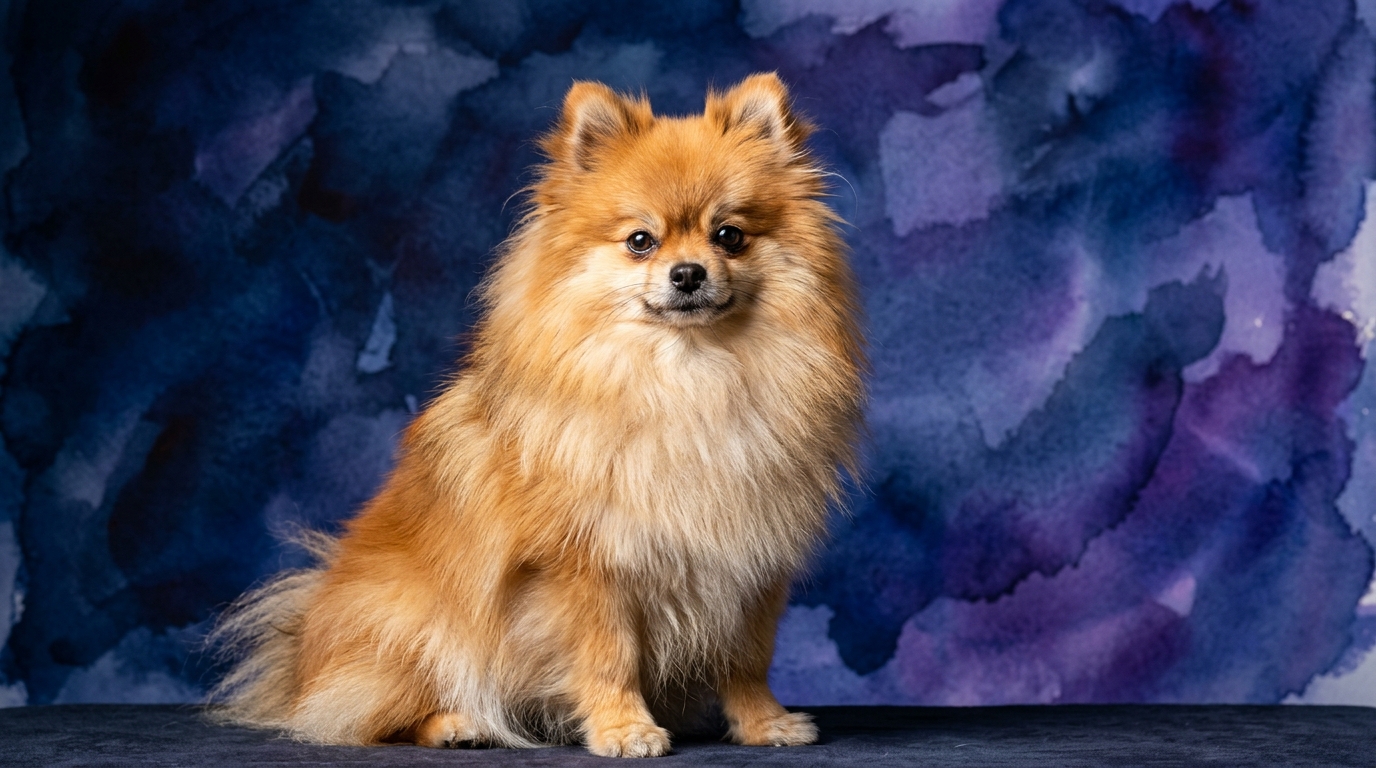
The Pomeranian, a Toy breed ranked #23 by Coren, presents a remarkably similar cognitive blueprint in many areas. It matches the Weimaraner with a Problem Solving score of 4/5, showing it can independently navigate its world and figure out how to achieve its goals, whether it’s getting a favorite toy or a treat. Its Training Speed also stands at 4/5, illustrating that Pomeranians learn new tricks and commands with comparable efficiency when engaged. Social Intelligence is likewise 4/5, indicating a keen awareness of family dynamics and an ability to connect emotionally with its human companions. Where the breeds diverge most significantly is in Instinctive Drive, with the Pomeranian scoring 3/5, suggesting a moderate, rather than overwhelming, set of innate breed-specific behaviors. Its Memory score, at 4/5, confirms its ability to recall past training and interactions, making consistent reinforcement effective.
Where the Weimaraner Excels Cognitively
The Weimaraner’s cognitive strengths are most evident in its unparalleled Instinctive Drive, scoring a perfect 5/5 compared to the Pomeranian’s 3/5. This profound drive translates into a breed that thrives on sustained, purposeful activity, often involving scent work, tracking, or retrieving over long distances. Their problem-solving abilities (4/5) are frequently channeled through this powerful instinct, enabling them to logically work through complex scenarios in the field, such as locating hidden objects or navigating varied terrain with unwavering focus. This deep-seated drive means they can maintain interest in a task that aligns with their historical purpose for extended periods, showcasing a remarkable capacity for sustained effort and problem-solving within that context. Their cognitive prowess lies in their ability to integrate complex commands with their powerful natural urges, making them highly effective partners in demanding working roles.
Where the Pomeranian Shines Cognitively
While the Pomeranian’s raw scores for problem-solving, training speed, social intelligence, and memory are identical to the Weimaraner’s, its cognitive advantage lies in the *application* of these skills within a compact, adaptable package. A Pomeranian's 4/5 problem-solving capabilities are often directed towards navigating a home environment and achieving social goals with a cleverness that belies its size, perhaps figuring out how to get attention or manipulate situations to its advantage. Their ability to learn quickly and adapt socially, combined with a less demanding instinctive drive (3/5), means their cognitive resources are often channeled into nuanced social interactions and mastering household routines with remarkable efficiency and charm. They exhibit an impressive capacity to thrive in diverse living situations, demonstrating their cognitive flexibility and social acuity in a way that makes them highly engaging companions without the intense physical demands of a sporting breed.
Training Dynamics: Which is Easier and Why?
Both the Weimaraner and the Pomeranian share a Training Speed score of 4/5, suggesting a similar aptitude for learning new commands and behaviors. However, the *ease* of training can differ significantly due to their divergent Instinctive Drives. The Weimaraner’s 5/5 instinctive drive, stemming from its heritage as a hunting dog, means it brings intense energy and a powerful desire to work to training sessions. While this can be a tremendous asset for owners who can channel it into structured activities like advanced obedience, agility, or field work, it also means that without consistent, engaging, and purposeful training, this drive can manifest as restlessness or destructive behaviors. Their instinct to pursue and range requires dedicated management and early socialization to ensure reliable recall and focus amidst distractions.
The Pomeranian, with an Instinctive Drive of 3/5, presents a different training landscape. While equally quick to learn, their instincts are less overwhelming, often manifesting as alert barking or playful chases rather than sustained hunting behaviors. This lower drive means they may be less prone to independent pursuits or wandering off compared to a highly driven sporting dog, potentially making off-leash training in certain environments less challenging. Training a Pomeranian often focuses more on polite manners, house-training, and specific tricks, requiring consistent positive reinforcement but perhaps less vigorous management of deeply ingrained working behaviors. Their smaller size also makes physical management during training inherently simpler, contributing to a generally more accessible training experience for many owners.
Matching Breeds to Lifestyles: Active vs. Relaxed Owners
The Weimaraner is an ideal match for active owners who can fully embrace and channel its robust cognitive and physical needs. Its 5/5 instinctive drive and high energy levels demand significant daily exercise, mental stimulation, and engagement in challenging activities like running, hiking, dog sports, or extensive scent work. Owners who enjoy outdoor adventures and can provide consistent, structured training and ample outlets for their breed's powerful work ethic will find the Weimaraner a fulfilling companion. Their problem-solving abilities and memory thrive when consistently challenged with complex tasks and varied environments, making them suitable for individuals committed to an active, engaged lifestyle.
The Pomeranian, while possessing a 4/5 in problem-solving and social intelligence, is a better fit for more relaxed owners due to its lower instinctive drive (3/5) and smaller physical requirements. They still require regular walks and engaging playtime, but their exercise demands are less rigorous than a sporting breed. Owners who prefer indoor activities, enjoy teaching tricks, and value a companion that can thrive in a smaller living space while still offering bright, engaging, and socially adept interaction will find a Pomeranian a wonderful fit. They are content with moderate activity and ample lap time, making them excellent companions for those seeking a clever and affectionate dog without extreme physical demands.
The Verdict
Select a Weimaraner if you are an experienced, active owner committed to providing extensive physical exercise and mental challenges, and if you seek a highly driven companion for dog sports, hunting, or intense outdoor adventures.
Opt for a Pomeranian if you desire a clever, social, and trainable companion in a compact form, suitable for moderate activity levels and indoor living, and if you appreciate a dog whose intelligence shines in social interactions and household routines.
🧠 Find Your Pet's IQ Score
Our Pet IQ Lab assessment covers 25+ tests across 5 cognitive dimensions — personalized to your breed.
Take the Full IQ Test →Frequently Asked Questions
Are Weimaraners or Pomeranians better for first-time dog owners?
Pomeranians are often a more manageable choice for first-time owners due to their smaller size and less intense instinctive drive. Weimaraners, with their powerful drives and high energy, require a more experienced hand to channel their cognitive and physical needs effectively.
Do Weimaraners and Pomeranians get along with children?
Both breeds can get along well with children, but require proper socialization and supervision. Weimaraners, with their boundless energy, might accidentally bowl over small children, while Pomeranians, being delicate, need children to understand gentle interaction.
How much mental stimulation do these breeds need?
Both breeds, despite their size difference, require significant mental stimulation given their high problem-solving and social intelligence scores. Weimaraners need complex training, scent work, and varied activities, while Pomeranians thrive on trick training, puzzle toys, and consistent social engagement to keep their minds active.