
Side-by-Side Cognitive Profile: Weimaraner vs. Shih Tzu
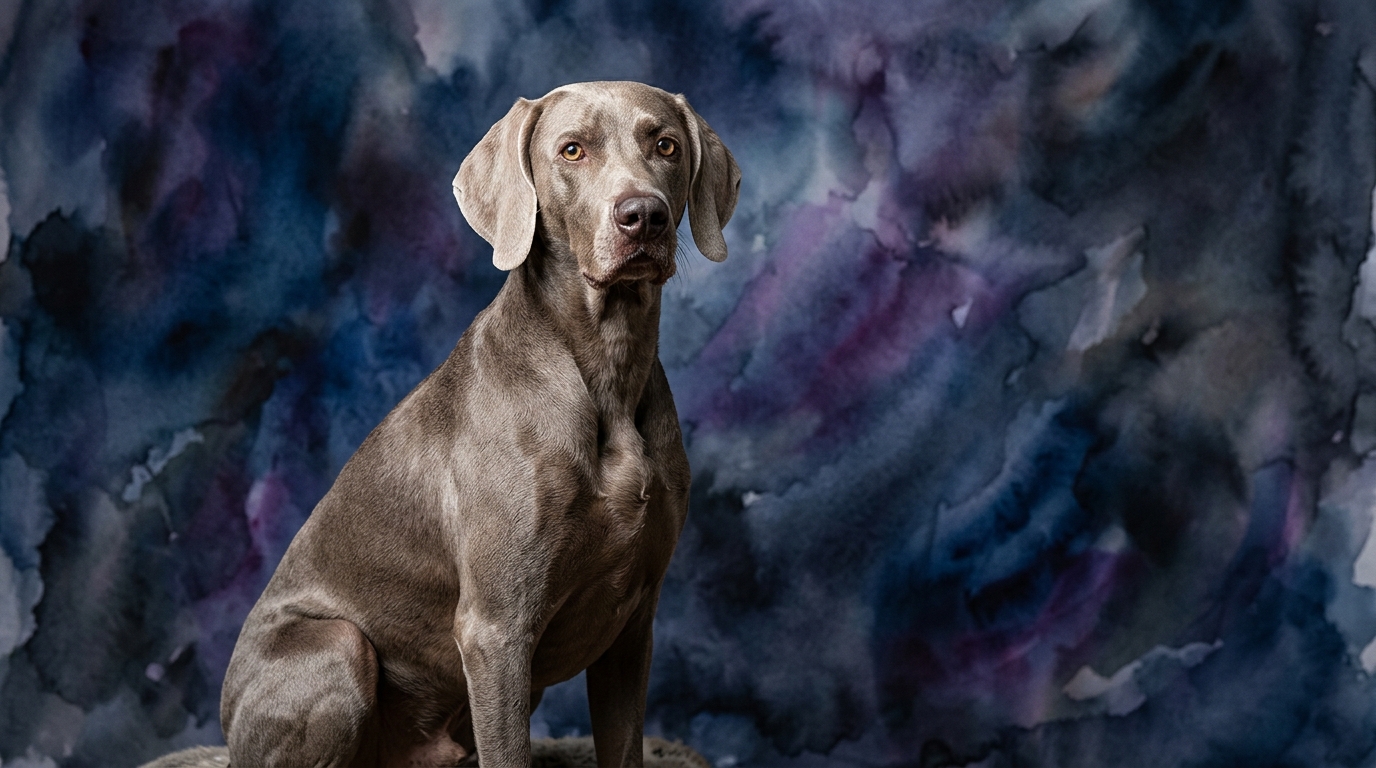
At The Cosmic Pet Pet IQ Lab, we analyze canine intelligence across five key dimensions. The Weimaraner, a Sporting group dog, holds a Coren rank of #21, reflecting its capacity for obedience and working intelligence. Its Problem Solving is rated 4/5, indicating a strong ability to navigate complex tasks, often involving spatial awareness and strategic retrieval. Training Speed is 4/5, as these dogs typically grasp new commands swiftly, thriving on structured learning and consistent engagement. Social Intelligence stands at 4/5; they form profound bonds with their primary caregivers and are attuned to their emotions, though they can be reserved with strangers. With an Instinctive Drive of 5/5, the Weimaraner possesses an incredibly potent prey drive and an innate desire to retrieve, making them tireless in fieldwork. Their Memory is also 4/5, allowing for excellent recall of commands and the retention of intricate routines.
Conversely, the Shih Tzu, a member of the Toy group, is ranked #70 by Coren, a position more reflective of their companion role than traditional working obedience. Their Problem Solving is 3/5, meaning they can tackle basic puzzles but are less inclined towards multi-step, task-oriented challenges without strong, immediate motivation. Training Speed is 2/5; while capable of learning, they often require more repetition and patience, sometimes displaying an independent streak that prioritizes comfort over compliance. Where the Shih Tzu truly shines is in Social Intelligence, earning a perfect 5/5. These dogs are masters at reading human social cues, offering comfort, and adapting gracefully to diverse social environments, forming deeply empathetic connections. Their Instinctive Drive is 2/5, prioritizing companionship and comfort over any traditional hunting or working instincts. Finally, their Memory is 3/5, sufficient for remembering routines and learned behaviors, particularly those associated with comfort and interaction, but perhaps not for complex, sequential tasks.
Where the Weimaraner Excels Cognitively
The Weimaraner's cognitive strengths are profoundly tied to its heritage as a hunting and retrieving dog. Their superior problem-solving abilities (4/5) are evident in scenarios demanding strategic thought, such as navigating dense cover to locate game or executing complex multi-stage field commands. An owner might observe a Weimaraner meticulously working out how to retrieve a specific toy from a pile, or remembering the precise sequence of obstacles on an agility course after just a few repetitions. This isn't just about physical prowess; it's a testament to their capacity for planning and execution.
Furthermore, their exceptional instinctive drive (5/5) acts as a powerful cognitive amplifier. This drive isn't merely physical energy; it's a deep motivational force that fuels their focus and persistence in learning and executing tasks. When a Weimaraner is engaged in a scent work exercise, its memory (4/5) and problem-solving skills are synergistically activated, allowing it to remember complex scent patterns and the location of targets with remarkable precision. This combination makes them particularly adept at roles requiring sustained mental effort and purpose, from competitive obedience to search and rescue.
Where the Shih Tzu Excels Cognitively
The Shih Tzu's cognitive triumphs lie squarely in the realm of social intelligence (5/5), a domain often undervalued in traditional IQ metrics but crucial for their role as companions. These dogs possess an extraordinary capacity to read and respond to human emotions, often anticipating their owner's needs or moods with uncanny accuracy. A Shih Tzu might approach a distressed family member and offer gentle comfort, seemingly understanding the unspoken cues of sadness or anxiety without explicit prompting. This isn't just affection; it's a sophisticated form of social problem-solving, where the 'problem' is human emotional state and the 'solution' is canine companionship.
Their social acumen also allows them to adapt seamlessly to various household dynamics and social situations, often making them excellent therapy or emotional support animals. While their problem-solving in task-oriented scenarios might be rated lower, their ability to navigate complex human social structures, mediate tensions with their presence, and elicit positive interactions from diverse individuals demonstrates a distinct and highly valuable form of intelligence. They excel at 'reading the room' and adjusting their behavior to maintain harmony and connection, which is a formidable cognitive feat in itself.
Training Dynamics: Weimaraner vs. Shih Tzu
When it comes to formal training, the Weimaraner generally presents a quicker learning curve for complex commands and obedience tasks. Their training speed (4/5) coupled with a high instinctive drive (5/5) means they are often eager to please and channel their considerable energy into purposeful work. They thrive on structure, consistency, and clear expectations, making them responsive to methods that involve repetition and positive reinforcement for achieving specific goals. However, their intelligence also means they can become bored or destructive if not adequately challenged, requiring an owner who can match their mental and physical needs.
The Shih Tzu, with a training speed of 2/5, often requires more patience and a different approach. Their motivation is primarily social interaction and comfort rather than task completion. While they can learn commands, it often takes more repetition, and lessons need to be framed as fun, bonding experiences rather than rigorous tasks. House-training can be a particular challenge for Shih Tzus due to their smaller bladder and a potential preference for indoor comfort over outdoor excursions in less-than-ideal weather. Their social intelligence, however, makes them highly adaptable to household rules and routines if training focuses on positive reinforcement and integrates seamlessly into their daily companionship.
Lifestyle Match: Active vs. Relaxed Owners
The Weimaraner is unequivocally suited for active owners. Their profound instinctive drive (5/5) and high energy levels demand substantial daily exercise and mental engagement. This isn't just a casual walk; it means activities like running, hiking, advanced obedience, agility, or even field work. An owner who can provide structured physical outlets and consistent mental stimulation will find a loyal, focused, and well-behaved companion. Without this commitment, their problem-solving skills and drive can be misdirected, leading to destructive behaviors, anxiety, or excessive demand for attention.
In stark contrast, the Shih Tzu is an ideal match for more relaxed owners. While they enjoy short walks and playful indoor sessions, their primary need is consistent companionship and social interaction, not intense physical exertion. Their high social intelligence (5/5) means they thrive on being close to their family, participating in daily routines, and offering quiet affection. Owners who prioritize a gentle, empathetic presence and can provide a comfortable, engaging home environment will find a devoted and content Shih Tzu, making them perfect for apartment living or less physically demanding lifestyles.
The Verdict
Choose the Weimaraner if you seek a highly engaged canine partner for demanding activities, valuing a breed that excels in complex tasks and thrives on a structured, active lifestyle.
Opt for the Shih Tzu if your priority is a deeply empathetic companion who excels in social nuances, offering quiet affection and thriving in a home environment focused on close human interaction.
🧠 Find Your Pet's IQ Score
Our Pet IQ Lab assessment covers 25+ tests across 5 cognitive dimensions — personalized to your breed.
Take the Full IQ Test →Frequently Asked Questions
Are Weimaraners good family dogs?
Yes, Weimaraners can be exceptionally devoted family dogs, forming strong bonds and being protective of their loved ones. However, their high energy and need for consistent training means they thrive best with experienced owners who can provide ample physical and mental stimulation, along with clear boundaries.
Is the Shih Tzu hard to house train?
Shih Tzus can present house-training challenges, often attributed to their smaller bladder size and a potential preference for comfort over outdoor excursions, especially in inclement weather. Consistent routines, abundant positive reinforcement, and patience are crucial for achieving success in house-training.
What's the main cognitive difference between a sporting dog and a toy dog?
The main cognitive difference often lies in their primary drives and problem-solving focus. Sporting dogs like the Weimaraner are selectively bred for task-oriented intelligence, excelling in roles requiring focus, memory, and physical execution, such as hunting or retrieval. Toy dogs like the Shih Tzu, conversely, excel in social intelligence, demonstrating superior abilities in reading human emotions and adapting to complex social environments for companionship.