
Side-by-Side Cognitive Profiles: Weimaraner vs. Silky Terrier
The Cosmic Pet Pet IQ Lab employs a five-dimensional framework to assess canine intelligence, offering a granular view of each breed's mental strengths. For the Weimaraner, a Sporting group dog with a Coren ranking of #21, this framework paints a picture of a capable and driven intellect. Their Problem Solving is rated 4/5, indicating an ability to independently navigate complex situations and strategize. Training Speed also sits at 4/5, reflecting their quick grasp of commands and routines, though this often comes with a need for consistent mental engagement. Social Intelligence is 4/5, showing a strong capacity to interpret human cues and form deep bonds, making them highly attuned companions. An Instinctive Drive of 5/5 highlights their profound urge to work and pursue, a remnant of their hunting heritage that demands an outlet. Finally, their Memory is 4/5, enabling them to retain intricate sequences and recall learned behaviors over time.
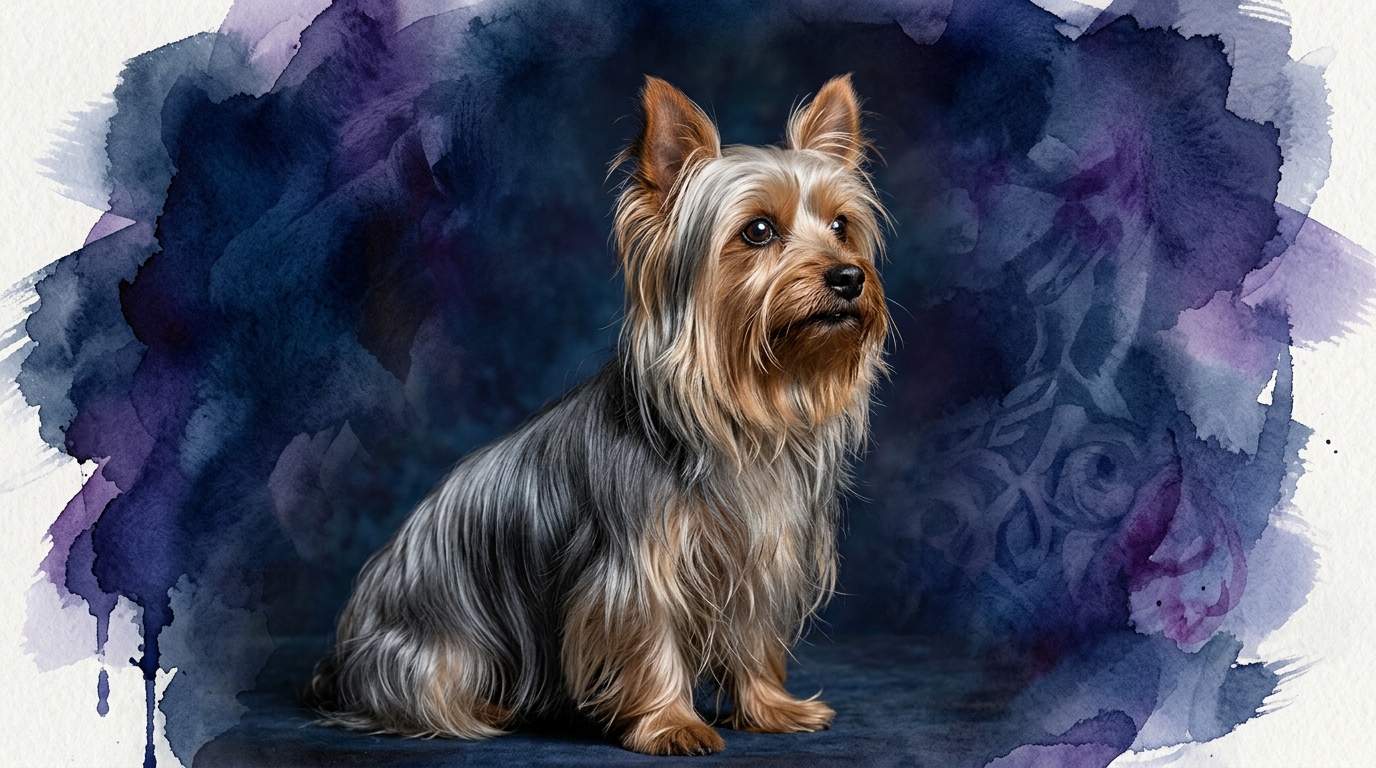
In contrast, the Silky Terrier, a lively Toy group dog not listed in Coren's rankings, presents a different cognitive signature. Their Problem Solving is rated 3/5, suggesting they can tackle moderate challenges but might require more guidance for intricate puzzles. Training Speed is 3/5, meaning they learn at a steady pace, benefiting from patient and consistent reinforcement rather than rapid-fire instruction. Social Intelligence also scores 3/5; they are affectionate with their inner circle but might not possess the same nuanced understanding of broader social dynamics as some larger breeds. Their Instinctive Drive is 3/5, reflecting a typical terrier's zest for life and occasional chase instinct, but without the intense, focused drive of a hunting dog. Memory is 3/5, allowing them to remember commands and routines, but perhaps with less long-term detail or recall for complex sequences compared to the Weimaraner.
Where the Weimaraner Wins Cognitively
The Weimaraner's cognitive profile demonstrates a clear advantage in areas demanding independent thought, rapid learning, and profound engagement. Their Problem Solving score of 4/5 means they are adept at figuring out how to open gates, retrieve hidden objects, or navigate new environments with minimal assistance. This capacity for independent reasoning makes them valuable in tasks requiring initiative and adaptability. Coupled with a Training Speed of 4/5, they absorb new commands quickly, making them efficient learners in obedience, agility, or working roles where precision and speed are paramount.
Furthermore, their superior Social Intelligence (4/5) allows them to pick up on subtle human emotions and intentions, fostering a deeper, more intuitive partnership. This translates into a dog that often anticipates its owner's needs or moods, responding with a sensitivity that goes beyond simple command following. Their exceptional Memory (4/5) reinforces this, enabling them to build a vast repertoire of learned behaviors and experiences, making them consistent performers once a task is mastered. The Weimaraner's blend of high drive, quick learning, and strong social attunement positions them as exceptionally capable partners for complex activities and demanding roles.
Where the Silky Terrier Wins Cognitively
While the Weimaraner often presents a profile geared towards demanding work, the Silky Terrier's cognitive strengths lie in different, equally valuable domains, particularly suited to companionship and alertness within a domestic setting. Their Instinctive Drive of 3/5, while lower than the Weimaraner's, is perfectly matched for their role as an alert companion. This drive manifests as a keen awareness of their surroundings, making them excellent, albeit vocal, tiny watchdogs, quick to signal the presence of strangers or unusual sounds. Their terrier tenacity, even at a 3/5 drive, means they can be persistent in their play or in seeking attention, a charming trait for owners who appreciate a dog with a spirited personality.
The Silky Terrier's Problem Solving at 3/5, combined with a moderate Training Speed of 3/5, means they are perfectly capable of learning household rules and basic commands without the intense mental stimulation required by a Weimaraner. They thrive on human interaction and the mental exercise of figuring out how to get a favored toy or secure a cozy spot on the couch, which are simpler but no less important forms of cognitive engagement for a companion animal. Their social intelligence, while not as broad as a Weimaraner's, is intensely focused on their family, making them deeply loyal and affectionate, excelling at personal bonding rather than complex group dynamics.
Ease of Training: Weimaraner vs. Silky Terrier
When it comes to ease of training, the Weimaraner (Training Speed 4/5) generally picks up new commands at a faster rate than the Silky Terrier (Training Speed 3/5). Weimaraners possess a strong desire to please their owners and excel when given a 'job' to do, which can make them eager participants in training sessions. However, their high Instinctive Drive (5/5) and advanced Problem Solving (4/5) mean they require consistent, engaging, and varied training to prevent boredom or the development of independent, sometimes undesirable, problem-solving behaviors like counter-surfing or escaping. They can be strong-willed and need an owner who can channel their considerable mental and physical energy effectively, often responding best to positive reinforcement and clear boundaries.
The Silky Terrier, with a Training Speed of 3/5, learns at a more moderate pace, often requiring more repetition and patience. Their lower Social Intelligence (3/5) might mean they are less attuned to subtle handler cues initially, necessitating clearer communication. While they lack the Weimaraner's intense work drive, Silky Terriers exhibit typical terrier persistence, which can sometimes be interpreted as stubbornness. They respond well to reward-based training and thrive on consistency. Potty training can sometimes be a particular challenge due to their smaller bladder and independent nature, demanding diligent supervision and frequent outdoor access. Neither breed is inherently 'difficult' to train, but their distinct cognitive profiles dictate different approaches and expectations from their trainers.
Suitability for Active vs. Relaxed Owners
The Weimaraner's cognitive makeup, characterized by a 5/5 Instinctive Drive and 4/5 scores in Problem Solving, Training Speed, Social Intelligence, and Memory, unequivocally points to suitability for active owners. These dogs require substantial physical exercise, often an hour or more of vigorous activity daily, coupled with equally demanding mental stimulation. Without sufficient outlets for their drive and problem-solving abilities, Weimaraners can become restless, destructive, or develop behavioral issues. They thrive in environments where they can participate in dog sports, hunting, long hikes, or advanced obedience, making them ideal for experienced owners who lead an adventurous lifestyle and can commit to their extensive needs for engagement.
Conversely, the Silky Terrier, with its more moderate scores across the board, is better suited for owners who might describe themselves as 'relaxed' but are still committed to daily interaction and moderate activity. While they enjoy walks and playtime, their smaller size and lower instinctive drive (3/5) mean they do not demand the same intensity or duration of exercise as a Weimaraner. They are content with indoor games, short walks, and plenty of human companionship, making them adaptable to apartment living or smaller homes. Their alertness and social intelligence, though not as broad, make them charming companions who thrive on being part of family life without needing an extensive 'job' to feel fulfilled.
The Verdict
Choose a Weimaraner if you are an experienced, active individual or family seeking a highly capable, driven, and mentally engaged canine partner for demanding activities and a life full of adventure.
Opt for a Silky Terrier if you desire a spirited, alert, and affectionate smaller companion who thrives on human interaction and can adapt to varied living situations without requiring intensive outdoor work.
🧠 Find Your Pet's IQ Score
Our Pet IQ Lab assessment covers 25+ tests across 5 cognitive dimensions — personalized to your breed.
Take the Full IQ Test →Frequently Asked Questions
Do Weimaraners need a lot of mental stimulation?
Absolutely. With a Problem Solving of 4/5 and Instinctive Drive of 5/5, Weimaraners require consistent mental challenges like puzzle toys, advanced training, and engaging activities to prevent boredom and undesirable behaviors.
Are Silky Terriers good apartment dogs?
Yes, Silky Terriers can be excellent apartment dogs due to their smaller size and moderate exercise needs. They thrive on indoor companionship and daily walks, fitting well into urban environments as long as they receive adequate attention.
How do Weimaraners typically interact with children?
Weimaraners, with their 4/5 Social Intelligence, can be wonderful family dogs, often forming strong bonds with children. However, their high energy and strong build necessitate supervision with very young children to prevent accidental knocking over during enthusiastic play.