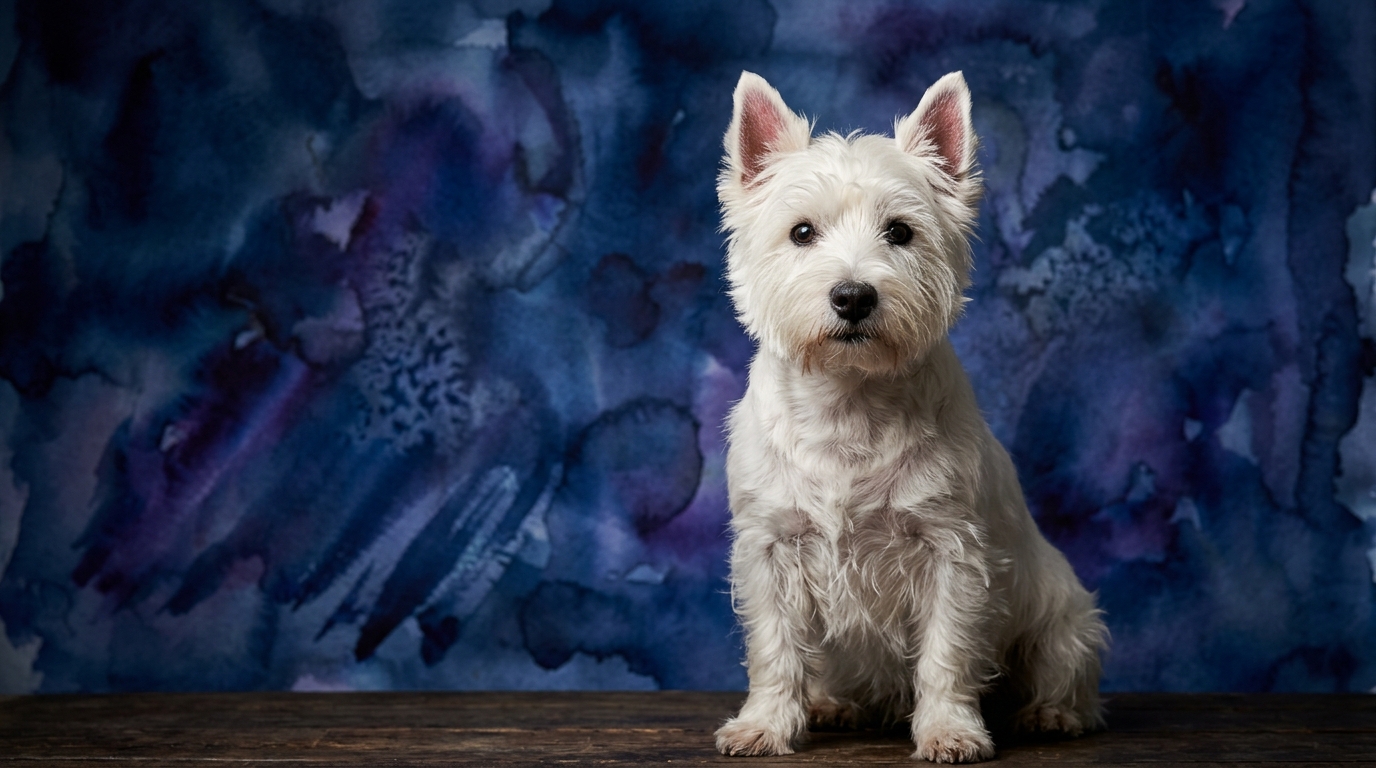

Side-by-Side IQ Profile
The Cosmic Pet Pet IQ Lab provides a unique lens through which to examine the cognitive attributes of our canine companions. For the West Highland White Terrier, ranked #47 by Coren, its Problem Solving is rated 3/5, reflecting an independent nature capable of strategizing to achieve goals, particularly those involving pursuit. Training Speed also stands at 3/5; while capable of learning, their inherent determination can sometimes be misconstrued as stubbornness, requiring consistent and engaging methods. Social Intelligence is 3/5, indicating an ability to interact effectively with humans, though often on their own terms, maintaining a degree of independence. The Instinctive Drive is 3/5, strongly manifesting in digging, chasing, and exploring behaviors, a direct link to their historical purpose. Notably, their Memory is 4/5, allowing them to retain complex sequences, commands, and spatial information over extended periods, a valuable asset for a working dog navigating varied terrain.
The Brussels Griffon, not ranked by Coren, presents a different cognitive blueprint shaped by its role as a companion dog. Its Problem Solving, like the Westie, is rated 3/5, often applied to navigating their home environment, figuring out how to gain attention, or manipulating situations to their comfort. Training Speed is 3/5; they are sensitive learners who respond best to positive reinforcement and a strong bond with their trainer, though their focus can sometimes wander if not sufficiently motivated. Social Intelligence is 3/5, characterized by a profound connection with their human family, often reading subtle emotional cues and seeking proximity. Their Instinctive Drive is 3/5, typically expressed as a desire for companionship, play, and occasionally a mischievous curiosity rather than a strong prey drive. The Brussels Griffon's Memory is 3/5, enabling them to recall routines, familiar faces, and basic commands, contributing to their adaptability within a household setting.
Where West Highland White Terrier Wins Cognitively
The West Highland White Terrier demonstrates a distinct cognitive edge in areas connected to their heritage. Their Memory, at a robust 4/5 compared to the Griffon's 3/5, suggests a superior capacity for long-term retention of complex information. This could translate to remembering intricate scent trails, recalling hidden toys over extended periods, or consistently executing multi-step commands learned months ago. This enhanced memory is crucial for a breed historically tasked with independent problem-solving in dynamic environments, where recalling previous successes or failures is paramount. While both breeds share a 3/5 rating in Problem Solving, the Westie's independent spirit often prompts them to initiate problem-solving autonomously, particularly when an instinctual drive is engaged. They are more likely to devise a strategy to dig under a fence or outsmart a puzzle toy on their own initiative, driven by an intrinsic desire to "work" or explore, rather than waiting for human direction. This proactive application of their intellect, tied to their strong instinctive drives, gives them a unique cognitive advantage in self-directed tasks.
Where Brussels Griffon Wins Cognitively
The Brussels Griffon shines with a particular nuance in its Social Intelligence, even though both breeds are rated 3/5. Bred primarily for companionship, the Griffon's social cognition is often characterized by a heightened sensitivity to human emotions and subtle cues. They frequently appear to "read" their owner's mood, offering comfort or seeking attention with an intuitive understanding of social dynamics. This deeper attunement to human emotional states can lead to a more profound and reciprocal social bond, making them exceptionally responsive to their family's needs. While their Problem Solving is also 3/5, the Griffon often applies this capacity to social engineering – figuring out the most effective way to elicit a treat, gain lap access, or encourage playtime. Their cognitive strength lies in understanding and manipulating the social environment to their advantage, a distinct form of practical intelligence focused on interpersonal success within the home. This makes their problem-solving intrinsically linked to their desire for connection and comfort, a subtle but significant difference from the Westie's more task-oriented approach.
Which Is Easier to Train and Why
Both the West Highland White Terrier and the Brussels Griffon share a Training Speed rating of 3/5, indicating that neither is inherently "easier" to train in the traditional sense, but rather require different approaches. The Westie's training journey is often shaped by their independent, tenacious terrier nature. Their strong instinctive drives, particularly for chasing and exploring, can be a significant distraction. Training a Westie demands consistency, firm yet positive leadership, and engaging methods that respect their intelligence without allowing their willfulness to dominate. Their superior memory (4/5) is an asset, as once a command is learned, it tends to stick, but getting them to *want* to comply initially can be the challenge. In contrast, the Brussels Griffon, while equally capable of learning, is a more sensitive soul. They thrive on positive reinforcement, gentle guidance, and a strong, trusting bond with their owner. Harsh corrections can easily discourage them, making them shut down. Their training success hinges on building rapport and making the learning process enjoyable and rewarding, often through praise and affection. While their memory (3/5) is solid for routines, more complex or abstract commands might require more patient repetition than with a Westie. Ultimately, neither breed is effortlessly compliant; the Westie requires a trainer who can channel their spirited drive, while the Griffon needs a trainer who understands and nurtures their sensitive, people-oriented nature.
Which Suits Active Owners vs. Relaxed Owners
The choice between a West Highland White Terrier and a Brussels Griffon often comes down to an owner's lifestyle and their capacity to meet a dog's specific cognitive and physical needs. The Westie is a natural fit for active owners. Their robust instinctive drive and problem-solving inclination mean they require regular mental stimulation and physical activity. Owners who enjoy long walks, interactive games like fetch or hide-and-seek, or even canine sports such as agility will find a Westie a willing and enthusiastic participant. Their independent nature also means they appreciate opportunities to explore and "work," whether it's digging in a designated area or engaging with challenging puzzle toys. For relaxed owners, the Brussels Griffon offers a more suitable companionship. While they certainly enjoy short walks and playtime, their exercise requirements are considerably lower than a Westie's. Griffons thrive on close human interaction and are content to spend much of their day alongside their family, whether lounging on the couch or observing household activities. Their mental stimulation often comes from social engagement, gentle play, and short, fun training sessions focused on bonding rather than intense physical exertion. They are ideal for individuals or families who value a devoted lap dog capable of nuanced social interaction, fitting seamlessly into a less demanding daily routine.
The Verdict
Choose the West Highland White Terrier if you seek an independent, spirited companion with a strong will and a need for engaging activities, and are prepared for consistent training and mental challenges that respect their working heritage.
Opt for the Brussels Griffon if you desire a devoted, sensitive, and charming companion who thrives on close human interaction and enjoys a more relaxed indoor lifestyle, provided you offer consistent, gentle guidance and ample affection.
🧠 Find Your Pet's IQ Score
Our Pet IQ Lab assessment covers 25+ tests across 5 cognitive dimensions — personalized to your breed.
Take the Full IQ Test →Frequently Asked Questions
Do West Highland White Terriers bark a lot?
Westies, with their terrier heritage, can be prone to barking, especially when alerting to perceived threats or expressing excitement. Consistent training from a young age can help manage this vocal tendency.
Are Brussels Griffons good with children?
Brussels Griffons can be good with older, respectful children who understand how to interact gently with a small, sensitive dog. Their delicate nature means they may not tolerate rough play from very young children.
How much grooming do these breeds require?
West Highland White Terriers have a double coat requiring regular brushing, hand-stripping, or professional grooming to prevent matting and maintain coat health. Brussels Griffons, depending on whether they are smooth or rough-coated, require regular brushing, with rough coats needing periodic stripping or clipping to prevent matting.