
Side-by-Side Cognitive Profile: Westie vs. Löwchen
To truly understand the mental makeup of the West Highland White Terrier and the Löwchen, The Cosmic Pet Pet IQ Lab employs a five-dimensional cognitive assessment, offering a granular view beyond general perceptions. While both breeds often score similarly across several dimensions, the application and manifestation of these cognitive traits are deeply rooted in their distinct breed histories and purposes.
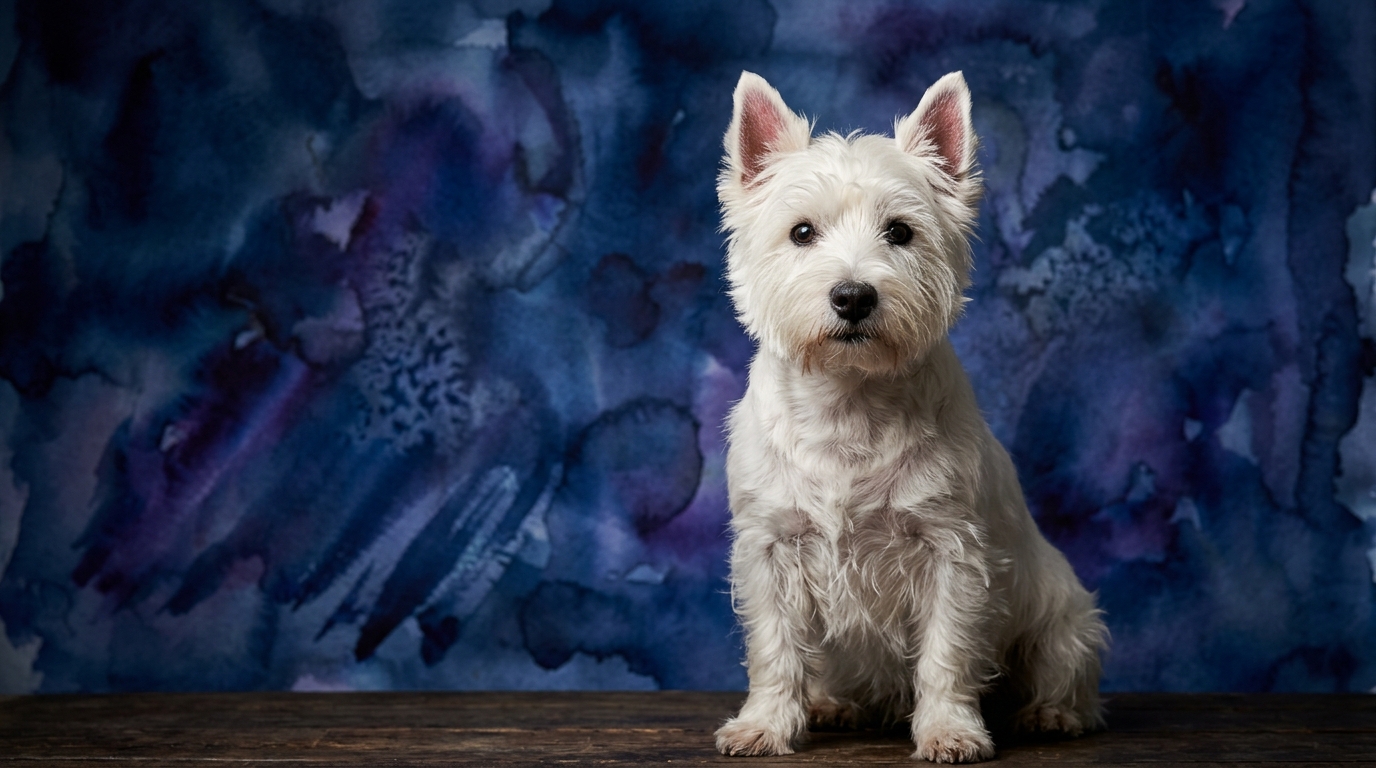
The West Highland White Terrier (Westie), ranking #47 in Coren's intelligence scale, carries the mental blueprint of a tenacious working terrier. Their Problem Solving (3/5) score reflects an innate ability to independently figure out how to overcome physical barriers or access desired objects, a direct legacy of flushing prey from dens. Training Speed (3/5) indicates they can grasp commands efficiently, yet their inherent independence means they often weigh compliance against their own desires, requiring consistent, engaging motivation. Social Intelligence (3/5) manifests as deep loyalty to their family, coupled with a watchful and sometimes assertive demeanor towards strangers, a protective trait. Instictive Drive (3/5) is robust, evident in their enthusiasm for chasing, digging, and vocalizing, channeling the energy of a working dog. A significant cognitive strength is their Memory (4/5), allowing them excellent recall for learned commands, routines, and experiences, which aids their ability to navigate complex environments and remember past successes or failures.
The Löwchen, a charming companion breed not formally Coren-ranked, presents a cognitive profile emphasizing adaptability and social acumen. Their Problem Solving (3/5) is often applied to navigating social dynamics and mastering new tricks for attention, demonstrating cleverness geared towards comfort and companionship. Training Speed (3/5) shows they typically respond well to instruction, acquiring new behaviors at a steady pace, largely driven by their desire for companionship and positive interaction. Social Intelligence (3/5) highlights their attunement to human cues, eager to please and generally displaying an agreeable, affectionate disposition towards people and other pets. Instinctive Drive (3/5) is primarily focused on companionship and play, exhibiting less intense prey or guarding instincts compared to working breeds, preferring interactive games over independent hunting. Their Memory (3/5) is solid, retaining learned behaviors and routines adequately, which contributes to their adaptability as companion animals.
Where the West Highland White Terrier Wins Cognitively
The West Highland White Terrier's cognitive advantages particularly shine in areas demanding robust recall and tenacious problem-solving, underpinned by their impressive 4/5 memory score. This superior memory allows them to quickly learn and retain complex sequences, remember the location of hidden toys, or recall the most effective strategy for bypassing a barrier, a trait invaluable for their original purpose of independent vermin control. Their 3/5 problem-solving score, while numerically similar to the Löwchen, is often fueled by a persistent, goal-oriented drive; once a Westie understands a task or desires something, their memory for previous attempts and their inherent terrier grit combine to create a relentless pursuit of the solution. This means they are less likely to give up on a challenge, continually referencing past experiences to refine their approach until success is achieved, a distinct cognitive edge for tasks requiring sustained mental effort and independent strategizing.
Where the Löwchen Wins Cognitively
While the Löwchen's individual IQ scores largely mirror the Westie's, their cognitive strengths often manifest differently, particularly in their nuanced application of social intelligence and problem-solving within a companion context. A Löwchen's 3/5 social intelligence score translates into a remarkable aptitude for reading human cues and adapting their behavior to foster harmonious relationships, often anticipating desires or reacting to emotional states with sensitivity. Their problem-solving (3/5) is frequently channeled into finding ways to engage their owners, whether through playful antics or subtle nudges, showcasing a cleverness geared towards social connection rather than independent task completion. This breed excels at understanding and manipulating social dynamics to their benefit, making them masters of eliciting interaction and affection, a cognitive 'win' for owners seeking a highly responsive and relationally intelligent companion.
Training Aptitude: Which Breed is Easier to Shape?
Evaluating ease of training requires looking beyond raw scores to the underlying behavioral motivations of each breed. The West Highland White Terrier, despite their 3/5 training speed, can present a moderate challenge due to their independent streak and strong instinctive drives. Their terrier heritage means they are often self-directed, more inclined to follow their nose or dig than to immediately comply with a command if it doesn't align with their current interest; consistent, highly motivating positive reinforcement is essential to overcome this innate independence. While their 4/5 memory helps them retain commands once learned, the initial acquisition can be slower as owners must consistently prove that cooperation is more rewarding than self-directed exploration. In contrast, the Löwchen, also with a 3/5 training speed, often proves more amenable to training because their primary drive is social engagement and pleasing their human companions. Their relatively lower instinctive drive (3/5) means fewer distractions from chasing or digging, allowing them to focus more readily on the trainer. They are typically eager to participate in activities that strengthen their bond with their owner, making them generally more responsive and cooperative in training sessions, even if the speed of learning new concepts is numerically similar.
Activity Levels: Active Owners vs. Relaxed Owners
For owners with an active lifestyle and a desire for a dog that thrives on engagement and independent exploration, the West Highland White Terrier is an excellent match. Their robust instinctive drives and need for mental stimulation mean they flourish with daily walks, puzzle toys, and opportunities for 'terrier work' like supervised digging or scent games. Owners who appreciate a dog with a strong personality and are prepared to channel their energy and intelligence into structured activities will find a Westie incredibly rewarding. Conversely, the Löwchen is better suited for owners who enjoy regular, moderate activity but also cherish quiet companionship and indoor relaxation. While they love playtime and walks, their energy requirements are generally lower, and their social nature means they are content to be close to their family, making them ideal for individuals or families seeking a devoted companion without the demanding exercise regimen or independent drive of a working terrier. They adapt well to various living situations, prioritizing human interaction over intense physical exertion.
The Verdict
Choose the West Highland White Terrier if you seek a tenacious, independent companion who thrives on mental challenges and consistent engagement, and you appreciate a dog with a strong, self-directed personality.
Opt for the Löwchen if you desire an affectionate, social, and adaptable companion who prioritizes interaction and is generally more compliant, fitting well into a home that values companionship over intense activity.
🧠 Find Your Pet's IQ Score
Our Pet IQ Lab assessment covers 25+ tests across 5 cognitive dimensions — personalized to your breed.
Take the Full IQ Test →Frequently Asked Questions
Do West Highland White Terriers bark a lot due to their intelligence?
Westies, with their 3/5 social intelligence and 3/5 instinctive drive, often use barking as a communication tool, stemming from their watchdog tendencies and historical role in alerting to vermin. While not directly tied to a higher IQ, their memory (4/5) helps them recall which stimuli warrant a vocal response.
Are Löwchen good at learning complex tricks given their IQ scores?
Yes, Löwchen, with a 3/5 in both problem-solving and training speed, are quite capable of learning complex tricks. Their strong social intelligence (3/5) and desire to please their owners make them enthusiastic participants in training, often enjoying the mental stimulation and attention that trick training provides.
How does the Westie's 4/5 memory impact their behavior?
The Westie's strong memory (4/5) means they effectively retain training, routines, and past experiences, both positive and negative. This aids in consistent performance of learned commands but also means they will remember perceived injustices or negative training methods, making positive reinforcement crucial.