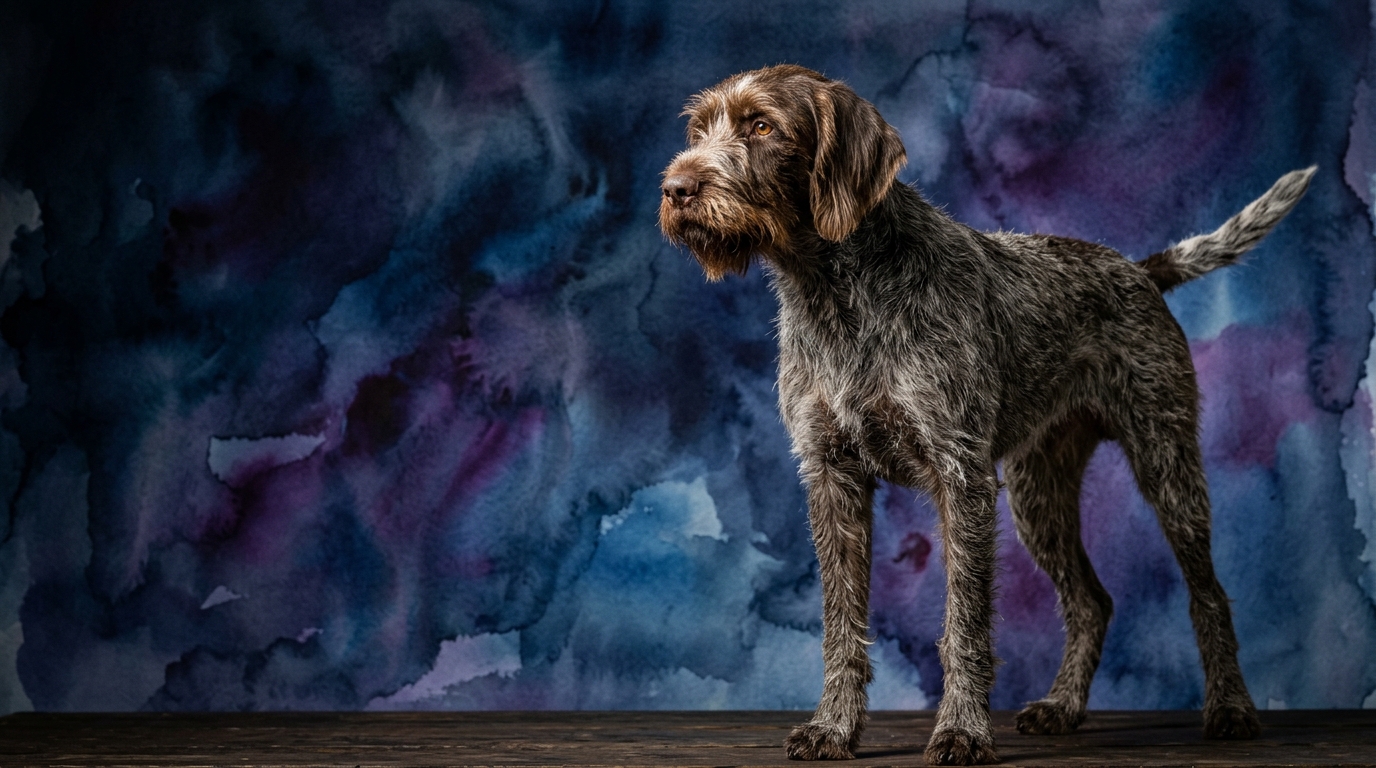
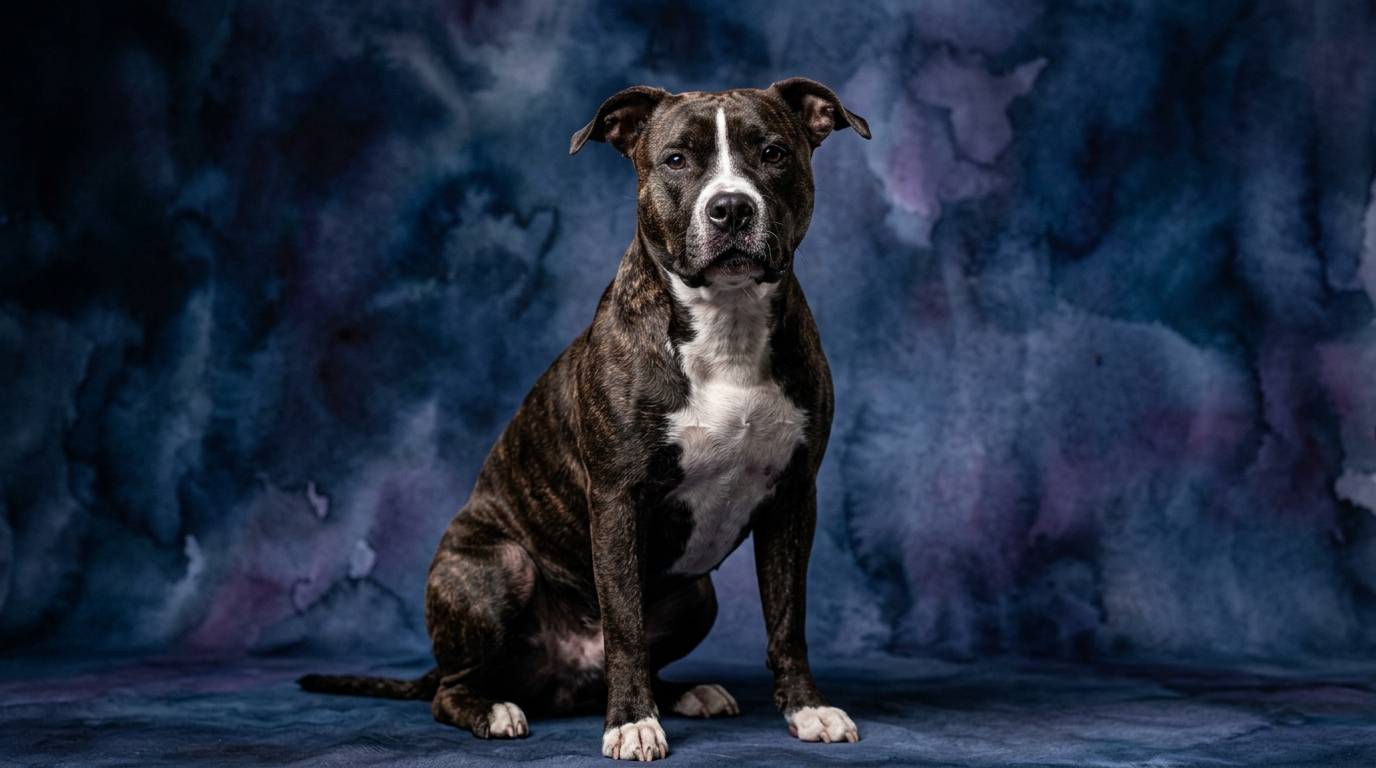
Side-by-Side Cognitive Profile: Griffon vs. AmStaff
At The Cosmic Pet Pet IQ Lab, we assess canine cognition across five key dimensions, offering a granular view of how breeds process the world. When comparing the Wirehaired Pointing Griffon and the American Staffordshire Terrier, their profiles reveal more similarities than differences in several core areas, with one notable distinction.
Both breeds score a 3 out of 5 for **Problem Solving**. This indicates a moderate capacity for independent thought and navigating novel situations. The Griffon, often tasked with finding and retrieving game, will apply its wits to overcome environmental obstacles in the field. Similarly, the AmStaff, historically bred for tenacity and companionship, uses a comparable level of cognitive flexibility to figure out how to access a desired toy or navigate its home environment.
In **Training Speed**, both the Wirehaired Pointing Griffon and the American Staffordshire Terrier also register a 3 out of 5. This places them in the middle ground for acquiring new commands and behaviors. They are certainly capable of learning a wide range of tasks, but neither breed is typically described as grasping complex sequences in a single session. Consistent, positive reinforcement and patience are key ingredients for steady progress with both.
Their **Social Intelligence** is likewise rated at 3 out of 5. Both breeds demonstrate a moderate understanding of social cues, whether originating from humans or other animals. The Griffon's collaborative hunting role fosters an awareness of its handler's intentions and movements. The AmStaff’s companion nature means it often tunes into its family's moods and dynamics. They can read situations, but might not always anticipate complex social nuances without explicit guidance.
**Instinctive Drive** for both breeds also sits at a 3 out of 5, though the manifestation of this drive differs. The Wirehaired Pointing Griffon's drive is deeply rooted in its sporting heritage, expressing itself as a strong desire to hunt, point, and retrieve. This natural inclination provides an inherent motivation to engage in activities mirroring its original purpose. The American Staffordshire Terrier's drive, while also present at a moderate level, often manifests as a powerful desire for interaction, vigorous play, and a protective instinct towards its family, reflecting its historical role as a guardian and companion.
The most significant distinction emerges in their **Memory** scores. The Wirehaired Pointing Griffon earns a 3 out of 5, indicating a solid ability to retain learned commands and experiences consistently over time. The American Staffordshire Terrier, however, exhibits a slightly enhanced memory capacity, scoring a 4 out of 5. This higher score suggests a stronger ability to recall past events, training cues, and potentially even more complex sequences of actions, which can influence the longevity of learned behaviors and their capacity to generalize knowledge across different contexts.
Where the Wirehaired Pointing Griffon Shines Cognitively
The Wirehaired Pointing Griffon's cognitive strengths are most evident in scenarios demanding sustained focus and independent work within a specific task domain, particularly in outdoor environments. While its memory score of 3/5 is not its highest, its balanced cognitive profile—especially its problem-solving and instinctive drive, both rated at 3/5—is exquisitely calibrated for its original purpose. A Griffon excels at applying its moderate problem-solving skills to navigate varied terrains, track scents, and locate game without constant human micro-management, showcasing a practical application of its individual cognitive scores working in concert.
Its ability to maintain a steady, purposeful effort over extended periods, guided by its instinctive drive, suggests a cognitive resilience well-suited for repetitive, goal-oriented tasks that require self-direction in the field. This breed’s overall cognitive balance makes it a highly effective and adaptable partner for those who appreciate a dog that can think through its hunting tasks with a blend of independence and responsiveness.
Where the American Staffordshire Terrier Holds a Cognitive Edge
The American Staffordshire Terrier boasts a distinct cognitive advantage in the realm of memory, scoring a 4/5 compared to the Griffon's 3/5. This enhanced recall ability means AmStaffs are often quicker to solidify learned behaviors and retain complex information over longer durations, making them potentially more consistent in executing commands after initial training. Their stronger memory can also translate into a greater capacity for recognizing specific individuals, remembering routines, and recalling past interactions, which can deepen their bond with their human companions.
Furthermore, the AmStaff’s Coren rank of #48 places it among breeds considered to have "above average working/obedience intelligence." This ranking suggests a practical aptitude for understanding and responding to human instruction that, while not explicitly detailed in its individual scores, implies an effective application of its cognitive abilities, particularly its memory, in an obedience setting. This superior memory allows the AmStaff to build a robust mental library of experiences and training cues, contributing to a stable and predictable behavioral foundation.
Training Dynamics: Which Breed Offers an Easier Path?
Given their identical training speed scores (3/5), neither breed presents an inherently “easier” path to initial command acquisition. Both the Wirehaired Pointing Griffon and the American Staffordshire Terrier require consistent, positive reinforcement methods and patience to build a solid training foundation. Owners should prepare for a steady learning curve rather than instantaneous mastery with either breed.
However, the AmStaff’s superior memory (4/5 versus WPG's 3/5) offers a subtle but significant advantage in the long-term retention and consistency of learned behaviors. While a Griffon will certainly learn and remember, an AmStaff might recall commands more readily after a break or generalize them to new environments with slightly less refresher work. The AmStaff's Coren ranking further supports its practical trainability in obedience contexts, suggesting a breed that, once taught, tends to reliably perform tasks.
The Griffon's training, while equally effective with proper methods, might require a bit more reinforcement over time to maintain precision due to its slightly lower memory score and its independent working nature. This independence can sometimes lead it to prioritize its instincts over immediate human directives in certain situations, especially in the field. For owners seeking a dog that solidifies commands with slightly greater permanence and consistency, the AmStaff might present a marginally smoother long-term training experience.
Lifestyle Match: Active vs. Relaxed Owners
The suitability of these two breeds for active versus relaxed owners hinges less on their identical instinctive drive scores (3/5) and more on the *nature* of that drive and their breed group characteristics. The Wirehaired Pointing Griffon, as a Sporting breed, possesses a drive geared towards sustained physical activity, outdoor exploration, and engaging in purposeful work like hunting or field trials. Its energy is best channeled through long walks, hikes, swimming, or active games that mimic its original purpose, making it an excellent fit for highly active owners who enjoy spending extensive time outdoors and can provide structured outlets for its desire to explore and work.
A Griffon with insufficient mental and physical stimulation can become restless or engage in undesirable behaviors. The American Staffordshire Terrier, while also possessing a moderate drive, often expresses it through vigorous play, companionship, and a desire to be involved in family activities. While they enjoy regular exercise, including walks and play sessions, their need for constant, high-intensity, structured "work" is typically less pronounced than the Griffon's.
AmStaffs thrive on interaction and can be content with a good daily walk, playtime in a securely fenced yard, and then relaxing indoors with their people. This makes them adaptable to moderately active families who enjoy daily engagement but might not dedicate every weekend to extensive outdoor adventures. Therefore, the Griffon leans towards the truly active, outdoor-oriented owner, while the AmStaff is better suited for active but perhaps more home-centric owners who appreciate a robust companion.
The Verdict
Choose the Wirehaired Pointing Griffon if you are an active, outdoor enthusiast who values a canine partner with a balanced cognitive profile for independent field work and sustained physical activity. This breed excels when given purposeful tasks that engage its moderate problem-solving and instinctive drive, making it a dedicated companion for hunting, hiking, or other extensive outdoor pursuits.
Opt for the American Staffordshire Terrier if you seek a loyal, robust companion that benefits from a slightly stronger memory for training retention and thrives on consistent human interaction within a moderately active household. Its superior recall ability makes it a reliable partner for obedience and family life, enjoying both vigorous play and relaxed companionship.
🧠 Find Your Pet's IQ Score
Our Pet IQ Lab assessment covers 25+ tests across 5 cognitive dimensions — personalized to your breed.
Take the Full IQ Test →Frequently Asked Questions
Do Wirehaired Pointing Griffons need extensive mental stimulation?
Yes, Wirehaired Pointing Griffons benefit significantly from mental engagement, particularly activities that tap into their instinctive drive and problem-solving skills. While their scores are moderate, their working dog heritage means they thrive on tasks like scent work, puzzle toys, and training that mimics their original purpose, preventing boredom and promoting well-being.
Is an American Staffordshire Terrier suitable for first-time dog owners?
An American Staffordshire Terrier can be suitable for first-time owners who are committed to consistent training and socialization from an early age. Their moderate training speed and good memory can make them responsive, but their robust nature and need for clear boundaries mean dedicated effort is essential for a well-adjusted companion.
How do the social intelligence scores of these breeds influence their family life?
With identical social intelligence scores of 3/5, both breeds possess a moderate ability to interpret human and canine social cues, making them capable family members. They can integrate well into a household dynamic, but consistent socialization and clear communication from owners will help them navigate complex social situations effectively, ensuring harmonious interactions.