Side-by-Side IQ Profile
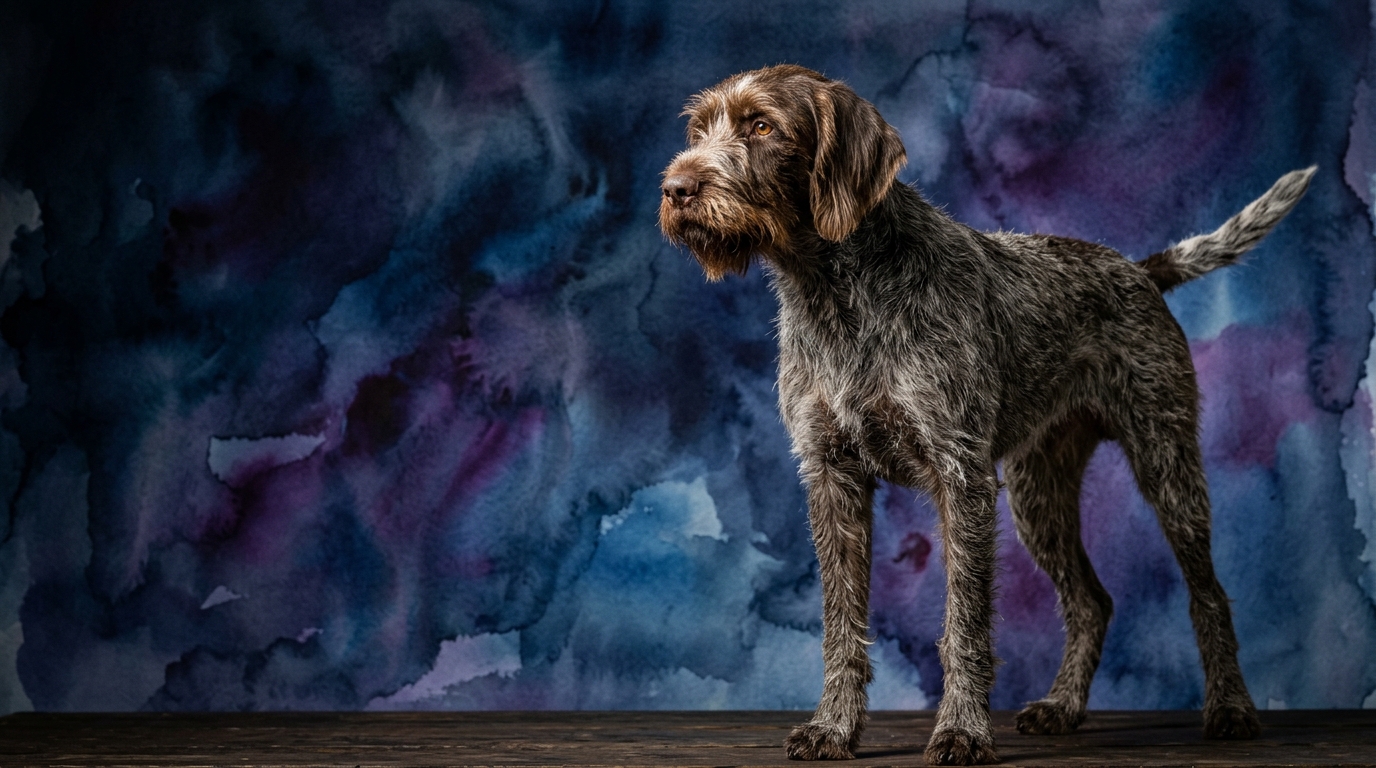
**Wirehaired Pointing Griffon:**
**Problem Solving (3/5):** Griffons display practical, task-oriented problem-solving, excelling at navigating terrain to flush game or retrieve. They rely on sensory input and learned patterns, with solutions often direct and efficient for specific objectives.
**Training Speed (3/5):** Griffons learn at a moderate pace, requiring consistent, patient repetition. Eager to please, they are receptive to positive reinforcement, especially when training aligns with their natural drives.
**Social Intelligence (3/5):** Their social understanding is geared towards cooperative work with humans and other dogs, interpreting subtle cues from handlers during hunts and integrating well into family structures.
**Instinctive Drive (3/5):** The Griffon’s instinctive drive is moderately strong and specialized, centered on hunting behaviors like pointing, flushing, and retrieving. This provides a clear framework for their cognitive engagement.
**Memory (3/5):** Griffons possess a reliable, functional memory for practical tasks, remembering hunting locations, learned commands, and daily routines that serve their working purpose.
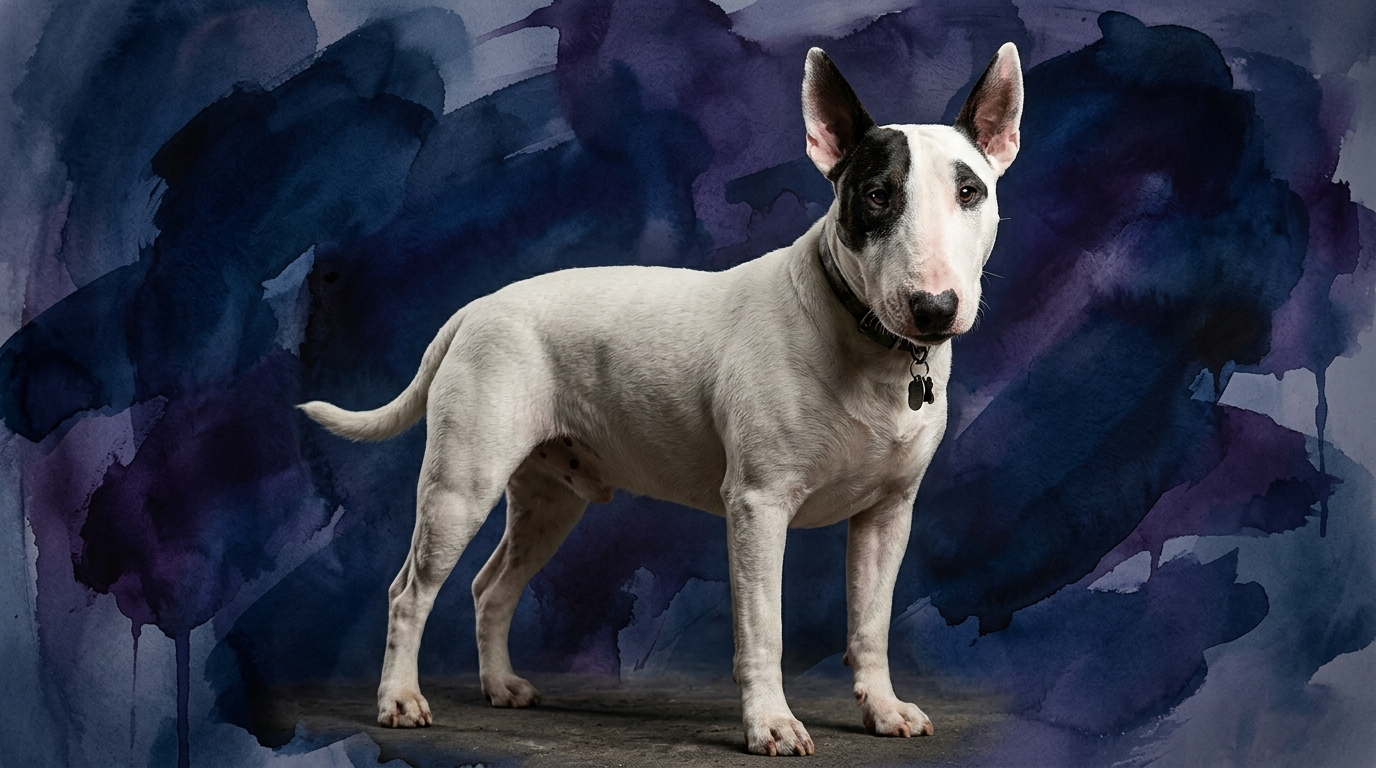
**Bull Terrier:**
**Problem Solving (3/5):** Bull Terriers apply problem-solving with determination and independent thought. They persist in figuring out desired outcomes, whether accessing treats or getting attention, often using trial and error.
**Training Speed (3/5):** Learning new commands at a moderate pace, Bull Terriers require engaging, varied sessions to maintain interest. Their independence means consistent, firm, positive reinforcement is crucial to overcome potential stubbornness.
**Social Intelligence (3/5):** Bull Terriers demonstrate good capacity for understanding human social dynamics and emotions, forming deep bonds. They are perceptive of moods, adapting interactions, though their assertive nature can influence dog-dog responses.
**Instinctive Drive (3/5):** Their instinctive drives are moderately strong and multifaceted, encompassing historical prey drive alongside strong companionship and protection. This motivates behaviors like digging, chasing, and family involvement.
**Memory (3/5):** Bull Terriers retain information about people, places, and routines well, contributing to strong attachment to home and family. They remember past interactions, shaping future responses.
Where Wirehaired Pointing Griffon Wins Cognitively
The Wirehaired Pointing Griffon’s cognitive strengths shine particularly brightly in scenarios requiring sustained focus on a cooperative task, especially those involving scent discrimination and environmental navigation. Their 3/5 problem-solving, when paired with their 3/5 instinctive drive, translates into an impressive ability to systematically search for and locate game, demonstrating a practical intelligence tuned for fieldwork. Griffons show a thoughtful, methodical approach to covering ground, interpreting wind currents, and signaling game presence, showcasing specialized cognitive prowess. Their memory (3/5) also excels in retaining complex patterns of scent and terrain, allowing them to build mental maps and recall successful strategies, a distinct advantage for repetitive, purpose-driven tasks. This makes them adept at learning and executing multi-step sequences related to their primary function.
Where Bull Terrier Wins Cognitively
The Bull Terrier exhibits a cognitive advantage in areas demanding resilience, independent decision-making, and nuanced social understanding in a domestic setting. Their 3/5 problem-solving, coupled with their 3/5 instinctive drive, often manifests as tenacious determination to achieve personal goals, whether creatively circumventing barriers or persistently seeking attention. This isn't about quick puzzle-solving, but an unwavering, self-directed drive to find solutions through trial and error, a hallmark of their independent spirit. Furthermore, their 3/5 social intelligence allows them to navigate human emotional landscapes with surprising sensitivity, responding intuitively to family members' moods. This makes them exceptionally attuned companions adapting behavior based on subtle human cues, demonstrating distinct social astuteness domestically.
Which Is Easier to Train and Why
Assessing ease of training between these two, both with a 3/5 Training Speed, requires looking beyond the raw score to their temperaments and purposes. The Wirehaired Pointing Griffon is generally more straightforward to train for cooperative tasks. Their deep-seated desire to work alongside humans, ingrained from generations of selective breeding, means they typically possess higher biddability. When a Griffon learns a command, their instinct is often to please and comply, especially if training is engaging and taps into natural drives, making them responsive to positive reinforcement. In contrast, the Bull Terrier, despite the same 3/5 Training Speed, can present a more nuanced training experience. Their history emphasized independence and tenacity, meaning they often possess a stronger will and propensity for "selective hearing." While capable of learning, their motivation needs to be higher, and consistency unwavering to overcome stubbornness. Training a Bull Terrier often feels like a negotiation, requiring patience, creativity, and a strong, positive bond. Therefore, for an average owner, the Griffon’s inherent cooperative nature generally makes the training process feel smoother and less challenging.
Which Suits Active Owners vs Relaxed Owners
For active owners seeking a canine partner for outdoor adventures, the Wirehaired Pointing Griffon is ideal. Their 3/5 instinctive drive and problem-solving, geared towards hunting, means they thrive on regular, vigorous exercise and mental engagement. They need opportunities to explore, use their nose, and engage in activities mimicking ancestral work, like long hikes or scent work. An insufficiently exercised Griffon can become restless, making them unsuitable for truly sedentary households. The Bull Terrier, while energetic, adapts to a wider range of owner lifestyles. Their 3/5 instinctive drive is less about sustained, long-distance work and more about bursts of activity, intense play, and deep companionship. They enjoy walks and interactive games but don't require the same endurance as a sporting dog. They demand significant owner interaction and mental engagement within the home, thriving with owners who enjoy daily walks, active play, and ample social interaction, fitting active or moderately active owners who appreciate downtime.
The Verdict
Opt for the Wirehaired Pointing Griffon if you are an active individual or family seeking a devoted, biddable partner for outdoor adventures, hunting, or dog sports, and you appreciate a dog whose cognitive strengths are geared towards cooperative work and methodical task completion.
Select the Bull Terrier if you desire a tenacious, affectionate, and sometimes comical companion who thrives on deep human connection, enjoys bursts of playful energy, and you are prepared to engage their independent spirit with consistent, creative training and ample social interaction.
🧠 Find Your Pet's IQ Score
Our Pet IQ Lab assessment covers 25+ tests across 5 cognitive dimensions — personalized to your breed.
Take the Full IQ Test →Frequently Asked Questions
Do Wirehaired Pointing Griffons shed a lot?
Wirehaired Pointing Griffons have a dense, wiry coat that sheds minimally, especially with regular brushing and hand-stripping. This makes them a relatively low-shedding breed, often preferred by those sensitive to dog hair, though their coat does require specific grooming to maintain its texture and function.
Are Bull Terriers good with children?
Bull Terriers can be excellent with children when properly socialized and raised together, often forming strong, protective bonds. However, their boisterous nature and strength mean supervision is always recommended, especially with very young children, to prevent accidental bumps or knocks. Their playful energy needs to be managed around small kids.
What is the main difference in temperament between these two breeds?
The Wirehaired Pointing Griffon typically exhibits a more cooperative, eager-to-please temperament, driven by their working heritage and desire to partner with humans in tasks. The Bull Terrier, while affectionate and loyal, often displays a more independent, tenacious, and sometimes stubborn personality, requiring consistent guidance and a strong, patient owner.