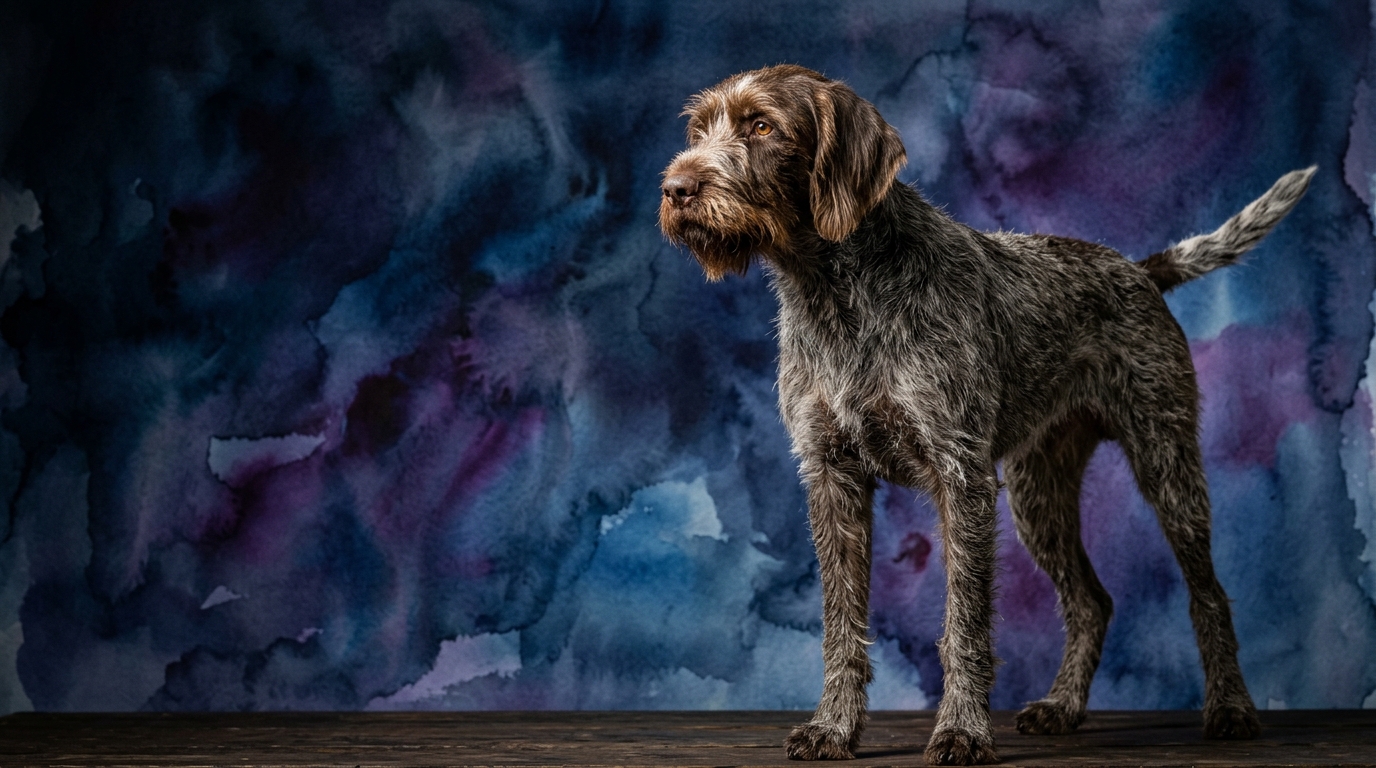
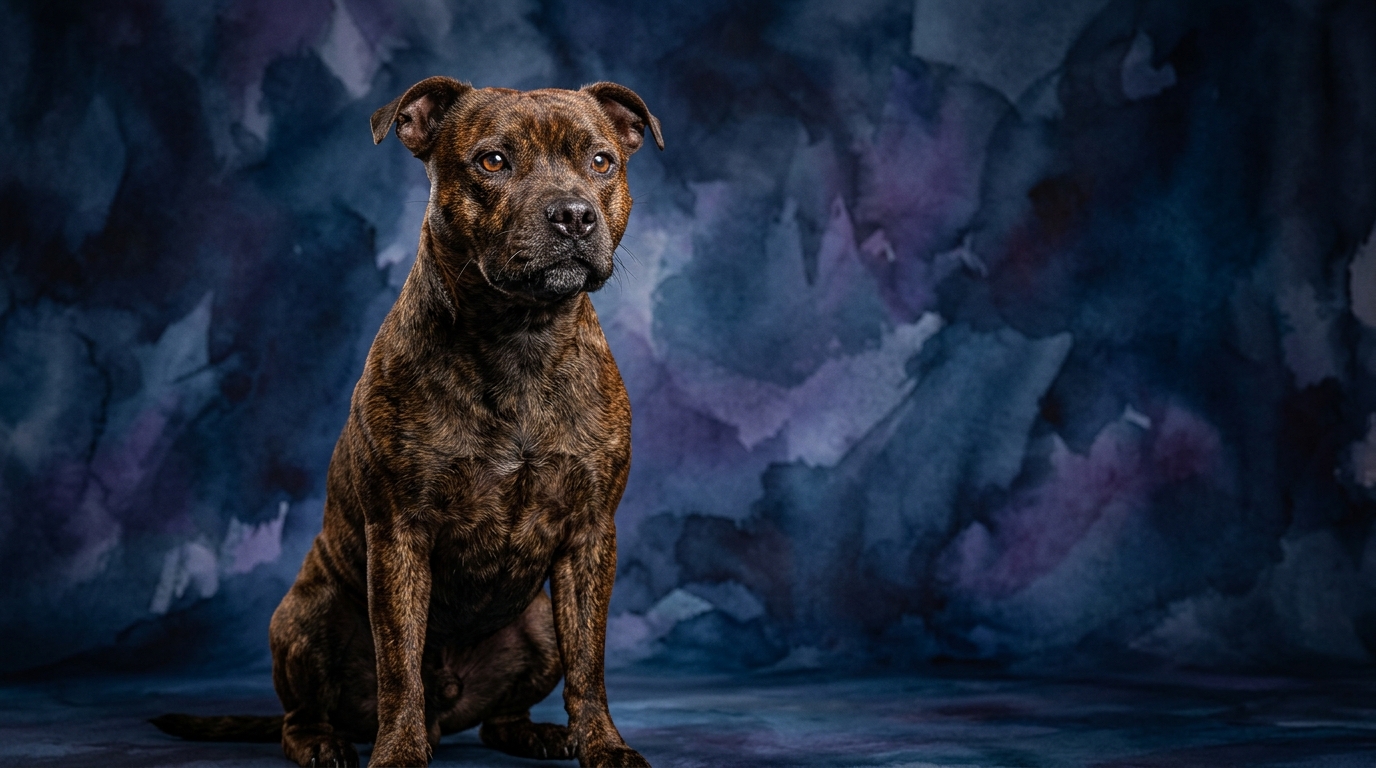
Side-by-Side IQ Profile: Wirehaired Pointing Griffon vs. Staffordshire Bull Terrier
Despite both the Wirehaired Pointing Griffon and the Staffordshire Bull Terrier scoring 3 out of 5 across all five measured cognitive dimensions, their breed histories and inherent temperaments mean these scores manifest in distinct behavioral patterns. A '3/5' indicates a moderate capacity, neither exceptionally high nor low, providing a solid foundation that each breed utilizes uniquely.
For the **Wirehaired Pointing Griffon (Sporting Group)**, their cognitive profile is finely tuned for their role as a versatile hunting companion. Their **Problem Solving (3/5)** reflects a practical, task-oriented approach to challenges encountered in the field, such as navigating dense cover or strategizing the retrieval of game. This isn't about abstract puzzles, but efficient, real-world application to achieve a specific goal dictated by their handler or their own keen instinct. Their **Training Speed (3/5)** suggests they absorb new commands and routines at a steady, reliable pace, often aided by their eagerness to work collaboratively with a human partner. Consistency and clear communication are paramount to developing their skills effectively over time. The Griffon's **Social Intelligence (3/5)** primarily manifests in their strong bond with their human family and their ability to work cooperatively within a hunting team, reading human cues well in a working context. Their **Instinctive Drive (3/5)** captures their inherent sporting instincts—the focused desire to point, retrieve, and track game, guiding their attention and energy towards purposeful tasks. Finally, their **Memory (3/5)** is reliable for recalling complex scent trails, the location of fallen game, or a sequence of commands during a hunt, making them dependable partners once a skill is learned.
The **Staffordshire Bull Terrier (Terrier Group)**, while sharing identical scores, applies its cognitive capacities through a lens of tenacity and deep human connection. Their **Problem Solving (3/5)** is characterized by a direct, often physical, and persistent approach. Faced with an obstacle, a Staffy might try to power through, dig under, or persistently work at it until a solution is found, driven by their strong will and desire to achieve a goal. Their **Training Speed (3/5)**, similar to the Griffon's, indicates a moderate learning pace, but their independent terrier spirit often means their willingness to comply depends heavily on motivation and the strength of their bond with the trainer. Engaging and rewarding training methods are crucial for success. A Staffy's **Social Intelligence (3/5)** shines in their capacity for forming deep, affectionate bonds with their human families, often demonstrating a nuanced understanding of human emotions. While generally friendly with people, their interactions with other dogs can sometimes be more assertive, reflecting their terrier heritage. Their **Instinctive Drive (3/5)** reflects a moderate but persistent terrier predisposition—a propensity for digging, chasing small prey, and a robust, enthusiastic play style. Lastly, their **Memory (3/5)** is good for people, places, and routines, retaining positive and negative experiences, which makes consistent training and positive reinforcement particularly impactful for them.
Where the Wirehaired Pointing Griffon Wins Cognitively
The Wirehaired Pointing Griffon's cognitive strengths are particularly evident in scenarios requiring sustained focus, independent decision-making within a collaborative framework, and methodical task execution. While their problem-solving is rated 3/5, it excels in practical, environmental challenges, such as discerning the most efficient path through dense underbrush or interpreting subtle changes in scent to locate game. This isn't about brute force but rather a calculated, adaptive approach that benefits from their specialized sensory input.
Their moderate memory and instinctive drive synergize to foster long-term retention of hunting strategies and the ability to systematically work through a field, remembering areas already covered. This capacity for sequential thought and sustained mental effort, combined with their training speed, enables them to master complex, multi-step field tasks over time. This makes them exceptional partners for activities demanding both physical endurance and consistent mental application, where a methodical, self-reliant approach within a working partnership is paramount.
Where the Staffordshire Bull Terrier Wins Cognitively
The Staffordshire Bull Terrier's cognitive prowess is most pronounced in their resilience, their acute social attunement within their human family, and their tenacious approach to overcoming obstacles. Their 3/5 problem-solving ability, though moderate, is characterized by sheer determination and a willingness to employ diverse, often physical, methods until a goal is achieved. This reflects a robust, direct, and persistent drive to succeed, rather than a subtle, strategic one.
Their social intelligence, also rated 3/5, truly shines in the depth and sensitivity of their human connections. Staffies often display a remarkable ability to read and respond to the emotional states of their family members, adjusting their behavior with empathy. This profound emotional attunement, coupled with their reliable memory for interactions, allows them to form exceptionally strong, reciprocal bonds, making them highly responsive to the nuances of human companionship and capable of integrating deeply into family dynamics.
Which is Easier to Train and Why?
With both breeds scoring 3/5 in training speed, neither is inherently a 'beginner' or 'expert' dog to train; rather, their training journeys differ based on their intrinsic motivations and breed characteristics. For the Wirehaired Pointing Griffon, training often feels like a natural extension of their purpose. Their sporting background instills an inherent desire to work alongside a human, and they generally respond well to clear directives and positive reinforcement that align with their natural drives. Challenges might arise from their strong scent drive, which can be a significant distraction, necessitating focused environmental management during training sessions. Their biddability for task-oriented learning often makes them straightforward for obedience and field work, as they are motivated by partnership and purpose.
The Staffordshire Bull Terrier, while equally capable of learning at a moderate pace, brings a distinct terrier independence and strong will to the training process. Their intrinsic motivation is key; they learn best when training is framed as an engaging game, or when it clearly benefits them, often in the form of affection, play, or a favored treat. Their moderate training speed is often tempered by their tenacity, meaning consistency, patience, and making training incredibly rewarding are essential for success. Distractions, particularly other dogs or exciting stimuli, can be a hurdle, requiring trainers to be adept at maintaining focus and channeling their robust enthusiasm. While a Griffon might be more inclined to *comply* to fulfill a role, a Staffy often needs to be *convinced* that compliance is the most enjoyable or rewarding option.
Which Suits Active Owners vs. Relaxed Owners?
The Wirehaired Pointing Griffon is unequivocally suited for active owners. Their 3/5 instinctive drive, coupled with their sporting heritage, demands substantial physical and mental engagement. They thrive when they have a 'job' to do, whether it's actual hunting, advanced obedience, scent work, or vigorous outdoor activities like hiking and trail running. Owners who genuinely enjoy spending hours outdoors, participating in dog sports, or providing consistent, purposeful activity will find the Griffon an ideal companion. A more relaxed owner who cannot consistently meet these high needs would likely find a Griffon restless, bored, and potentially destructive, as their moderate problem-solving and memory would be applied to finding their own entertainment if not adequately stimulated.
The Staffordshire Bull Terrier can adapt to a broader range of owner activity levels, though 'relaxed' should not be mistaken for sedentary. Staffies require regular, vigorous exercise to satisfy their moderate instinctive drive and robust physique, but they are also deeply content to spend significant time relaxing and cuddling with their human family. An owner who enjoys daily walks, enthusiastic play sessions in the yard, and frequent mental enrichment (like puzzle toys or short training bursts) would suit a Staffy well. While they need activity, their primary need is often companionship and inclusion in family life, making them potentially more adaptable than a high-drive sporting dog for owners whose activity levels fluctuate or are less focused on specific canine 'work'.
The Verdict
Choose the Wirehaired Pointing Griffon if you are an active, outdoors-oriented individual or family seeking a dedicated working partner for hunting, dog sports, or extensive outdoor adventures. Their collaborative nature and sustained focus make them ideal for owners who value a methodical, task-oriented companion.
Opt for the Staffordshire Bull Terrier if you desire a devoted, resilient, and affectionate family companion who thrives on deep human connection and robust play, willing to share both energetic outings and cozy relaxation. They suit owners who appreciate a dog with a strong personality and are committed to consistent, positive training.
🧠 Find Your Pet's IQ Score
Our Pet IQ Lab assessment covers 25+ tests across 5 cognitive dimensions — personalized to your breed.
Take the Full IQ Test →Frequently Asked Questions
Do identical IQ scores mean these breeds think the same way?
No, identical scores of 3/5 across cognitive dimensions indicate moderate abilities in those areas, but the manifestation of those abilities differs significantly based on breed purpose and temperament. A Griffon's problem-solving is often task-specific and collaborative, while a Staffy's is typically tenacious and driven by personal desire or direct interaction.
How does a Griffon's 'instinctive drive' differ from a Staffy's, despite both scoring 3/5?
A Griffon's 3/5 instinctive drive is specialized for pointing, tracking, and retrieving game, requiring focused, sustained effort in the field for a specific purpose. A Staffy's 3/5 instinctive drive is more generalized, encompassing a robust prey drive for small animals, a love for digging, and a very enthusiastic, often physical, approach to play and engagement, rooted in their terrier heritage.
Can a Staffordshire Bull Terrier be trained for advanced tasks like a Wirehaired Pointing Griffon?
While both breeds score 3/5 in training speed, a Griffon's inherent biddability and focus on partnership make them generally more inclined towards complex, multi-step tasks like those in field trials. A Staffy can certainly learn advanced tasks, but their independent nature means training requires exceptional consistency, high motivation from the handler, and a strong bond to overcome their potential stubbornness.